How Does Chemotherapy Work in China: Costs, Hospitals, and the Real Process
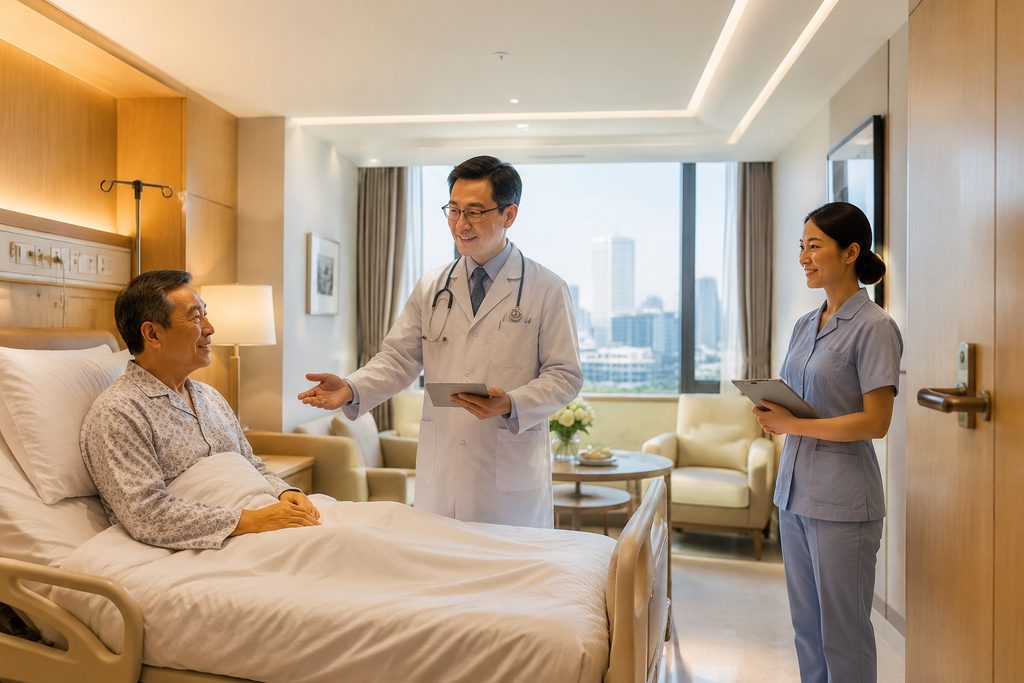
Have you ever stared at a treatment plan and wondered what the same protocol would look like on the other side of the world? The chemotherapy cost China offers is often a fraction of Western prices, but the logistics of actually receiving treatment there can feel opaque. That gap between the price tag and the process is exactly what we will unpack here.
Chemotherapy in China follows the same clinical principles you would find at Memorial Sloan Kettering or MD Anderson. The drugs, the protocols, the staging workups—they are all built on the same global evidence base. What differs is the system around the treatment: how you get in, who coordinates your care, what you pay, and how long you wait. Our team has spent years helping international patients navigate that system. This article explains the mechanics, the realistic timeline, the honest failure points, and the numbers you need to make a clear-eyed decision.
How This Actually Works, Step by Step
You do not just fly to Beijing and walk into a chemo suite. The sequence matters, and skipping steps is how patients end up stranded in a hotel room with a stack of unread CT scans. Here is the real path.
First, you send us your existing records: pathology reports, imaging, blood work, current medication list, and a brief summary of your diagnosis and treatment history. We translate these into Chinese. That translation is not a formality. A poorly translated pathology report can delay a treatment decision by weeks or lead a reviewing oncologist to request repeat biopsies. Our medical translators handle the terminology that generalist translators miss.
Second, we match your case to the right department. Not just the right hospital—the right subspecialty within it. A lung cancer patient with an EGFR mutation needs a different oncologist than one with small cell carcinoma. Our database covers 340+ top-ranked hospitals across 37 cities, including the oncology departments ranked among China’s top 10 by the Fudan University hospital rankings. We send your translated records to the department’s international coordination office for review.
Third, the department responds. Sometimes within 48 hours, sometimes two weeks. The response will say one of three things: we can treat this, we need more information, or we recommend a different approach. If they say yes, the next step is scheduling. Public hospital outpatient clinics in China generally cannot be booked from overseas in advance—you show up, queue, and see the doctor that day. That is the reality for domestic patients. For international patients, the practical route is the hospital’s international department or VIP channel, which allows pre-arranged consultations with senior specialists. The cost runs roughly 1.5 to 2 times the standard public rate. That premium buys you English-speaking coordination, scheduled appointments, and a doctor who has blocked time for your case.
Fourth, you travel. You will need an S2 visa for short-term medical treatment and private affairs. Your accompanying family members apply for S2 as well. The hospital provides the supporting invitation documents. Visa processing takes one to three weeks depending on your home country’s Chinese embassy or consulate. We guide you through the document checklist, but we do not control the embassy.
Fifth, you meet the oncologist in person. No hospital in China will start chemotherapy without a face-to-face consultation. The doctor reviews your records, may order additional scans or blood work, and confirms the protocol. Chemo typically begins within one to two weeks after that initial consultation, assuming no new findings require additional workup.
What Chemotherapy Actually Costs in China
Let us talk numbers. The chemotherapy cost China presents depends heavily on the drug regimen, the hospital tier, and whether you are using generic or imported drugs. A standard six-cycle adjuvant chemotherapy course for breast or colorectal cancer at a top-tier public hospital’s international department typically ranges from $8,000 to $25,000 for the chemotherapy drugs and administration alone. That does not include surgery, radiation, imaging, or hospitalization for complications.
For lung cancer, the picture shifts. Traditional platinum-based doublet chemotherapy runs lower, often $6,000 to $15,000 per full course. But many lung cancer patients now receive targeted therapy or immunotherapy, which changes the math entirely. Targeted agents like osimertinib or crizotinib can cost $3,000 to $8,000 per month in China, depending on whether you receive the imported brand or a Chinese generic. Immunotherapy with PD-1 inhibitors—many of which are now manufactured by Chinese pharmaceutical companies—runs $1,500 to $4,000 per cycle. That is dramatically lower than the $10,000 to $15,000 per cycle common in the United States.
| Treatment Type | China (USD, range) | United States (USD, range) |
|---|---|---|
| Adjuvant chemo, 6 cycles (breast/colorectal) | $8,000 – $25,000 | $50,000 – $120,000 |
| Platinum-doublet chemo (lung cancer) | $6,000 – $15,000 | $35,000 – $80,000 |
| Targeted therapy, per month | $3,000 – $8,000 | $12,000 – $20,000 |
| PD-1 immunotherapy, per cycle | $1,500 – $4,000 | $10,000 – $15,000 |
These figures vary by hospital and case complexity. They are reference points, not quotes. Some patients ask about a chemo package price medical tourism China providers advertise online. Be cautious with anyone selling a fixed “chemo package.” Real oncology care is iterative—doses get adjusted, cycles get delayed, complications get managed. A package price that covers everything is usually a marketing construct. What you want is transparent per-cycle pricing plus a clear fee for coordination services.
A Realistic Timeline
Here is what the calendar actually looks like, including the steps people forget.
| Stage | Duration | What Happens |
|---|---|---|
| Document collection and translation | 3 – 7 days | You gather records; we translate and format for Chinese hospital standards |
| Hospital matching and department review | 1 – 2 weeks | Oncology department reviews your case and responds |
| Visa processing (S2) | 1 – 3 weeks | Embassy processing time varies by country; hospital documents required |
| Travel and initial consultation | 2 – 3 days after arrival | In-person oncologist meeting; additional tests may be ordered |
| Pre-treatment workup | 3 – 10 days | Blood work, imaging, possibly repeat biopsy if pathology is unclear |
| Chemotherapy begins | 1 – 2 weeks after consultation | First cycle administered; schedule confirmed for subsequent cycles |
| Full course completion | 3 – 6 months | Depending on regimen; some patients return home between cycles |
The forgotten step is document translation. Patients assume their English records will be accepted. They will not be, not at the departmental review level. The other forgotten step is the gap between consultation and first infusion. Chinese oncologists often want their own imaging, not just the scans you brought. That means a new CT or PET-CT, sometimes a repeat biopsy. Budget a week for that.
What Can Go Wrong — and What Happens Then
Let us be blunt about the failure modes. They exist, and pretending otherwise does you no good.
The department says no. This happens. Sometimes the oncologist determines your case is better managed where you are, or that the specific trial drug you want is not available in China. When that happens, we go back to the matching process. A rejection is not the end of the road; it is a redirect. We have seen patients rejected by one hospital and accepted by another within the same week.
Your visa gets delayed. Embassies are unpredictable. If your S2 visa takes longer than expected, your scheduled consultation may need to be pushed. We coordinate with the hospital to reschedule. That is why we recommend applying for the visa the moment the hospital confirms your appointment, not before.
Your blood work shows something unexpected. A low neutrophil count, elevated liver enzymes, an infection. Chemo gets delayed. This is normal oncology practice worldwide, but it is jarring when you have flown across an ocean. The hospital manages the medical side; we handle the logistics—extending your accommodation, communicating with your family, adjusting your return flight.
You realize you cannot stay for the full course. Six cycles over four months is a long time to be away from home. Some patients do cycles one and two in China, then coordinate with their home oncologist to continue the same protocol locally. That is a legitimate strategy, and Chinese oncologists are generally willing to share treatment records and protocols with your home team. Discuss this before you commit.
How Does Chemo Work for Lung Cancer in China: The Protocol Reality
Lung cancer is the most common diagnosis we coordinate for international patients. The question we hear constantly: how does chemo work for lung cancer in China differently than at home?
The short answer is that the drugs are the same. Cisplatin, carboplatin, pemetrexed, paclitaxel, docetaxel—these are the backbone of lung cancer chemotherapy in China just as they are in the US and Europe. What differs is the sequencing. Chinese oncologists tend to be more aggressive about combining chemotherapy with local therapies. A stage III lung cancer patient might receive concurrent chemoradiation where a Western oncologist might sequence them. A stage IV patient with a driver mutation will almost certainly be offered a targeted agent first, with chemo reserved for progression. That is consistent with global guidelines.
Can I get targeted therapy instead of chemo in China? Often, yes—if your tumor profile supports it. Chinese hospitals have widespread access to EGFR, ALK, ROS1, and other mutation testing. The cost of genetic testing in China runs $500 to $1,500, significantly less than in the US. If your mutation is actionable, targeted therapy is typically the first-line recommendation. But if your tumor is wild-type, chemo plus immunotherapy is the standard. No reputable oncologist will substitute targeted therapy for chemo without a matching mutation. Anyone who promises otherwise is not practicing medicine.
Choosing the Right Hospital for Chemotherapy in China
Hospital selection matters more than most patients realize. The best oncology hospitals in Shanghai for chemo are not necessarily the best fit for your specific case. Shanghai has several hospitals with oncology departments ranked among China’s top 10 by the Fudan rankings, including Fudan University Shanghai Cancer Center and Zhongshan Hospital. Beijing has its own cluster: Peking Union Medical College Hospital, Cancer Hospital Chinese Academy of Medical Sciences, and Beijing Cancer Hospital. Guangzhou, Chengdu, and Hangzhou each have strong options.
What should you actually evaluate? Three things. First, the department’s subspecialty focus. A hospital famous for liver cancer surgery may have a mediocre lung oncology program. Look at the specific department, not the hospital brand. Second, the international department’s infrastructure. Do they have English-speaking nursing staff? Do they have experience with foreign patients? A hospital that performs 10,000 chemo infusions a year but has never treated a non-Chinese speaker will be a rough experience. Third, the wait time for the specific oncologist you need. Top specialists in Shanghai or Beijing may have consultation wait times of two to four weeks even through international channels. If you need to start chemo urgently, a strong but slightly less famous department might get you in faster.
Our database of top-ranked hospitals organizes the Fudan-ranked institutions by city so you can see the landscape quickly. For oncology specifically, the department rankings show which hospitals rank in the top 10 for medical oncology, radiation oncology, and thoracic surgery. That granularity is what actually drives a good match.
Practical Considerations: Records, Visas, Payment, and Follow-Up
Records. Bring everything. Every scan on CD, every pathology report, every treatment summary. Chinese oncologists want the primary data, not just the written conclusions. If your scans are more than three months old, expect to repeat them. Budget for that.
Visa. S2 is the correct category for short-term medical treatment. If your treatment will exceed 180 days, you need S1. Your family members traveling with you also apply for S2. The hospital’s international office provides the invitation letter. Start this process as soon as the hospital confirms your appointment. Do not book flights until the visa is in your passport.
Payment. Public hospitals in China require prepayment. You deposit funds at admission or before each chemo cycle, and the hospital draws down against that deposit. Insurance reimbursement works differently than you are used to: you pay the hospital directly, then file with your insurer. Some private international hospitals in China offer direct insurance billing—United Family, Jiahui, Parkway, Raffles—but those hospitals are generally not where you go for cutting-edge oncology. For cancer care, you want the top public hospitals, and that means paying upfront and seeking reimbursement yourself. If you are coordinating through our service, we help you understand the deposit structure and payment logistics before you arrive.
Language. This is the single biggest practical barrier. A top-tier Chinese oncology ward is not an English-speaking environment. The doctors may read English medical literature, but the nurses, the pharmacy, the scheduling desk, the imaging department—they operate in Chinese. A bilingual medical companion who handles registration, queueing, payment, and translation is not a luxury. It is the difference between a smooth treatment course and a daily struggle. Our companion service starts at $300 per day and covers everything from hospital navigation to translating your questions for the oncologist.
Follow-up at home. Before you leave China, ask your oncologist for a written treatment summary in English, including the exact drugs, doses, cycle dates, and any dose modifications. Also request the imaging reports and blood work results. Your home oncologist will need all of this to continue your care. Chinese hospitals are generally cooperative with this request, but you have to ask. We help patients compile this discharge packet before they fly home.
Frequently Asked Questions
Most chemotherapy regimens in China cost 70% to 90% less than the equivalent treatment in the United States. A six-cycle adjuvant course that runs $50,000 to $120,000 in the US typically costs $8,000 to $25,000 at a top Chinese public hospital’s international department. Targeted therapies and immunotherapies show similar gaps, largely because many are now manufactured by Chinese pharmaceutical companies.
You cannot book a specific chemo start date from overseas through the standard public outpatient system. What you can do is arrange a pre-scheduled consultation through the hospital’s international department or VIP channel, which our coordination service facilitates. After that in-person consultation, the oncologist schedules your chemotherapy. The gap between consultation and first infusion is typically one to two weeks.
That is a legitimate concern, and it happens. The right approach is to get the Chinese hospital’s written treatment plan—including drug names, doses, and rationale—and share it with your home oncologist before starting treatment. Many Chinese oncologists are willing to discuss the plan directly with your home doctor if you request it. If there is a genuine disagreement, you are not obligated to proceed. You can seek a second opinion from another Chinese hospital or return home.
No, but you need someone with you who does. The oncologist may speak some English, especially at top academic hospitals, but the ward nurses, pharmacy staff, and scheduling desks generally do not. A bilingual medical companion handles translation and logistics throughout your treatment. Trying to navigate a Chinese oncology ward alone without language support is a recipe for missed appointments, misunderstood instructions, and unnecessary stress.
At top-ranked hospitals, yes. The Fudan-ranked institutions follow international protocols and maintain accreditation standards comparable to Western academic centers. The risk is not the quality of the chemo itself—it is the coordination failures that happen when a foreign patient tries to navigate the system without support. Choose a hospital with an established international department and experienced English-speaking coordination staff. That single decision eliminates most of the risk.
Your Next Step
Chemotherapy in China is not a shortcut. It is a legitimate option for patients who want high-quality oncology care at a fraction of Western prices, provided they understand the process and have the right support. The chemotherapy cost China offers is real, but so are the coordination challenges.
We are China Medical Services. We do not practice medicine and we do not make treatment decisions. What we do is handle the logistics: hospital matching, record translation, appointment coordination, visa guidance, and on-the-ground bilingual support. If you are considering chemotherapy in China, start with a conversation. Tell us your
For more medical information and treatment options in China, visit chinamedservices.com (China Medical Services).
