Endocrine Tumor Second Opinion in China: Ruijin Hospital Cost & Process
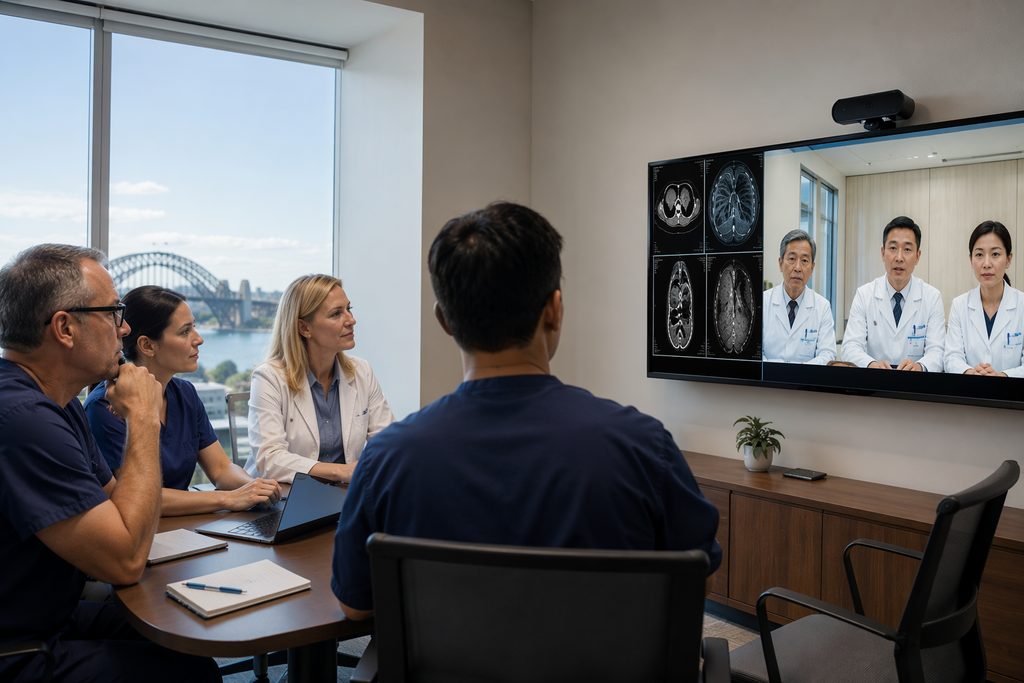
When 47-year-old Sarah from Manchester was told her adrenal nodule looked “suspicious but indeterminate,” her UK endocrinologist recommended watchful waiting. Six months of anxiety later, she started researching alternatives. She found herself asking the same question thousands of patients type into Google each month: is it worth getting a second opinion in China, and specifically, what does a Ruijin Hospital endocrine tumor second opinion cost?
The short answer: a written second opinion from a top-tier Shanghai specialist at Ruijin Hospital typically runs between $300 and $500 through our coordination service, with video consultations ranging from $500 to $800 depending on the specialist’s seniority. That’s a fraction of what you’d pay for a comparable review at a major U.S. endocrine center, and it often arrives within 5 to 10 business days after we receive your complete records.
But the price tag only tells part of the story. The real value hinges on whether your case is the kind that benefits from a Chinese perspective — and whether Ruijin specifically matches your tumor type.
Who This Is Right For — and Who It Isn’t
Not every endocrine tumor patient should seek a second opinion abroad. Some cases genuinely don’t need it. Others would be better served staying local. Here’s the honest breakdown.
Good candidates for a Ruijin Hospital endocrine tumor second opinion:
- Patients with indeterminate adrenal incidentalomas where imaging can’t rule out malignancy
- People diagnosed with pheochromocytoma or paraganglioma who want surgical volume data before committing to a surgeon
- Patients with pituitary adenomas who’ve been told surgery is optional but want a second read on hormone-secreting potential
- Neuroendocrine tumor (NET) patients seeking input on peptide receptor radionuclide therapy (PRRT) timing
- Anyone whose local team disagrees internally about the diagnosis or treatment path
Who should probably not pursue this:
- Patients with a clear, biopsy-confirmed diagnosis and a standard treatment plan already underway
- People with aggressive, fast-growing tumors requiring immediate intervention — a remote second opinion takes days, and that delay can matter
- Patients whose primary concern is getting a prescription or medication adjustment; written opinions are for review and direction, not prescriptions
- Those unable to provide complete medical records in English or Chinese, as incomplete files limit what any specialist can conclude
If you’re in the first group, the next question is how Ruijin stacks up against your other options.
The Options, Compared
When considering a second opinion for an endocrine tumor, you’re really choosing between three paths: staying local, going to a Western center with a strong endocrine reputation, or seeking review from a high-volume Chinese hospital. Here’s how they compare for a typical written second opinion.
| Factor | Local/Regional Center | U.S./UK Major Endocrine Center | Ruijin Hospital (Shanghai) |
|---|---|---|---|
| Written second opinion fee | $150–$400 (often covered by insurance) | $800–$2,500 (out-of-pocket if uninsured) | $300–$500 via coordination service |
| Time to receive written opinion | 2–4 weeks | 3–8 weeks | 5–10 business days |
| Annual endocrine tumor cases reviewed | Varies, often <200 | 500–1,500 | Estimated 3,000+ across the department |
| Access to rare tumor expertise | Limited | Strong for common types; limited for rare variants | High volume of rare adrenal and pituitary cases |
| Language barrier | None | None | Managed by bilingual coordinator or companion |
| Follow-up if you choose treatment there | Immediate | Immediate but expensive | Requires travel; coordination service handles logistics |
Ruijin’s advantage isn’t prestige alone — it’s volume. The hospital’s endocrine department sees a steady stream of adrenal, pituitary, and neuroendocrine cases that smaller centers might encounter a handful of times per year. That repetition builds pattern recognition. For a patient with an ambiguous scan, pattern recognition is often the difference between an unnecessary operation and a correctly deferred one.
Ruijin Hospital Endocrine Tumor Second Opinion: What the Process Actually Looks Like
If you decide to pursue this, you’ll want to know exactly what happens after you click “send” on your records. The process is more structured than many patients expect, and knowing the steps reduces the anxiety of waiting.
Here’s the sequence we’ve seen work reliably:
Step 1: Record collection. You’ll need all imaging reports (CT, MRI, PET/CT if applicable), pathology slides or reports, blood work showing hormone levels, and a summary of any prior treatments. If your records aren’t in English, they’ll need translation. Our team handles this, but it’s worth knowing upfront.
Step 2: Specialist matching. Based on your tumor type — adrenal, pituitary, or neuroendocrine — we identify the appropriate specialist within Ruijin’s endocrine or endocrine surgery department. You won’t pick a specific doctor by name; you’ll be matched by subspecialty and case complexity.
Step 3: Written review. The specialist reviews your complete file and produces a written assessment covering diagnosis confirmation, treatment options, and recommended next steps. This document is for reference and direction — it is not a prescription and cannot replace an in-person evaluation.
Step 4: Video consultation (optional). If you want to ask questions directly, a video session can be arranged after the written review. This adds $500–$800 depending on the specialist, but many patients find the live conversation clarifies nuances that a written report can’t capture.
Step 5: Decision point. You take the opinion back to your local treating team. Some patients use it to confirm their current plan. Others use it as the basis for traveling to Shanghai for treatment.
One thing worth stating plainly: a remote second opinion cannot replace an in-person examination. It can, however, give you a clearer picture of whether traveling for treatment is justified.
What It Costs — and What Drives the Price
You cannot book a public outpatient appointment at Ruijin from overseas directly. The hospital’s public registration system requires in-person queuing on the day of the visit, and surgery can only be scheduled after a face-to-face consultation. What you can do from abroad is arrange a remote second opinion or video consultation through the hospital’s international department or a coordination service like ours. If you later choose to travel for treatment, we coordinate the in-person appointment and logistics. The remote step comes first.
This happens more often than patients expect — not because one doctor is wrong, but because treatment philosophies differ. Chinese endocrinologists often favor earlier surgical intervention for borderline adrenal nodules, while Western guidelines sometimes lean toward longer observation. A conflicting opinion doesn’t mean you must choose one over the other. Bring both to your local team and discuss the reasoning. If the disagreement is fundamental, that’s a signal to seek a third opinion or an MDT review.
Treatment costs vary dramatically by tumor grade, stage, and the specific therapy. Surgical resection of a localized NET at a top Shanghai public hospital might run $8,000–$20,000. PRRT, if indicated, is more expensive and requires multiple cycles. These figures are ranges, not quotes — the final cost depends on your specific case, the hospital’s current fee schedule, and whether you go through the standard public pathway or the international/VIP pathway, which carries a 1.5–2x premium for senior specialists and English-language service.
Yes. Written second opinions and video consultations are conducted entirely remotely. You send your records, the specialist reviews them, and you receive a written report or have a live conversation. This is the most common starting point for international patients. Only if the opinion recommends treatment in China — and you agree — does travel become necessary.
Your Next Step
A second opinion from Ruijin Hospital won’t solve every problem, but for the right patient it provides something rare: a high-volume perspective at a price that doesn’t require a second mortgage. If your endocrine tumor diagnosis feels uncertain, or if your local team is divided, a Shanghai review can clarify the path forward.
We’re China Medical Services, a coordination team that helps international patients navigate Chinese hospitals. We are not a hospital, and we don’t provide diagnoses or treatment recommendations ourselves. What we do is handle the logistics — record translation, specialist matching, appointment coordination, and bilingual support — so you can focus on the medical conversation that matters.
If you’re considering a Ruijin Hospital endocrine tumor second opinion, start with a free consultation. We’ll review your situation, tell you honestly whether this path makes sense for your case, and outline the costs and timeline. No pressure, no obligation.
Your diagnosis deserves clarity. Sometimes that clarity is a 12-hour flight away — and sometimes it’s just an email.
Frequently Asked Questions
Yes. The hospitals used for international patients are JCI-accredited and follow the same international safety standards as top hospitals in the US and Europe. Surgical teams perform high volumes of procedures — often more than their Western counterparts — which studies show leads to better outcomes.
Costs vary by procedure and hospital, but international patients typically save 40-80% compared to US prices — even when factoring in travel and accommodation. A consultation with our team will give you an exact, all-inclusive quote with no hidden fees.
Send us your existing medical reports to get started. We handle everything from hospital selection and appointment scheduling to visa assistance and post-operative recovery planning. Your medical records are reviewed by the specialist before you even book a flight.
For more medical information and treatment options in China, visit chinamedservices.com (China Medical Services).
