Zhongshan Hospital Shanghai: A Foreign Patient’s Guide to China’s #5 National Hub for Cardiology & General Surgery
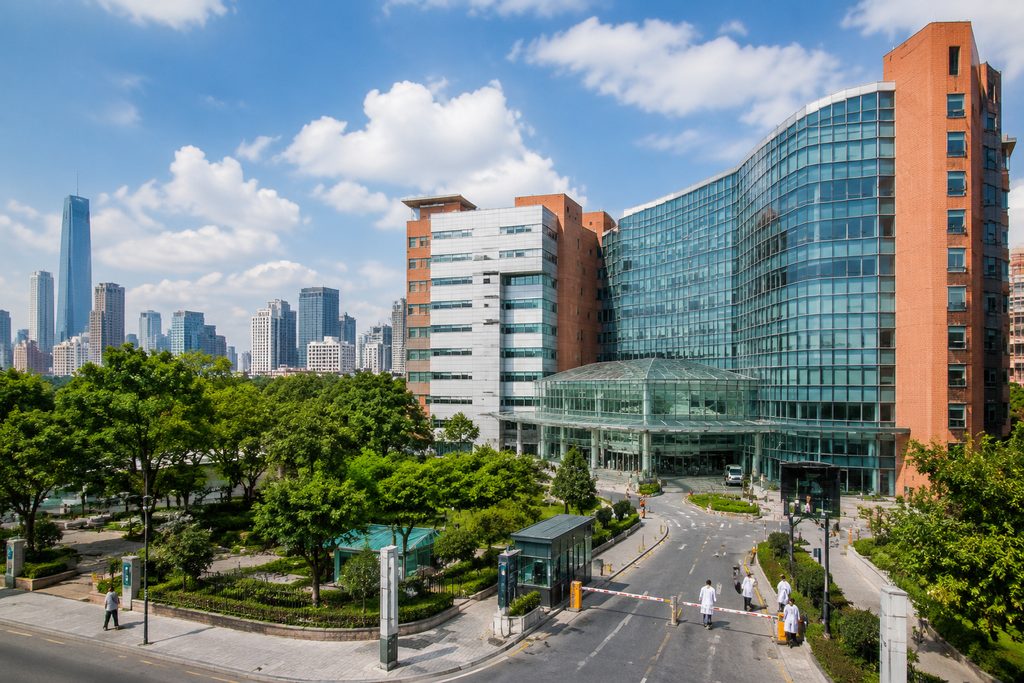
Zhongshan Hospital Shanghai: The Short Answer
There is no single published Zhongshan Hospital Shanghai price list for foreigners that you can download. The hospital’s international wing does not post a public menu of surgical fees online. But that does not mean you walk in blind.
Based on the cases our team has coordinated, a cardiac bypass at Zhongshan Hospital typically lands between $18,000 and $28,000 USD for international patients using the VIP pathway. A complex general surgery procedure, such as a laparoscopic liver resection, runs from $14,000 to $22,000. These are all-in figures covering the surgeon, anesthesiologist, private room, and standard post-operative monitoring. They are not quotes. Your case determines your number.
The bigger question hiding behind the price search is whether this specific hospital is worth crossing an ocean for. For a defined set of cardiac and abdominal conditions, the answer is a hard yes. Zhongshan Hospital, affiliated with Fudan University, sits in the top tier of China’s 35,000+ hospitals. It is one of only a handful of institutions to hold an A++++ rating on the national Fudan Hospital Ranking, placing it firmly among the top 5 hospitals in the entire country. Its cardiac surgery volume is among the highest on the planet. Its general surgery department is a national reference center. The clinical data is public and audited. The challenge for a foreign patient is not the quality of the scalpel. It is the logistics of accessing it.
Who This Is Right For — and Who It Isn’t
Zhongshan is not a medical tourism resort. It is a high-throughput, high-acuity Chinese teaching hospital that treats an enormous volume of complex cases daily. The experience is efficient, data-driven, and direct. It suits a specific patient profile.
Typically a strong candidate:
- You need a high-volume cardiac procedure — valve repair, bypass, or congenital defect correction — and your home country’s wait time exceeds three months.
- You have a complex abdominal condition requiring a general surgery team that performs your specific procedure hundreds of times per year, not dozens.
- You have complete, recent medical imaging and records translated into English or Chinese.
- You are medically stable enough for a long-haul flight and a 10- to 14-day on-ground stay for evaluation and initial recovery.
- You accept that the bedside manner will be more direct and less conversational than you may be used to in a Western private hospital.
Probably not a good fit:
- Your condition is in an early diagnostic phase with no clear imaging or biopsy confirmation yet. Zhongshan’s specialists need a concrete target to work with remotely.
- You require daily, hour-long consultations with your surgeon. The communication style here is concise and rounds are structured.
- You are seeking a low-cost, no-frills public-ward experience. The international patient pathway is a premium service channel, not a budget public-ward shortcut.
- You have multiple uncontrolled comorbidities that make a post-operative ICU stay of uncertain length highly likely. The financial risk becomes harder to estimate upfront.
Being honest about that second list is what prevents bad outcomes. We have seen cases where a patient with poorly managed diabetes and an incomplete cardiac workup arrived expecting a quick fix. That scenario helps no one.
The Options, Compared: Where Does Zhongshan Fit?
If you are searching for a Zhongshan Hospital Shanghai price list for foreigners, you are probably also comparing it against other regional hubs. The table below lays out the realistic landscape for a foreign patient considering a complex cardiac or general surgery procedure.
| Factor | Zhongshan Hospital (Shanghai) | Top Private Hospital (Singapore) | Major University Hospital (Germany) | US Academic Medical Center |
|---|---|---|---|---|
| Cardiac Bypass Cost (Foreign Patient) | $18,000 – $28,000 | $35,000 – $55,000 | $25,000 – $40,000 | $120,000+ |
| Annual Cardiac Surgery Volume | Over 5,000 cases (institution) | 800 – 1,200 cases | 1,500 – 2,500 cases | 1,000 – 2,000 cases |
| National Ranking (Cardiac Surgery) | Top 3 in China (Fudan Specialty Reputation) | Not nationally ranked (small city-state) | Top 10 nationally | Top 10 nationally |
| General Surgery Subspecialty Depth | Dedicated teams for liver, pancreas, gastric, colorectal | General surgeons with broad scope | Strong subspecialty structure | Strong subspecialty structure |
| Language Barrier for English Speakers | High in public areas; managed in VIP/international wing | Minimal | Moderate; many senior doctors speak English | Minimal |
| Visa Complexity | S2 visa with hospital invitation letter | Straightforward medical visa | Schengen visa with medical documentation | B-2 visa with hospital letter |
| Typical Wait for Surgery After Consultation | 1 – 3 weeks (VIP pathway) | 2 – 4 weeks | 2 – 6 weeks | 2 – 8 weeks (can be longer in public system) |
The table makes one thing obvious. If your primary filter is surgeon experience with your exact procedure and a cost that does not bankrupt you, Zhongshan occupies a unique position. The cardiac surgery cost Shanghai vs Singapore comparison alone explains why we field so many inquiries from Southeast Asia and the Middle East. Singapore offers a frictionless English-speaking environment. But for a complex redo valve replacement, the sheer case volume at Zhongshan is hard to match anywhere in Asia. The trade-off is the logistical lift required to navigate a Chinese hospital as a non-Mandarin speaker.
What the National Ranking Actually Means for Your Surgery
When you read that Zhongshan Hospital is ranked among the top 5 nationally, that is not a marketing slogan. It comes from the Fudan University Hospital Ranking, the most authoritative hospital evaluation system in China. The methodology is public. It weights clinical reputation among peers, research output, and clinical outcomes. A hospital in the A++++ tier has cleared a bar that only a tiny fraction of China’s 35,000+ hospitals reach.
For cardiology, the numbers are staggering. The Department of Cardiology at Zhongshan performs over 5,000 interventional procedures and more than 2,000 open-heart surgeries annually. That volume creates a feedback loop. Surgeons who see rare anatomical variants weekly, not yearly, develop an intraoperative intuition that no textbook can teach. The hospital is also a major center for transcatheter aortic valve replacement (TAVR) and minimally invasive cardiac surgery, techniques that are still building volume in many Western centers.
The general surgery department is similarly structured. It is not one amorphous department. It is a collection of subspecialty teams — hepatobiliary, pancreatic, gastric, colorectal, endocrine — each functioning almost as an independent unit with its own dedicated operating rooms and ward beds. A patient with a Klatskin tumor is not handed to a general surgeon who does a bit of everything. They land on a team that does nothing but complex biliary reconstruction. This is the same subspecialization model you find at MD Anderson or Heidelberg, delivered at a scale that is uniquely Chinese.
Many prospective patients ask us bluntly: is Zhongshan Hospital good for general surgery reviews from other international doctors? The answer is embedded in referral patterns. The hospital’s general surgery department receives complex referrals from across China and increasingly from Southeast Asia and the Middle East. When a surgeon in Manila or Jakarta hits the limit of local expertise for a difficult pancreaticoduodenectomy, Zhongshan is often the destination they recommend. That peer-to-peer referral pattern is a more honest signal than any patient-facing review platform.
What It Costs: Real Numbers for International Patients
Every foreign patient starts their research hunting for a Zhongshan Hospital Shanghai price list for foreigners. The search is logical. The answer is frustrating until you understand how Chinese public hospitals structure their international services.
Zhongshan Hospital, like most top-tier Chinese public hospitals, operates a dual-track system. The standard public track serves domestic patients at government-regulated prices. The international/VIP track serves foreign patients and Chinese citizens who opt for premium service. You, as a foreigner without Chinese national insurance, will be routed through the international track. The pricing is higher because it bundles private rooms, English-capable nursing coordination, expedited imaging and lab work, and a higher level of administrative support.
Here are the ranges we see in practice for common procedures on the international track:
- Coronary artery bypass grafting (CABG): $18,000 – $28,000
- Single valve replacement (mitral or aortic): $20,000 – $32,000
- Minimally invasive mitral valve repair: $25,000 – $35,000
- Laparoscopic liver resection: $14,000 – $22,000
- Pancreaticoduodenectomy (Whipple procedure): $20,000 – $30,000
- Laparoscopic colorectal resection: $12,000 – $18,000
- Complex abdominal wall reconstruction: $10,000 – $16,000
These figures include the surgeon’s fee, anesthesiologist, standard private room for 5–10 days, operating theater costs, and routine post-operative medications. They do not include pre-operative imaging if you need fresh scans upon arrival, extended ICU stays beyond the standard recovery period, or treatment for unexpected complications. You should budget an additional 20–30% as a contingency buffer.
The cardiac surgery cost Shanghai vs Singapore gap is real and persistent. The same CABG that costs $22,000 at Zhongshan can easily reach $45,000 at a private hospital in Singapore. That $23,000 difference covers flights, a bilingual companion for your entire stay, and a comfortable serviced apartment for a family member — with money left over. This is not a hypothetical. It is the arithmetic that drives the medical tourism package Shanghai top ranked hospital market, a segment that has grown steadily as more patients from the Middle East and Southeast Asia discover the value proposition.
How to Book Surgery at This Hospital as a Foreigner
The question of how to book surgery at Zhongshan Hospital Shanghai as a foreigner has a two-word answer: you cannot. Not directly. Not from overseas. This is the single biggest misconception we encounter, and it causes real problems when patients book flights before securing a clinical pathway.
Chinese public hospitals, including Zhongshan, do not allow a foreign patient to schedule a surgery remotely. There is no online booking portal for an operating theater slot. The pathway is sequential and non-negotiable:
- Remote evaluation first. You send your complete medical records — imaging on CD or via secure upload, pathology reports, operative notes from any prior surgeries, current medication list, and a summary letter from your treating physician. The relevant department at Zhongshan reviews these materials. This is typically a written second opinion service, which costs between $300 and $500 USD. The output is a written analysis stating whether your case is suitable for treatment at Zhongshan and, if so, what the recommended surgical approach would be.
- Video consultation. If the written review is favorable, a video consultation with the specialty team follows. This is your chance to ask questions directly and for the surgeon to clarify any anatomical or clinical uncertainties before you travel. This step costs between $500 and $800 USD for a top-specialist session.
- Travel and in-person evaluation. Only after the remote steps confirm you are a suitable candidate do you apply for an S2 visa with the hospital’s invitation letter supporting your application. You fly to Shanghai, attend an in-person consultation, and undergo any additional pre-operative testing the surgeon requires. The surgery is scheduled after this face-to-face evaluation confirms the remote assessment.
- Surgery and recovery. The procedure itself, followed by in-hospital recovery and a period of observation before you are cleared to fly home.
Any service that promises to book a surgery date before you have completed steps one through three is either misinformed or making promises it cannot keep. The hospital’s rules are clear on this point. The remote evaluation phase is not a bureaucratic hurdle. It protects you from traveling to Shanghai only to discover that your case is not suitable for the approach the team would recommend, or that your imaging is insufficient for surgical planning.
Practical Considerations: Records, Language, and Follow-Up
Zhongshan Hospital has a fully equipped surgical ICU staffed by intensivists who manage post-operative complications daily. The standard of critical care is high. The question is not whether the hospital can handle a complication — it can. The question is what a prolonged ICU stay will cost and whether your insurance covers it. This is the scenario that makes contingency budgeting essential. A routine bypass that becomes a complex re-exploration for bleeding can add $8,000 to $15,000 to your bill overnight. You need to arrive with the financial buffer to absorb that possibility.
At a top-5 national hospital, the cardiac and general surgery departments are not staffed by trainees operating unsupervised. The surgeon who performs your procedure will be a senior attending with a subspecialty focus. You can and should ask during the video consultation: how many of this exact procedure have you personally performed, and what is your team’s 30-day mortality rate for it? The question is direct, and a surgeon at this level will answer it without hesitation. If the answer is vague, push harder. You are entitled to know who is holding the scalpel and what their track record looks like.
Yes, and the evidence is in referral patterns rather than online reviews. The hepatobiliary and pancreatic surgery teams at Zhongshan receive complex referrals from across Asia. When a surgeon in another country encounters a case that exceeds local expertise, Zhongshan is frequently the recommended destination. This peer-to-peer trust is a stronger signal than any patient testimonial. The hospital also publishes clinical outcome data in international peer-reviewed journals, which your own physician can review if they want to verify the department’s track record.
Your Next Step
The search for a Zhongshan Hospital Shanghai price list for foreigners leads to a more useful question: is this the right hospital for my specific case, and what will it actually cost me? The answer lives in your medical records, not on a public website.
Our team at China Medical Services exists to bridge the gap between your diagnosis and the right Chinese clinical team. We are not a hospital. We do not diagnose or treat. We handle the logistics — record translation, department matching, remote evaluation coordination, S2 visa documentation, and on-the-ground bilingual support — so that you arrive in Shanghai with a confirmed clinical pathway and a clear financial picture. Any remote consultation fee you pay now is credited in full toward our on-the-ground coordination service if you proceed to treatment within 90 days. No pressure. No hard sell. Just a clear next step when you are ready to take it.
Send us your records for a free initial assessment. We will tell you honestly whether Zhongshan is the right target, what the likely cost range looks like, and what the first concrete step should be.
Frequently Asked Questions
Yes. The hospitals used for international patients are JCI-accredited and follow the same international safety standards as top hospitals in the US and Europe. Surgical teams perform high volumes of procedures — often more than their Western counterparts — which studies show leads to better outcomes.
Costs vary by procedure and hospital, but international patients typically save 40-80% compared to US prices — even when factoring in travel and accommodation. A consultation with our team will give you an exact, all-inclusive quote with no hidden fees.
Send us your existing medical reports to get started. We handle everything from hospital selection and appointment scheduling to visa assistance and post-operative recovery planning. Your medical records are reviewed by the specialist before you even book a flight.
For more medical information and treatment options in China, visit chinamedservices.com (China Medical Services).
