First Affiliated Hospital of Chongqing Medical University Urology: A Guide for International Patients
When 54-year-old Daniel from Manchester was diagnosed with an enlarged prostate requiring surgical intervention, his NHS consultant quoted him a 14-month wait. The private route in the UK came in at just under £9,000. Frustrated and in mounting discomfort, he began searching for alternatives. That search eventually led him to a phrase he never expected to type: “best hospital for prostate surgery in China.” His story is not unique. Across Europe, North America, and the Gulf states, patients facing urological procedures — from kidney stone removal to complex oncology — are quietly recalculating the geography of their care.
Key Takeaways
- The First Affiliated Hospital of Chongqing Medical University performs over 4,000 urological surgeries annually, placing it among the highest-volume urology centers in western China.
- Urology surgery cost China typically runs 60-80% below equivalent private care in the US or UK, with comparable clinical outcomes for standard procedures.
- Language barriers and unfamiliar hospital workflows are the biggest practical hurdles for foreign patients — not clinical quality.
- International patients cannot simply walk in and book surgery. A structured pathway through the hospital’s international department is required, and that process starts weeks before you travel.
The Problem: Urology Wait Times and Costs Are Forcing Patients to Look Abroad
Across publicly funded health systems, urological surgery has become a waiting game. In Canada, the median wait time for urological surgery reached 28.3 weeks in 2023, according to the Fraser Institute’s annual survey. In the UK, NHS data shows that over 360,000 patients were waiting more than 18 weeks for urology treatment as of mid-2024. For a patient with recurrent kidney stones or suspected bladder cancer, that delay is not an inconvenience. It is a clinical risk.
Private alternatives within Western systems solve the speed problem but introduce a financial one. A robotic prostatectomy in the United States averages $35,000 to $55,000 without complications. Even a straightforward ureteroscopy for stone removal can exceed $15,000. For uninsured or underinsured patients, these figures are simply out of reach. And that is where the question arises: is urology surgery safe in China for foreigners? The answer, based on volume data and international accreditation standards, is more nuanced and more reassuring than most patients expect.
Why First Affiliated Hospital of Chongqing Medical University Delivers Results
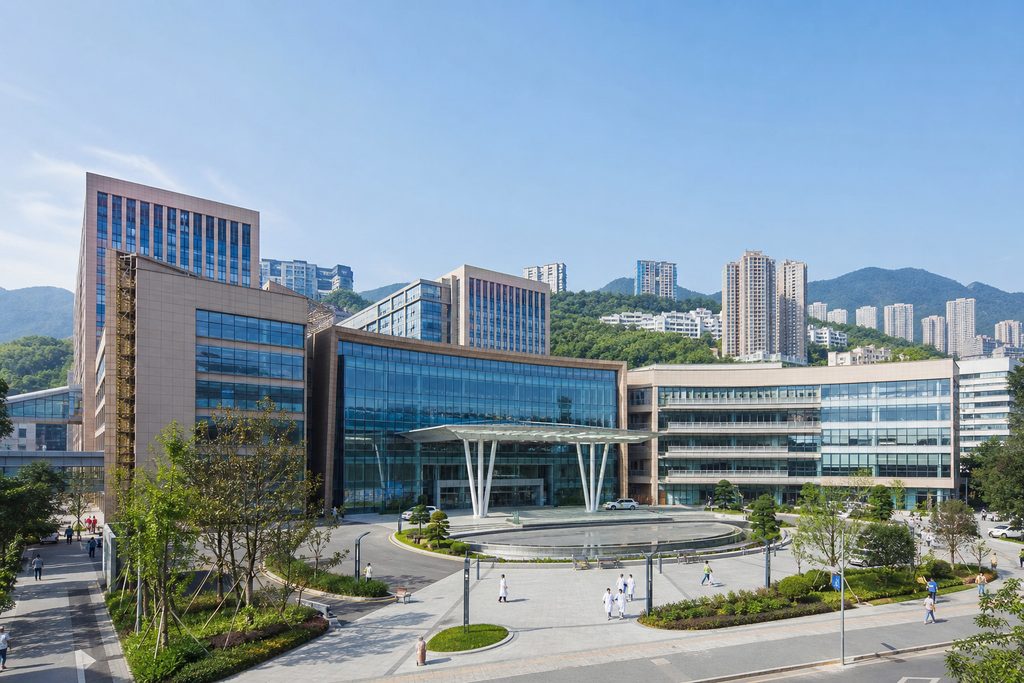
Chongqing is not Beijing or Shanghai. That is precisely why some patients choose it. The First Affiliated Hospital of Chongqing Medical University (CQMU First Affiliated) is a 3,200-bed academic medical center that anchors healthcare for a municipality of 32 million people. Its urology department operates at a scale that most Western hospitals cannot match.
Clinical Volume Drives Procedural Competence
The department’s surgeons perform more than 4,000 urological procedures each year, spanning oncologic, reconstructive, and stone surgery. That volume matters. Studies consistently link higher surgical volume to lower complication rates in urologic oncology. A surgeon who performs 200 radical prostatectomies annually has navigated more anatomical variations and intraoperative surprises than one who performs 30. At CQMU First Affiliated, the senior attending surgeons routinely hit those numbers.
And this is not a rural outpost. The hospital is one of the original members of China’s “Double First Class” medical university system and ranks consistently among the top 50 hospitals nationally in the Fudan University hospital rankings. Its urology program holds a national key discipline designation from China’s National Health Commission.
Technology Without the Premium Price Tag
The department operates the da Vinci Xi robotic surgical system, holmium and thulium laser platforms for stone fragmentation, and 3D laparoscopic suites. For international patients, the practical implication is straightforward: the same equipment found at Johns Hopkins or Charité Berlin, deployed at a fraction of the cost. A robotic-assisted partial nephrectomy that might bill at $45,000 in the US is typically quoted at $18,000 to $25,000 at this hospital, depending on case complexity.
Why the Cost Gap Exists — and Why It Does Not Reflect Quality
Lower prices in China are not a discount on safety. They reflect structural economics: lower labor costs for nursing and support staff, higher patient throughput that amortizes equipment investment faster, and a public hospital mandate that caps certain charges. The hospital’s international department operates under the same clinical governance as its domestic wards. The difference is service layer — English-speaking coordinators, priority scheduling, and private or semi-private rooms.
What International Patients Actually Experience at CQMU First Affiliated Urology
Let us walk through the real pathway. A patient does not email the hospital and book a prostatectomy. The process begins with remote evaluation.
First, you submit existing medical records — imaging, biopsy reports, lab results. The urology team reviews them and provides a written assessment, including a proposed surgical plan and a cost estimate. This written second opinion typically costs between $300 and $500, and it is the single most important step before committing to travel. If the team confirms you are a surgical candidate, the hospital’s international department issues a treatment invitation letter, which is required for your visa application.
You will enter China on an S2 visa, which covers short-term private affairs including medical treatment. The letter from the hospital is essential supporting documentation. Family members traveling with you apply for the same S2 category. Processing times vary by consulate, but most patients report 2 to 4 weeks from submission to approval.
Once in Chongqing, you will complete pre-operative testing — typically blood work, ECG, and a chest X-ray — over one or two days. Surgery is scheduled within the same week in most cases. For a standard procedure like transurethral resection of the prostate or ureteroscopic stone removal, hospital stay runs 3 to 5 days. For major oncologic surgery, expect 7 to 10 days. After discharge, the international department arranges follow-up video consultations from your home country at no additional charge for the first month.
Choosing the Right Procedure: What the Numbers Mean for Your Case
Not every urological condition warrants a flight to Chongqing. The decision matrix below reflects what our coordination team has observed across hundreds of international cases.
| Procedure | Typical Cost at CQMU First Affiliated | US Average (Private) | UK Private Average | Hospital Stay |
|---|---|---|---|---|
| Ureteroscopy + Laser Lithotripsy (kidney stone) | $3,500 – $5,500 | $15,000 – $22,000 | £6,000 – £9,000 | 2–3 days |
| Transurethral Resection of Prostate (TURP) | $4,000 – $6,500 | $18,000 – $28,000 | £7,500 – £11,000 | 3–4 days |
| Robotic Radical Prostatectomy | $18,000 – $25,000 | $35,000 – $55,000 | £16,000 – £24,000 | 7–10 days |
| Percutaneous Nephrolithotomy (PCNL, large stones) | $5,000 – $8,000 | $25,000 – $35,000 | £10,000 – £15,000 | 4–6 days |
These figures are ranges, not quotes. Final pricing depends on stone burden, tumor staging, comorbidities, and whether robotic or open techniques are required. Always request a written estimate after the remote review.
Practical Considerations: Documentation, Payment, and Follow-Up
Medical records must be translated into Chinese before submission. The hospital’s international department handles this internally, but you should allow an extra 2 to 3 days if your records are extensive. Bring original imaging on CD or USB — do not rely on cloud links, which are often inaccessible from within China.
Payment is pre-authorized. The hospital requires a deposit before admission, typically 50% of the estimated surgical fee. Balance is settled at discharge. International credit cards are accepted at the international department, but wire transfer is more common for large amounts. Note that China’s foreign exchange controls mean refunds for unused deposits can take up to 30 days to process back to an overseas account.
Insurance reimbursement is your responsibility. The hospital provides detailed itemized invoices and discharge summaries in English, which most international insurers accept. But confirm coverage before you travel. Some policies exclude treatment in China, and others require pre-authorization.
Language support within the department is functional but not seamless. The international coordinators speak English. Ward nurses may not. For patients who want a dedicated bilingual companion throughout their stay — someone to handle registration, queue for tests, translate conversations with nurses, and manage discharge paperwork — that service exists and costs from $300 per day.
Frequently Asked Questions
Clinical safety at top-tier academic hospitals like CQMU First Affiliated is comparable to Western standards. The hospital follows national clinical pathways, and its urology department reports surgical infection and complication rates in line with international benchmarks. The risks foreign patients face are logistical — language gaps, unfamiliar processes — rather than clinical. That is why structured coordination matters more than the surgery itself.
You cannot book surgery directly. You can, however, complete the entire pre-operative evaluation remotely. That means submitting records, receiving a written surgical recommendation and cost estimate, and confirming your candidacy before you ever board a plane. The first in-person step is the pre-operative workup in Chongqing, which happens days before surgery, not weeks.
The hospital’s urology team provides structured follow-up via video consultation. For the first month after discharge, these calls are included in your treatment package. If a complication requires local intervention, the team will send a detailed clinical summary to your home physician. You are never discharged into a communication void — but you do need a local urologist willing to manage post-operative care.
There is no standardized “package” in the resort sense. What exists is a coordinated pathway: remote review, visa support letter, airport pickup, hospital admission, surgery, post-operative monitoring, and discharge. Some patients choose to add a bilingual companion for the full stay. Costs are itemized per service, not bundled into a flat tourist rate. That transparency protects you — you pay for medical care, not for marketing.
Your Next Step
If you are weighing urological surgery and the numbers in your home country do not add up, the First Affiliated Hospital of Chongqing Medical University deserves serious evaluation. We are China Medical Services, a coordination team that helps international patients navigate the country’s top-tier public hospitals — from remote second opinions to on-the-ground bilingual support. We do not perform surgery, and we do not make diagnoses. What we do is make a complex system legible. If you want to understand whether this hospital fits your specific case, start with a free consultation. Bring your records. We will take it from there.
The core message is simple: world-class urological care does not have to cost a year’s salary or require a year’s wait. It does require preparation, documentation, and the right local partner. Those are solvable problems.
For more medical information and treatment options in China, visit chinamedservices.com (China Medical Services).
