Invisible Braces in China: Our Companion for Orthodontic Treatment
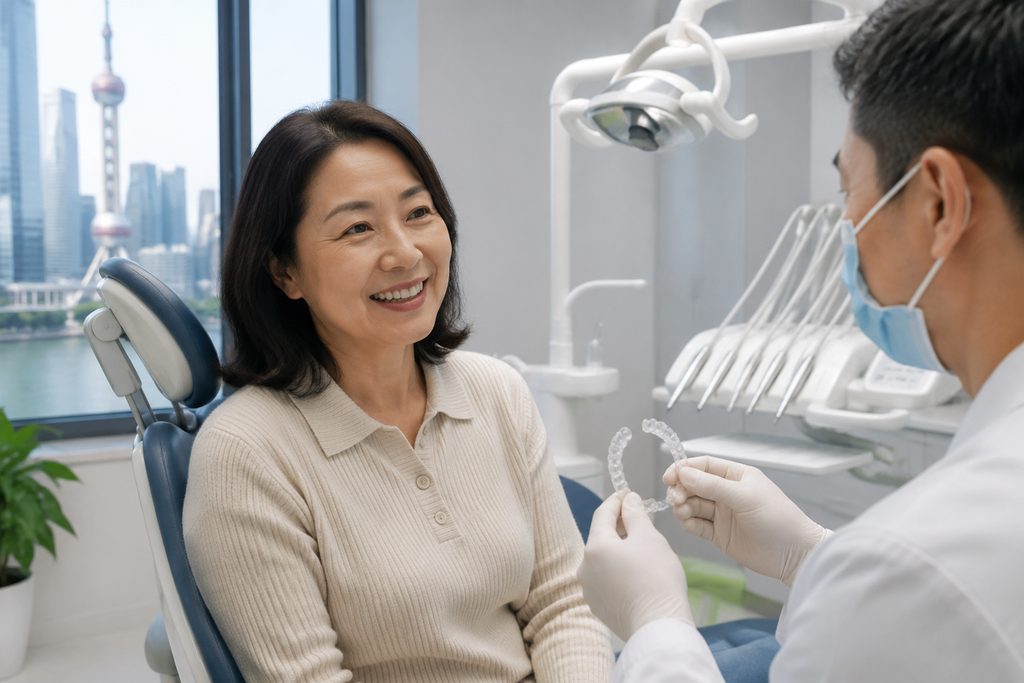
When 34-year-old Elena from Manchester first searched for “invisible braces cost China,” she had no idea whether the numbers she found were real, inflated, or missing critical fees. She had been quoted £4,200 for clear aligner treatment in the UK. A friend mentioned that dental work in Shanghai was significantly cheaper. But could she trust a clinic she had never visited? Would the aligners be the same quality? And who would translate the treatment plan into English?
These are the questions we answer every week. Our team at China Medical Services helps international patients navigate Chinese healthcare, including orthodontic treatment. We do not perform dental work. We connect you with reputable hospitals and clinics, coordinate appointments, and provide bilingual support throughout your treatment journey. This guide covers what invisible braces actually cost in China, where to find qualified providers, how long treatment takes, and what could go wrong.
How This Actually Works, Step by Step
The path from initial inquiry to wearing your first set of aligners in China follows a predictable sequence. Here is what actually happens.
First, you send us your dental records. This usually means recent X-rays, photographs of your teeth from several angles, and any prior orthodontic history. If you do not have these, we can arrange them once you arrive. But having them upfront saves time.
Next, a qualified orthodontist reviews your case. For written second opinions, fees range from $300 to $500. For a video consultation with a top specialist, expect $500 to $800. These consultations are for reference only — they are not prescriptions. They give you a realistic picture of whether you are a candidate for invisible braces, what the treatment plan might look like, and what it will cost.
After you agree to proceed, we coordinate your in-person consultation. Public hospitals in China generally do not allow overseas patients to book outpatient appointments in advance. You register on the day, queue, and see the doctor. If you want to lock in a specific specialist and avoid the queue, you use the hospital’s international or VIP department. That costs roughly 1.5 to 2 times the standard rate.
Then comes the records appointment. The orthodontist takes digital scans or impressions, photographs, and cephalometric X-rays. The aligner manufacturer — usually a global brand like Invisalign or a domestic equivalent like Angelalign — fabricates your trays based on these records.
You return for fitting. The orthodontist attaches small composite buttons to certain teeth, fits the first tray, and explains wear protocols. You typically wear each tray for 7 to 14 days, 20 to 22 hours per day.
Follow-up visits happen every 6 to 8 weeks. If you live abroad, some clinics offer remote monitoring via smartphone apps. But for the first fitting and at least two or three in-person reviews, you need to be in China.
What Invisible Braces Actually Cost in China
The “invisible braces cost China” question has no single answer. Prices vary by city, clinic tier, brand, case complexity, and whether you use a public hospital’s international department or a private clinic. Here is what we see in 2026.
For a straightforward case — mild to moderate crowding, no extractions, 12 to 18 months of treatment — a full clear aligner course in a reputable private clinic in Shanghai or Beijing typically runs from $3,000 to $6,000. The same treatment in a public hospital’s international department might cost $4,000 to $7,000. Complex cases requiring extractions, interproximal reduction, or 24+ months of treatment can push the total to $8,000 or more.
Compare that to the United States, where Invisalign treatment averages $5,000 to $8,000 for simple cases and $9,000 to $12,000 for complex ones. In the UK, clear aligner treatment from a specialist orthodontist usually falls between £3,500 and £5,500. In Australia, expect AUD $6,000 to $9,000.
| Treatment Scenario | China (USD) | United States (USD) | United Kingdom (GBP) |
|---|---|---|---|
| Simple case, 12–18 months | $3,000–$6,000 | $5,000–$8,000 | £3,500–£5,500 |
| Moderate case, 18–24 months | $5,000–$8,000 | $7,000–$10,000 | £4,500–£6,500 |
| Complex case, 24+ months | $7,000–$10,000+ | $9,000–$12,000+ | £5,500–£8,000+ |
The “invisible braces price comparison China” conversation usually ends with one realization: you can save 30% to 50% compared to Western prices, but only if you choose the right provider. A cheap clinic in a tier-3 city might quote $1,800. That price often excludes refinements, retainers, and follow-up visits. The final cost ends up higher than the honest quote from a reputable clinic.
Domestic brands like Angelalign and Smartee typically cost 20% to 30% less than Invisalign. They use similar thermoplastic materials and CAD/CAM design software. The difference is often in brand recognition and the volume of clinical data behind the product. Invisalign has been used in over 15 million cases worldwide. Angelalign claims over 1 million cases in China. Both are legitimate options.
Best Clear Aligner Clinic Shanghai: What to Look For
Shanghai has the highest concentration of orthodontic specialists in China. When patients ask us for the “best clear aligner clinic Shanghai” recommendation, we do not point to a single name. We give them criteria.
Look for a clinic where the treating clinician is a certified orthodontist, not a general dentist who took a weekend aligner course. In China, orthodontics is a recognized specialty requiring three years of postgraduate training after dental school. Ask directly: “Are you a specialist orthodontist?” A general dentist can legally provide aligner treatment. That does not mean they should.
Check the clinic’s case volume. A clinic treating 500 aligner cases per year has seen complications that a clinic treating 50 cases has not. Ask how many aligner cases the specific doctor completes annually.
Confirm the brand. Invisalign, Angelalign, and Smartee all have different lab networks and refinement policies. Invisalign’s Comprehensive package includes unlimited refinements for five years in many markets. Angelalign’s Pro package offers similar terms. Ask what happens if your teeth do not track as planned.
Verify follow-up policy. Will the clinic see you every 6 weeks? What if you return to your home country mid-treatment? Some clinics offer remote monitoring with an app and ship trays internationally. Others require in-person visits.
The Shanghai medical guide on our site lists reputable dental departments and private clinics. For orthodontic care specifically, university-affiliated hospital stomatology departments and established private dental groups both have strengths. University hospitals offer academic oversight. Private groups offer shorter wait times and English-speaking staff.
A Realistic Timeline
People underestimate how long the pre-treatment phase takes. Here is an honest schedule for an international patient starting from zero.
| Stage | Duration | Notes |
|---|---|---|
| Initial inquiry to records review | 3–7 days | You send existing records; we translate and forward them |
| Written second opinion or video consultation | 5–14 days | Depends on specialist availability |
| Visa application (S2) | 1–4 weeks | Varies by embassy; hospital documents required |
| In-person consultation and records appointment | 1–2 days in China | Queue times apply in public hospitals |
| Aligner fabrication | 2–4 weeks | Invisalign ships from overseas labs; Angelalign from domestic |
| Fitting appointment | 1 day | Buttons attached, first tray fitted |
| Active treatment | 12–24 months | Varies by case complexity |
| Refinement phase | 3–6 months | If teeth do not track perfectly |
| Retention | Lifelong | Nighttime wear, usually permanent |
The forgotten step is document translation. Chinese hospitals require your dental records in Chinese or English. If your records are in French, German, or Arabic, translation adds 3 to 5 days. Our team handles this as part of the coordination service.
Visa processing is another delay. Foreign patients coming to China for medical treatment apply for an S2 visa, which covers short stays for medical purposes and private affairs. You need supporting documents from the hospital or clinic — an invitation letter, treatment plan, and appointment confirmation. We help prepare these. Approval time depends on your home country’s Chinese embassy or consulate. Plan for at least two weeks, ideally four.
What Can Go Wrong — and What Happens Then
Invisible orthodontics is safe when managed by a qualified orthodontist. But it is not risk-free. Here are the honest failure modes.
Teeth do not track. This is the most common complication. A tooth fails to move as the aligner prescribes, and the tray no longer fits properly. The fix is a refinement — new scans, new trays, additional months of treatment. Most packages include refinements. But if you chose a budget clinic with a limited package, refinements cost extra. Ask before you pay.
Root resorption. All orthodontic movement causes microscopic shortening of tooth roots. In most cases, the change is clinically insignificant. But aggressive treatment plans or poor case selection can cause visible root shortening on X-rays. A competent orthodontist takes progress X-rays at the 6-month and 12-month marks to monitor this.
Temporomandibular joint pain. Some patients develop jaw joint discomfort during aligner treatment. This usually resolves within weeks. If it persists, the orthodontist may pause treatment and refer you to a TMJ specialist.
Attachment debonding. The small composite buttons on your teeth can detach. If you are in your home country, a local dentist can reattach them — but you need the aligner brand’s attachment template. Not all local dentists will do this for a treatment started abroad. Discuss this scenario with your Chinese orthodontist before you leave.
Poor communication. This is the risk we exist to mitigate. A non-Chinese-speaking patient in a busy public hospital stomatology department can miss critical instructions. Wear time, tray change frequency, hygiene protocols — these details determine success. Our bilingual medical companion service, starting from $300 per day, puts a trained interpreter beside you for every appointment.
The question “is invisible orthodontics safe in China” deserves a nuanced answer. The technology and materials are the same as in Europe or North America. The variable is operator skill and communication. Choose a specialist orthodontist, verify their case volume, and ensure you have reliable translation. Then the safety profile is comparable to treatment anywhere else.
How Long Does Invisible Braces Treatment Take in China?
The answer depends on your starting point. For mild crowding or spacing, treatment can finish in 6 to 12 months. Moderate cases typically need 12 to 18 months. Complex cases involving bite correction, extractions, or significant rotations can take 24 months or longer.
What surprises international patients is that the aligner brand does not determine duration. The orthodontist’s treatment plan does. A skilled orthodontist using Angelalign can finish faster than a mediocre one using Invisalign. The brand is a tool. The clinician is the variable.
Your compliance matters more than anything. Aligners work only when worn 20 to 22 hours per day. Patients who remove trays for meals and forget to put them back extend their treatment by months. Patients who wear trays while drinking anything other than water risk staining and decay.
“How long does invisible braces treatment take in China” also depends on whether you can stay in the country for the full course. Many international patients start treatment during a work assignment or study period in China, then transfer to a local provider in their home country mid-treatment. This is possible but requires coordination. Your Chinese orthodontist needs to release records and communicate with the receiving provider. Not all clinics will do this smoothly. Ask before you commit.
Practical Considerations: Records, Visa, Payment, Insurance, Language, Follow-Up
Records. Bring everything: panoramic X-ray, lateral cephalometric X-ray, intraoral photographs, and any previous orthodontic records. Digital copies on a USB drive work. If you have had extractions or dental implants, bring those records too. Missing records mean repeat imaging, which adds cost and time.
Visa. The S2 visa is the correct category for short-term medical treatment in China. It is not a “medical visa” — no such category exists. It covers private affairs including medical treatment. Stays over 180 days require an S1 visa. Accompanying family members also apply for S2. We provide the supporting documents from the hospital or clinic, but approval rests with the embassy. We never guarantee visa outcomes.
Payment. Public hospitals in China require prepayment for treatment. You deposit funds at the cashier, and costs are deducted as services are rendered. International insurance plans that cover overseas dental treatment may reimburse you afterward. Private international clinics sometimes offer direct billing with major insurers. Clarify this before treatment starts.
Insurance. Most international health insurance plans exclude orthodontic treatment for adults. Some premium plans cover a portion. Check your policy’s dental rider. Do not assume coverage. If your insurer does cover treatment in China, request pre-authorization before you pay.
Language. In public hospital stomatology departments, English-speaking staff are rare. In private international clinics like United Family or Jiahui, English is standard. The trade-off is cost — private international clinics charge 20% to 40% more than public hospital international departments. Our private hospital guide explains the differences in detail.
Follow-up at home. If you return to your home country during treatment, you need a local dentist willing to monitor your progress and communicate with your Chinese orthodontist. Some aligner brands offer remote monitoring apps that reduce the need for in-person visits. But at minimum, you need a local provider for emergencies — a broken attachment, a lost tray, or sudden pain.
Frequently Asked Questions
Yes, when performed by a qualified orthodontist using genuine aligner systems. The materials and technology are identical to those used in Western countries. The key is verifying the clinician’s specialty training and case volume, and ensuring clear communication throughout treatment.
For comparable treatment by a specialist orthodontist, expect to pay 30% to 50% less in China. Simple cases run $3,000 to $6,000 in China versus $5,000 to $8,000 in the US. Complex cases can reach $10,000 in China versus $12,000 or more in the US.
You can arrange a video consultation and written treatment plan remotely, which gives you a realistic cost estimate and treatment outline. But the actual fitting requires an in-person visit for records and aligner fitting. Public hospitals do not allow overseas patients to book outpatient appointments in advance, though international departments and private clinics offer more flexibility.
Most aligner packages include refinement trays. Your Chinese orthodontist can order new trays based on remote scans or photographs if you have a monitoring app. Some clinics ship trays internationally. Discuss this scenario before you start treatment, and confirm any additional fees.
Both are clinically effective. Invisalign has more global case data and a longer track record. Angelalign is significantly cheaper in China and uses similar technology. The orthodontist’s skill matters more than the brand. Ask about case volume and refinement policies for whichever brand you choose.
Your Next Step
Choosing orthodontic treatment in a foreign country is a significant decision. The cost savings are real, but they only materialize when you select the right provider, understand the full timeline, and have reliable support throughout the process. Our team at China Medical Services coordinates the logistics — hospital matching, appointment scheduling, document translation, and bilingual accompaniment. We do not perform dental work, and we do not promise outcomes. We help you make an informed decision and navigate the system.
If you are considering invisible braces in China, start with a conversation. Send us your records, and we will connect you with a qualified orthodontist for a written opinion or video consultation. Any consultation fee is credited in full toward our coordination service if you proceed with treatment in China within 90 days. For more medical information and treatment options in China, visit chinamedservices.com (China Medical Services).
