Cochlear Implant Reality: What “Normal Hearing” Truly Means After Surgery
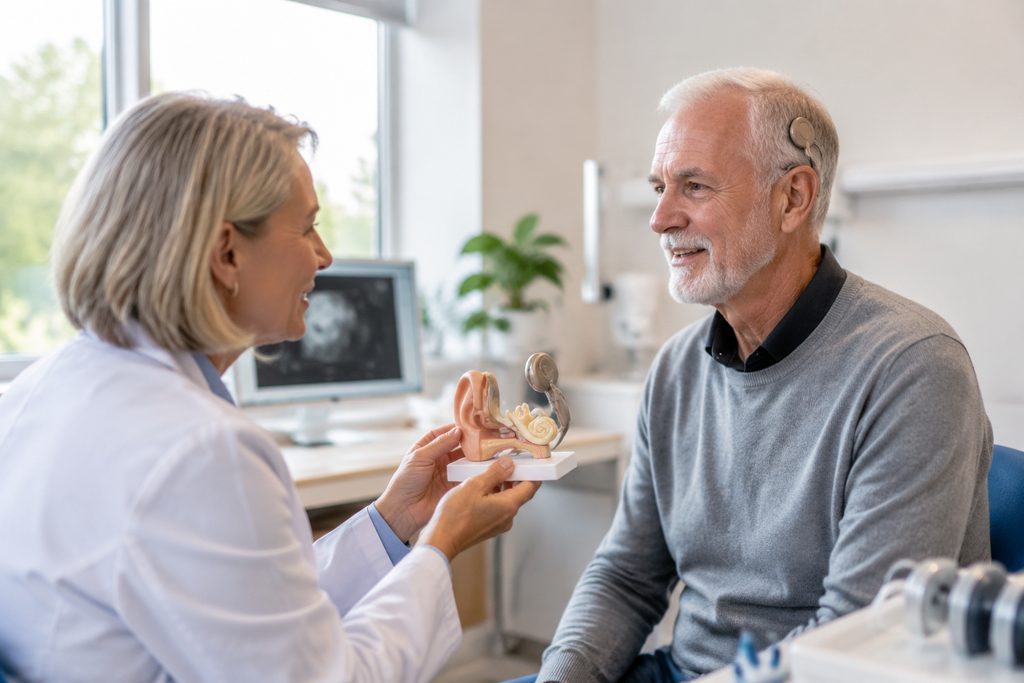
What if the phrase “normal hearing” is the wrong benchmark entirely? For most cochlear implant recipients, the honest answer is that hearing becomes functional and rich — but not identical to biological hearing. That distinction matters more than any price tag or hospital ranking.
Key Takeaways
- Cochlear implants do not restore natural acoustic hearing; they deliver a processed electrical signal the brain must learn to interpret, with most adults achieving open-set speech understanding within 6–12 months of consistent use.
- The cochlear implant cost China ranges from roughly $28,000 to $45,000 per ear depending on device brand and hospital tier, compared to $50,000–$100,000 in the United States.
- Auditory rehabilitation — not the surgery itself — is the strongest predictor of long-term satisfaction. Patients who skip structured listening practice often plateau within the first year.
- Top programs in Shanghai and Beijing run high surgical volumes and mature mapping teams, but no hospital can guarantee a specific hearing outcome; realistic expectations must precede any booking decision.
The Problem: Unrealistic Expectations Meet a Life-Changing Device
Approximately 430 million people worldwide live with disabling hearing loss, according to the World Health Organization. For a subset with severe-to-profound sensorineural loss, hearing aids amplify sound but deliver little clarity. That is where cochlear implants enter the picture.
But here is the tension. A cochlear implant is not a hearing aid. It bypasses damaged hair cells and stimulates the auditory nerve directly. The brain receives electrical pulses, not acoustic waveforms. So when a patient searches “will I hear normally after cochlear implant,” what they are really asking is: Will voices sound like voices? Will music return? Will I understand speech in a noisy restaurant?
Those are the right questions. And the answers are more nuanced than most marketing materials suggest.
Why Cochlear Implant Outcomes Depend on More Than the Surgeon
Chinese cochlear implant centers at major public hospitals perform hundreds of implantations annually. That volume matters for surgical consistency. Full electrode insertion with minimal trauma to residual structures is associated with better speech perception outcomes, particularly in the low-frequency range.
Several centers in Shanghai and Beijing have dedicated cochlear implant teams that include otologic surgeons, audiologists, speech-language pathologists, and mapping specialists. The best cochlear implant hospital Shanghai patients reference typically combines high surgical volume with an in-house rehabilitation department — a structural advantage over programs that only handle the surgery and refer rehabilitation elsewhere.
Mapping Expertise Determines Daily Comfort
After surgery, the external speech processor must be programmed — or “mapped” — to the individual’s electrode responses. This is iterative. The first activation is just a starting point. Over the next 12 months, a patient may need 6 to 10 mapping adjustments.
Programs with experienced audiologists who see thousands of implant users can fine-tune stimulation levels more precisely. That translates to less listening fatigue and faster progress. The difference between an average map and an excellent map is not subtle; it is the difference between tolerating the device for two hours and wearing it for fourteen.
Cost Structure Without the Insurance Maze
The cochlear implant cost China offers reflects a fundamentally different healthcare economy. Device manufacturers charge similar wholesale prices globally, but hospital fees, surgeon fees, and audiology service charges are significantly lower in China than in the United States or Western Europe.
For a self-paying international patient, a unilateral cochlear implant procedure in China — including the device, surgery, initial mapping, and a short hospital stay — typically falls between $28,000 and $45,000. In the US, the same procedure often exceeds $50,000 before insurance negotiations, and can reach $100,000 at major academic centers. That structural gap is why cochlear implant surgery packages abroad have gained traction among patients facing long public-system waits or high out-of-pocket costs at home.
What “Hearing” Actually Feels Like After Activation
Let us be direct. On activation day, almost no one hears “normally.” The first sounds are frequently described as robotic, metallic, or cartoon-like. Some patients cry. Some laugh. Some feel overwhelmed and need the processor turned off after twenty minutes.
Then the brain gets to work.
Neuroplasticity is the mechanism. The auditory cortex must learn to interpret the new electrical signal. This takes time. How long does it take to hear with cochlear implant? For post-lingually deafened adults — those who lost hearing after developing spoken language — meaningful speech understanding often emerges within 3 to 6 months of consistent daily use. Open-set comprehension, meaning understanding speech without visual cues, typically improves steadily through the first year and can continue for several years.
Pre-lingually deafened adults face a longer road. Their auditory pathways did not develop with sound, so the brain must build new connections from scratch. Outcomes vary widely, and some never achieve open-set speech understanding. Honest counseling before surgery is essential.
Music perception remains the most common disappointment. Rhythm is usually preserved. Melody and timbre are harder. Many implant users describe music as flatter or less rich than they remember. Some adapt and enjoy it again; others do not.
Choosing Where to Book: What the Numbers Do Not Tell You
When patients ask how to book cochlear implant in Beijing or evaluate the best cochlear implant hospital Shanghai has available, they often focus on rankings and prices. Those matter. But three other factors deserve equal weight.
| Evaluation Factor | Why It Matters | What to Ask |
|---|---|---|
| Annual implant volume | Surgical consistency and complication management | “How many cochlear implant surgeries did your team perform last year?” |
| In-house rehabilitation | Coordinated mapping and auditory training accelerate progress | “Is speech therapy located in the same hospital or referred elsewhere?” |
| Device brand options | Cochlear, MED-EL, and Advanced Bionics have different electrode designs | “Which manufacturers do you offer, and why?” |
| International patient pathway | Language support and documentation for insurance claims | “Do you provide English-language audiology reports and surgical summaries?” |
Public hospital international departments in Beijing and Shanghai are accustomed to foreign patients. They provide English-speaking coordination and can schedule surgery more predictably than the standard outpatient queue. But the same rule applies as with any Chinese public hospital: you cannot simply email and book a surgery date. A formal evaluation — remotely via video consultation or in person — must happen first.
Some patients explore cochlear implant surgery packages abroad that bundle device, hospital fees, mapping sessions, and accommodation support. These packages can simplify logistics, but read the fine print. Which mapping sessions are included? What happens if a revision surgery is needed? Who handles device warranty claims after you return home?
Practical Considerations: Records, Visas, and Follow-Up Reality
If you are considering a cochlear implant in China, the preparation starts before you book a flight. You will need comprehensive audiological records: recent audiograms, imaging (CT or MRI of the temporal bone), and any prior hearing aid trial documentation. These records determine candidacy and help the surgical team select the appropriate electrode array.
For visa purposes, medical treatment falls under the S2 visa category — a short-stay visa issued for private affairs including medical treatment. The hospital’s international department will provide an invitation letter and treatment confirmation documents to support the application. Family members accompanying you apply for the same S2 category. Processing times vary by embassy, so begin this at least 6 to 8 weeks before your intended travel date.
Payment at Chinese public hospitals is typically required upfront. International departments accept major credit cards and sometimes bank transfers, but confirm payment methods before arrival. If you have insurance, understand that most Chinese public hospitals do not bill insurers directly. You pay, obtain itemized receipts and medical reports in English, and submit for reimbursement. Private international hospitals in China may offer direct billing, but cochlear implant programs are concentrated in large public institutions.
The follow-up reality is the part most international patients underestimate. You will need mapping adjustments after you return home. Some patients fly back to China for annual mapping reviews. Others find a local audiologist experienced with their specific device brand and arrange remote mapping support with the Chinese team. This coordination should be discussed before surgery, not discovered after.
Frequently Asked Questions
Will I hear normally with a cochlear implant?
No, not in the way you remember natural hearing. Most recipients describe the sound as different — initially robotic, then increasingly natural over months. The realistic goal is functional hearing: understanding speech without lipreading, using the phone, and participating in conversations. Many achieve this. “Normal” acoustic hearing is not the benchmark.
How long does it take to hear with a cochlear implant?
Meaningful speech understanding typically develops within 3 to 6 months for post-lingually deafened adults who wear the processor consistently and complete auditory training. The first month is often the hardest. Progress is not linear — expect plateaus and sudden jumps. Pre-lingually deafened adults may need years, and outcomes vary more widely.
Is the cochlear implant cost in China lower because quality is lower?
No. The devices are the same FDA- and CE-approved brands used worldwide. The cost difference comes from lower hospital fees, surgeon fees, and audiology service charges — not from inferior equipment or surgical technique. Top Chinese implant centers use the same surgical approaches and mapping software as Western programs.
What if the implant does not work for me?
This is rare but real. A small percentage of recipients experience limited benefit despite a well-placed electrode array. Pre-operative counseling should include honest discussion of this risk. Device failure, though uncommon, is covered by manufacturer warranties, and revision surgery is available. Ask about the revision rate for your specific device before committing.
Can I book a cochlear implant in Beijing or Shanghai remotely?
You can begin the process remotely — submit records, complete a video consultation, and receive a candidacy assessment. But surgery requires an in-person evaluation first. No reputable hospital will schedule an implant without examining you. The remote step simply tells you whether traveling is worthwhile.
Your Next Step
The decision to pursue a cochlear implant — in China or anywhere else — should rest on realistic expectations, verified surgical volume, and a rehabilitation plan that extends beyond the operating room. We help international patients evaluate top-ranked Chinese hospitals, coordinate remote consultations, and navigate the logistics of treatment in China. We are not a hospital and do not provide diagnoses or medical advice. If you want an honest assessment of whether a Chinese cochlear implant program fits your situation, request a free consultation and our team will help you think through the options.
For more medical information and treatment options in China, visit chinamedservices.com (China Medical Services).
