Cochlear Implant in Shanghai: Why Fudan ENT Hospital Leads Hearing Restoration
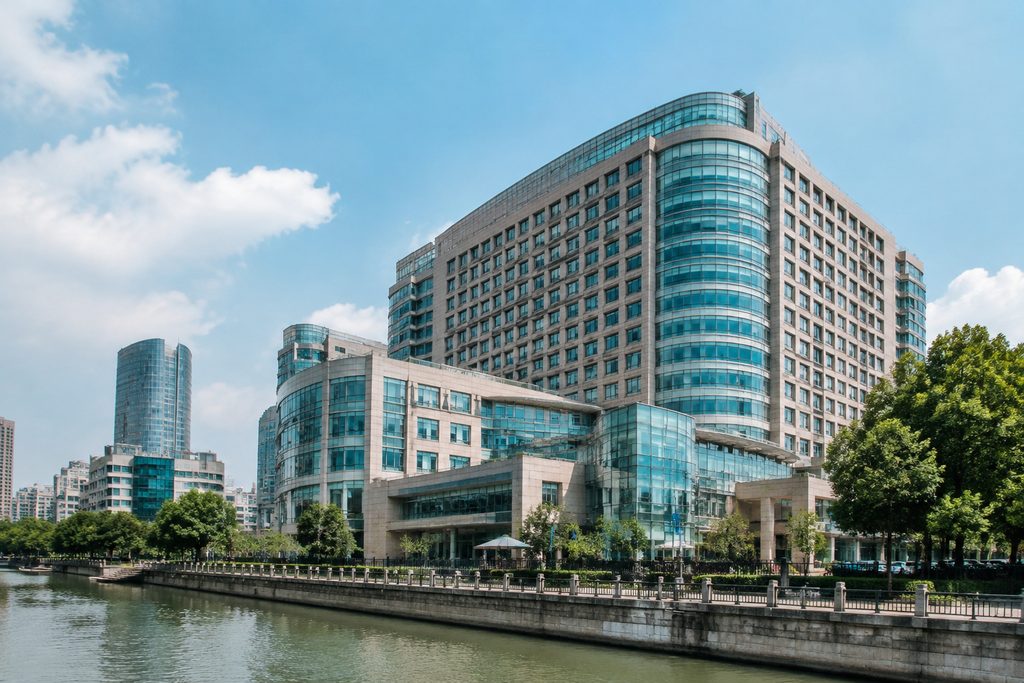
According to the WHO’s 2024 World Report on Hearing, over 430 million people live with disabling hearing loss, a number projected to exceed 700 million by 2050. For those with severe-to-profound sensorineural hearing loss where hearing aids provide little benefit, the cochlear implant remains the only medical technology that can functionally restore a sense of sound. We see many families and adults researching exactly this path, and one name consistently surfaces in their search: the Eye & ENT Hospital of Fudan University in Shanghai. They want to know if the rankings are real, what the cochlear implant cost Shanghai Fudan ENT Hospital actually looks like, and whether traveling across the world for this surgery makes sense.
Our team has coordinated care pathways for international patients at this institution. We don’t perform surgery. We handle the logistics that make the surgery possible. That means we can walk you through what the process demands, where the friction points are, and what you should verify before booking a flight.
How This Actually Works, Step by Step
You don’t simply arrive in Shanghai and get scheduled for surgery the following week. The sequence is methodical, and skipping steps creates delays.
Step 1: You send your existing audiological records. We need a recent audiogram (pure-tone and speech audiometry), a CT scan of the temporal bone, and an MRI if available. Reports must be in English—or we arrange certified translation into Mandarin Chinese. Without complete imaging, the surgical team cannot assess cochlear patency or identify anatomical anomalies that would change the surgical approach.
Step 2: The ENT team reviews your candidacy remotely. This is a written second opinion that confirms whether you meet the audiological and medical criteria for implantation. The fee starts from $300 and is credited in full toward any later coordination service within 90 days. You receive a documented assessment, not a verbal assurance.
Step 3: A video consultation follows. This is where you speak directly with the otology team. You describe your hearing history, your goals, your concerns about surgery. They explain the recommended device—typically choosing between Cochlear, MED-EL, or Advanced Bionics—and why one implant system may suit your specific cochlear anatomy and lifestyle better than another. This consultation ranges from $500 to $800 for a top-specialist session.
Step 4: You receive a treatment proposal and cost estimate. Only after the team has reviewed your scans and spoken with you do they issue a formal proposal. This document outlines the surgical plan, the implant device, the hospital stay duration, and the estimated fees. You now have something concrete to evaluate.
Step 5: You apply for your visa. Medical treatment in China falls under the S2 short-stay visa category. Your application package requires the hospital’s invitation letter, treatment confirmation, and proof of financial means. Processing times vary by your home country’s Chinese embassy, but plan on three to four weeks. Rushing this step is the single most common cause of rescheduled surgery dates.
Step 6: You travel, undergo final pre-op assessments, and have surgery. The hospital repeats key audiological tests and runs pre-operative labs. Surgery typically lasts two to three hours. Inpatient stay is usually three to five days. The implant is not activated yet.
Step 7: Initial activation and mapping. About three to four weeks post-surgery, the external processor is activated and programmed. This is when you begin hearing through the implant. Multiple mapping sessions follow over the next months.
Fudan ENT Hospital: What the Ranking Actually Means
The Eye & ENT Hospital of Fudan University consistently tops China’s national specialty reputation rankings for otorhinolaryngology. In the Fudan University Hospital Rankings—China’s most authoritative hospital evaluation system—the ENT specialty list ranks hospitals by peer reputation and clinical output. Fudan ENT has held the number one position in this specialty ranking for over a decade. Not the top tier. Not “among the best.” Rank one, sustained.
That reputation is built on volume and complexity. The hospital’s otology and neurotology division performs over 1,000 cochlear implant surgeries annually, including difficult cases involving cochlear ossification, inner ear malformations, and revision surgeries where a previous implant failed. Its audiology center houses one of the largest vestibular and electrophysiological testing labs in Asia.
When someone searches for the best hospital for cochlear implant China reviews, they are usually trying to decode whether a high ranking translates into actual surgical quality. The answer depends on what you measure. Complication rates at top-tier Chinese ENT centers are comparable to those reported in Western registries—device failure below 2%, major surgical complications below 1%. But the patient experience differs. The hospital is enormous. Daily outpatient volume exceeds 8,000 visits. Navigating registration, payment windows, audiology labs, and the surgical ward without Mandarin fluency is disorienting. That is not a criticism of the hospital. It is a description of reality inside any Chinese public tertiary center.
For international patients, the hospital operates a dedicated international medical services pathway. This is separate from the general outpatient queue. Appointments are pre-scheduled. A coordinator handles registration and billing. Consultations include English-capable staff, though complex audiological discussions may still require a bilingual companion who understands both the medical terminology and the cultural context of how Chinese doctors communicate risk and prognosis.
A Realistic Timeline
| Stage | Activity | Typical Duration |
|---|---|---|
| Week 1–2 | Document collection, translation, and initial submission | 5–10 business days |
| Week 3–4 | Remote candidacy review + written second opinion | 7–14 days from complete submission |
| Week 4–5 | Video consultation scheduling and completion | 3–7 days to schedule; 1 hour for session |
| Week 5–6 | Treatment proposal issuance and review | 3–5 days after consultation |
| Week 6–10 | S2 visa application and processing | 3–4 weeks (varies by embassy) |
| Week 10–11 | Travel to Shanghai; pre-op assessments | 2–3 days of testing |
| Week 11 | Surgery and inpatient recovery | 1 day surgery; 3–5 days hospitalization |
| Week 15 | Initial activation and first mapping | 3–4 weeks post-surgery |
| Month 2–6 | Multiple follow-up mapping sessions | Ongoing; some can be done locally if your home audiologist coordinates |
This timeline assumes no unexpected findings. If the CT scan reveals cochlear fibrosis or a common cavity malformation, the surgical plan changes. Additional imaging may be ordered. The schedule stretches. Build buffer into your planning.
What Can Go Wrong—and What Happens Then
We’ve seen cases proceed smoothly. We’ve also seen cases hit obstacles. Being honest about the failure modes is how you prepare properly.
Your candidacy is borderline. Maybe your speech discrimination scores are better than expected, or your cochlear nerve appears hypoplastic on MRI. The Chinese surgical team may recommend against implantation or suggest a staged approach—implant one ear and reassess. You can seek a second opinion elsewhere, but you’ve already invested time and money. This is why we emphasize the remote review before travel. It costs from $300 to learn you are not a candidate. That stings. But flying to Shanghai to learn the same thing costs thousands.
The implant device you want is not available. China’s National Medical Products Administration approves cochlear implant systems on its own timeline. All three major manufacturers have devices registered in China, but specific processor models may differ from what is available in your home country. Confirm the exact model number before you commit.
Post-operative infection or device extrusion. Rare, but real. The rate of surgical site infection in cochlear implantation is approximately 1–3% in published series. Fudan ENT’s otology ward manages these complications routinely. The bigger challenge for an international patient is follow-up care. If a flap complication develops after you return home, your local ENT may not be comfortable managing it. You need a plan for who handles complications—ideally a local surgeon identified before you travel.
Mapping mismatch. After activation, your implant needs sequential programming adjustments. Fudan’s audiologists will do the first several mappings. But long-term mapping should ideally be done by an audiologist near your home who works with the same device manufacturer. Confirm that your local clinic will accept a patient mapped initially in China. Some will not. Ask before surgery.
Evaluating Costs: What You Actually Pay
We get this question constantly: how much is cochlear implant surgery in China? The answer varies by device choice and hospital pathway, but here is what the numbers typically look like at a top public hospital like Fudan ENT.
| Cost Component | Estimated Range (USD) | Notes |
|---|---|---|
| Implant device (unilateral) | $18,000–$28,000 | Varies by manufacturer and processor model; the device itself is the dominant cost |
| Surgical fees and hospitalization | $6,000–$10,000 | Includes surgeon fee, operating room, anesthesia, 3–5 day ward stay |
| Pre-operative diagnostics | $800–$1,500 | CT, MRI, comprehensive audiological battery, pre-op labs |
| Initial activation and mapping (first 3 sessions) | $1,500–$2,500 | Usually bundled into the surgical package or charged per session |
| Total estimated unilateral implant | $26,300–$42,000 | Compare: same procedure in the US typically $50,000–$100,000+ |
The cochlear implant cost Shanghai Fudan ENT Hospital question has a second layer: the international patient pathway adds coordination fees. Hospital appointment coordination starts from $300. A bilingual medical companion for the surgical day and key audiology appointments runs from $300 per day. These are not hidden markups on the surgery. They pay for the logistical labor that makes the surgery accessible to someone who does not speak Mandarin or understand the Chinese hospital system.
Bilateral implantation—both ears during the same surgery or staged—roughly doubles the device cost but does not double the hospitalization cost. Sequential bilateral surgery is more common at Fudan ENT, with the second side implanted six to twelve months after the first, once the initial ear shows stable hearing outcomes.
Practical Considerations: Records, Visa, and Follow-Up Abroad
Some logistical realities that don’t fit neatly into a timeline but determine whether the whole thing works.
Medical records. Chinese otologists want to see the raw data, not just the summary report. Send the actual audiogram graph, not just the written interpretation. Send the DICOM files of your CT and MRI, not just the radiologist’s report. If your home hospital cannot export DICOM files onto a disc or USB, we help arrange that. Incomplete records are the number one reason candidacy review stalls.
Visa. Again: S2 visa, not M. The M visa is for commercial trade. Applying under the wrong category gets your application rejected, and a rejection on your record complicates re-application. The hospital’s international department issues a formal invitation letter with the hospital’s official stamp. That letter is essential. Without it, the consulate will not process a medical S2 application.
Payment. Chinese public hospitals require pre-payment for scheduled surgeries. The hospital issues a deposit invoice, and you settle the balance before discharge. International credit cards are accepted at the international services counter, but wire transfer in advance is more common for large amounts. Private international hospitals in Shanghai—like Jiahui or United Family—offer direct insurance billing, but Fudan ENT is a public institution. You pay, then seek reimbursement from your insurer. Confirm your policy’s out-of-network coverage for overseas surgery before committing.
Language. The otology team at Fudan includes surgeons who publish in English-language journals and present at international conferences. Their clinical English is functional for surgical consent discussions. But the audiology team, the ward nurses, the billing desk, the CT technician—these interactions happen in Mandarin. A bilingual companion bridges this gap. It is not a luxury. It is the difference between a 45-minute registration process and a three-hour one where you accidentally pay the wrong window and have to queue again.
Follow-up at home. Cochlear implant outcomes depend on mapping and auditory rehabilitation over months and years. Fudan’s audiology team will provide your MAP settings and programming parameters. Your local audiologist needs to be willing to take over. Some manufacturers offer remote mapping support where a local audiologist connects with the manufacturer’s clinical specialist via telemedicine. Ask your device manufacturer about this before choosing an implant system.
Frequently Asked Questions
Surgical candidacy for long-duration deafness depends on cochlear patency and auditory nerve integrity, not on the hospital’s reputation. Fudan ENT’s otology team evaluates each case individually. Adults deafened for 10 or 20 years can still achieve meaningful open-set speech understanding if the cochlea is not fully ossified and the auditory pathway remains stimulable. But outcomes are more variable than in recently deafened patients. The pre-operative imaging and promontory stimulation testing—done during your candidacy workup—provide the best prediction.
Some medical tourism facilitators advertise all-inclusive packages. We approach it differently. A “package” implies a fixed price and a fixed scope, but surgery does not work that way. What we offer is transparent, line-item coordination: remote candidacy review, visa support, appointment scheduling, bilingual companion services, and hospital admission coordination. The hospital’s surgical and device fees are paid directly to the hospital. Our coordination fees are paid to us. There is no bundled markup. This lets you see exactly what each component costs and make decisions accordingly.
Cochlear implants do not restore normal hearing. They provide a signal the brain must learn to interpret. Most recipients achieve improved speech perception, but a small percentage—estimates range from 1% to 5%—experience limited benefit despite a properly functioning device. This is not a surgical failure. It reflects the complex neurobiology of auditory deprivation. Fudan ENT’s team counsels patients on realistic expectations before surgery. If device failure occurs, revision surgery is available. If the issue is central auditory processing, aural rehabilitation therapy is the primary intervention, not more surgery.
The savings depend entirely on your home country’s pricing. A unilateral implant in the United States frequently costs $80,000 to $100,000 or more when device, surgical, and hospital fees are combined. At Fudan ENT, the same procedure typically ranges from $26,000 to $42,000. That is a meaningful difference—roughly 50% to 70% less. But you must factor in international travel, accommodation for several weeks, visa fees, coordination services, and the cost of follow-up mapping at home. The net savings are real but not as dramatic as the sticker-price comparison suggests. We recommend building a full budget before committing.
Your Next Step
Fudan ENT Hospital in Shanghai is not the only place to get a cochlear implant. But for patients who need complex otologic surgery performed by a team that handles high volumes of difficult cases, it is one of the strongest options in Asia. The question is whether you are a candidate, whether the logistics work for your situation, and whether the financial equation makes sense.
Our role is narrow. We do not perform surgery, we do not influence surgical decisions, and we do not promise outcomes. What we do is reduce the friction between you and a top-tier Chinese surgical team. If you have your audiological records ready, you can request a free initial consultation with our coordination team. We’ll review your situation, explain the likely pathway and costs, and help you decide whether to proceed with a
For more medical information and treatment options in China, visit chinamedservices.com (China Medical Services).
