Colonoscopy Frequency Guide: When to Screen and What It Costs in China
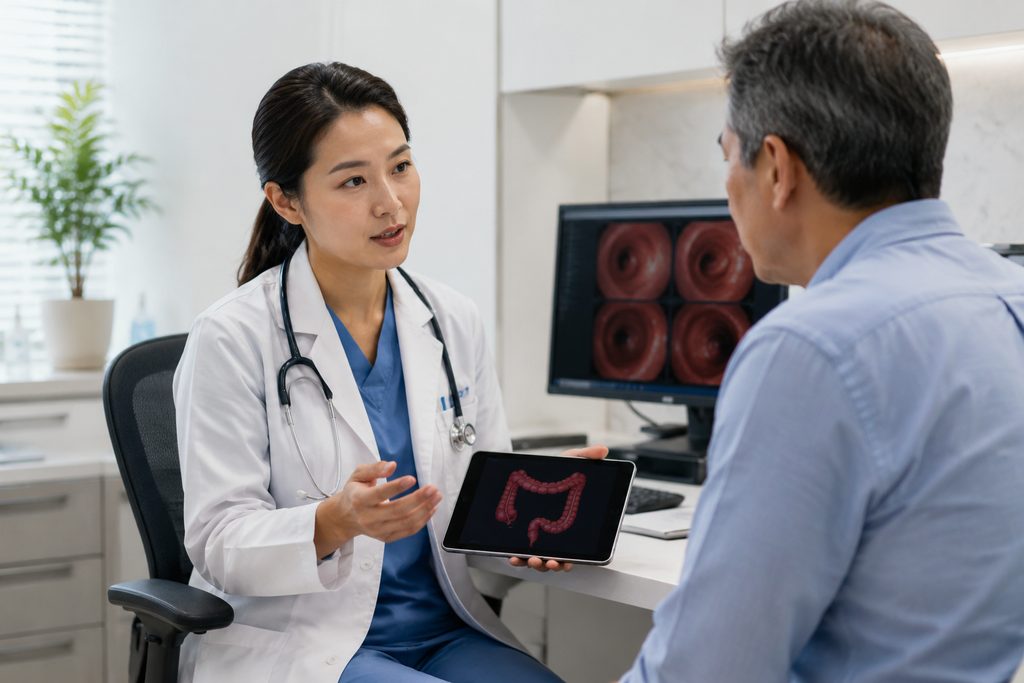
How Often Should I Get a Colonoscopy? A Practical Guide for International Patients Considering China
Colorectal cancer kills roughly 53,000 Americans every year, yet it remains one of the most preventable malignancies when caught early. The American Cancer Society now recommends starting screening at age 45 for average-risk adults. If you are searching “how often should I get a colonoscopy,” you are already ahead of most people. The answer depends on your risk profile, family history, and prior findings. For international patients weighing where to undergo the procedure, colonoscopy cost China international patient comparisons reveal savings of 60–80% versus US private-pay rates, without sacrificing procedural quality at top-tier facilities. This guide breaks down screening intervals, safety benchmarks, hospital selection, and the logistics of traveling to China for a colonoscopy.
Key Takeaways
- Average-risk adults should begin colonoscopy screening at age 45 and repeat every 10 years if results are clear, per the American Cancer Society and US Multi-Society Task Force.
- High-risk individuals—family history of colorectal cancer, prior polyps, inflammatory bowel disease—need screening every 3 to 5 years, sometimes earlier than age 45.
- Top Chinese gastroenterology centers in Beijing and Shanghai perform colonoscopies at 60–80% lower cost than US hospitals, with adenoma detection rates comparable to Western benchmarks.
- Language barriers and navigating public hospital registration are real challenges; international patients typically use hospital international departments or coordination services for smoother access.
The Problem: Screening Confusion and Cost Barriers
According to a 2023 study published in Gastroenterology, roughly 30% of eligible adults in the United States are not up to date with colorectal cancer screening. The reasons are consistent: confusion about intervals, fear of the preparation, and cost. An uninsured patient in the US can face a colonoscopy bill of $2,500 to $5,000, and even insured patients often pay $1,000–$2,000 in deductibles and coinsurance after polyp removal. The situation in Canada and the UK involves long wait times for non-urgent colonoscopies—sometimes 6 to 12 months.
That delay matters. The National Cancer Institute reports that five-year survival for localized colorectal cancer exceeds 90%. For distant-stage disease, it drops to around 14%. Screening is not just a box to tick. It is the single most effective intervention for preventing colorectal cancer entirely, because polyps can be removed during the same procedure before they ever turn malignant.
So the real question is not just how often. It is whether you can access a high-quality colonoscopy when you need one, at a price that does not force you to postpone it.
Why China Delivers Results for Colonoscopy Screening
China’s top-tier hospitals handle enormous clinical volume. A single gastroenterology department at a major Beijing or Shanghai teaching hospital may perform 15,000 to 20,000 colonoscopies annually. That repetition builds procedural fluency. Western endoscopists at high-volume centers might perform 500 to 1,000 colonoscopies per year. The gap in repetition is not a marker of better quality by itself, but volume correlates with polyp detection skill, especially for flat or subtle lesions that less experienced operators miss.
Clinical Volume and Adenoma Detection Rates
The adenoma detection rate (ADR)—the percentage of average-risk screening colonoscopies in which at least one precancerous polyp is found—is the single most important quality metric for colonoscopy. US guidelines set a minimum ADR of 25% for men and 15% for women. Leading Chinese academic centers report ADRs in the 30–40% range, according to studies published in the Chinese Medical Journal and Journal of Digestive Diseases. That means Chinese specialists at top hospitals are finding and removing precancerous polyps at rates that meet or exceed Western benchmarks.
Why does this matter for you? Because a colonoscopy is only as good as the operator’s ability to find polyps. A cheap procedure with a low ADR is a false economy. A thorough procedure at a high-volume Chinese center is genuinely protective.
Technology and Efficiency at Scale
Chinese teaching hospitals adopted high-definition colonoscopes and narrow-band imaging (NBI) years ago. Many centers now use artificial intelligence–assisted polyp detection systems. A 2022 randomized trial in The Lancet Gastroenterology & Hepatology found that AI-assisted colonoscopy increased adenoma detection by approximately 8 percentage points compared to standard white-light colonoscopy. Several Chinese hospitals were early adopters of these systems, integrating them into routine screening workflows rather than treating them as experimental add-ons.
Operationally, the workflow is streamlined. Patients typically complete pre-procedure blood work and an ECG on the same day as their consultation. The colonoscopy itself is scheduled within days, not months. For international patients, this means a single trip can cover consultation, preparation, procedure, and pathology results in under a week.
Cost Advantage Without Quality Compromise
Let us address the obvious objection directly. Lower cost does not mean lower quality in this context. The structural reasons for the price difference are straightforward: lower labor costs for nurses and support staff, lower facility overhead, and a high-volume model that spreads fixed costs across more procedures. The equipment is the same—Olympus and Fujifilm scopes dominate Chinese endoscopy suites just as they do in the US and Europe.
A colonoscopy price comparison China vs USA shows the gap clearly. In the United States, a screening colonoscopy without polypectomy averages $2,750 before insurance. With polyp removal, the bill often exceeds $4,000. In China, the same procedure at a top public hospital’s international department typically ranges from $500 to $1,200, including sedation, facility fees, and pathology on any removed tissue. Private international hospitals in Shanghai or Beijing charge $1,500 to $2,500—still below the US cash price but with English-speaking staff and Western-style service.
| Procedure Component | US Average (USD) | China Top Public Hospital Int’l Dept (USD) | China Private International Hospital (USD) |
|---|---|---|---|
| Screening colonoscopy (no polyps) | $2,500–3,500 | $500–800 | $1,500–2,000 |
| Colonoscopy with polypectomy | $3,500–5,000 | $700–1,200 | $1,800–2,500 |
| Pathology on removed tissue | $300–600 | $50–150 | $150–300 |
| Anesthesia/sedation | $500–1,000 | $100–200 | $200–400 |
Prices vary by hospital and case complexity. Always request a written estimate before scheduling.
Screening Intervals: What the Guidelines Actually Say
The answer to “how often should I get a colonoscopy” depends on what your last colonoscopy found and your personal risk factors. Here is the breakdown, based on the 2021 US Multi-Society Task Force on Colorectal Cancer guidelines and the American Cancer Society.
Average-Risk Adults: Every 10 Years
If you are between 45 and 75 years old, have no family history of colorectal cancer, no personal history of polyps or inflammatory bowel disease, and your last colonoscopy was completely clean with adequate bowel preparation, the recommended interval is 10 years. Not 5. Not 3. Ten years. Many patients are told to return sooner than guidelines recommend, which leads to unnecessary procedures and cost.
But here is the catch: the 10-year interval only applies if your colonoscopy was high quality. That means the endoscopist reached the cecum, your bowel prep was rated adequate or excellent, and no polyps were found. If any of those conditions were not met, the interval shortens.
If Polyps Were Found: 3 to 5 Years
The type, number, and size of polyps determine your next interval. One or two small tubular adenomas (under 10 mm) typically mean a repeat colonoscopy in 5 to 7 years. Three or more adenomas, or any adenoma 10 mm or larger, or any polyp with villous features or high-grade dysplasia, usually means a repeat in 3 years. Sessile serrated polyps follow similar logic. Your endoscopist should give you a specific recommendation based on pathology results.
If you had 10 or more adenomas in a single procedure, or very large sessile polyps removed piecemeal, you may need a repeat in 6 to 12 months. These are uncommon scenarios, but they demand closer surveillance.
Family History: Earlier and More Often
A first-degree relative (parent, sibling, child) diagnosed with colorectal cancer or advanced adenoma before age 60 means you should start screening at age 40, or 10 years before the youngest affected relative’s diagnosis—whichever comes first. The repeat interval is usually every 5 years. If the relative was diagnosed at 60 or older, screening starts at 40 but the interval may follow average-risk guidelines.
If you have a known hereditary syndrome such as Lynch syndrome or familial adenomatous polyposis, screening often begins in the early 20s and repeats every 1 to 2 years. This is a specialized situation requiring genetic counseling and a dedicated surveillance plan.
Is Colonoscopy Safe in Shanghai Hospitals? What the Data Shows
Safety is the first question most international patients ask. The short answer: yes, colonoscopy at accredited Shanghai hospitals is safe, with complication rates comparable to Western centers. A 2021 retrospective analysis of over 300,000 colonoscopies in Shanghai published in the Journal of Gastroenterology and Hepatology reported a perforation rate of 0.02% and a post-polypectomy bleeding rate of 0.3%. Those figures align closely with US and European benchmarks.
Shanghai’s top gastroenterology departments—at Zhongshan Hospital, Ruijin Hospital, and Renji Hospital—all maintain international patient departments with English-speaking coordinators. These hospitals are accredited by the Chinese Ministry of Health and several hold JCI certification or equivalent international quality standards. The endoscopes are modern, the sedation protocols follow international guidelines, and pathology labs process specimens within 3 to 5 business days.
What you should know: public hospital international departments are not the same as private international hospitals. The former are wings of large public teaching hospitals with dedicated staff for foreign patients. The latter—like Jiahui International Hospital or Shanghai United Family Hospital—are standalone private facilities with Western-trained physicians and direct insurance billing. Both are safe. The choice depends on your budget and service preferences.
Best Gastroenterology Hospital Beijing Colonoscopy Package: What to Expect
Beijing offers some of China’s strongest gastroenterology programs. Peking Union Medical College Hospital (PUMCH), Peking University Third Hospital, and Beijing Friendship Hospital all rank among the top gastroenterology departments in the country. For international patients seeking a best gastroenterology hospital Beijing colonoscopy package, the typical offering includes the procedure, sedation, pathology, and a written report in English.
PUMCH’s international medical services department is a common entry point. The workflow usually looks like this: you send your medical history and any prior colonoscopy reports, a gastroenterologist reviews them, you schedule a consultation and procedure date, you arrive in Beijing 2 days before the procedure for pre-op labs and bowel preparation, and you undergo the colonoscopy under sedation. Results are discussed the same day, with pathology following within the week.
Package pricing at PUMCH’s international department typically starts around $800 and can reach $1,500 depending on whether polyps are removed and how many biopsies are taken. Private international hospitals in Beijing, such as Beijing United Family Hospital, charge $2,000 to $3,000 for a comparable package with more Western-style amenities.
How to Book Colonoscopy Medical Tourism China: A Step-by-Step Timeline
Patients who search book colonoscopy medical tourism China usually want a clear sense of the process. Here is what a realistic timeline looks like.
Day 1–7: Remote consultation. You send recent medical records, a list of medications, and any prior colonoscopy or imaging reports. A gastroenterologist reviews them and confirms you are a suitable candidate for the procedure abroad. If you are on blood thinners, you will receive instructions on when to stop them.
Day 8–14: Scheduling and visa. The hospital confirms a procedure date. You apply for an S2 visa at your local Chinese embassy or consulate, using the hospital’s invitation letter and medical records as supporting documents. S2 is the short-stay visa category used for private affairs including medical treatment. Processing typically takes 4 to 7 business days.
Day 15–16: Arrival and pre-op. You fly into Beijing or Shanghai. A coordinator meets you at the airport if you have arranged pickup. You visit the hospital for blood work, an ECG, and a final consultation with the endoscopist.
Day 17: Bowel preparation. You begin the split-dose prep—usually polyethylene glycol solution—the evening before the procedure. This is the least pleasant part of the process, but it is identical to what you would do in the US or Europe.
Day 18: The colonoscopy. The procedure itself takes 20 to 40 minutes under sedation. You wake up in recovery, receive preliminary results, and are discharged the same day. If polyps were removed, you receive dietary and activity instructions.
Day 19–25: Pathology and follow-up. Pathology results arrive within 3 to 5 business days. You receive a written report in English, including recommendations for your next screening interval. You then fly home.
Total time in China: 7 to 10 days. Total cost including procedure, accommodation, and flights: typically $2,500 to $5,000, depending on hospital choice and travel class. That is often less than the US cash price for the procedure alone.
Practical Considerations: Documentation, Payment, and Insurance
Before you commit to a colonoscopy in China, there are several practical matters to handle.
Medical records. Bring all prior colonoscopy reports, pathology slides or reports, and a list of current medications. If your prior colonoscopy found polyps, the pathology details matter—the type of polyp determines your next interval. Chinese endoscopists will want to see the original reports, not just a summary.
Visa. The S2 visa is the correct category for short-term medical treatment in China. You will need an invitation letter from the hospital, proof of appointment, and your passport. The S2 is typically issued for 30 to 90 days, which covers the entire colonoscopy timeline. If you plan to stay longer than 180 days, an S1 visa applies. Always confirm current requirements with the Chinese embassy in your country, as rules change.
Payment. Chinese public hospitals, including their international departments, generally require prepayment. Credit cards are accepted at international departments and private hospitals, but be aware that some international cards may incur foreign transaction fees. Private international hospitals often bill insurance directly. Public hospital international departments typically require you to pay upfront and seek reimbursement from your insurer afterward.
Insurance. Check your policy before traveling. Some international health insurance plans cover treatment in China, but many US-based plans do not. If you have a high-deductible plan or are uninsured, the out-of-pocket savings in China can be substantial even after travel costs. Request an itemized receipt and procedure report for any reimbursement claim.
Language. In public hospital international departments, English-speaking staff are available, but the level of fluency varies. In private international hospitals, English is the working language. If you choose a public hospital, consider whether you want a bilingual medical companion to help with registration, payment, and translation. This is a personal choice, not a requirement.
Frequently Asked Questions
The screening interval does not change based on where you have the procedure. If your colonoscopy in China is clean and you are average-risk, the recommendation remains every 10 years. If polyps are found, the interval follows the same guidelines as anywhere else—3 to 5 years depending on polyp type and number. The location of the procedure does not alter the biology of your colon.
It depends on your policy. Some international health insurance plans and expatriate policies cover treatment in China. Most US domestic plans do not, meaning you would pay out of pocket and potentially submit for out-of-network reimbursement. The good news: even without insurance coverage, the total cost in China—procedure plus travel—is often lower than the US out-of-pocket cost for the procedure alone. Check your policy’s international coverage terms before booking.
What happens if a polyp
For more medical information and treatment options in China, visit chinamedservices.com (China Medical Services).
