Is a Colonoscopy Safe in China? Our Digestive Safety Companion
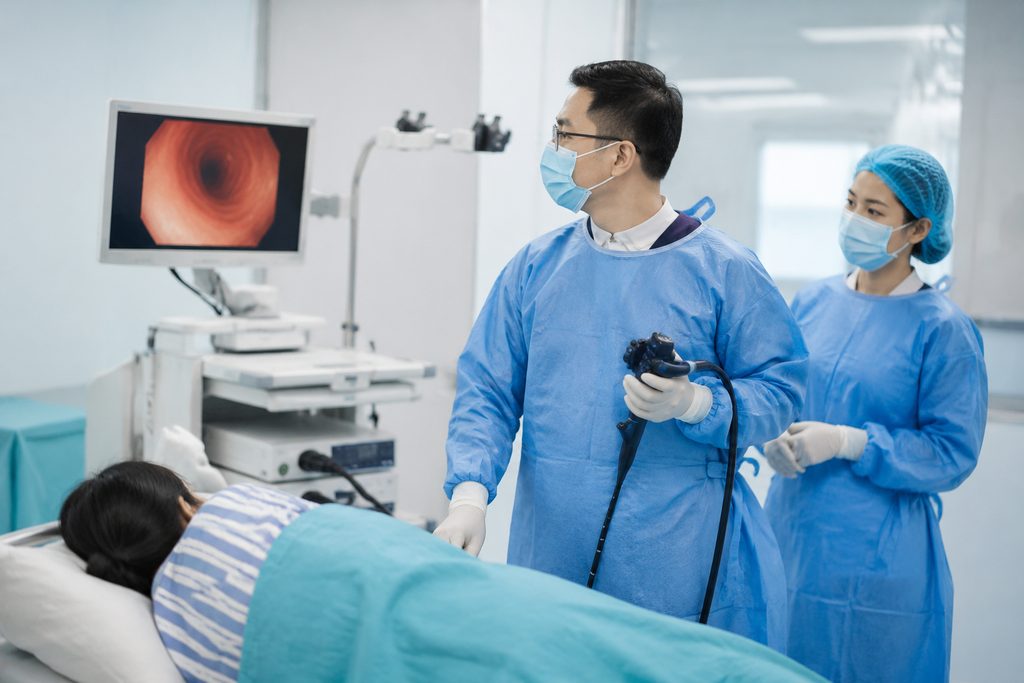
Is a Colonoscopy Safe in China? The Short Answer
Yes — when performed at a JCI-accredited or Fudan-ranked top-tier hospital, a colonoscopy in China meets international safety benchmarks for infection control, sedation protocols, and endoscopic technique. The colonoscopy cost China patients typically pay ranges from $300 to $800 at public hospital international departments, or $600 to $1,500 at private international hospitals. That’s a fraction of the $2,000 to $5,000 commonly charged in the United States.
But the real answer is more nuanced than a price tag. Safety depends on three things: the facility’s accreditation, the endoscopist’s case volume, and the quality of bowel preparation. A colonoscopy is only as safe as the weakest link in that chain. Our team has seen patients arrive with assumptions shaped by Western media, only to discover that China’s top gastroenterology departments handle endoscopy volumes that would be unimaginable in most Western centers. Volume matters. It drives competency.
Who This Is Right For — and Who It Isn’t
A screening or diagnostic colonoscopy in China makes sense for a specific profile of international patient. You’re a good candidate if:
- You’re already in China for work, study, or extended travel and need the procedure done locally
- You’re planning a medical tourism trip and want to bundle a colonoscopy with other health screenings
- You have a family history of colorectal cancer and want a high-volume endoscopy center without a multi-month wait
- You’re uninsured or facing high deductibles in your home country and the math for out-of-pocket payment works in China’s favor
- You need a second opinion on polyps or biopsy results and prefer to have the procedure redone rather than just the slides reviewed
Who should not pursue this? If you have an active inflammatory bowel disease flare requiring complex biologic management, unstable cardiovascular disease that makes sedation riskier, or a known bleeding disorder that hasn’t been cleared by a hematologist — stay home and get treated where your full medical history lives. Same goes for anyone who cannot tolerate the idea of navigating a non-English-speaking environment, even with a bilingual companion. The procedure itself may be safe, but the surrounding logistics require a tolerance for unfamiliar systems. Be honest with yourself about that.
The Options, Compared
Not all colonoscopy experiences in China are the same. The table below compares the three genuine pathways available to foreign patients.
| Factor | Public Hospital International Dept | Private International Hospital | Public Hospital Standard Dept |
|---|---|---|---|
| Typical cost (colonoscopy only) | $300–$800 | $600–$1,500 | $150–$400 |
| English-speaking staff | Yes, in international department | Yes, throughout | Rarely |
| JCI accreditation | Some (varies by hospital) | Most major chains | Rare |
| Wait time for appointment | 3–10 days | 1–5 days | Same day to 3 days (but queueing on-site) |
| Sedation type | Propofol (deep sedation) standard | Propofol or conscious sedation | Often unsedated or conscious sedation |
| Insurance direct billing | Usually not — pay first, claim later | Yes, with major international insurers | No |
| Bilingual companion needed | Helpful but not essential | Not needed | Essential |
The right column suits a specific reader: someone already living in China, comfortable with Mandarin, and willing to trade comfort for cost. The middle column suits patients who want a Western-style experience with minimal friction. The left column — public hospital international departments — is where we see most medical tourism patients land. It offers the best balance of clinical expertise and price. A JCI accredited hospital colonoscopy Shanghai or Beijing typically falls in this category, and the physicians there are often the same specialists who run the standard departments.
Why Chinese Endoscopists See More Colons Than Almost Anyone
Here’s the thing most safety discussions miss. The average gastroenterologist at a top Chinese hospital performs 3,000 to 5,000 colonoscopies per year. In the United States, the annual volume for a busy endoscopist is typically 1,000 to 1,500. That’s not a criticism of American medicine — it’s a function of population density and centralized hospital systems.
Volume translates directly to polyp detection rates. The adenoma detection rate (ADR) — the percentage of screening colonoscopies where a precancerous polyp is found — is the single most important quality metric in colonoscopy. International benchmarks consider an ADR of 25% or higher acceptable for male patients. Top Chinese endoscopy centers report ADRs in the 30–40% range. Higher detection means fewer missed lesions. Fewer missed lesions means a safer procedure in the only way that actually matters: it finds what it’s supposed to find.
But volume alone doesn’t guarantee safety. Infection control is where accreditation becomes non-negotiable. JCI standards require documented reprocessing protocols for endoscopes, including high-level disinfection with validated chemical agents and routine biological monitoring. Not every Chinese hospital does this consistently. The ones in our network do, and we verify it. That’s not a marketing line — it’s the difference between a safe procedure and a gamble.
How Much Does a Colonoscopy Cost in Beijing and Shanghai?
Let’s get specific. The phrase “how much does a colonoscopy cost in Beijing” is one of the most common queries we receive, and the honest answer is: it depends on four variables.
First, the hospital tier. A standard public hospital department in Beijing might charge $150 to $250 for the procedure itself. The international department of the same hospital charges $400 to $700, because you’re paying for English coordination, faster scheduling, and a more comfortable environment. Second, whether polyps are removed. A diagnostic colonoscopy that finds nothing costs less than a therapeutic one where polyps are excised and sent for pathology. Polyp removal can add $100 to $400 depending on size and number. Third, anesthesia. Unsedated colonoscopy is cheaper but uncomfortable. Propofol sedation adds $80 to $150. Fourth, pre-procedure testing. Some hospitals require blood work and an ECG before sedation, adding another $50 to $100.
Shanghai is comparable, with private international hospitals like Jiahui and United Family charging $800 to $1,500 all-in. A medical tourism China colonoscopy package through a coordinator might bundle the procedure, pathology, and bilingual accompaniment into a single price from $600 to $1,200, depending on the hospital. Always ask what the package includes. Some include bowel prep medication and post-procedure transport. Others don’t.
Practical Considerations: Records, Visas, and the Language Barrier
If you’re traveling to China specifically for a colonoscopy, the logistics matter as much as the medicine. Here’s what actually applies.
Bring your medical records. If you’ve had a previous colonoscopy, bring the report and any pathology slides. If you have a family history of colorectal cancer, bring documentation. Chinese gastroenterologists will want to see it. Records in English are generally acceptable at international departments, but translations help. Our team handles this as part of our coordination service.
Visa category: for medical treatment in China, the S2 visa is the applicable short-stay category. It covers private affairs including medical treatment, and requires supporting documentation from the hospital. Your accompanying family members also apply for S2. Processing times vary by embassy, so start at least 4–6 weeks before your planned procedure date. We provide visa guidance documents but never guarantee approval — that’s the consulate’s call.
Payment is almost always upfront. Public hospital international departments require prepayment before the procedure. Private international hospitals may bill your insurer directly if they have an agreement, but don’t assume it — verify before you book. Credit cards are widely accepted at international departments, but have a backup payment method ready. Cash limits apply for large amounts.
Language is the biggest practical barrier. Even at international departments, the endoscopist may speak limited English. The nurses almost certainly won’t. A bilingual medical companion — someone who can translate your symptoms, explain the bowel prep instructions, and advocate for you during recovery — transforms the experience. It’s the difference between feeling like a patient and feeling like a piece of cargo. From $300 per day, it’s the cheapest insurance you’ll buy for this trip.
Follow-up after returning home: make sure you get the full written report and pathology results in English before you leave. Most international departments provide English reports on request. If polyps are removed, the pathology takes 3–7 days. Plan your departure accordingly, or arrange to have results emailed to you. Your home gastroenterologist will need them.
Frequently Asked Questions
Yes. Foreigners can access colonoscopy services at any public hospital, but the realistic pathway is through the international department or a private international hospital. Standard public departments require on-site registration, Chinese-language navigation, and often same-day queueing that starts at 6 AM. The international department removes most of that friction. You’ll need your passport, medical records, and payment upfront. No special medical visa is required for the procedure itself — the S2 visa covers short-term medical treatment.
At accredited hospitals, yes. JCI-accredited facilities and Fudan-ranked top-tier hospitals follow internationally recognized protocols for sedation, infection control, and endoscopic technique. The risk profile is comparable to Western centers. The gap is in consistency — not all Chinese hospitals meet this standard. That’s why facility selection matters more than the country-level question. A colonoscopy at an unaccredited county hospital is not the same as one at a top-tier teaching hospital. Choose the facility first, then decide if China makes sense.
Perforation and post-polypectomy bleeding are the two serious complications, occurring in roughly 1 in 1,000 and 1 in 100 procedures respectively — rates similar to Western centers. Top Chinese hospitals have interventional radiology and surgical backup on-site, which matters more than the complication rate itself. If you’re at a tertiary hospital, the response capability is excellent. If you’re at a small private clinic, it may not be. Ask about on-site surgical backup before you book. Any facility that can’t answer that question clearly is not the right facility.
Not necessarily. If your previous colonoscopy was within the recommended screening interval and the report is complete with photo documentation, a Chinese gastroenterologist may accept it. But if the report is incomplete, the bowel prep was documented as poor, or you’re seeking a second opinion on a specific finding, a repeat procedure may be recommended. That’s a clinical decision made by the physician after reviewing your records — not a service we can pre-approve.
Your Next Step
A colonoscopy in China is safe when you choose the right facility and prepare properly. The cost advantage is real — China Medical Services has guided international patients through this exact process at hospitals across Beijing, Shanghai, and 35 other cities. We are not a hospital and we do not provide medical advice or diagnoses. What we do is handle the coordination: hospital matching, appointment scheduling, bilingual accompaniment, and records translation. If you’re considering a colonoscopy in China, start with a conversation. Request a free consultation and we’ll help you understand your options before you commit to anything.
The core message is simple: safety in Chinese healthcare is not a country-level question — it’s a facility-level one. Choose well, prepare thoroughly, and the procedure itself is no more risky than at home. The rest is logistics, and logistics can be managed.
For more medical information and treatment options in China, visit chinamedservices.com (China Medical Services).
