Complex Eye Disease Second Opinion: Eye and ENT Hospital China
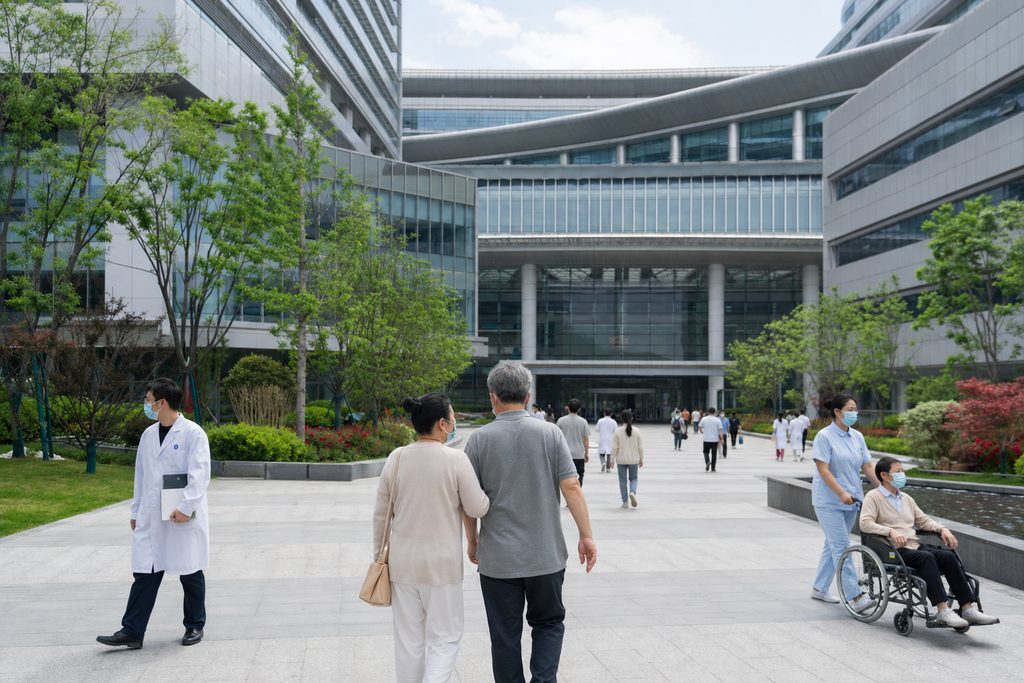
While patients in Canada wait a median 28.6 weeks for specialist ophthalmology referrals, the Eye and ENT Hospital of Fudan University in Shanghai handles over 870,000 outpatient visits annually — with a dedicated international service that reviews complex case files remotely. That contrast is stark. It explains why more Western patients are asking about an eye and ENT hospital China second opinion cost before they commit to irreversible surgery at home.
The short answer: a written second opinion from a top-tier Chinese eye hospital typically costs between $300 and $800, depending on whether you need a single specialist review or a multidisciplinary panel. Video consultations run $100 to $800. These fees cover the medical review, translation of your records into Chinese, and a written report in English. What they don’t cover is travel — because you don’t need to travel for the second opinion itself.
Eye and ENT Hospital China Second Opinion Cost: The Short Answer
A written second opinion from a specialist at a top Chinese eye and ENT hospital costs between $300 and $500 for a single senior specialist. A video consultation with a top specialist runs $500 to $800. A multidisciplinary team review — useful for complex cases involving both retina and glaucoma, or orbital tumors affecting the optic nerve — costs $1,500 to $2,000.
The caveat: these are coordination and review fees, not treatment charges. They cover case file translation, scheduling with the hospital’s international department, the specialist’s time reviewing your OCT scans, visual field tests, fluorescein angiography, and prior surgical notes, plus a written or verbal response in English. If you later decide to travel to China for surgery, the consultation fee is credited in full toward your on-the-ground coordination service within 90 days.
Who This Is Right For — and Who It Isn’t
A remote second opinion from a Chinese eye hospital makes sense for specific situations. Not every case.
Good candidates typically include:
– Patients with progressive or unexplained vision loss where the diagnosis remains unclear after multiple visits at home
– People facing high-risk surgery — complex retinal detachment repair, macular hole closure after failed primary surgery, advanced glaucoma with multiple prior procedures
– Patients with rare or aggressive conditions such as uveal melanoma, intraocular lymphoma, or optic nerve sheath meningioma
– Those who want a volume-based perspective: Chinese specialists at top centers see more complex cases in a month than many Western surgeons see in a year
– Patients weighing whether the cost of surgery abroad justifies the travel
Who should not pursue this:
– Anyone with an acute emergency — sudden painless vision loss, suspected retinal artery occlusion, acute angle-closure glaucoma. Go to your nearest emergency department now. A remote second opinion is too slow.
– Patients whose condition is stable and well-managed, where a second opinion would add information but not change decisions
– Those unwilling to share complete medical records. A second opinion is only as good as the data provided
– People expecting a guaranteed different answer. Sometimes the second opinion confirms the first one — that’s value too
The Options, Compared
What are you actually choosing between? Here’s the landscape for complex eye disease second opinions across different systems.
| Option | Cost Range | Wait Time | What You Get | Best For |
|---|---|---|---|---|
| Written second opinion, US academic center | $800–$2,500 | 2–6 weeks | Single-specialist written report | Insurance-covered cases, US-based patients |
| Written second opinion, China top eye hospital | $300–$500 | 5–10 business days | Senior specialist review, English report | Complex retina, glaucoma, orbital cases |
| Video consultation, China top specialist | $500–$800 | 1–2 weeks | Live discussion, real-time Q&A | Patients wanting to ask follow-up questions |
| MDT panel review, China | $1,500–$2,000 | 2–3 weeks | Multi-specialist consensus, integrated plan | Cases crossing retina, glaucoma, neuro-ophthalmology |
| In-person consultation, China | $800–$1,200 coordination + travel | 3–6 weeks | Face-to-face exam, imaging on-site | Patients already planning surgery in China |
The written second opinion from China is the lowest-cost entry point. The MDT panel is the most thorough. If your case spans multiple subspecialties — say, proliferative diabetic retinopathy with neovascular glaucoma — the panel review often catches interactions a single specialist might miss.
How to Get a Second Opinion for Eye Disease in China
The process is more straightforward than most people expect. No, you don’t need to fly to Shanghai first.
Here’s the sequence:
1. Gather your records. That means all OCT scans (preferably the raw files, not just printouts), visual field reports, fluorescein or ICG angiography images, corneal topography if relevant, prior surgical notes, current medication list, and a brief summary of your history written in plain language.
2. Contact a coordination service or the hospital’s international department directly. Some hospitals accept direct inquiries. But most international patients use a coordination service because the hospital’s international office handles high volume and language barriers remain real. The service translates your records into Chinese, submits them through the proper channel, and coordinates scheduling.
3. The specialist reviews your file. This is where the volume advantage matters. A senior retina specialist at a top Chinese eye hospital may review 50 to 100 complex cases per week. They’ve seen patterns that a lower-volume Western practice might not encounter in a year.
4. You receive a written report in English. The report typically includes: confirmation or revision of the diagnosis, assessment of whether the proposed treatment plan is appropriate, alternative approaches used in Chinese centers, and a recommendation on whether travel to China for treatment would add meaningful value.
5. Optional video consultation. If the written report raises questions, a follow-up video call lets you speak directly with the reviewing specialist.
Is Complex Eye Surgery Safe in China?
The short answer: at top-tier centers, yes — with outcomes comparable to major Western institutions. But “China” is not a monolith.
The Eye and ENT Hospital of Fudan University in Shanghai performs over 40,000 eye surgeries annually. Zhongshan Ophthalmic Center at Sun Yat-sen University in Guangzhou handles a similar volume. These are not small clinics. They are massive, high-throughput centers where surgeons perform the same complex procedures dozens of times per week.
Safety data is published in peer-reviewed journals. Chinese retina surgeons report primary retinal detachment repair success rates of 90–95%, comparable to European and North American benchmarks. Cataract surgery complication rates at top centers run below 1%. The volume-outcome relationship is real: surgeons who do more of a procedure tend to have better results.
But there are real caveats.
Language barriers in regular outpatient departments are significant. Public hospital outpatient clinics see thousands of patients daily, and English-speaking staff are rare outside international departments. Infection control standards at top-tier teaching hospitals are rigorous, but smaller provincial hospitals vary. That’s why the hospital choice matters enormously.
If you’re considering surgery in China, you want a hospital on the Fudan University hospital ranking — the authoritative national assessment — or one with JCI accreditation. The Fudan-ranked top 100 hospitals represent the top 5% of China’s 35,000+ hospitals. That’s the pool you should draw from.
What It Costs
Let’s break down the full cost picture for a complex eye disease second opinion — and what happens if you proceed to treatment.
Second opinion phase:
– Written second opinion, single senior specialist: $300–$500
– Top-specialist video consultation: $500–$800
– MDT panel review: $1,500–$2,000
– Records translation and coordination: included in the above fees
If you proceed to treatment in China:
– Vitrectomy for complex retinal detachment: $5,000–$12,000 (varies by hospital and case complexity)
– Trabeculectomy or tube shunt for glaucoma: $3,000–$7,000
– Corneal transplant: $4,000–$9,000
– Orbital tumor resection: $6,000–$15,000
Compare those to US cash prices: a complex vitrectomy runs $20,000–$40,000; a corneal transplant $25,000–$50,000. The savings are substantial even after travel and accommodation.
What’s not included: airfare, hotel, meals, local transport, and post-operative rehabilitation if you stay in China. A bilingual medical companion — someone who handles registration, queueing, payment, translation, and navigation — starts at $300 per day. For most international patients, that’s not optional. It’s the difference between a smooth experience and a stressful one.
Practical Considerations: Records, Visa, Payment, Follow-Up
Records are the foundation. A second opinion without complete imaging is worthless. Request DICOM files from your imaging center — these are the raw data files, not compressed JPEGs. Chinese specialists want to manipulate the images themselves, not squint at a printout.
Visa. Foreign nationals traveling to China for medical treatment use an S2 visa with the purpose annotated as medical treatment. Accompanying family members also apply for S2. Processing time varies by embassy, typically 1–4 weeks. You’ll need supporting documents from the hospital — an invitation letter or treatment confirmation. The M visa is for commercial activity and does not apply to medical travel.
Payment. Chinese public hospitals require prepayment. You deposit funds at admission and the hospital draws down as services are provided. International insurance is generally reimbursement-based — you pay upfront and file a claim. Some private international hospitals in China offer direct billing, but top-tier public hospitals do not.
Language. Even at international departments, the level of English varies. A bilingual medical companion handles translation during consultations, explains medication instructions, and navigates the physical hospital — which can be genuinely disorienting at a facility with 10,000 daily outpatient visits.
Follow-up after returning home. This is the part most people forget. Eye surgery requires follow-up at 1 week, 1 month, 3 months, and sometimes longer. If you return home immediately after surgery, your local ophthalmologist needs to be willing to manage post-operative care. Arrange this before you travel. Some patients stay in China for the first 2–4 weeks post-surgery to complete early follow-up with the operating surgeon, then transfer care home.
Frequently Asked Questions
How much does a second opinion from an eye and ENT hospital in China actually cost?
A written second opinion from a senior specialist costs $300 to $500. A video consultation runs $500 to $800. A multidisciplinary panel review costs $1,500 to $2,000. These fees cover translation, scheduling, specialist review time, and the written or verbal response. They do not cover travel, accommodation, or any treatment you might later pursue.
Which hospital is best for a retina second opinion in China?
For retina specifically, the Eye and ENT Hospital of Fudan University in Shanghai and Zhongshan Ophthalmic Center in Guangzhou are the two most frequently cited by international patients. Both are ranked among China’s top 10 for ophthalmology on the Fudan specialty reputation list. The ophthalmology specialty rankings provide a fuller picture across subspecialties.
What if the second opinion disagrees with my local doctor?
That’s the point of a second opinion — sometimes it confirms, sometimes it diverges. If the Chinese review recommends a different approach, you now have two expert views to weigh. You can take the written report back to your local specialist and discuss. You are never obligated to travel to China for treatment. The report is yours to use however you choose.
Can I book eye disease second opinion in Beijing instead of Shanghai?
Yes. Beijing has multiple top-tier eye centers, including the ophthalmology department at Peking Union Medical College Hospital and Beijing Tongren Hospital, which operates one of the highest-volume ophthalmology departments in the world. The Beijing hospital directory lists the Fudan-ranked institutions in the city. The choice between Beijing and Shanghai often comes down to which specialist has the most relevant experience for your specific condition, not the city itself.
Is it safe to have complex eye surgery in China as a foreigner?
At top-tier centers, yes — clinical outcomes are comparable to Western benchmarks, and surgical volume is often higher. The risks are not medical; they’re logistical. Language barriers, navigation of a massive public hospital, and post-operative follow-up coordination are the real challenges. Using the international department pathway and a bilingual companion mitigates most of these. Choosing a hospital outside the Fudan-ranked top tier introduces more variability.
Your Next Step
A second opinion from a high-volume Chinese eye hospital costs less than most Western patients expect — and it can change a treatment decision before you commit to irreversible surgery. We’re China Medical Services, a coordination team that connects international patients with top-ranked Chinese hospitals. We are not a hospital, and we do not provide diagnoses or medical advice. What we do is handle the logistics: records translation, specialist matching, appointment coordination, and on-the-ground support if you decide to travel.
If you’re weighing a complex eye procedure and want a second set of eyes on your case — literally — start with a free consultation. We’ll review your situation and tell you honestly whether a Chinese second opinion is worth pursuing for your specific condition. No pressure. Just clarity.
For more medical information and treatment options in China, visit chinamedservices.com (China Medical Services).
