Complex Fracture Specialist: Shanghai Sixth Hospital Cost & Access
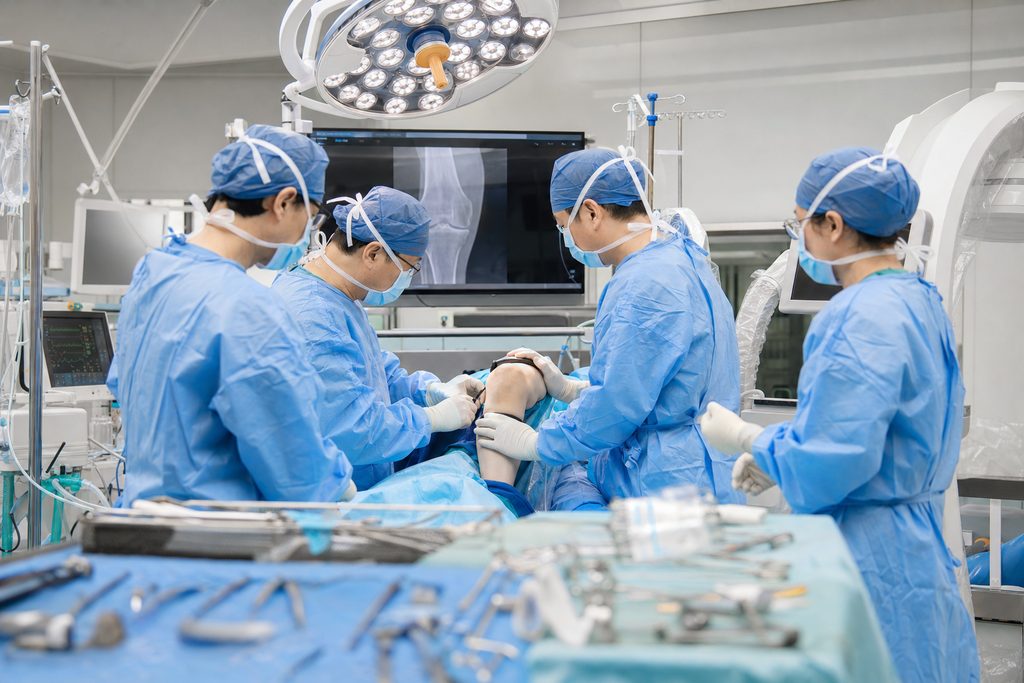
Complex Fracture Specialist Shanghai Sixth Hospital: The Short Answer
You have probably heard that seeking surgery in China means accepting lower quality. The reality for orthopedic trauma is the opposite. Shanghai Sixth People’s Hospital performs over 1,000 complex fracture reconstructions annually, making it one of the highest-volume centers worldwide. The complex fracture surgery cost Shanghai Sixth Hospital typically runs between $8,000 and $25,000 depending on hardware, length of stay, and whether you use the international VIP ward. That compares to $60,000–$150,000 for equivalent procedures at major US trauma centers.
But the number is not the whole story. Getting into a Chinese public hospital as a foreigner is not like booking a hotel. You cannot simply email the hospital and reserve a bed. The process requires in-person evaluation, specific documentation, and a realistic understanding of how China’s public hospital system actually works.
Who This Is Right For — and Who It Isn’t
Complex fractures are not simple breaks. We are talking about intra-articular fractures, nonunions, malunions, infected hardware cases, and multi-fragment injuries that have failed previous treatment. The patients who benefit most from traveling to Shanghai for this care share a few common traits.
Good candidates typically have:
- A documented complex fracture with imaging (CT, MRI) that has either failed conservative management or requires specialized reconstruction
- Financial flexibility — you will pay upfront and seek reimbursement later
- The ability to stay in Shanghai for at least 2–4 weeks for evaluation, surgery, and initial follow-up
- A support person who can travel with you
Who should not pursue this path? If your fracture is fresh, simple, and well-managed at home, the cost and logistics of international travel rarely make sense. If you have unstable medical comorbidities that require intensive perioperative management, staying closer to your existing care team is usually wiser. And if you need a guaranteed surgery date before you arrive, Chinese public hospitals cannot promise that — even through their international departments.
The Options, Compared
You have three realistic routes for complex fracture surgery at Shanghai Sixth Hospital. Each carries different trade-offs in cost, speed, and service level.
| Route | Approx. Cost (USD) | Wait Time | English Support | Who It Suits |
|---|---|---|---|---|
| Standard public outpatient | $8,000–$15,000 | Days to weeks for specialist; surgery scheduled after in-person consult | Minimal — bring your own interpreter | Budget-conscious patients with local support |
| Hospital international department (VIP) | $15,000–$25,000 | Faster access to senior specialists; surgery typically within 1–2 weeks of evaluation | Dedicated English-speaking coordinators | Most international patients |
| Private international hospital (e.g., United Family, Jiahui) with visiting specialist | $25,000–$40,000 | Fastest scheduling, Western-style environment | Fully English-speaking staff, direct insurance billing | Patients with international insurance or higher budgets |
The international department route is what most of our patients choose. It costs roughly 1.5–2 times the standard public price, but you get senior attending surgeons, shorter waits, and staff who understand what foreign patients need. The private hospital route offers the smoothest experience but at a premium — and you may not always get the same surgeon who leads the public hospital’s trauma team.
Is Shanghai Sixth Hospital Good for Orthopedic Trauma? The Evidence
Shanghai Sixth People’s Hospital is not just a good orthopedic hospital. It is a reference center. The hospital’s orthopedic department consistently appears in the Fudan University China Hospital Specialty Reputation Rankings among the top programs nationally for orthopedics. Its trauma and microsurgery teams pioneered techniques now used worldwide, particularly in limb salvage and complex reconstruction.
What does that mean for you? Volume. Surgeons who see hundreds of complex fracture cases per year develop pattern recognition that no textbook can teach. The hospital’s single-day outpatient volume exceeds 10,000 patients across all departments — a scale that is hard to comprehend until you stand in the lobby. For orthopedic trauma specifically, the department handles cases referred from across China after failed initial surgeries elsewhere.
And the cost advantage is real. A complex tibial plateau reconstruction with dual plating at a US academic center often exceeds $80,000 in facility and surgeon fees alone. The same procedure at Shanghai Sixth Hospital’s international department typically falls between $12,000 and $18,000. That is not a marketing number. It is the arithmetic of different healthcare economies.
How Does Shanghai Sixth Hospital Treat Complex Fractures?
The treatment pathway matters more than the price tag. Here is what actually happens when you pursue care there.
First, you need a remote evaluation. Send your existing imaging — CT scans, X-rays, operative notes from any prior surgeries — through the hospital’s international department or through a coordination service like China Medical Services. A written second opinion from a Shanghai Sixth orthopedic specialist costs $300–$500 and gives you a clear read on whether your case is appropriate for treatment there. A video consultation with a top specialist runs $500–$800.
If the specialist confirms your case is treatable, you travel to Shanghai on an S2 visa with documentation from the hospital. You attend an in-person consultation. Surgery is scheduled after that evaluation — not before. This is the single most important thing to understand: no legitimate Chinese public hospital will guarantee a surgery date sight unseen.
The surgery itself follows international standards. Modern locking plates, intramedullary nails, external fixation, and 3D-printed custom implants are all available. Post-operative care includes early mobilization protocols and structured rehabilitation. Most international patients stay in Shanghai for 2–3 weeks after surgery before flying home.
What Complex Fracture Surgery Costs at Shanghai Sixth Hospital
Let us break down the complex fracture surgery cost Shanghai Sixth Hospital in real terms. The figures below reflect 2025–2026 pricing for international department care and vary by hospital and case complexity.
- Surgeon and hospital fees: $6,000–$15,000 depending on fracture complexity and hardware used
- Implant costs: $2,000–$8,000 — titanium locking plates and screws are priced per unit; 3D-printed custom implants cost more
- Anesthesia and operating room: $1,500–$3,500
- Hospital stay (5–10 days): $800–$2,500 in a standard international ward; VIP suites cost more
- Post-operative imaging and follow-up: $500–$1,500
The total lands between $8,000 and $25,000 for most complex fracture cases. What drives the variance? Hardware choice is the biggest variable. A simple nonunion repair with a single plate costs far less than a multi-fragment intra-articular reconstruction requiring custom 3D-printed implants. Length of stay matters too — infection cases requiring staged procedures can double the total.
This price does not include flights, accommodation, visa fees, or interpreter services. Budget an additional $3,000–$6,000 for a 3–4 week stay in Shanghai, depending on your lodging choices.
Practical Considerations: Records, Visa, Payment, and Follow-Up
Bring everything. Every imaging study you have ever had for this injury, on CD or USB. Every operative note. Every discharge summary. Chinese specialists will want to see the full arc of your case, not just the most recent X-ray. Incomplete records are the most common reason for delayed or declined remote evaluations.
Visa is S2, not M. The M visa is for commercial and trade activities and has nothing to do with medical treatment. You apply for an S2 visa at your local Chinese embassy or consulate, supported by an invitation letter from the hospital or a medical coordination service. Processing typically takes 1–2 weeks. Your accompanying family member applies for their own S2.
Payment is upfront. Chinese public hospitals — including their international departments — require prepayment before admission. You pay a deposit at registration, and the hospital deducts from it as services are provided. International insurance is rarely accepted for direct billing at public hospitals. You pay out of pocket and file for reimbursement with your insurer afterward. Private international hospitals like United Family and Jiahui do offer direct insurance billing, which is why some patients choose them despite the higher price.
Follow-up after you return home is the underrated challenge. Your local orthopedic surgeon will need to manage the post-operative course. Chinese surgeons typically provide a detailed discharge summary and are often willing to communicate with your home physician via email or video. But you need a local doctor who is on board before you leave. Do not assume your original surgeon will happily manage a colleague’s complex reconstruction without prior agreement.
Frequently Asked Questions
No. Chinese public hospitals require an in-person consultation before scheduling surgery. You can complete a remote evaluation and receive a written treatment plan first, which significantly de-risks the trip. But the actual surgery date is set only after the specialist examines you in Shanghai. Any service claiming to guarantee a specific surgery date before you arrive is not operating through legitimate hospital channels.
Yes. Its orthopedic department is consistently ranked among China’s top programs in the Fudan University specialty reputation rankings. The hospital is a national referral center for failed fracture fixation, nonunions, and complex trauma. That said, “best” is contextual — other centers like Beijing Jishuitan Hospital also have world-class trauma programs. Shanghai Sixth’s advantage is the combination of high volume, senior surgical expertise, and an international department experienced with foreign patients.
This is the hardest question and the one you should sit with before committing. Complex fracture surgery carries real risks — infection, nonunion, hardware failure, nerve injury. If a complication occurs after you return home, your local surgeon manages it. The Shanghai team can advise remotely, but they are not flying to your country. Some patients plan for this by scheduling a video follow-up at 6 weeks and 12 weeks post-op. Others budget for a return trip to Shanghai if revision surgery is needed. The cost advantage only makes sense if you accept this logistical reality.
A written second opinion from a Shanghai Sixth orthopedic specialist costs $300–$500 through the hospital’s international department or a coordination service. A video consultation with a top specialist runs $500–$800. In-person consultation coordination fees range from $800–$1,200. These are the prices for international patients using official channels — not the subsidized rates Chinese citizens pay for standard outpatient registration.
Your Next Step
Shanghai Sixth People’s Hospital offers world-class complex fracture care at a fraction of Western prices. The catch is that navigating the system — records, visa, evaluation, admission — requires local knowledge and Chinese language capability. That is where we come in. China Medical Services is not a hospital and we do not provide medical advice or diagnoses. We are a coordination team that helps international patients connect with China’s top-ranked hospitals, prepare documentation, and navigate the logistics on the ground. If you are considering complex fracture surgery in Shanghai, start with a written second opinion. It costs a few hundred dollars and tells you whether this path is worth pursuing. The consultation fee is credited toward coordination if you proceed. That is a low-risk first step toward a decision that could save you tens of thousands of dollars.
For more medical information and treatment options in China, visit chinamedservices.com (China Medical Services).
