Craniofacial Deformity Surgery China: Shanghai Ninth People’s Hospital for Rare Facial Conditions
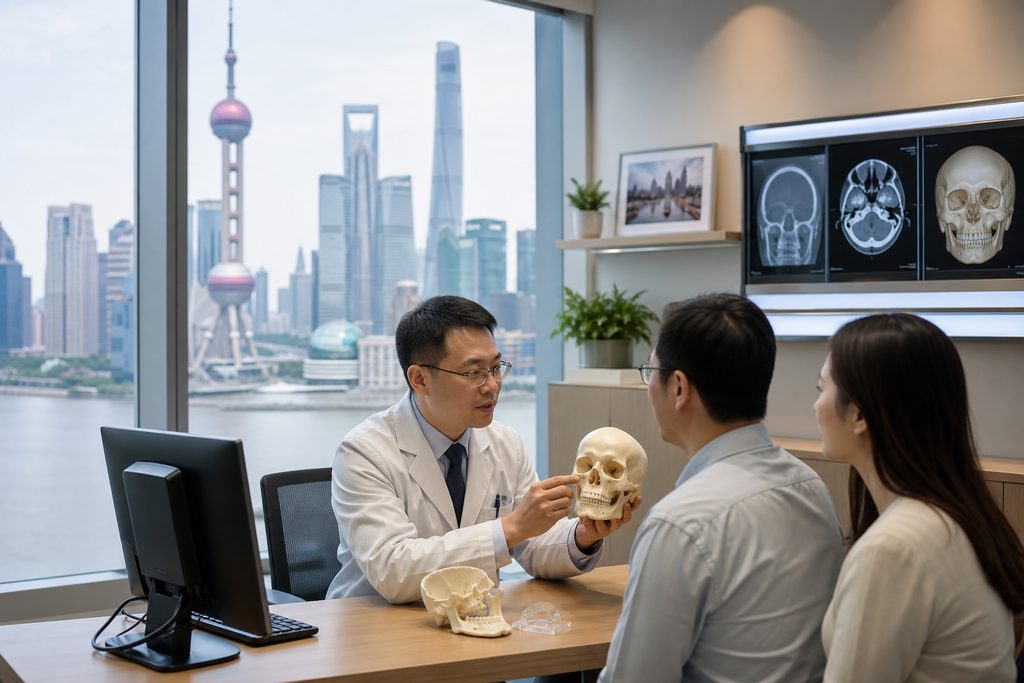
You have probably heard that traveling abroad for complex surgery means rolling the dice on quality. Maybe you picture a dimly lit operating room and a doctor you cannot communicate with. The reality at a place like Shanghai Ninth People’s Hospital could not be further from that image. Here, a single craniofacial department performs over 4,000 surgeries annually. Many of those cases involve conditions so rare that a typical Western surgeon might see three or four in an entire career. The volume is not just a number. It is a signal of deep, concentrated expertise.
That expertise draws families from over 60 countries. They come carrying thick folders of medical records and heavier burdens of hope. They come because they have been told elsewhere that nothing more can be done. They come to find out if that is true. This article walks you through what that journey actually looks like, what it costs, and how to navigate the system without losing your mind—or your savings.
Key Takeaways
- Shanghai Ninth People’s Hospital performs over 4,000 craniofacial procedures yearly, making it one of the highest-volume centers globally for rare facial conditions.
- The craniofacial deformity surgery cost China typically ranges from $15,000 to $45,000 USD—a fraction of the $100,000 to $300,000+ charged in the United States for comparable procedures.
- Navigating a Chinese public hospital independently is extremely difficult without Mandarin fluency; the registration system, payment processes, and post-operative protocols are not designed for international patients.
- You cannot simply book a surgery date online from abroad. A formal in-person consultation is mandatory before any surgical plan is confirmed, and the wait for that consultation can be managed strategically.
The Problem: When Rare Means “We Don’t See This Enough”
Approximately 1 in 1,700 babies in the United States is born with a craniofacial condition like craniosynostosis. That number feels abstract until it is your child. Then it becomes the only number that matters. Rarer conditions—hemifacial microsomia, Treacher Collins syndrome, complex syndromic craniosynostosis—affect far fewer people. And that is precisely the problem. Low incidence means low surgical volume at most hospitals. A 2021 study in the Journal of Craniofacial Surgery noted that many US centers treat fewer than 20 syndromic craniosynostosis cases per year. Low volume correlates with higher complication rates and longer operative times. You do not need a medical degree to understand why that is terrifying.
Then there is the financial gut punch. Even with good insurance, a multi-stage craniofacial reconstruction in the US can leave a family with $50,000 to $100,000 in out-of-pocket costs. For uninsured or underinsured international patients seeking care in the West, the quotes often exceed $250,000. That is a house. That is a future. That is a number that forces impossible choices.
Wait times add another layer of anguish. A child’s facial skeleton grows fast. Waiting 12 to 18 months for a surgical slot at a busy Western craniofacial center can mean missing a critical developmental window. Bones fuse. Soft tissues adapt asymmetrically. The surgery becomes harder. The outcome becomes less predictable. Time is literally bone in this specialty.
Who We Are
We are China Medical Services. We are not a hospital. We do not provide medical treatment or offer clinical diagnoses. We are your logistical architects. Our team bridges the gap between you and China’s top-tier hospitals—specifically the 340+ top-ranked institutions across 37 cities that meet the rigorous standards of the Fudan University hospital rankings and international JCI accreditation. We handle the chaos: hospital matching, appointment coordination, bilingual medical companions, visa guidance, and recovery logistics. You focus on the medical decisions. We make everything else around them actually work.
Why Shanghai Ninth People’s Hospital Delivers Results for Rare Facial Conditions
Shanghai Ninth People’s Hospital, affiliated with Shanghai Jiao Tong University School of Medicine, is not just another big hospital. Its Department of Craniofacial Surgery is a nationally designated center. The department handles a surgical volume that resets expectations. When you ask, “is Shanghai Ninth hospital good for rare facial conditions,” the answer lives in the data.
Surgical Volume That Creates Unmatched Clinical Instinct
The department completes over 4,000 craniofacial procedures annually. To put that in perspective, many reputable Western craniofacial centers report 100 to 300 cases per year. The surgeons here see more rare pathology in a month than most see in a career. This is not a knock on Western surgeons—they are constrained by population demographics and referral patterns. But for a parent of a child with a condition affecting 1 in 50,000 births, the math is simple. You want the surgeon who has done this exact procedure 200 times, not 20.
Research backs this up. A systematic review in Plastic and Reconstructive Surgery (2020) found a clear inverse relationship between hospital surgical volume and complication rates in craniofacial procedures. High-volume centers had significantly lower rates of surgical site infection, unplanned reoperation, and prolonged hospital stay. Shanghai Ninth’s volume puts it firmly in that high-volume, low-complication category.
Technology and Surgical Innovation at Scale
The hospital integrates virtual surgical planning (VSP), 3D-printed surgical guides, and intraoperative navigation as standard tools—not experimental add-ons. For complex midface advancements or orbital box osteotomies, the surgical team simulates the entire procedure digitally before making a single incision. Custom titanium implants are designed and manufactured in-house, reducing lead times and costs. This is not futuristic marketing copy. It is the daily workflow.
Intraoperative CT scanning allows surgeons to verify bone position before closing. If something is off by a millimeter, they adjust it right then. No waiting for a post-op scan. No “let’s see how it heals and maybe revise later.” This intraoperative feedback loop is a game-changer for complex reconstructions where millimeter precision determines facial symmetry.
craniofacial deformity surgery cost China: The Structural Reasons Behind the Numbers
Let us address the elephant in the room directly. Lower cost does not mean lower quality. It means different economics. The craniofacial deformity surgery cost China typically ranges from $15,000 to $45,000 USD, depending on complexity, number of stages, and length of hospital stay. A comparable multi-stage reconstruction in the United States often runs $100,000 to $300,000 or more.
Why the gap? Labor costs in Chinese healthcare are fundamentally lower—not because surgeons are underqualified, but because the entire wage structure of the economy differs. Hospital administrative overhead is leaner. The supply chain for implants and surgical hardware is localized. And the sheer volume of cases spreads fixed costs across more patients. The result is a price point that makes treatment accessible without sacrificing the technology or expertise that drives outcomes.
| Procedure Type | Estimated Cost in China (USD) | Estimated Cost in USA (USD) |
|---|---|---|
| Single-suture craniosynostosis repair | $15,000 – $22,000 | $50,000 – $80,000 |
| Monobloc frontofacial advancement | $30,000 – $45,000 | $150,000 – $300,000+ |
| Orthognathic surgery (jaw correction) | $12,000 – $18,000 | $40,000 – $70,000 |
| Microtia ear reconstruction (autologous) | $8,000 – $15,000 | $30,000 – $60,000 |
Note: These are estimates based on publicly available data and internal case experience. Actual costs vary by hospital, surgeon, case complexity, and length of stay. Always obtain a formal quote after consultation.
Many international patients search for a “craniofacial surgery package Shanghai price” expecting an all-inclusive medical tourism bundle. The reality is more nuanced. Chinese public hospitals do not typically offer packaged pricing in the way private international hospitals do. You pay for the consultation, the imaging, the surgery, the implants, the hospital bed, and the medications as separate line items. This can feel opaque. It is also why working with a coordinator who can translate and itemize every charge matters enormously.
What You Need to Know Before Going Alone
The clinical excellence is real. So are the barriers. Anyone who tells you this is easy is lying. Here is what you will face if you attempt to navigate this system independently.
- Visa Requirements Are Specific and Unforgiving: You need an S2 visa with a notation specifying medical treatment as the purpose. Not an L tourist visa. Not an M business visa. The S2 is specifically for private visits including medical treatment. Your accompanying family members also need S2 visas. The application requires an invitation letter from the hospital—something you cannot obtain without a confirmed consultation. This creates a chicken-and-egg problem that frustrates many families before they even board a plane.
- The Registration System Was Not Built for Foreigners: Shanghai Ninth sees over 10,000 outpatient visits per day across all departments. The registration kiosks, the appointment apps, the queue numbers—everything is in Mandarin. Specialist consultations often require a referral from a general outpatient visit first. You cannot simply walk up to the craniofacial department counter and book a slot. The system is designed for a domestic patient flow that assumes language fluency and local knowledge.
- Payment Is Prepaid and Cash-Flow Heavy: Public hospitals in China operate on a prepaid deposit system. You load money onto a hospital card at admission, and charges are deducted daily. When the balance runs low, you top up or services pause. International credit cards are not reliably accepted at hospital cashiers. Wire transfers are possible but slow. You need a local payment strategy, and you need it before the hospital bed is assigned.
- Post-Operative Communication Is Not Built-In: Once discharged, you are largely on your own for follow-up questions unless you have arranged ongoing support. The surgeon will see you for scheduled follow-ups, but the kind of “email my doctor a photo of the incision” access that Western patients expect is not standard. This gap is manageable—but only if you plan for it.
How We Help You Navigate This
This is the hard question every family must consider. The surgical team at Shanghai Ninth will provide a detailed discharge summary and operative report in English upon request. We ensure this happens. You then share those records with a local craniofacial surgeon in your home country for continuity of care. We strongly recommend establishing this local follow-up relationship before you travel to China—not after. Most Western craniofacial surgeons will accept a patient for follow-up care if they have complete records and a clear understanding of the procedure performed. Complication rates at high-volume centers are low, but the responsible plan is to have a safety net in place.
Look for specificity. A genuine review mentions the condition treated, the surgeon’s approach, the recovery timeline, and honest difficulties encountered. Vague praise is less useful than detailed accounts. Independent medical travel forums, condition-specific Facebook groups, and direct requests to speak with former patients (which we can facilitate) provide more reliable insight than curated hospital marketing materials. Also, ask for complication and revision rates directly during your consultation. A confident surgical team answers these questions with data, not deflection.
A “craniofacial surgery package Shanghai price” that claims to be all-inclusive should be scrutinized carefully. In a public hospital setting, billing is line-item. The surgical fee, anesthesia fee, implant costs, medications, imaging, and hospital bed charges are separate. A good coordinator provides a detailed estimated breakdown before you travel and flags any potential additional costs—for example, if a custom implant is more complex than initially planned. The total should not be a mystery. But it will not be a single round number either. Transparency is the test. If someone cannot show you a line-item estimate, walk away.
Your Next Step
You have been handed a diagnosis that most people cannot pronounce, let alone understand. You have been quoted numbers that feel like a second trauma. You have been told to wait while your child’s face grows in a direction you were hoping to correct. Shanghai Ninth People’s Hospital represents a different path. High volume. Concentrated expertise. A cost structure that does not demand a lifetime of debt. The barriers to accessing it are real but entirely navigable with the right support.
If you want to understand what this path looks like for your specific situation, our team is here to walk you through it. No pressure. No sales script. Just an honest conversation about your case, your options, and whether this makes sense for you. Reach out for a free consultation and let us help you map the road ahead.
Medical Disclaimer: This article is for informational purposes only and does not constitute medical advice. Treatment decisions should be made in consultation with a qualified healthcare provider. Surgical outcomes vary by individual case. China Medical Services is a logistics and coordination service, not a healthcare provider.
Frequently Asked Questions
Yes. The hospitals used for international patients are JCI-accredited or major Grade 3A tertiary centres and follow the same international safety standards as top hospitals in the US and Europe. Surgical teams perform high volumes of procedures — often more than their Western counterparts — which studies show leads to better outcomes.
Costs vary by procedure and hospital, but international patients typically save 40-80% compared to US prices — even when factoring in travel and accommodation. A consultation with our team will give you an exact, all-inclusive quote with no hidden fees.
Send us your existing medical reports. The relevant specialty reviews them and gives you a written opinion, including treatment direction and options, before you commit to any travel. From there you can add a video consultation with the doctor, or have us attend an appointment on your behalf.
For more medical information and treatment options in China, visit chinamedservices.com (China Medical Services).
