Deep Brain Stimulation in China: Access, Costs, and Top Hospitals
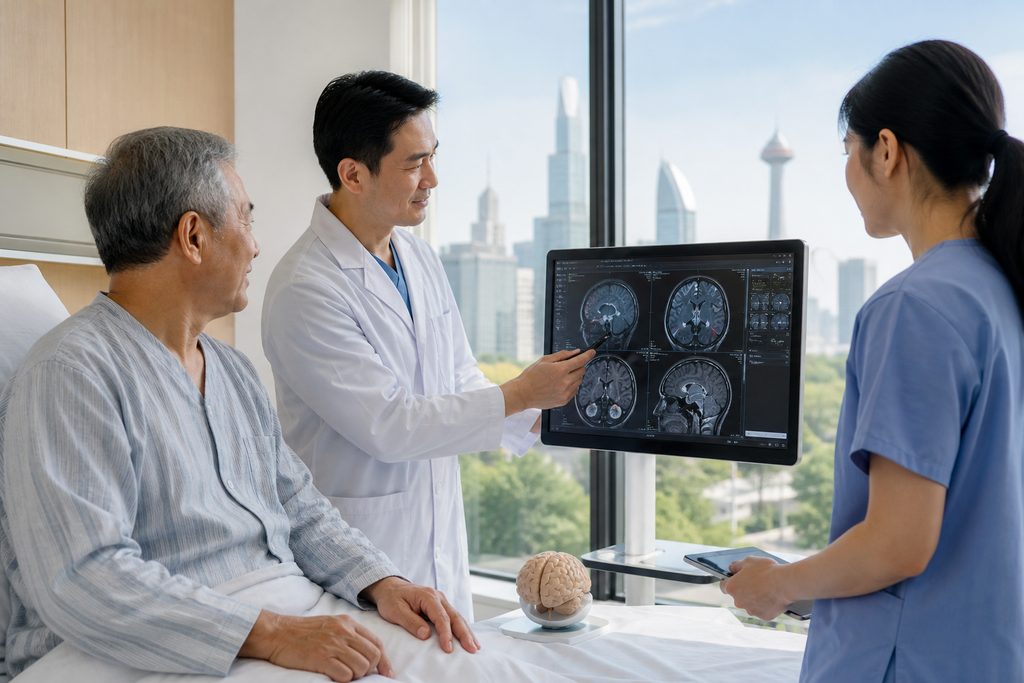
You have probably heard that advanced neurosurgery in China means compromising on quality. The data tells a different story. Deep brain stimulation cost China typically runs between $25,000 and $45,000 at top-tier public hospitals, compared with $60,000 to $100,000 in the United States for the device and procedure alone. That gap is real, and it is widening. But cost is not the only question that matters. Whether you can actually get DBS in China depends on your diagnosis, your records, and how you navigate a system that does not operate like Western healthcare.
Our team at China Medical Services has guided patients through this exact process. We are not a hospital. We do not diagnose or treat. What we do is connect you with the right specialists at 340+ top-ranked hospitals across 37 cities, handle the logistics, and make sure you are not walking into a foreign medical system alone.
Can You Get Deep Brain Stimulation in China? The Short Answer
Yes. International patients receive deep brain stimulation in China every year. The procedure is performed at major neurosurgery centers in Beijing, Shanghai, Guangzhou, and Chengdu. You need a confirmed diagnosis — most commonly Parkinson’s disease, essential tremor, or dystonia — and a full set of medical records. You also need to understand that no public hospital in China will schedule surgery remotely. You must first attend an in-person consultation. After the neurologist and neurosurgeon evaluate you, they will decide whether DBS is appropriate and when it can be scheduled.
That is the honest answer. The short version hides a longer process involving visa paperwork, hospital selection, and a decision about whether to use the standard public channel or the international VIP pathway.
Who This Is Right For — and Who It Isn’t
DBS is not for everyone with a movement disorder. Chinese neurosurgery teams follow the same international inclusion criteria used in Europe and North America. Good candidates typically meet these conditions:
- Diagnosed with idiopathic Parkinson’s disease, essential tremor, or primary dystonia for at least 4-5 years
- Previously responded well to levodopa but now experience motor fluctuations or dyskinesias
- Cognitively intact, with no significant dementia or major untreated depression
- Under age 75 in most centers, though exceptions exist for otherwise healthy patients
- No major brain atrophy or structural abnormalities visible on MRI
Who should not pursue this? Patients with atypical parkinsonism — multiple system atrophy, progressive supranuclear palsy, or corticobasal degeneration — generally do not benefit from DBS. Neither do patients with severe cognitive impairment, untreated psychiatric illness, or high surgical risk from uncontrolled cardiovascular disease. If you are unsure, a written second opinion from a Chinese movement disorder specialist costs $300–500 and can clarify eligibility before you travel.
The Options, Compared
Choosing where to have DBS surgery means weighing cost, device availability, and follow-up logistics. The table below compares the main pathways available to international patients considering China versus staying in Western systems.
| Option | Estimated Total Cost (USD) | Wait Time for Surgery | Device Brands Available | Key Trade-off |
|---|---|---|---|---|
| US hospital (self-pay) | $60,000–$100,000 | 2–6 months | Medtronic, Abbott, Boston Scientific | Highest cost, familiar system |
| European hospital (private) | $45,000–$80,000 | 3–8 months | Medtronic, Abbott, Boston Scientific | Moderate cost, language barrier varies |
| China public hospital (international VIP) | $25,000–$45,000 | 2–8 weeks after consultation | Medtronic, Abbott, PINS, SceneRay | Lower cost, requires travel and coordination |
| China public hospital (standard channel) | $18,000–$30,000 | 1–4 months | Medtronic, PINS, SceneRay | Lowest cost, limited English support |
If you have private insurance that covers DBS abroad, the US or Europe may make more sense. But if you are paying out of pocket, the math is stark. The same Medtronic Percept PC device implanted in Beijing or Shanghai costs roughly half of what it does in California. Chinese domestic devices from PINS and SceneRay are even less expensive, with growing clinical data supporting their use. Which path suits you depends on your budget, your tolerance for travel, and whether you need English-language support throughout.
Is Deep Brain Stimulation Safe in China?
This is the question that keeps people up at night. Fair enough. The answer requires separating myth from measurable reality.
China’s top neurosurgery centers perform DBS at volumes that exceed most Western hospitals. Fudan University’s Huashan Hospital in Shanghai and Beijing Tiantan Hospital each complete hundreds of DBS implantations annually. Volume matters in neurosurgery. A 2019 study published in Stereotactic and Functional Neurosurgery reviewed DBS outcomes across Chinese centers and found complication rates — infection, hemorrhage, lead misplacement — comparable to international benchmarks of 1–3% for serious adverse events.
But there is a catch. Those outcomes come from top-tier university hospitals, not every hospital in the country. China has 35,000+ hospitals, and only the top 5% meet the standards international patients should accept. The hospitals in our database are ranked by the Fudan University Hospital Rankings and JCI accreditation. That is the filter that matters. Choose a hospital from that tier, and the safety profile is genuinely equivalent to what you would find in a major US academic center.
Best DBS Surgeons in Beijing and Shanghai
Patients often ask us to name the best DBS surgeons in Beijing. The honest answer is that China does not publish individual surgeon rankings the way some countries do. What exists is the Fudan University specialty reputation ranking, which evaluates entire neurosurgery departments. Beijing Tiantan Hospital, Peking Union Medical College Hospital, and Xuanwu Hospital consistently rank among China’s top 10 for neurosurgery. In Shanghai, Huashan Hospital and Ruijin Hospital hold similar positions.
The surgeon who operates on you will be a senior attending within one of these departments. You can request a specific specialist through the international VIP channel, and most hospitals will accommodate that request when medically appropriate. But the department’s overall quality matters more than any individual name. A strong team means strong outcomes regardless of which attending performs your procedure.
Browse our specialty department rankings to compare neurosurgery programs across Chinese cities.
How Much Does DBS Cost in Shanghai?
Shanghai pricing deserves its own section because the city is the most common entry point for international patients. How much does DBS cost in Shanghai? At a public hospital’s international department, expect $28,000 to $42,000 for the full package: device, surgical fees, hospital stay, and initial programming. At a private international hospital like Jiahui or United Family, the same procedure runs $40,000 to $60,000. The public international channel offers the best balance of cost and English-language support.
What drives the variance? Three things. First, the device. Medtronic’s rechargeable Percept RC costs more than the non-rechargeable Activa SC. Chinese-made PINS devices can reduce the total by $8,000 to $12,000. Second, whether you need unilateral or bilateral implantation. Most patients require bilateral, which doubles the lead cost. Third, hospital tier. A Fudan top-10 neurosurgery department charges more than a provincial hospital, and rightly so.
What is not included? Airfare, visa fees, accommodation during your 2-3 week stay, and any post-operative rehabilitation. Budget an additional $3,000 to $6,000 for these logistics. Also, subsequent programming sessions after you return home are not covered by the initial surgical fee.
Book Deep Brain Stimulation China: The Actual Process
You cannot book DBS surgery in China the way you book a hotel room. The phrase “book deep brain stimulation China” implies a level of e-commerce that does not exist in Chinese public hospitals. Here is what actually happens.
Step one: remote evaluation. You send your existing records — neurology notes, MRI images, medication history, UPDRS scores if available — to the hospital’s international department. A movement disorder specialist reviews them and issues a written opinion on whether you are a candidate. This costs $300–500 and takes 5–10 business days. Step two: in-person consultation. You travel to China on an S2 visa, which is the short-stay category used for medical treatment and private affairs. Bring your passport, hospital invitation letter, and medical records. Step three: face-to-face evaluation with the neurosurgery team, including cognitive testing and a levodopa challenge test. Step four: surgical scheduling. If approved, surgery is typically scheduled within 2–8 weeks through the VIP channel.
This is where our bilingual medical companion service becomes valuable. We handle registration, queue management, payment, and translation during each hospital visit. You focus on your health, not on navigating a system where the daily outpatient volume at a top hospital can exceed 10,000 patients.
Practical Considerations: Visa, Payment, and Follow-Up
Visa first, because this trips up more patients than anything else. The S2 visa is what you need for medical treatment in China. It is issued for short stays — typically 30 to 90 days, extendable in-country. Your accompanying family member also applies for an S2 visa. Supporting documents include the hospital’s invitation letter, your medical records, and proof of funds. The M visa is for commercial and trade activities and has nothing to do with medical travel. Do not apply for the wrong category.
Payment is straightforward but inflexible. Chinese public hospitals require prepayment before surgery. You deposit the estimated cost upfront, and the hospital deducts from that balance. International credit cards are accepted at international departments, but wire transfer is more common for amounts over $10,000. Private international hospitals accept direct insurance billing from major international insurers. Public hospitals do not — you pay, then submit claims to your insurer for reimbursement.
Follow-up after you return home is the piece most patients underestimate. DBS requires programming adjustments, especially in the first six months. Chinese hospitals now routinely offer remote programming for compatible devices. Medtronic and PINS both have telehealth platforms that allow your Shanghai neurologist to adjust stimulation parameters while you sit at home. Ask about this before you commit, because it solves the biggest practical problem with traveling for DBS.
DBS Surgery China Patient Reviews: What People Actually Say
Reading DBS surgery China patient reviews is essential, but you need to know where to look and how to interpret what you find. Public reviews on Google and Facebook exist but are sparse. The more useful sources are expat health forums, Parkinson’s disease support groups, and direct testimonials collected by hospital international departments. Our own clients have shared consistent themes over the years.
The positive reviews focus on three things: cost savings, surgical competence, and the efficiency of the VIP channel. A patient from the UK who had bilateral DBS at Huashan Hospital in 2023 reported paying $31,000 total — roughly a third of the quote he received in London. The negative reviews, where they exist, center on communication gaps in standard public channels and the complexity of hospital paperwork. That second complaint is exactly what a bilingual companion addresses.
One honest caveat: Chinese hospitals do not publish patient satisfaction scores the way US hospitals do under HCAHPS. You will not find a neat star rating. You will find individual stories, and those stories are overwhelmingly positive when patients use top-tier hospitals with international departments.
Frequently Asked Questions
Foreigners can and do receive DBS in China. There is no citizenship restriction. The practical barriers are language and navigation, not eligibility. International departments at major hospitals exist specifically to serve foreign patients, and they handle everything from registration to discharge summaries in English.
Chinese law holds hospitals to the same medical liability standards as other countries, and top-tier hospitals carry malpractice insurance. Surgical complication rates at Fudan-ranked neurosurgery departments are comparable to Western benchmarks. That said, if a complication occurs, you will be treated in the same hospital by the same team — there is no medical evacuation to your home country unless you arrange it privately. Travel insurance with medical evacuation coverage is worth considering.
Plan for three weeks minimum. Week one: in-person consultation, testing, and surgical clearance. Week two: surgery and initial recovery in the hospital, typically 5–7 days. Week three: initial programming, wound check, and discharge. Some patients stay a fourth week for a second programming session before flying home. Discuss the timeline with your surgical team before booking flights.
In most cases, yes. Medtronic and Abbott devices implanted in China are the same models sold in the US and Europe. Chinese domestic devices from PINS and SceneRay are different hardware, but both have received CE marking and are used in clinical practice across Asia and Europe. Your surgeon will discuss device options based on your symptoms and budget.
Your Next Step
Deep brain stimulation in China is not a shortcut. It is a legitimate medical option with real cost advantages for patients who do their homework and choose their hospital carefully. The process requires patience, paperwork, and a willingness to travel for care. But for the right candidate, the savings are substantial and the clinical quality at top centers is genuinely world-class.
We are China Medical Services. We are not a hospital and we do not provide medical advice. What we do is help you identify the right hospital, coordinate your consultation, and support you on the ground with bilingual companions who know how Chinese hospitals actually work. If you are considering DBS in China, start with a free consultation. Tell us your diagnosis and your records. We will tell you honestly whether this path makes sense for you.
Get started at our patient services page — no commitment, just a conversation about your options.
For more medical information and treatment options in China, visit chinamedservices.com (China Medical Services).
