Deep Brain Stimulation in Shanghai: Huashan Hospital’s Neurosurgery Edge Explained
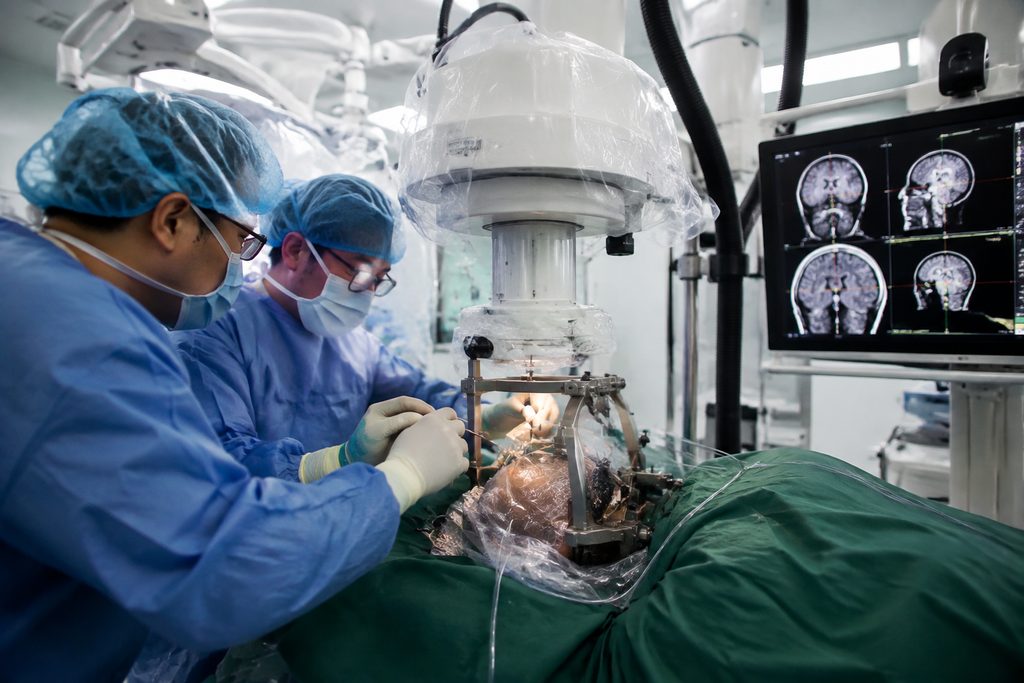
Parkinson’s disease wears a person down. Not overnight. It takes years. The tremor that starts in one hand eventually makes writing a check impossible. The stiffness turns a morning walk into a shuffled negotiation with the floor. By the time most families start searching for “deep brain stimulation cost Shanghai Huashan hospital,” medication has stopped working the way it used to. The on-off cycles have become unpredictable. And someone has heard—usually from a fellow patient, a neurologist, or a support group—that the neurosurgery team at Huashan Hospital affiliated with Fudan University handles over 600 DBS implantations annually. That number matters. Surgical volume correlates with outcomes in deep brain stimulation. A 2023 analysis in the Journal of Neurosurgery found that centers performing more than 50 DBS cases per year had significantly lower complication rates than lower-volume centers. Huashan performs more than ten times that threshold.
Our team coordinates with international patients who are evaluating exactly this decision. We are not surgeons. We handle the logistics—hospital selection, document translation, appointment scheduling, visa guidance, and on-the-ground bilingual support. What follows is a direct explanation of how the DBS program at Huashan actually works for someone coming from outside China, what it costs, and what the pathway looks like from first inquiry to programming the implanted device.
How This Actually Works, Step by Step
The process starts long before you board a plane. Most international patients first send their existing medical records for review. This is not a formality. The neurosurgery team needs to confirm that you are actually a DBS candidate. Not every Parkinson’s patient is. The ideal candidate has idiopathic Parkinson’s disease, has shown a clear positive response to levodopa, and does not have significant cognitive impairment or untreated depression. A patient with atypical parkinsonism or major psychiatric comorbidities will likely be declined. That is a good thing. It means the team is screening properly.
Here is the actual sequence:
You send your records. These typically include a recent neurological examination report, brain MRI images (preferably within the last 6 months), a medication history with levodopa response documentation, and a neuropsychological evaluation if one has been done. Our team translates these into clinical Chinese and submits them through Huashan’s international patient channel. A neurosurgeon and movement disorder neurologist review the file together. This takes 3 to 7 working days.
If the review is favorable, you receive a preliminary assessment letter. It will state that you appear to be a candidate for DBS, pending an in-person evaluation. That in-person evaluation is mandatory. No reputable center will schedule DBS surgery based on records alone. You will need to travel to Shanghai for a comprehensive assessment that includes an on-state and off-state UPDRS motor examination, a detailed neuropsychological battery, and a high-resolution 3T MRI with DBS-specific sequences.
After the in-person evaluation confirms candidacy, the surgical date is scheduled. The surgery itself is typically a two-stage procedure at Huashan. Stage one: implantation of the DBS leads into the target brain nucleus (usually the subthalamic nucleus or globus pallidus interna) under local anesthesia with microelectrode recording guidance. Stage two: implantation of the pulse generator in the chest under general anesthesia, usually the next day. Hospital stay is 5 to 7 days total. Initial programming happens about 2 to 4 weeks after surgery, once brain swelling has subsided. Full programming optimization takes several sessions over 3 to 6 months.
That last part surprises many families. The surgery is not the end. Programming is where the real fine-tuning happens, and it requires patience.
Why Huashan’s Neurosurgery Program Stands Out for DBS
The question “is Huashan hospital Fudan good for neurosurgery” has a data-backed answer. The Department of Neurosurgery at Huashan Hospital was established in 1952 and is consistently ranked among China’s top three neurosurgery programs in the Fudan University Hospital Rankings—a national evaluation system that assesses clinical capability, research output, and specialty reputation across 45 disciplines. In neurosurgery specifically, Huashan has held a top-3 position for over a decade.
DBS volume is the most telling metric for international patients. Huashan’s functional neurosurgery division performs more than 600 DBS procedures per year. That places it among the highest-volume DBS centers globally. For comparison, most major U.S. academic centers perform between 80 and 150 DBS surgeries annually. The surgical team has implanted over 5,000 DBS systems since the program began. When you are choosing where to have electrodes placed into a target the size of a grain of rice, repetition matters. The microelectrode recording technique used at Huashan involves passing a tiny recording electrode through the target area to map neuronal firing patterns before final lead placement. This intraoperative neurophysiology step improves targeting precision, but it requires a team that does it every day, not once a week.
Also relevant: Huashan is one of the few centers in China that offers both traditional frame-based stereotactic DBS and the newer frameless robot-assisted approach using the ROSA robotic system. The choice between them depends on patient-specific anatomy and surgeon preference, but having both options available means the team can adapt to individual cases rather than applying one method universally.
Key takeaway: Huashan’s DBS program combines high annual surgical volume (600+ cases), dual-platform targeting technology (frame-based and robotic), and a dedicated movement disorder neurology team for pre-surgical screening and post-operative programming—a combination that few centers worldwide can match.
What Deep Brain Stimulation Actually Costs at Huashan
Let’s address the question directly: what is the deep brain stimulation cost Shanghai Huashan hospital for an international patient? The answer has two components—the hospital charges and the device cost—and varies depending on which DBS system you choose.
The hospital surgical package for bilateral DBS lead implantation and pulse generator placement at Huashan’s International Medical Center typically ranges from $28,000 to $38,000 USD. This covers the operating room, anesthesia, surgeon fees, microelectrode recording, intraoperative CT verification, and a 5-to-7-day inpatient stay in a private room on the international ward. It does not include the pre-surgical evaluation, which costs approximately $2,500 to $3,500 USD for the full neurological, neuropsychological, and imaging workup.
The DBS device itself is a separate cost. Huashan offers three systems. Medtronic’s Percept PC with BrainSense technology runs approximately $22,000 to $26,000 USD. Boston Scientific’s Vercise Genus system is priced around $20,000 to $24,000 USD. The domestically manufactured PINS system, which has gained significant traction in China and is now CE-marked for the European market, costs approximately $12,000 to $16,000 USD. The PINS system offers rechargeable and non-rechargeable options and has published five-year safety and efficacy data comparable to international brands.
So a realistic all-in figure for bilateral DBS at Huashan, including the device, surgery, and pre-operative evaluation, falls between $42,500 and $67,500 USD depending on device selection. That range is worth putting in context. The same procedure in the United States typically costs between $80,000 and $130,000 for the surgery alone, with the device adding another $25,000 to $40,000. In Western Europe, the combined cost often falls between $70,000 and $110,000 USD. The Parkinson’s DBS surgery price China offers is meaningfully lower, even through the international patient channel.
| Cost Component | Huashan International (USD) | U.S. Average (USD) |
|---|---|---|
| Pre-surgical evaluation | $2,500 – $3,500 | $5,000 – $8,000 |
| Surgical package (bilateral) | $28,000 – $38,000 | $80,000 – $130,000 |
| DBS device (Medtronic/Boston Sci) | $20,000 – $26,000 | $25,000 – $40,000 |
| DBS device (PINS, domestic) | $12,000 – $16,000 | N/A |
| Total estimated range | $42,500 – $67,500 | $110,000 – $178,000 |
These figures reflect the international patient pathway pricing. The standard domestic patient pathway costs less, but it does not include English-language coordination, private inpatient rooms, or the administrative support international patients require. The international channel pricing remains substantially below U.S. and European benchmarks.
A Realistic Timeline
People underestimate how long this takes. Not the surgery itself—that is two days. The surrounding process. Here is a realistic timeline based on actual cases we have coordinated:
| Stage | Duration | What Happens |
|---|---|---|
| Record collection and translation | 1–2 weeks | You gather MRIs, neurology reports, medication history. Our team translates into clinical Chinese. Back-and-forth if records are incomplete. |
| Huashan team review | 1–2 weeks | Neurosurgeon and movement disorder specialist review the file. Preliminary candidacy determination issued. |
| Visa processing (S2) | 2–4 weeks | With the hospital’s invitation letter, you apply for an S2 visa at your local Chinese embassy or consulate. Processing times vary by country. |
| Travel to Shanghai and in-person evaluation | 1 week | Comprehensive assessment: on/off UPDRS testing, neuropsych battery, 3T MRI. Final surgical candidacy confirmed at the end of this week. |
| Surgery scheduling gap | 2–4 weeks | After evaluation confirms candidacy, the next available surgical slot is typically 2 to 4 weeks out. This is the scheduling reality at a high-volume center. |
| Surgery and inpatient stay | 5–7 days | Two-stage procedure. Lead implantation day one. Pulse generator day two. Observation days three through five or seven. |
| Initial recovery in Shanghai | 2–3 weeks | You stay in Shanghai. Surgical site healing. First programming session around week 2 or 3 post-op. |
| Return home and ongoing programming | 3–6 months | Multiple programming sessions required for optimization. Some can be done remotely if your local neurologist has the manufacturer’s programmer. Otherwise, additional trips may be needed. |
The total time from first contact to returning home after surgery is typically 10 to 14 weeks. The variable that stretches this the most is visa processing time. Some embassies process S2 visas in under a week. Others take a month. Plan conservatively.
What Can Go Wrong—and What Happens Then
Every surgical procedure has risks. DBS carries specific ones. The overall serious complication rate for DBS at high-volume centers is approximately 2% to 4%. That includes intracranial hemorrhage (about 1%), infection requiring hardware removal (2% to 3%), and lead misplacement requiring revision (1% to 2%). These are the numbers from the published literature, and Huashan’s published outcomes align with these benchmarks.
If an infection occurs, the standard protocol is explantation of the hardware, a course of intravenous antibiotics, and reimplantation after the infection has fully cleared—typically 6 to 12 weeks later. This is disruptive and distressing. It is also manageable. The hospital’s international patient coordinator remains involved throughout. The reimplantation surgery is scheduled as a priority case.
If a lead is suboptimally placed, a revision surgery repositions it. This is usually done within the first week post-op if intraoperative or immediate postoperative imaging shows the lead is off-target. Huashan performs intraoperative CT verification before the patient leaves the operating room, which has significantly reduced the rate of lead revision compared to centers that rely solely on microelectrode recording without imaging confirmation.
What about programming problems? This is the most common frustration, not a complication per se. Initial programming may produce unwanted side effects—speech difficulties, muscle pulling, mood changes. These are almost always reversible with parameter adjustments. But it takes time and multiple sessions. A patient who expects one programming visit to produce perfect results will be disappointed. A patient who understands that DBS programming is a months-long titration process will do fine.
And the honest scenario no one wants to discuss: what if you are not a candidate? It happens. Perhaps the in-person evaluation reveals cognitive issues that were not apparent in the records. Or the MRI shows significant white matter disease. Or the levodopa response is less robust than initially reported. In that case, the surgical team will decline to operate. The pre-surgical evaluation fee is not refundable—the work was done. But you have avoided an ineffective surgery. That is the correct outcome, even if it is not the one you hoped for.
How to Evaluate a DBS Center and Surgeon from Abroad
If you are searching for the best DBS surgeon Shanghai China, you need criteria beyond a hospital’s reputation. Reputation helps. But you need specifics. Here is what to look for when evaluating a DBS program remotely:
Annual surgical volume is the single most predictive metric. Ask directly: how many DBS implantations does this specific surgeon perform per year? At Huashan, the lead functional neurosurgeons each perform 100 to 200 DBS cases annually. That is the volume range associated with the lowest complication rates. A surgeon doing 20 DBS cases a year is not in the same league, regardless of their credentials.
Ask about the targeting technology. Does the center use microelectrode recording? Intraoperative imaging? Both? A center that uses MER without imaging confirmation has a higher lead revision rate than one that uses both. Huashan uses MER plus intraoperative CT. Some cases also use the ROSA robotic platform for trajectory planning. These are not marketing points—they are technical specifications that affect precision.
Ask about the programming protocol. Who does the initial programming? A movement disorder neurologist or a device representative? At strong centers, a fellowship-trained movement disorder specialist handles programming. Device reps provide technical support but should not be making clinical parameter decisions. Huashan’s programming is managed by its movement disorder neurology team.
Ask about follow-up support for international patients. Can programming adjustments be done remotely if your local neurologist has the manufacturer’s tablet? Medtronic, Boston Scientific, and PINS all offer remote programming platforms, but they require a local clinician with the equipment and willingness to collaborate. Clarify this before surgery. Huashan’s team will provide detailed programming parameters and guidance to your home neurologist, but they cannot control whether that neurologist is comfortable managing a DBS patient.
A final point on the “best surgeon” question. The best DBS surgeon is not necessarily the most famous one. It is the one who operates in a high-volume team with integrated neurology support, uses modern targeting technology, and has a track record you can verify. At Huashan, the functional neurosurgery division is a team, not a single name. The surgeon who performs your case will be a senior member of that team with thousands of lead implantations behind them.
Practical Considerations: Records, Visa, Payment, and Follow-Up
The logistics of getting DBS in Shanghai are manageable but specific. Here is what you need to have in order before you start.
Medical records. You will need a recent brain MRI (within 6 months, 3T preferred, with T1, T2, and susceptibility-weighted sequences), a neurological examination report documenting your UPDRS scores in on and off medication states, a detailed medication schedule with levodopa equivalent daily dose calculation, and ideally a neuropsychological evaluation. If you do not have all of these, the Huashan team will tell you what is missing and whether the in-person evaluation can fill the gap or whether you need to obtain specific tests at home first.
Visa. International patients traveling to China for medical treatment use the S2 visa, which covers short-term private affairs including medical care. The S2 visa requires an invitation letter from the Chinese hospital. Huashan’s international patient office provides this letter once your preliminary candidacy is confirmed and your evaluation dates are set. Processing time at your local Chinese embassy or consulate ranges from 4 business days to 4 weeks depending on the country. Apply as early as possible. The S2 visa is typically issued for 30 to 90 days and can be extended once inside China if recovery requires a longer stay. Accompanying family members also apply for S2 visas with the same invitation documentation.
Payment. Huashan’s International Medical Center requires a deposit before the pre-surgical evaluation and full payment before surgery. Payment is by wire transfer or credit card. The hospital provides itemized receipts suitable for insurance reimbursement. Most international patients pay out of pocket and then seek reimbursement from their insurer. Check with your insurance provider before traveling. Some U.S. insurers will reimburse DBS performed at JCI-accredited international centers at out-of-network rates. Huashan is not JCI-accredited—it operates under China’s domestic hospital accreditation system, which is rigorous but not always recognized by Western insurers. Clarify your coverage.
Language. The international patient ward at Huashan has English-speaking nursing staff. The neurosurgeons and neurologists speak functional medical English. However, the broader hospital environment—registration desks, imaging departments, billing offices—operates in Chinese. A bilingual medical companion is not a luxury. It is how you get through the day without missing appointments or misunderstanding instructions. Our team provides this service for international patients throughout their stay.
Follow-up at home. DBS is not a one-and-done treatment. The device requires regular programming adjustments, battery monitoring, and eventual battery replacement (typically 3 to 5 years for non-rechargeable systems, 15 years for rechargeable ones). Before you travel to Shanghai, identify a neurologist or movement disorder specialist in your home country who is willing to manage a DBS patient implanted abroad. Some will. Some will not. Have this conversation early. Huashan’s team will provide a detailed discharge summary, programming parameters, and direct contact information for follow-up questions. Remote programming is possible with the manufacturer’s platform, but you need a local clinician to facilitate it.
Frequently Asked Questions
DBS delivers continuous electrical pulses to specific brain nuclei that become dysregulated in Parkinson’s disease. The most common target is the subthalamic nucleus, which is overactive in Parkinson’s due to dopamine loss. The electrical stimulation effectively resets the abnormal firing pattern, reducing tremor, rigidity, and bradykinesia. It does not cure the disease or stop its progression. It addresses motor symptoms that previously responded to levodopa but have become difficult to manage with medication alone due to motor fluctuations and dyskinesias. Non-motor symptoms like cognitive decline, depression, and autonomic dysfunction generally do not improve with DBS and may sometimes worsen.
No. Huashan requires an in-person evaluation before scheduling surgery. This is standard practice at any reputable DBS center. The evaluation confirms that you are a surgical candidate, identifies the optimal target nucleus, and screens for contraindications that may not be apparent in medical records. You cannot bypass this step. What you can do remotely is the preliminary records review, which tells you whether it is worth traveling for the in-person evaluation. That preliminary review is the logical first step for international patients considering Huashan for DBS.
The most serious risk is intracranial hemorrhage, occurring in approximately 1% of cases. Most hemorrhages are small and asymptomatic, but a minority cause permanent neurological deficits. Infection risk is 2% to 3% and may require hardware removal. Hardware complications—lead fracture, lead migration, pulse generator malfunction—occur in approximately 4% to 5% of cases over the device lifetime. Stimulation-related side effects like speech difficulties, gait changes, or mood effects are common during programming but are usually reversible with parameter adjustments. The overall probability of a serious permanent adverse event at a high-volume center is approximately 1% to 2%. These are the realistic numbers.
Most international insurers do not have direct billing arrangements with Chinese public hospitals, including Huashan. You will likely need to pay upfront and seek reimbursement. Whether your insurer reimburses depends on your plan’s out-of-network international coverage. Some plans explicitly exclude treatment in non-JCI-accredited facilities, which would exclude Huashan. Others cover medically necessary care abroad at out-of-network rates. Contact your insurer before committing to any expenses. Ask specifically about coverage for DBS at an international facility, reimbursement rates, and documentation requirements. Get the answer in writing.
What happens if the DBS device battery runs out?
Pulse generator battery life depends on the device and stimulation settings. Non-rechargeable systems typically last 3 to 5 years. Rechargeable systems last 15 years or more but require weekly patient charging. When the battery depletes, a replacement surgery is
For more medical information and treatment options in China, visit chinamedservices.com (China Medical Services).
