Dental Care in China: Booking From Abroad Without the Guesswork
Dental Care in China: Booking From Abroad
What if you could cut your dental bill by 70% and still sit in a chair that meets Western sterilization standards? That question is exactly why so many international patients now look up the dental implants cost China offers before they ever book a flight.
Here is the honest version. China has world-class dental hospitals and international clinics. It also has a booking system that was never designed for someone sitting in Toronto or Dubai with a laptop. This guide walks you through both realities.
Key takeaway: You cannot simply reserve a specialist appointment online from overseas at most public hospitals. The workable path is a written review of your dental records first, then a coordinated appointment, then travel. Skipping that order is where most overseas patients lose money.
How This Actually Works, Step by Step
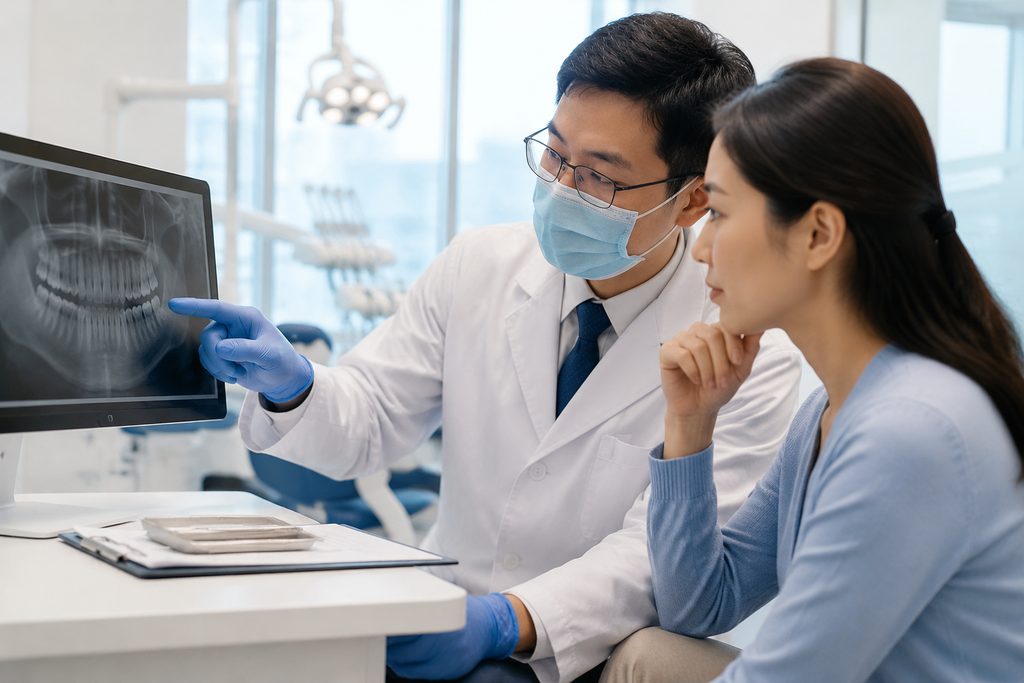
Most people assume the process starts with a flight. It doesn’t. It starts with a panoramic X-ray you probably already have.
Step one: you gather your existing records. A recent panoramic radiograph, a CBCT scan if you have one, photos of the problem area, and any treatment notes from your dentist at home. These get translated into Chinese by a medical translation service — not by a general translation app, because “sinus lift” and “bone graft” have specific clinical equivalents.
Step two: the relevant specialty reviews those files. At a hospital’s international department, a prosthodontist or implantologist looks at your bone volume, gum health, and the number of missing teeth, then returns a written opinion. That opinion tells you whether you’re a candidate for implants, what type of restoration makes sense, and roughly how many visits the plan requires.
Step three: only now do you talk scheduling. A coordinated appointment gets registered under your name at the chosen hospital, and your medical card is created before you land. This matters more than it sounds. Walk-in registration at a large public dental hospital means joining a queue at 6 a.m. with a few hundred other people.
Step four: you arrive, attend the in-person consultation, and the treating dentist confirms or adjusts the plan. Treatment begins. For a single implant, that may be one trip. For full-mouth rehabilitation, expect two or three.
What Dental Work Actually Costs, and Where to Go
Price is the reason most readers are here, so let’s put real ranges on the table. These are typical private and international-clinic ranges, and they move depending on the hospital, the implant brand, and how much bone grafting your case needs.
| Procedure | Typical China Range (USD) | Typical US Range (USD) |
|---|---|---|
| Single dental implant (fixture + abutment) | $800 – $2,000 | $3,000 – $6,000 |
| Implant crown (porcelain/zirconia) | $300 – $800 | $1,500 – $3,000 |
| Full zirconia crown | $200 – $600 | $1,200 – $2,500 |
| Root canal (molar) | $150 – $500 | $1,000 – $2,000 |
| Full-mouth implant rehabilitation | $12,000 – $30,000 | $50,000 – $100,000+ |
Those numbers explain the search volume. They also explain why the phrase “affordable dental crown price Beijing” shows up so often — a crown that costs $2,000 in Chicago can cost a fraction of that in a Beijing international clinic, and the materials are frequently the same imported brands.
Where you go depends on what you need. For complex implantology and bone reconstruction, the stomatology departments attached to major university hospitals are the strongest option. For a straightforward crown or cleaning with English-speaking staff and direct insurance billing, private international clinics are often the smoother experience. Our directory of top-ranked hospitals by city lets you compare both categories side by side.
If you’re searching for the best dental clinic Shanghai for foreigners specifically, the international clinics in the former French Concession and Pudong tend to dominate that conversation, while the university-affiliated stomatology hospitals handle the harder surgical cases. Both are legitimate. They serve different needs.
A Realistic Timeline
Dental timelines are longer than people expect because healing biology doesn’t negotiate. Here’s what a single-implant case looks like when you’re booking from abroad.
| Stage | Realistic Duration | What’s Happening |
|---|---|---|
| Record collection & translation | 3 – 10 days | X-rays, notes, translation into Chinese |
| Written specialty review | 3 – 7 days | Implantologist assesses bone and gum status |
| Appointment coordination | 1 – 3 weeks | Registration, medical card, slot confirmation |
| Visa (S2, medical purpose) | 1 – 3 weeks | Requires hospital invitation documents |
| Trip 1: consult + implant placement | 5 – 10 days in China | In-person exam, surgery, suture check |
| Osseointegration (healing at home) | 3 – 6 months | Implant fuses with bone — nothing to rush |
| Trip 2: abutment + crown | 7 – 14 days in China | Impression, fitting, final restoration |
So the honest answer to “how long does a dental implant take abroad” is: the surgery is quick, but the full sequence spans roughly four to eight months, most of which you spend at home. Anyone promising a finished implant in one week is either describing a different procedure or oversimplifying.
Tip: Book your second trip loosely. Healing varies, and a dentist who rushes the crown fitting onto immature bone is doing you no favors.
What Can Go Wrong — and What Happens Then
Let’s be direct, because trust is built here and not in a brochure.
Your X-rays turn out to be inadequate. A panoramic film alone sometimes can’t show whether you need a sinus lift. The clinic asks for a CBCT, which you get at home before traveling. Annoying, but far better than arriving and being told the plan changed.
The implant fails to integrate. This happens in a small percentage of cases even in the best hands — smoking, uncontrolled diabetes, and poor bone quality raise the risk. Reputable clinics typically offer a replacement fixture, but you’ll still pay for the extra trip. Ask about the warranty policy in writing before you commit.
You need more grafting than estimated. Quotes made from X-rays are estimates. The final number is confirmed after the in-person exam. Budget a 15–25% buffer on complex cases.
Communication breaks down. This is the most common failure, and the least discussed. A treatment plan explained in rapid Mandarin is a plan you can’t consent to properly. A bilingual companion who sits in the room and translates the consent form is not a luxury here.
Something goes wrong after you fly home. Your local dentist may be unwilling to adjust another clinic’s work. Sort this out beforehand — ask the treating clinic for complete records, implant brand and lot numbers, and a written follow-up protocol your home dentist can work from.
How to Judge Whether a Clinic Is Worth Your Money
Credentials matter more than photos of a marble lobby.
Look for a stomatology department attached to a university teaching hospital, or a private clinic with JCI accreditation and named specialists whose training you can actually verify. Ask which implant system they use. Straumann, Nobel Biocare, and Astra Tech are the brands with global support networks — meaning if a component fails in five years, your dentist at home can source a replacement. Off-brand fixtures save money now and cause problems later.
Ask about sterilization protocol. Autoclave logs, single-use burs, and sealed instrument pouches should be standard, and any clinic worth its reputation will show you without hesitation. This is the core of the “is dental work in China safe” question, and the answer is genuinely yes at accredited facilities — the risk sits with unlicensed backstreet operators, not with hospital stomatology departments.
Finally, ask who will actually place the implant. At teaching hospitals, a senior specialist may supervise while a resident performs part of the work. That’s normal and often excellent, but you’re entitled to know in advance.
Practical Considerations: Records, Visa, Payment, Follow-Up
Records. Bring digital copies on a USB drive and in the cloud. Chinese hospitals generally cannot pull your foreign dental records electronically.
Visa. Medical travel to China uses the S2 visa with a medical-treatment annotation. Stays beyond 180 days fall under S1. Accompanying family members also apply for S2. Note that the M visa is for commercial and trade activity only — it has nothing to do with medical treatment, despite what some outdated forum posts claim. Requirements shift, so confirm current rules with your nearest Chinese embassy or consulate and with the hospital’s international office.
Payment. Public hospitals require prepayment, and you claim reimbursement from your insurer afterward. Most private international clinics bill insurance directly. Confirm which model applies before you commit.
Language. Large public hospitals see thousands of outpatients daily. Signage is in Chinese. Even a simple pharmacy trip becomes difficult without help.
Follow-up at home. Line up a local dentist before you travel. Tell them what you’re having done and confirm they’ll handle maintenance.
If you’d like to understand how remote review fits into the wider picture of treatment planning, our consultation and coordination service page explains the staged approach we use.
Frequently Asked Questions
At private international clinics, often yes — some accept online booking and English-speaking walk-ins. At large public stomatology hospitals, no. Registration happens on the day, in person, in Chinese. If you’re only visiting as a tourist and want a cleaning or a simple filling, a private clinic is the practical choice. For implants or surgery, arrange the appointment in advance through the hospital’s international department.
At accredited hospitals and JCI-certified international clinics, yes. Materials are frequently imported from the same European and American manufacturers used elsewhere, and sterilization standards are enforced. The real risks concentrate in unlicensed clinics advertising bargain prices online. Verify credentials, ask about implant brands, and don’t choose a provider purely on the lowest quote.
For a single implant with crown, patients commonly save 50–70% compared with US private-practice pricing. On full-mouth rehabilitation, the gap widens further. Factor in flights, accommodation, and the possibility of a second trip — the net saving is still substantial, but it’s smaller than the headline procedure price suggests.
Most implant cases do require two visits, separated by three to six months of healing. Some clinics offer same-day or early-loading protocols for selected cases, but these depend on bone quality and aren’t appropriate for everyone. Plan for two trips and treat a single-trip outcome as a bonus.
For treatment in China, the S2 visa with a medical-purpose annotation is the applicable short-stay category, and accompanying family members apply under the same category. Requirements change, so verify the current checklist with the Chinese embassy or consulate in your country and request supporting documents from the hospital. Never travel on a tourist visa intending to receive treatment without confirming the rules first.
Your Next Step
The short version: China offers genuinely excellent dental care at a fraction of Western prices, but the booking path from abroad runs through medical records, a written review, and coordinated scheduling — not through a website checkout button.
China Medical Services connects international patients with 340+ top-ranked hospitals across 37 cities, and we handle the parts that trip people up: record translation, appointment coordination through official international departments, and bilingual accompaniment on the day. We don’t provide medical advice, and we can’t promise a specific specialist or a guaranteed surgery date.
If you’d like a straight assessment of your case and what it would realistically involve, start with a free consultation. No pressure, no obligation — just a clear picture before you decide anything.
This article is for general information only and is not a substitute for professional medical advice. Treatment decisions should always be made with a qualified dentist or physician who has reviewed your individual records.
For more medical information and treatment options in China, visit chinamedservices.com (China Medical Services).
