Dental Care in Taiyuan for International Patients: A Practical Guide
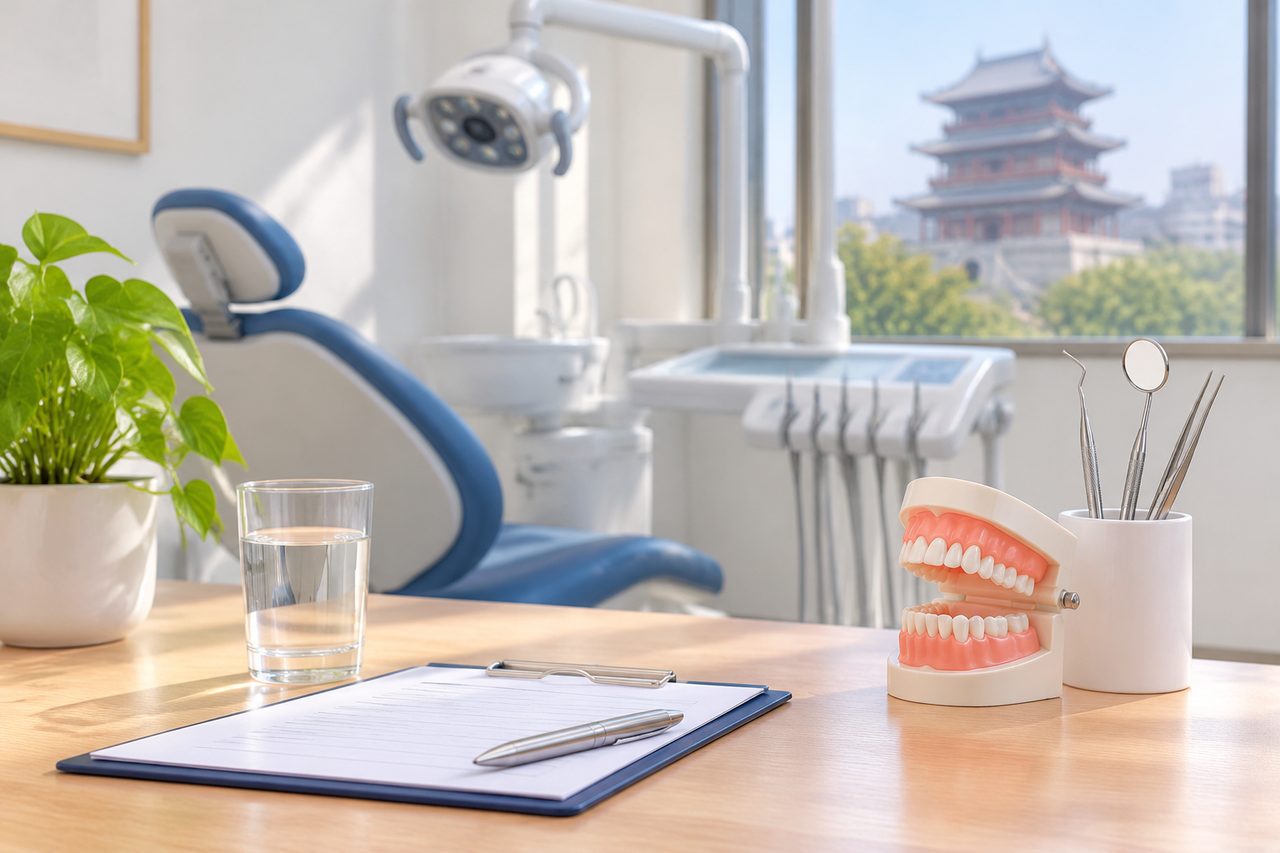
Dental Care in Taiyuan for International Patients
What happens if a crown fails, an implant needs review, or a toothache arrives while you are working or studying in Shanxi? Dental care in Taiyuan for international patients is available, but the pathway is not the same as walking into a clinic in your home country. Taiyuan is an industrial and university city of several million people with a full range of public and private dental providers, yet most of them do not run English-language booking systems. Understanding how appointments, records, payment and language support fit together is what turns a stressful problem into a manageable one.
This guide explains the practical sequence, the realistic timeline, the costs you can and cannot predict, and the points where international patients most often lose time. It is written by the team at China Medical Services, which coordinates hospital and specialist access across 37 Chinese cities, including Taiyuan.
How This Actually Works, Step by Step
The process is more sequential than most people expect. Here is the real order of events.
- You gather what you already have. Recent dental X-rays or a panoramic radiograph, any CBCT scan, a list of current medications, and a short note on what was done and when. If you have no imaging, that is normal — it simply means the first visit will include imaging.
- You describe the problem in plain language. Pain on chewing, a loose crown, bleeding gums, a missing tooth you want replaced, or a routine check. Specifics matter because they determine which department and which type of provider is appropriate.
- A Chinese dental specialist reviews the material. For straightforward cases, a written second opinion can clarify whether the issue is urgent, what treatment options exist, and roughly what the work involves. This is a document review, not a diagnosis, and it is for reference only.
- An appointment is coordinated. Public tertiary hospitals in China generally do not allow overseas patients to book an ordinary outpatient slot in advance; registration typically happens on the day. Guaranteed advance scheduling usually means the hospital’s international or VIP department, where English-speaking staff are more common and prices run roughly 1.5 to 2 times the standard channel. Private international dental clinics are the third option and often the simplest for expatriates already in the city.
- You attend, with or without a companion. A bilingual medical companion can handle registration, queueing, payment, wayfinding and interpretation during the visit. This is labor and coordination support, not a promise of a specific doctor or a specific appointment time.
- Treatment is planned and priced. Chinese public hospitals require prepayment for planned treatment; private clinics often settle directly, and some bill international insurance.
- Follow-up is agreed before you leave. Ask explicitly what review schedule applies and what records you will take home.
What Dental Care in Taiyuan for International Patients Really Covers
Taiyuan’s dental capacity spans three broad settings, and they behave very differently.
Public tertiary hospitals with stomatology departments handle complex work: surgical extractions, impacted wisdom teeth, implant placement, periodontal treatment and oral medicine. They are busy, appointment-light for foreigners, and inexpensive by Western standards. A single-site implant in a Chinese public hospital commonly falls in a broad range rather than a fixed price, because the implant brand, bone grafting needs and prosthetic type drive most of the cost. Treat any figure you see online as a starting point, not a quote.
Private and international dental clinics in Taiyuan serve expatriates and business visitors. They typically offer English-speaking dentists or interpreters, same-week appointments, digital scanning and a Western-style clinic environment. Prices are higher than public hospitals but usually still below Western Europe or North America. Direct insurance billing is more common here than in public hospitals, though you should confirm with your insurer before treatment rather than after.
Traditional Chinese medicine (TCM) hospitals play a smaller but real role — mainly in managing chronic oral conditions, dry mouth, and post-surgical discomfort. TCM is not a substitute for restorative dentistry. Our overview of TCM hospitals in China explains where it fits and where it does not.
A Realistic Timeline
Timelines depend on whether you are already in Taiyuan or planning a trip. The table below reflects typical ranges, not guarantees.
| Stage | What Happens | Typical Duration |
|---|---|---|
| Records collection | Gather X-rays, medication list, treatment history | 1–3 days |
| Written review | Specialist reviews records and comments on options | 3–7 days |
| Appointment coordination | Registration, department selection, companion booking | 3–10 days |
| Visa (if traveling) | S2 short-stay visa for medical treatment, subject to embassy requirements | 1–3 weeks |
| First consultation | Examination, imaging, treatment plan and cost estimate | Same day |
| Simple treatment | Filling, extraction, crown preparation | 1–2 visits |
| Implant or complex work | Staged visits, healing intervals between stages | 3–6 months |
| Follow-up | Review appointment or records sent to your dentist at home | 1–2 weeks after treatment |
The step international patients most often forget is the healing interval. Implant dentistry is not a single trip. If you are planning travel specifically for dental work, ask before booking flights whether the plan requires two visits months apart.
What Can Go Wrong — and What Happens Then
Honest planning means naming the failure modes.
The appointment cannot be secured for the date you want. Public hospital registration is same-day and demand is high. The recourse is either to accept a later date, to use the international or VIP department where advance scheduling is more reliable, or to choose a private clinic. Our appointment coordination service refunds the coordination fee in full if the appointment shown in the order cannot be secured.
Language breaks down at the payment window. This is the single most common friction point. Registration, imaging payment and pharmacy collection are separate counters, often with no English signage. A bilingual companion resolves this; arriving alone without Mandarin is workable but slow.
The treatment plan changes after examination. A crown turns out to need a root canal; an implant site needs grafting. Costs rise accordingly. Ask for the revised written estimate before consenting, and do not treat any pre-travel figure as final.
Insurance does not reimburse as expected. Public hospitals generally require prepayment and provide documentation for later reimbursement. Confirm with your insurer in advance which documents they require — itemized invoice, diagnosis certificate, medical record excerpt — because obtaining them after you leave is harder.
A complication appears after you return home. Your home dentist needs records. Request copies of imaging and treatment notes before departure. If a problem emerges later, a written second opinion from a Chinese specialist can help your local dentist understand what was done.
How to Judge a Dental Provider in Taiyuan
Credentials matter more than marketing. In China, dental providers should be able to show hospital or clinic registration and the treating dentist’s license. Public tertiary hospitals are ranked in the Fudan hospital rankings, which assess specialist reputation; our department rankings by specialty show how Chinese hospitals are evaluated across 45 specialties, and the same logic of reputation and volume applies when comparing institutions.
Practical questions to ask before committing:
- Which implant system do you use, and are components available for future maintenance in my home country?
- Is the quoted price inclusive of imaging, anesthesia, laboratory work and the final crown?
- How many visits will this require, and what is the minimum interval between them?
- Will I receive imaging and treatment records in a format my dentist at home can read?
- What is the process if the implant fails or the crown fractures within the warranty period?
A provider who answers these precisely is a better signal than one who quotes the lowest price. Chinese dental care is genuinely cost-competitive, but the cheapest option is rarely the right benchmark for complex restorative work.
Practical Considerations: Records, Visa, Payment and Language
Generally yes, particularly for implants, crowns and surgical extractions in public hospitals, though prices vary widely by hospital, implant brand and case complexity. Private international clinics cost more than public hospitals but usually less than equivalent clinics in North America or Western Europe. Always request a written estimate after examination rather than relying on published ranges.
Request all imaging and treatment records before departure so your home dentist can assess the situation. If a question remains, a written second opinion from a Chinese specialist can clarify what was done and what options exist. Neither approach replaces an in-person examination by a licensed dentist where you live.
Your Next Step
Dental care in Taiyuan is accessible to international patients, but it rewards preparation: records in hand, realistic expectations about scheduling, a clear understanding of what public and private settings each offer, and a plan for language and payment. Our team does not provide dental treatment or clinical advice. We coordinate specialist review, appointment logistics, bilingual accompaniment and hospital communication so that the clinical side can proceed without administrative friction. If you would like to discuss your situation, you can request a free consultation and we will explain what is realistic for your case.
This article is for general information only and does not constitute medical advice. Treatment decisions should be made with a qualified dental professional who has examined you.
For more medical information and treatment options in China, visit chinamedservices.com (China Medical Services).
