Dental Crowns: How Long Do They Last and What They Cost in China
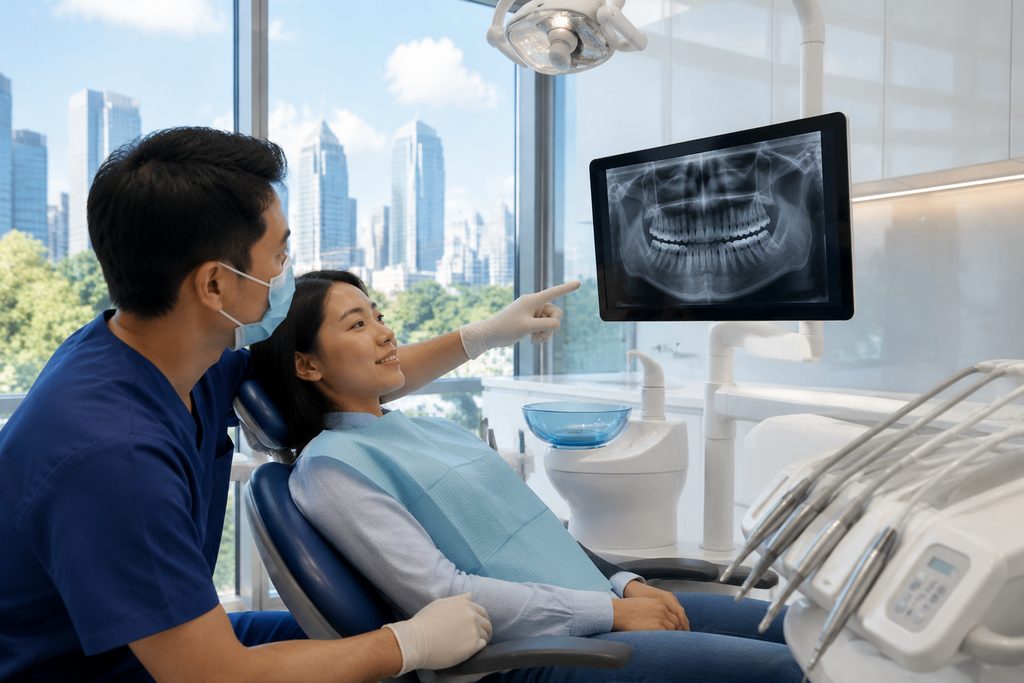
Have you ever winced at a dental quote and wondered whether there is a smarter way to get the same crown? A single ceramic crown in the United States now runs between $1,200 and $2,500 before insurance. In the United Kingdom, the NHS covers only metal crowns for back teeth, and private ceramic options start around £600. The dental crown cost China routinely lands between $180 and $420 for the same material — a difference that pays for the flight, the hotel, and a week of sightseeing. But cost is only half the question. The other half is durability: how long do dental crowns last in China, and are the materials and techniques genuinely comparable to what you would get at home?
Our team at China Medical Services fields these questions every week from patients in North America, Europe, and the Gulf. They are not bargain hunters. They are people who need three, four, or eight crowns and cannot justify spending the price of a used car on their teeth. This article gives you the straight numbers on lifespan, material choices, safety standards, and the practical steps to book dental crown treatment Shanghai or elsewhere in China — without the marketing fluff.
Key Takeaways
- Porcelain-fused-to-metal crowns in China typically last 10–15 years; full zirconia and e.max crowns often exceed 15 years with proper care.
- Ceramic crown price Shanghai ranges from roughly $180 to $420 per unit, compared to $1,200–$2,500 in the US — a 70–85% saving.
- Top Chinese dental hospitals use the same CAD/CAM systems (CEREC, 3Shape) and imported materials (Ivoclar, VITA, 3M) as Western clinics.
- Language barriers and verification of clinic credentials are the two biggest risks — both manageable with the right preparation.
The Problem: Dental Work at Western Prices Is No Longer Sustainable
Around 178 million Americans are missing at least one tooth, and the American College of Prosthodontists expects that number to keep climbing. Crowns are the standard fix for cracked molars, root-canaled teeth, and failing large fillings. Yet in the US, the average single crown costs $1,300 to $1,600, and most dental insurance plans cap annual benefits at $1,500. One crown eats the entire year’s coverage. Two crowns mean thousands out of pocket.
That math breaks down fast for patients who need multiple restorations. A full-mouth rehabilitation involving six to eight crowns can easily exceed $15,000 in the US, $10,000 in the UK, or €8,000 in Germany. And if you need implants under those crowns, the total can double. The result: people delay treatment, live with pain, or patch problems with temporary fixes that fail within a year. Delaying a crown after a root canal, for instance, raises the risk of tooth fracture — which can turn a $1,500 crown into a $4,000 implant.
So the question is not whether you can afford dental care. The question is whether you can afford to keep paying Western prices for the same restorative work available elsewhere at a fraction of the cost.
Why China Delivers Comparable Crowns at a Fraction of the Price
Clinical Volume and Specialization
Chinese prosthodontists in major urban centers see a volume of crown cases that most Western dentists never approach. A busy prosthodontics department at a top-tier hospital in Shanghai or Beijing may complete 40 to 60 crown placements per week. That repetition builds technical fluency — margin adaptation, occlusion adjustment, shade matching — skills that directly affect how long a crown lasts. A poorly fitted margin is the leading cause of secondary decay under a crown. Volume matters because it polishes exactly the skills that prevent failure.
And this is not back-alley dentistry. The leading dental hospitals in China are affiliated with major medical universities and follow infection-control protocols audited by international bodies. Many private international dental clinics in Shanghai and Beijing hold JCI accreditation or equivalent, meaning their sterilization, record-keeping, and patient-safety standards meet the same benchmarks as hospitals in Singapore or Germany.
Technology Without the Premium
Walk into a reputable dental clinic in Shanghai and you will find the same equipment as a high-end practice in London or Los Angeles: intraoral scanners, cone-beam CT, and in-house milling units. Many clinics use CEREC or 3Shape systems to design and mill crowns on-site, which means single-visit dentistry is available. The materials are imported — Ivoclar e.max, VITA VM ceramics, 3M Lava zirconia — because Chinese dentists know that international patients specifically ask about material provenance.
The structural difference is labor economics. A Chinese prosthodontist earns a fraction of what a US dentist earns, and clinic overhead is lower. The crown itself — the ceramic block, the milling time, the technician’s labor — costs roughly the same everywhere. What you are not paying for is the Western wage premium embedded in every procedure code.
Cost Comparison: The Numbers That Matter
| Crown Type | US Average Price (per unit) | UK Private Price | China Price Range (Shanghai/Beijing) |
|---|---|---|---|
| Porcelain-fused-to-metal (PFM) | $900–$1,400 | £450–£700 | $120–$250 |
| Full zirconia (monolithic) | $1,200–$2,000 | £600–£900 | $220–$420 |
| Lithium disilicate (e.max) | $1,500–$2,500 | £700–£1,100 | $250–$450 |
| Full-mouth (8 crowns, e.max) | $12,000–$20,000 | £5,600–£8,800 | $2,000–$3,600 |
Prices vary by hospital tier, clinic location, and case complexity. A top-tier public hospital prosthodontics department may charge less than a private international clinic, but the private clinic will offer English-speaking staff and faster scheduling. The point stands: ceramic crown price Shanghai is not a typo. It is the structural reality of Chinese healthcare economics.
How Long Do Dental Crowns Last in China: The Real Lifespan Data
Let us answer the headline question directly. How long do dental crowns last in China? The honest answer: the same as anywhere else, because the crown’s lifespan depends on material, margin fit, and your oral hygiene — not the country where it was placed.
Clinical studies consistently report 10-year survival rates of 90–95% for porcelain-fused-to-metal crowns and 95–98% for full zirconia and lithium disilicate crowns. A 2021 systematic review in the Journal of Prosthetic Dentistry found that monolithic zirconia crowns had a five-year survival rate above 97%, with most failures caused by secondary caries or endodontic complications — not material fracture. The crown itself rarely fails. The tooth underneath it does.
That is the critical distinction. A crown placed over a tooth with undiagnosed decay or a poorly executed root canal will fail within a few years regardless of where you got it. A crown placed on a healthy, well-prepared tooth with a sealed margin can last 20 years or more. Chinese prosthodontists in reputable clinics follow the same preparation protocols as their Western counterparts: 1.5–2 mm of occlusal reduction, chamfer or shoulder margins, and verified marginal fit before cementation.
What shortens crown lifespan? Bruxism (teeth grinding), acidic diets, poor flossing habits, and smoking. None of these are China-specific. If you grind your teeth at night, you need a night guard — whether your crown was made in Shanghai or Seattle.
Is Dental Work in China Safe: Standards, Materials, and What to Verify
Is dental work in China safe? The short answer is yes — if you choose a vetted clinic and verify three things before you sit in the chair. The longer answer requires understanding how Chinese dental care is structured.
China has two parallel dental systems. The first is the public hospital system, where prosthodontics departments operate under the same hospital administration as cardiac surgery and oncology. These departments follow national infection-control regulations, use autoclave sterilization for all instruments, and are staffed by dentists who completed five-year undergraduate programs plus specialty training. The second is the private clinic sector, which ranges from high-end international clinics (United Family, Jiahui, Parkway, Raffles) to small neighborhood practices. The international clinics are the safest choice for foreign patients: English-speaking staff, JCI accreditation, imported materials, and transparent pricing.
What should you verify before booking? Three things. First, ask for the clinic’s sterilization protocol — specifically, do they use Class B autoclaves and single-use disposable items for anything that touches blood? Second, ask where the crown materials come from. Reputable clinics will name the brand: Ivoclar, VITA, 3M, or Dentsply Sirona. If they cannot name the material, walk away. Third, check whether the dentist is licensed by the Chinese Stomatological Association or holds international credentials. Many prosthodontists in international clinics trained in the US, UK, or Germany.
We have written a detailed guide on how to evaluate Chinese hospital credentials that applies equally to dental care. The principles are the same: verify accreditation, confirm material provenance, and never choose a provider based on price alone.
Dental Crown Package Abroad: What a Treatment Trip Actually Looks Like
A dental crown package abroad is not a single product you buy off a shelf. It is a sequence of steps that, done correctly, gives you high-quality restorative work and a trip you actually enjoy. Here is the realistic timeline for a crown trip to Shanghai.
Day 1: Arrival and initial consultation. The dentist examines your teeth, takes X-rays or a cone-beam CT, and confirms the treatment plan. If you sent records in advance, this visit is shorter. Day 2: Tooth preparation. The dentist removes decay, shapes the tooth, and takes digital impressions with an intraoral scanner. A temporary crown is placed. Day 3–5: The permanent crown is milled and glazed. For single crowns with in-house milling, this can be same-day or next-day. For multiple crowns or complex cases, the lab may need 3–5 days. Day 6: Try-in and cementation. The dentist checks fit, occlusion, and shade, then bonds the crown permanently. Day 7: Final check and departure.
For a single crown, the whole process can be compressed into 3–4 days. For multiple crowns or full-mouth work, plan for 7–10 days. The key advantage of booking through a coordination service is that the clinic knows you are traveling from abroad and schedules your appointments back-to-back instead of spreading them over weeks.
Practical tip: If you need more than four crowns, ask whether the clinic offers a discount for multiple units. Many Chinese clinics price crowns per unit but reduce the per-unit fee for full-arch or full-mouth cases. The savings can be an additional 10–20%.
How to Book Dental Crown Treatment Shanghai: The Step-by-Step Process
Booking dental treatment in China from abroad is not like booking a haircut. You cannot simply call a public hospital and reserve a slot — public hospital dental departments typically require in-person registration, and many do not offer English-language scheduling. The practical route for international patients is either a private international clinic or a coordination service that handles the logistics.
Here is the process if you want to book dental crown treatment Shanghai independently. First, identify the clinic. United Family, Jiahui, ParkwayHealth, and Raffles Medical all have dental departments in Shanghai with English-speaking staff and direct insurance billing. Contact them directly by email or their international patient hotline. Send your dental records — recent X-rays, a treatment plan from your home dentist, and a list of medications. Ask for a written quote before you book flights. Most international clinics will provide one.
Second, sort out your visa. Foreign nationals traveling to China for medical treatment use the S2 visa, which covers short-term private affairs including medical treatment. You will need supporting documents from the clinic — a treatment confirmation letter and appointment schedule. The S2 visa typically allows a stay of up to 180 days, which is far more than any dental trip requires. Family members accompanying you apply for the same S2 category.
Third, arrange payment. Public hospitals require prepayment and do not bill international insurance directly. Private international clinics in Shanghai often do bill directly — United Family and Parkway both have direct-billing agreements with major insurers like Cigna, Aetna, and Bupa. Check with your insurer before you travel. If you are paying out of pocket, international clinics accept major credit cards and bank transfers.
Finally, plan your follow-up. A well-made crown needs no immediate follow-up, but if an issue arises within the first year — a chip, a loose crown, sensitivity — you need a plan. Ask the clinic before you leave what their warranty covers. Many Chinese clinics offer a 1–3 year warranty on crowns, which is comparable to Western standards. Keep your records and the lab prescription so your home dentist can service the crown if needed.
Caution: Do not book flights until you have a written treatment plan and quote from the clinic. Prices can shift once the dentist sees your actual teeth, and you want that conversation to happen before you commit to travel dates.
Frequently Asked Questions
There is no clinically meaningful difference. Crown longevity is determined by material quality, margin fit, and oral hygiene — not geography. A zirconia crown placed in Shanghai by a competent prosthodontist will last 15–20 years, the same as one placed in New York. The materials are identical because they are imported from the same manufacturers.
For a single e.max or zirconia crown in Shanghai, expect $250–$450 for the crown itself. Add consultation fees ($30–$80), X-rays or CT ($50–$150), and any necessary preparatory work like a root canal ($150–$400). A realistic all-inclusive budget for one crown is $500–$900. For eight crowns, budget $3,000–$5,500 including diagnostics. This still represents a 70–80% saving versus US prices.
Yes, if you choose an international clinic with English-speaking staff. United Family, Jiahui, ParkwayHealth, and Raffles Medical all operate dental departments in Shanghai and Beijing where English is the working language. These clinics follow JCI or equivalent standards and import their materials from the same suppliers as Western clinics. The risk is not the dentistry — it is choosing an unvetted local clinic where communication breaks down.
Most reputable Chinese clinics offer a 1–3 year warranty on crowns. If a crown chips or loosens within that period, the clinic will typically repair or replace it — but you may need to return to China. For minor adjustments, your home dentist can usually handle the issue. Keep all records, including the lab prescription and material certificates, so your home dentist knows exactly what was placed.
Some international clinics in Shanghai and Beijing have direct-billing agreements with major insurers, including Cigna, Aetna, Bupa, and Allianz. Check with your insurer before booking. If your plan does not cover overseas dental work, you will pay out of pocket and can often claim partial reimbursement under your plan’s out-of-network provisions. Public hospitals do not bill international insurance directly.
Your Next Step
You now have the numbers, the lifespan data, and the safety context to make an informed decision about dental crowns in China. The savings are real, the materials are the same, and the risks are manageable with proper vetting. China Medical Services helps international patients navigate Chinese healthcare — we are not a hospital, we do not diagnose, and we do not push anyone into treatment. We connect you with vetted clinics, help you understand your options, and handle the logistics if you decide to proceed. If you want a clearer picture of what your specific case would cost and which clinic fits your needs, start with a free consultation. No pressure, no obligation — just straight answers.
For more medical information and treatment options in China, visit chinamedservices.com (China Medical Services).
