Zirconia Crowns in China: How We Arrange Your Implant Restoration
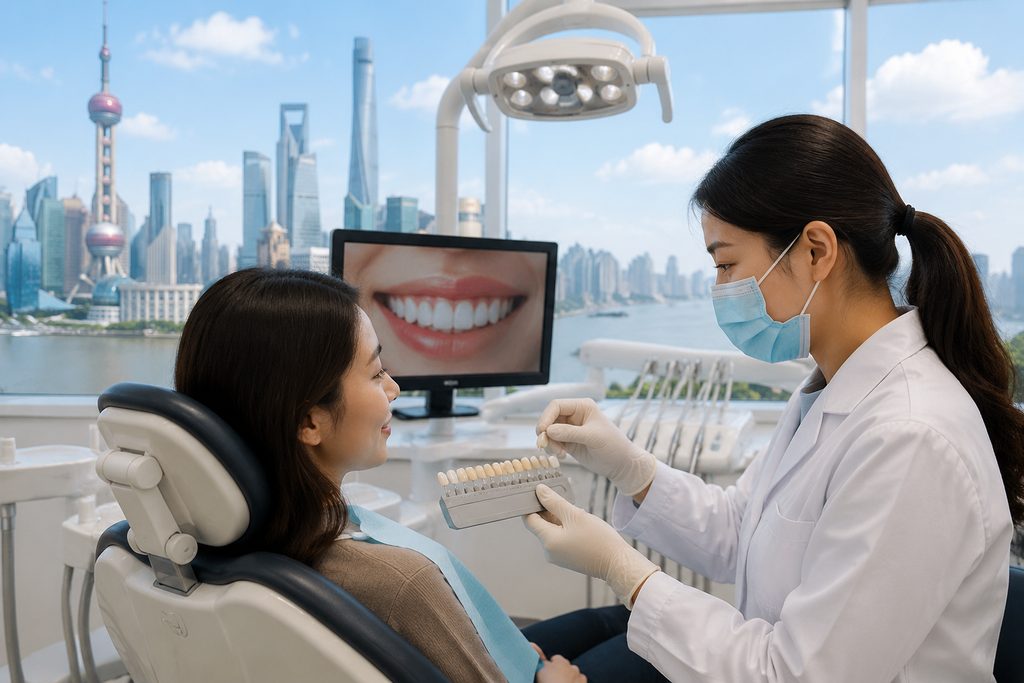
When 47-year-old Daniel from Manchester lost his lower first molar to a failed root canal, his UK dentist quoted £2,800 for a single implant and an additional £950 for the zirconia crown on top. That was just the restoration phase—the implant surgery itself had already cost him £1,700. He started searching for alternatives. That search led him to a question many international patients eventually ask: what is the actual zirconia crown cost China, and is it safe to travel for it?
Daniel is not alone. Dental tourism to China has grown steadily over the past decade, driven by a simple arithmetic that is hard to ignore. The same zirconia crown that costs $1,200 to $2,500 in the United States or $600 to $1,200 in Western Europe typically runs between $250 and $600 in top-tier Chinese dental hospitals and private clinics. That is a 60–85% reduction. But price alone is not a reason to book a flight. Quality, materials, workflow, and aftercare matter more. This article explains what zirconia crowns are, why China has become a serious contender for implant restoration, how the process actually works for international patients, and what you should verify before committing.
Key Takeaways
- Zirconia crowns in China cost between $250 and $600 at reputable clinics—roughly 60–85% less than US prices for the same material.
- Top Chinese dental centers use the same CAD/CAM systems and zirconia blanks (3M Lava, Ivoclar, VITA) as Western clinics.
- Language barriers and aftercare logistics are real challenges—a bilingual coordinator changes the experience materially.
- You should never book a crown without first confirming the implant system, abutment compatibility, and warranty terms in writing.
The Problem: Dental Restoration Costs in the West Have Become Unsustainable
According to the American Dental Association’s 2022 Survey of Dental Fees, the median fee for a single porcelain-fused-to-metal crown in the US was approximately $1,100. A full-contour zirconia crown—the material most dentists now recommend for posterior implants—runs higher. The average US patient pays between $1,500 and $2,800 per crown when the abutment and placement are factored in. In Australia, the figure is comparable: AUD $1,800 to $2,600. The UK sits slightly lower but still painful: £700 to £1,300 for the crown alone.
Those numbers hit harder when you realize that dental insurance rarely covers the full amount. Most US dental plans cap annual benefits at $1,500, which means a single implant crown can exhaust an entire year of coverage. Many patients delay treatment. Some live with a missing tooth for years. Others choose lower-quality materials to save money—a decision that often leads to fracture, wear, or peri-implantitis within five years.
Daniel’s situation was typical. He needed the restoration, he wanted a material that would last, and he could not justify spending the equivalent of a used car on a single tooth. The search for “zirconia crown price abroad vs US” led him to evaluate options in Turkey, Thailand, Mexico, and China. What he found surprised him.
Why China Delivers Results for Zirconia Implant Restoration
Clinical Volume and Digital Dentistry at Scale
China’s top dental hospitals process volumes that are hard to comprehend from a Western perspective. The stomatology department at Peking University School and Hospital of Stomatology—one of the oldest and most respected dental institutions in the country—handles over 1 million outpatient visits annually. Shanghai Ninth People’s Hospital, affiliated with Shanghai Jiao Tong University School of Medicine, performs more than 300,000 dental procedures each year. That volume creates two advantages: clinicians see rare complications more often, and laboratories can afford the kind of digital equipment that smaller Western practices cannot.
Most of the clinics we work with use intraoral scanners (3Shape TRIOS or iTero), chairside milling units (CEREC or Planmeca), or send digital impressions to centralized labs running industrial-grade sintering furnaces. The zirconia blanks come from the same manufacturers you would find in a Beverly Hills practice: 3M Lava, Ivoclar Vivadent, VITA, and Dental Direkt. Some Chinese labs have begun producing their own zirconia blocks under brands like Upcera and Aidite, which are increasingly used in Europe and the Middle East. The material science is not a compromise.
Cost Advantage Without Quality Compromise
Why is the zirconia crown cost China so much lower? The answer is structural, not qualitative. Chinese dental technicians earn $1,500 to $3,000 per month, compared to $4,000 to $7,000 in the US or Western Europe. Clinic overhead is lower. Laboratory equipment, once purchased, is amortized across dramatically higher case volumes. A Chinese dental lab might produce 500 crowns per day; a typical US lab produces 50. That scale drives down per-unit costs without changing the quality of the material or the precision of the milling process.
There is a second factor. Chinese hospitals and large private dental chains operate on thin margins and high throughput. A private clinic in Shanghai or Shenzhen might see 80 to 120 patients per day. The economics work because volume compensates for lower per-case pricing. For the patient, that means access to genuinely high-end restorative dentistry at a fraction of Western prices.
Is It Safe to Get Zirconia Crowns in China?
The honest answer: it depends on where you go. China has over 35,000 hospitals, but the top 5%—ranked by Fudan University’s hospital rankings and JCI accreditation—are genuinely world-class. The dental departments at these institutions follow strict sterilization protocols, use imported implant systems (Straumann, Nobel Biocare, Osstem, Dentium), and employ clinicians who trained in the US, Germany, Japan, or at China’s own elite dental schools. Infection control at accredited facilities is comparable to Western standards.
But the variance is real. A low-cost clinic in a tier-3 city may use unbranded zirconia blocks, skip proper abutment torque protocols, or rush the cementation. The question “is it safe to get zirconia crowns in China” cannot be answered with a blanket yes. It requires verification: check the clinic’s credentials, confirm the implant system and crown material in writing, and ask about warranty terms. We help patients do exactly that.
What the Process Actually Looks Like: From Records to Crown Delivery
Most international patients assume they need to fly to China for a consultation, wait for the crown, and stay for weeks. That is not how modern digital dentistry works. Here is the typical workflow we coordinate for implant restoration patients.
Step one: remote records review. You send us your existing dental records—panoramic X-rays, CBCT scans if available, implant brand and size, and photographs of the current abutment or healing cap. A Chinese prosthodontist reviews these remotely. They confirm whether your implant system is compatible with the restoration options available in China. Not every implant system is equally supported; some European brands are less common in Chinese labs. This step prevents wasted trips.
Step two: treatment plan and cost estimate. Based on the records, the clinic provides a written plan: crown material, abutment type, number of visits required, and total cost. A typical single zirconia crown on an existing implant requires two visits. The first visit is for digital impressions and shade matching. The second visit, usually 3 to 7 days later, is for try-in and final cementation. Some clinics offer same-day milling for simple cases, but for implant restorations, a two-visit protocol is more common and more reliable.
Step three: travel and treatment. You fly to China on an S2 visa, which is the appropriate short-stay category for private medical treatment. Your first clinic visit takes about 45 minutes. The digital impression is sent to the lab. Three to five days later, you return for placement. Total in-country time: 5 to 8 days. Our bilingual coordinator accompanies you to every appointment, handles registration and payment, and translates clinical discussions in real time.
Step four: aftercare. You return home with a warranty document and a digital copy of your records. Follow-up is done remotely. Most complications—sensitivity, minor occlusion adjustments—can be managed by a local dentist. The crown itself should not require replacement for a decade or more if properly maintained.
How Long Do Zirconia Crowns Last on Implants? What the Data Says
This is the question every patient should ask before comparing prices. A crown is only cheap if it lasts. The evidence on zirconia survival rates is reassuring. A 2021 systematic review published in the Journal of Prosthetic Dentistry analyzed 18 studies with follow-up periods ranging from 3 to 10 years. The pooled survival rate for zirconia single crowns on implants was 96.3% at 5 years and 91.2% at 10 years. That is comparable to—and in some studies slightly better than—porcelain-fused-to-metal crowns.
Zirconia’s main advantages are biocompatibility and fracture resistance. The material does not corrode, does not trigger metal allergies, and resists chipping better than earlier ceramic formulations. Full-contour zirconia (also called monolithic zirconia) is particularly suited for posterior implants because it withstands occlusal forces without the need for a porcelain veneer layer, which is the layer most prone to chipping.
The limiting factor is rarely the crown itself. It is the implant, the abutment connection, and the patient’s oral hygiene. Peri-implantitis—inflammation around the implant—is the leading cause of late implant failure, affecting approximately 1 in 5 implant patients at some point. A well-made zirconia crown on a healthy implant should last 10 to 15 years, and often longer. What matters is not just the crown material but the precision of the abutment fit and the occlusion adjustment at placement. That is where clinician skill makes a measurable difference.
Choosing the Right Clinic: What to Verify Before You Book
Not every Chinese dental clinic is worth your trust. The range in quality is wide, and the price differences between a top-tier clinic and a budget operation are often only $100 to $200 per crown. That is not where you should save money. Here is what we tell patients to verify before booking a zirconia crown implant package China.
| Verification Point | Why It Matters | What to Look For |
|---|---|---|
| Implant system compatibility | Not all labs stock every abutment type | Written confirmation of your implant brand and platform |
| Zirconia brand and grade | Material quality affects fracture resistance | Named brand (3M Lava, Ivoclar, VITA) or ISO 6872 certification |
| Digital impression workflow | Intraoral scanning is more accurate than traditional impressions | 3Shape, iTero, or CEREC equipment |
| Warranty terms | Protects you if the crown fails prematurely | Minimum 5-year warranty on the crown, 2-year on the abutment |
| Clinician credentials | Prosthodontic training matters for implant restorations | Specialist title, years of implant restoration experience |
The best dental implant clinic Shanghai zirconia patients choose is not necessarily the most famous name. It is the one that answers these questions clearly, provides written documentation, and does not rush the process. Some of the strongest options are the stomatology departments at major public hospitals—Peking University, Shanghai Ninth People’s Hospital, West China Hospital of Stomatology in Chengdu. Others are private international clinics like United Family Dental or Jiahui Dental, which offer English-speaking staff and direct insurance billing. Both models have strengths. Public hospitals offer deep clinical expertise and lower prices; private international clinics offer smoother communication and Western-style service. The right choice depends on your case complexity and your comfort level.
For patients searching “best dental implant clinic Shanghai zirconia,” the answer requires more than a Google result. Shanghai has over 200 dental clinics, but only a subset are equipped for complex implant restorations. The stomatology department at Shanghai Ninth People’s Hospital is widely regarded as one of China’s top two dental centers, with a prosthodontics division that handles thousands of implant restorations annually. For a more Western-style experience, ParkwayHealth Dental and Jiahui International Hospital Dental both offer JCI-accredited facilities with English-speaking prosthodontists. We maintain a database of top-ranked hospitals that includes dental specialty centers, and we can help you evaluate specific options based on your implant system and restoration needs.
Practical Considerations: Visas, Payment, and Aftercare Logistics
At reputable clinics, expect to pay between $250 and $600 for the crown itself, plus $100 to $300 for the custom abutment. The total restoration cost—impressions, abutment, crown, and placement—typically ranges from $400 to $900 per tooth. Prices vary by clinic tier, city, and case complexity. Shanghai and Beijing are slightly more expensive than Chengdu or Guangzhou.
Clinical studies report 5-year survival rates above 96% and 10-year rates above 91% for zirconia single crowns on implants. With good oral hygiene and regular dental check-ups, a well-made zirconia crown should last 10 to 15 years or longer. The most common cause of failure is not the crown but peri-implantitis, which is preventable with proper maintenance.
Yes, but the process starts with a remote records review. You send your existing X-rays, implant details, and photographs. A Chinese prosthodontist reviews them and confirms whether your case is suitable. Only then do you book travel. This prevents wasted trips for patients whose implant systems or clinical situations are not a good match for Chinese labs.
Most minor issues—occlusion adjustments, minor sensitivity—can be handled by your local dentist. The Chinese clinic provides warranty documentation and digital records. If the crown fails under warranty, the clinic will fabricate a replacement. You may need to return to China for placement, or the crown can be shipped to your local dentist. Confirm warranty logistics before you leave China.
Your Next Step
Zirconia implant restoration in China is not a gamble
Frequently Asked Questions
Yes. The hospitals used for international patients are JCI-accredited and follow the same international safety standards as top hospitals in the US and Europe. Surgical teams perform high volumes of procedures — often more than their Western counterparts — which studies show leads to better outcomes.
Costs vary by procedure and hospital, but international patients typically save 40-80% compared to US prices — even when factoring in travel and accommodation. A consultation with our team will give you an exact, all-inclusive quote with no hidden fees.
Send us your existing medical reports to get started. We handle everything from hospital selection and appointment scheduling to visa assistance and post-operative recovery planning. Your medical records are reviewed by the specialist before you even book a flight.
For more medical information and treatment options in China, visit chinamedservices.com (China Medical Services).
