Spine Care in Shanghai for International Patients: Costs, Top Hospitals, and How to Start
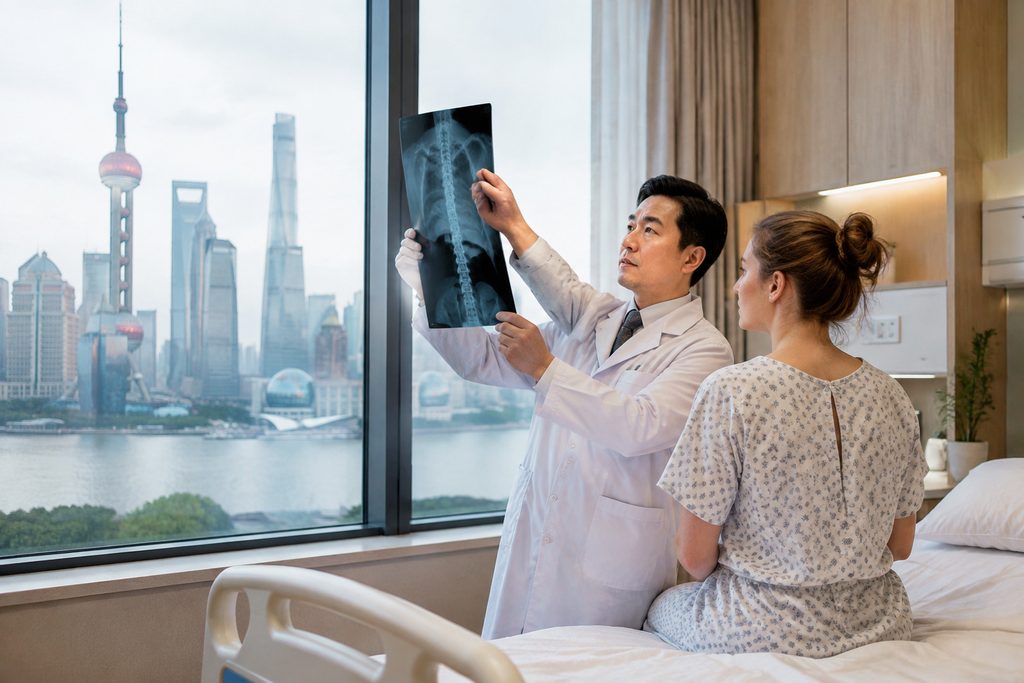
When 46-year-old Daniel from Oregon was told he needed a two-level lumbar fusion, the quote from his local hospital came back at $148,000 before insurance adjustments. His employer’s plan would still leave him responsible for roughly $22,000 out of pocket, plus months on a surgical waitlist. A colleague mentioned that spine surgery cost Shanghai runs a fraction of U.S. prices at internationally accredited hospitals. Daniel had never considered traveling for care. He also had no idea where to begin.
That uncertainty is where most international patients start. The clinical question — “do I actually need this operation?” — is only the first of many. The rest are logistical, financial, and deeply human: Which hospital? Which surgeon? What happens if something goes wrong 7,000 miles from home?
This guide answers those questions directly. No sales pitch. Just the information our team wishes every patient had before they started searching.
Spine Care in Shanghai for International Patients: The Short Answer
Shanghai is one of Asia’s strongest destinations for complex spine surgery. It has 18 hospitals in the Fudan Top 100 ranking — the second-highest concentration in China after Beijing. For international patients, the practical entry points are the international departments of major public hospitals and JCI-accredited private hospitals such as United Family, Jiahui, and Parkway.
Typical spine surgery cost Shanghai ranges from about $8,000 to $25,000 for procedures like lumbar discectomy, decompression, or single-level fusion at a top public hospital’s international wing. The same operation at a private international hospital runs higher — often $30,000 to $60,000. Both figures sit well below U.S. averages, but the gap narrows once you factor in travel, lodging, and follow-up care.
The catch: public hospitals generally do not allow overseas patients to book surgery remotely without an in-person consultation first. That single rule reshapes how you plan the entire trip.
Who This Is Right For — and Who It Isn’t
Spine surgery abroad is not for everyone. Being honest about that up front saves people time, money, and risk.
Usually a good fit:
- Patients with a confirmed diagnosis (MRI, CT, and clinical exam) who need a specific procedure — discectomy, laminectomy, fusion, or disc replacement
- People facing U.S. or E.U. quotes above $80,000 with limited insurance coverage
- Patients willing to spend 2–4 weeks in China for surgery plus early recovery
- Those with a support person traveling alongside them, or willing to hire a bilingual medical companion
- Cases where a second opinion from a high-volume spine center could change the treatment plan
Usually not a good fit:
- Anyone with an unstable spine fracture, active spinal infection, or metastatic spinal cord compression requiring emergency surgery — go to the nearest emergency department, not an airport
- Patients with severe cardiac or pulmonary comorbidities that make long-haul travel unsafe
- People who cannot obtain clear imaging and records in English or Chinese
- Cases where the recommended surgery is genuinely simple and can be done close to home at reasonable cost
- Patients who need guaranteed access to a specific named surgeon on a specific date — no hospital in any country can promise that
The Options, Compared
Before choosing a country, it helps to see the real numbers side by side. The table below reflects typical ranges for a single-level lumbar fusion. Actual quotes vary by hospital, surgeon seniority, implant type, and case complexity.
| Destination | Typical Cost (Single-Level Fusion) | Typical Wait Time | Language Support | Insurance Handling |
|---|---|---|---|---|
| United States | $110,000–$180,000 | 3–8 weeks | English native | In-network billing common |
| Western Europe | $45,000–$90,000 | 4–12 weeks | Varies by country | Public systems vary |
| Shanghai — public hospital international wing | $12,000–$25,000 | 1–3 weeks after consultation | English interpreters available | Pay upfront, reimburse later |
| Shanghai — private international hospital | $30,000–$60,000 | Days to 2 weeks | English-speaking staff | Direct billing with some insurers |
| Thailand / India | $10,000–$22,000 | 1–2 weeks | Strong English support | Varies widely |
Which column matters most depends on you. A patient with a generous PPO plan and a strong local surgeon should probably stay home. Someone paying cash, facing a long wait, and needing a high-volume center has a different calculus. Cost is one axis. Surgical volume, implant quality, and post-operative follow-up are others — and they don’t always point the same direction.
Finding the Best Spine Hospital in Shanghai for International Patients
Shanghai’s spine care landscape splits into three tiers, and knowing which tier fits your case prevents a lot of wasted effort.
Tier 1 — Top public hospitals with international departments. These are the flagship institutions, ranked in the Fudan Top 100. Their orthopedic and neurosurgery departments handle high surgical volumes, which matters: research consistently links higher case volume to better outcomes in complex spine procedures. The trade-off is process. Public hospitals require in-person registration, upfront payment, and patience with queues. International departments soften this considerably but cost roughly 1.5–2 times the standard rate.
Tier 2 — Private international hospitals. Facilities like United Family, Jiahui, and Parkway offer English-speaking staff, JCI accreditation, Western-style rooms, and direct insurance billing. They are easier to navigate and often faster to schedule. They are also more expensive, and complex revision cases may still be referred to public hospital specialists.
Tier 3 — Traditional Chinese Medicine and rehabilitation. For chronic back pain without surgical indication, or for post-operative recovery, Shanghai’s TCM hospitals offer acupuncture, tuina massage, and herbal therapy. These are adjuncts, not substitutes for surgical care. They can be genuinely useful for pain management and mobility work.
Our department directory lists top-ranked hospitals by specialty, including orthopedics and neurosurgery, so you can see which institutions actually lead in spine care rather than relying on general reputation.
What It Costs — and What’s Included
Spine surgery pricing in Shanghai depends on four variables: the procedure itself, the implant or hardware used, the hospital tier, and the length of stay. Here’s how the numbers typically break down.
| Procedure | Public Hospital (International Wing) | Private International Hospital |
|---|---|---|
| Microdiscectomy | $8,000–$14,000 | $18,000–$30,000 |
| Lumbar decompression / laminectomy | $10,000–$18,000 | $22,000–$38,000 |
| Single-level lumbar fusion | $12,000–$25,000 | $30,000–$60,000 |
| Two-level fusion | $18,000–$35,000 | $45,000–$80,000 |
| Cervical disc replacement | $14,000–$28,000 | $35,000–$65,000 |
These figures generally include surgeon fees, anesthesia, the hospital stay, standard implants, and basic post-operative imaging. They usually exclude international airfare, hotel accommodation, meals, a companion’s expenses, and any complications requiring extended care. Budget an additional $3,000–$8,000 for a two-to-three-week stay including lodging and a companion.
How Long Is Recovery After Spinal Fusion?
This is the question patients ask most, and the honest answer is: longer than most people hope.
For a single-level lumbar fusion, expect roughly 4–6 weeks before you can return to desk work, 3–6 months before lifting anything meaningful, and 6–12 months for full fusion consolidation on imaging. Walking usually resumes within 24–48 hours of surgery. Driving typically waits 2–6 weeks depending on your surgeon’s protocol and whether you’re on narcotic pain medication.
That timeline has a direct implication for medical travel. Most international patients fly home between day 10 and day 21 post-surgery, once the surgical wound is stable and the surgeon clears them for a long flight. Blood clot risk makes early long-haul travel a real concern, so this clearance is not a formality.
Follow-up is where overseas surgery gets tricky. Your Shanghai surgeon will want imaging at 6 weeks, 3 months, 6 months, and 12 months. Most of that can be done locally and shared digitally. But if a complication emerges — infection, hardware loosening, persistent pain — you’ll need a local surgeon willing to take over care. Arrange that relationship before you fly, not after.
Practical Considerations: Records, Visas, and Payment
Medical records. You’ll need your MRI and CT images on disc or via a secure cloud link, plus a written radiology report and clinical notes. Chinese specialists read English imaging reports routinely, but a translated summary of your history speeds things up. Bring more documentation than you think you need.
Visa. International patients coming to China for medical treatment typically apply for the S2 visa, which covers short-stay private affairs including medical treatment, subject to the latest embassy or consulate requirements and supporting hospital documents. Accompanying family members apply under the same category. Stays exceeding 180 days fall under S1. Note that the M visa is for commercial and trade activities — it is not a medical visa, despite what some online forums suggest. Visa issuance is always at the discretion of the consulate.
Payment. Public hospitals require prepayment. International credit cards are accepted at international departments, but large transactions may hit card limits — arrange a wire transfer in advance. Private international hospitals often bill your insurer directly if they have a relationship with them; confirm this before arrival.
Language. China’s top public hospitals see tens of thousands of outpatients daily. Signage, registration systems, and staff interactions are predominantly in Chinese. Even a well-prepared patient will struggle alone. This is the single biggest practical barrier, and it’s why bilingual medical companions exist.
Frequently Asked Questions
At top-ranked hospitals, yes — outcomes for routine spine procedures are broadly comparable to Western centers, and these institutions handle very high surgical volumes. But “China” is not one standard. A Fudan Top 100 hospital with an established international department is a very different environment from a provincial facility. Safety depends on the specific hospital, surgeon, and your individual risk profile. Ask for complication rates and never accept vague reassurances.
Generally, no — not directly. Chinese public hospitals require an in-person consultation before scheduling surgery. This is a firm rule, not a bureaucratic quirk. What you can do remotely is arrange a written second opinion or video consultation with the specialty team, which clarifies whether surgery is appropriate and what it would involve. That step often saves patients an unnecessary trip.
Sometimes, but rarely without effort. Most U.S. plans cover emergency care abroad and may cover elective care if you obtain prior authorization. Reimbursement is typically at out-of-network rates, and you’ll pay upfront and file afterward. Call your insurer before assuming anything, and get any authorization in writing.
Packages bundle hospital coordination, interpretation, airport transfer, and accommodation into one price. They’re convenient but vary enormously in quality and transparency. You don’t strictly need one — plenty of patients arrange components individually. What you should not skip is reliable interpretation during registration, consultation, and discharge, because errors there have real clinical consequences.
This is the question that deserves the most honest answer. Your Shanghai surgeon can consult remotely and review imaging, but cannot physically intervene. You need a local physician or surgeon who agrees in advance to manage your follow-up. Establish that contact before surgery, share your operative report with them, and confirm they’ll accept you as a patient. Skipping this step is the most common and most serious planning mistake in medical travel.
Your Next Step
Spine surgery is a significant decision, and geography shouldn’t be the deciding factor — but it can be a legitimate one when cost, wait times, or surgical expertise genuinely differ. Shanghai offers real options at a fraction of Western prices, provided you plan carefully and go in with clear expectations.
Our team at China Medical Services is not a hospital and we do not provide diagnoses. We help international patients understand their options, connect with appropriate hospitals, and navigate the practical side of treatment in China — from records translation to bilingual accompaniment during appointments. If you’d like to explore whether Shanghai makes sense for your case, start with a conversation. There’s no obligation, and no pressure.
For more medical information and treatment options in China, visit chinamedservices.com (China Medical Services).
