Dental Implant Cost in China: Questions Patients Ask
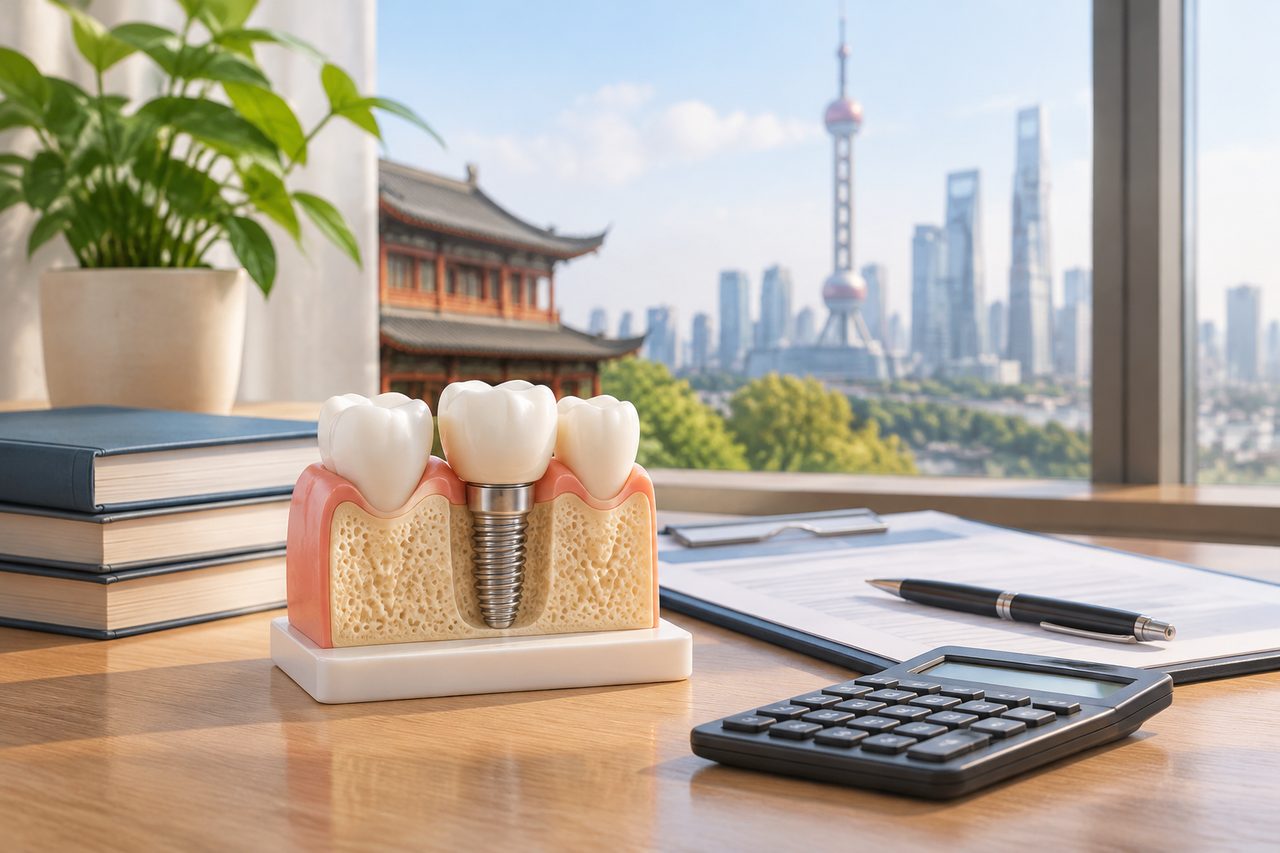
Dental implant cost in China is one of the first things international patients ask us, and the honest answer is that a single implant — the titanium post itself, placed by a qualified surgeon — typically falls in a broad range rather than a single figure. Across major Chinese cities, patients commonly see quoted totals spanning roughly $800 to $2,500 per implant depending on the city, the hospital or clinic tier, the implant brand, and whether bone grafting or a sinus lift is needed. That range is wide because “implant” is not one product or one procedure. The final number depends on the materials chosen, the surgeon’s seniority, and the complexity of your case.
This guide answers the questions patients actually ask us — not just “how much,” but whether it is safe, why Shanghai quotes differ from smaller cities, what is included, and what happens if something goes wrong after you fly home. We are not a dental clinic and we do not place implants. We help international patients understand the landscape, compare hospitals, and coordinate appointments and bilingual support. Everything below is educational; your own treatment plan must come from a licensed dentist or oral surgeon who has examined you.
Dental Implant Cost in China: The Short Answer
For a straightforward single implant with an abutment and crown, international patients at reputable Chinese hospitals and international clinics commonly budget somewhere between about $1,000 and $2,500 all-in per implant. A full-arch or multiple-implant case multiplies that, and complex cases requiring grafting, extraction, or guided surgery push toward the upper end or beyond. These are planning ranges, not quotes. Prices vary by hospital and case complexity, and the only reliable figure is a written estimate from the specific clinic after reviewing your X-rays or CBCT scan.
The caveat that makes this more complicated than a one-liner: the cheapest quote and the best value are rarely the same thing. A low price may exclude the crown, the abutment, the scan, or follow-up visits — each of which can add meaningfully to the total. Ask every clinic what the number includes before you compare.
Key takeaway: Compare total treatment cost — implant, abutment, crown, imaging, and follow-up — not the headline “implant only” price. A quote that looks 40% cheaper often excludes half the components.
Who This Is Right For — and Who It Isn’t
Dental tourism to China suits some patients well and is a poor fit for others. Being clear about both is more useful than encouragement.
Typically a reasonable fit:
- Adults with one or more missing teeth and adequate bone volume, seeking treatment where the cost is materially lower than their home country.
- Patients who can travel for an initial assessment plus a surgical visit, and who understand that implant dentistry is staged over months, not days.
- People comfortable coordinating care across a language barrier, or willing to arrange bilingual support.
- Patients who have already gathered recent dental X-rays or a CBCT scan to send ahead for a preliminary opinion.
Probably not the right choice:
- Anyone with uncontrolled diabetes, active smoking with poor healing prospects, untreated gum disease, or bleeding disorders — these are medical contraindications a surgeon must assess first.
- Patients who need complex full-mouth reconstruction and cannot return for follow-up or arrange a qualified local dentist for aftercare.
- Those expecting a single short trip to complete everything. Implant treatment involves healing time between placement and loading the crown.
- People whose priority is the absolute lowest price with no interest in verifying credentials or materials.
The Options, Compared
The table below compares the realistic alternatives a patient weighing treatment in China is actually choosing between. Figures are planning ranges in USD and vary by hospital, city, and case complexity.
| Option | Typical cost per implant (USD) | What’s usually included | Considerations |
|---|---|---|---|
| China — public tertiary hospital, standard channel | ~$800–$1,800 | Varies; often implant + abutment, crown sometimes separate | High volume, experienced surgeons; appointment access and English support vary |
| China — international/VIP clinic or private hospital | ~$1,500–$2,500+ | Often all-in with English service, premium brands | Higher price, smoother communication, direct insurance billing sometimes available |
| China — Shanghai specifically | ~$1,200–$2,500+ | Depends on clinic tier and brand | Higher living costs and premium clinics push quotes above smaller cities |
| Home country (e.g., US/Western Europe) | ~$3,000–$5,000+ | Varies widely by provider and insurance | Local aftercare and continuity; insurance may offset part of the cost |
Which column suits you depends on your risk tolerance and priorities. A patient who values English-language continuity and premium implant brands may prefer the international clinic route even at a higher price. A patient with a straightforward single implant and flexibility on logistics may find the public hospital tier offers strong value — provided they arrange support for scheduling and communication.
Is Dental Implant Safety in China a Real Concern?
This is the question behind the question, and it deserves a direct answer. “Is dental implant safe in China” is best reframed: implant safety depends far more on the individual surgeon, the clinic’s sterilization protocols, and the quality of the implant system used than on the country itself. China has thousands of dental providers ranging from world-class tertiary hospital stomatology departments to small private clinics of variable quality. The variation within the country is larger than the average difference between countries.
What actually determines safety:
- Surgeon credentials and volume. Ask how many implants the surgeon places annually and whether they are a registered oral/maxillofacial surgeon or implant specialist.
- Implant brand traceability. Reputable systems (major international brands and well-regulated domestic ones) come with traceable lot numbers. Ask which system is used and whether documentation is provided.
- Imaging before surgery. A CBCT scan and proper planning reduce nerve and sinus complications. A clinic that skips imaging is a red flag anywhere in the world.
- Sterilization and facility standards. International clinics with JCI accreditation follow documented infection-control protocols; you can ask about accreditation directly.
None of this guarantees an outcome — no clinic can. But it lets you judge a provider on evidence rather than reputation alone. For patients who want to compare accredited private and international facilities, our overview of private international hospitals in China explains what JCI accreditation and direct insurance billing mean in practice.
Dental Implant Price in Shanghai vs. Other Cities
Dental implant price in Shanghai tends to sit at the higher end of the national range, for predictable reasons: higher operating costs, a concentration of premium international clinics, and strong demand. Patients comparing Shanghai with Chengdu, Xi’an, or other cities often find quotes 20–40% lower outside the largest coastal metros — but the trade-off may be fewer English-speaking providers and less established international patient services.
Shanghai does offer real advantages: a dense cluster of well-regarded stomatology departments and international dental clinics, easier access for many international flights, and a large expatriate infrastructure. If you are considering Shanghai, our Shanghai city guide covers the hospital landscape and how international patients typically navigate appointments there. The right city is the one where you can verify the surgeon, communicate clearly, and return for follow-up if needed.
What the Cost Includes — and What It Doesn’t
Because “implant cost” is quoted so differently, it helps to break down the components. A complete single-tooth implant typically involves:
- Consultation and imaging — examination, X-rays, and often a CBCT scan.
- The implant fixture — the titanium post itself; brand drives much of the price difference.
- Abutment — the connector between implant and crown.
- The crown — the visible tooth; material (porcelain, zirconia) affects cost.
- Adjunctive procedures — bone grafting or sinus lift if bone volume is insufficient, which can add substantially.
- Follow-up visits — healing checks and final loading of the crown.
Ask each clinic to itemize these. A quote that lists only “implant” is incomplete. Also clarify payment terms: Chinese public hospitals typically require prepayment with insurance reimbursement handled afterward, while private international clinics may bill insurers directly. Confirm which applies to you before committing.
Practical tip: Request a written, itemized estimate that states the implant brand, whether the crown and abutment are included, and what follow-up is covered. Compare totals, not headline prices.
Practical Considerations for Treatment in China
Records first. Send recent dental X-rays or a CBCT scan ahead so a clinic can give a preliminary opinion before you travel. Many patients find a written second opinion or video consultation useful to clarify feasibility and likely cost before booking flights.
Visa category. For medical treatment, the applicable short-stay category is the S2 visa, used for medical treatment and private affairs, subject to the latest embassy or consulate requirements and supporting hospital documents. Accompanying family members apply under the same category. The M visa is for commercial and trade activities and is not a medical visa. Always confirm current requirements with the relevant Chinese embassy or consulate, and note that approval is never guaranteed.
Language and scheduling. Top Chinese hospitals are large and busy, and English-speaking staff are not universal outside international departments. Bilingual support can make scheduling, payment, and communication far smoother. Our China Medical Services team helps international patients match hospitals, coordinate appointments, and arrange bilingual accompaniment — we are a coordination service, not a clinic, and we do not provide diagnoses.
Aftercare at home. Before treatment, identify a qualified local dentist who can handle follow-up and any complications after you return. Implant dentistry is a long-term relationship, not a one-off purchase.
Frequently Asked Questions
Planning ranges commonly fall between about $800 and $2,500 per implant depending on city, clinic tier, implant brand, and whether grafting is needed. These are ranges, not quotes — the only reliable figure comes from a written estimate after a clinic reviews your imaging.
Safety depends on the individual surgeon, sterilization standards, imaging protocols, and implant brand traceability — not the country alone. China has excellent tertiary stomatology departments alongside variable private clinics, so verify credentials, ask about accreditation, and insist on proper imaging before surgery.
Shanghai has higher operating costs and a concentration of premium international clinics, which pushes quotes upward. Smaller cities may offer lower prices but fewer English-speaking providers and less international patient infrastructure. Weigh verification and communication against the price difference.
Usually not. Implant treatment is staged: assessment and placement, a healing period, then loading the crown. Some patients combine the initial assessment with surgery in one visit and return later, but this depends on your case and must be planned with your surgeon.
This is a real risk to plan for. Arrange a local dentist for follow-up before you travel, keep all documentation and implant lot numbers, and clarify in advance what remote support the treating clinic offers. No clinic can guarantee a complication-free outcome.
Your Next Step
The core message is simple: dental implant cost in China can be materially lower than in many Western countries, but the number that matters is the itemized total from a verified provider — not the headline price. Take time to confirm the surgeon, the implant brand, what the quote includes, and your aftercare plan at home.
If you would like help understanding your options, our team at China Medical Services can match you with appropriate hospitals, coordinate appointments, and arrange bilingual support so the process feels less daunting. We are not a hospital and we do not provide medical advice or diagnoses — we help you navigate the system. When you are ready, you can request a free consultation with no obligation, and we will walk through your questions at your pace.
This article is for general educational purposes only and does not constitute medical advice. Always consult a licensed dentist or oral surgeon about your individual situation before pursuing treatment.
For more medical information and treatment options in China, visit chinamedservices.com (China Medical Services).
