Dental Implant for Diabetic Patients in China: Specialist Coordination
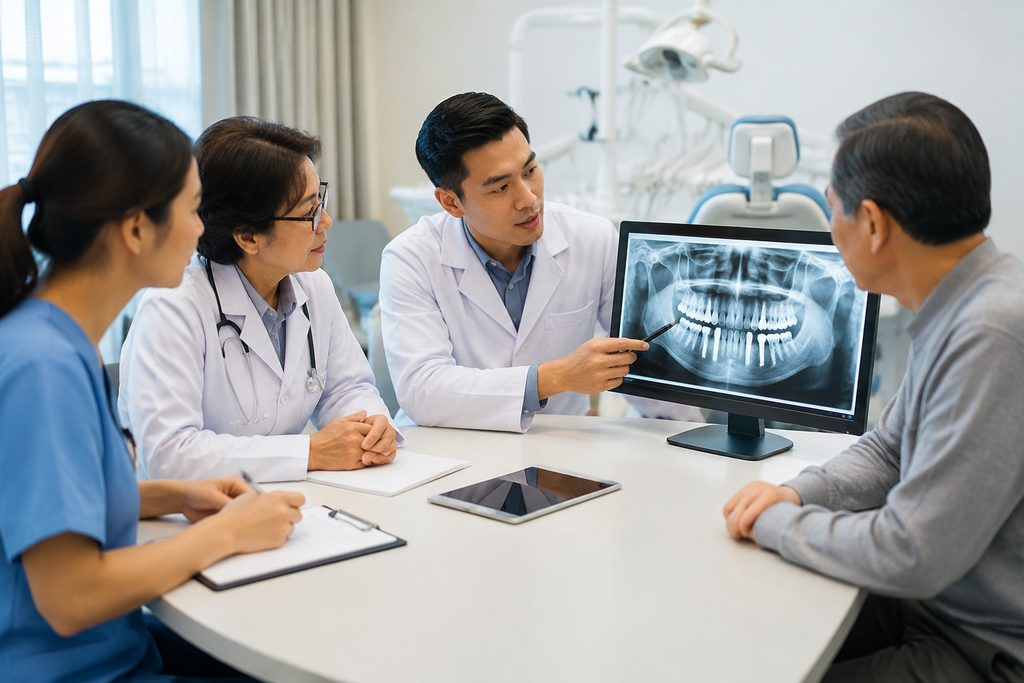
You’ve probably heard that dental implants are off-limits for diabetics. Too risky. Poor healing. High failure rates. The reality is more nuanced — and for many patients with well-managed blood sugar, implants are not only possible but routine at China’s top dental centers. The catch is coordination. Finding a clinic that actually screens you properly, communicates with your endocrinologist, and builds a protocol around your HbA1c rather than treating you like a standard case. That’s where specialist coordination stops being a luxury and becomes the whole ballgame.
How This Actually Works, Step by Step
You’re sitting at home, looking at dental implant options abroad. Maybe your local dentist quoted you $4,500 per tooth. Maybe they hesitated when you mentioned diabetes. Here’s what actually happens when you pursue treatment in China through a coordinated pathway.
First, you send your existing records. That means recent HbA1c results, fasting glucose readings, any medication list, and panoramic X-rays if you have them. A Chinese implant specialist reviews these before anything else. They’re looking for one number above all: your HbA1c. Below 7% is the general green zone. Between 7% and 8.5% depends on other factors. Above 8.5% means most reputable clinics will ask you to stabilize first.
Second, you get a written assessment. Not a generic “yes we can do it” email. A real evaluation that names the surgical approach, the implant system they’d use, the number of visits required, and what additional testing you’d need on arrival. This typically takes 3 to 7 business days after records are received.
Third, you schedule. This is where the coordination matters. A hospital’s international department or a medical concierge handles the booking, confirms the surgical slot, and arranges the pre-operative blood work. You don’t fly to Shanghai hoping to walk in. You arrive with a date.
Fourth, you undergo on-site screening. Expect a blood draw on day one. Some clinics also run a cone-beam CT (CBCT) scan to map bone density. If your numbers are stable, surgery happens within 24 to 48 hours. If not, the clinic adjusts — sometimes delaying by a few days, sometimes recommending a different approach like a two-stage implant with longer healing intervals.
Fifth, you go home with a plan. The implant itself is placed in one visit. The crown comes later — usually 3 to 6 months after, once osseointegration is confirmed. Some patients return to China for the crown. Others have the final restoration done at home, with the Chinese clinic sending the surgical records and implant specifications to your local dentist.
Dental Implant Cost China Diabetic Patients Should Expect
Let’s talk numbers, because that’s usually the first question. The dental implant cost China diabetic patients encounter varies by city, hospital tier, and implant brand. But the ranges are consistent enough to plan around.
| Item | Cost in China (USD) | Typical Cost in US (USD) |
|---|---|---|
| Single implant (titanium, mid-range brand) | $800 – $1,500 | $3,000 – $5,000 |
| Premium implant (Swiss/German system) | $1,800 – $3,000 | $5,500 – $8,000 |
| Bone graft (if needed, per site) | $300 – $800 | $1,500 – $3,000 |
| CBCT scan + pre-op blood panel | $150 – $300 | $500 – $1,200 |
| Crown (porcelain or zirconia) | $400 – $1,000 | $1,500 – $3,500 |
These are self-pay prices at public hospital international departments and private clinics. They vary by hospital and case complexity. A full-mouth restoration for a diabetic with significant bone loss will cost more than a single-tooth replacement. But even at the high end, you’re looking at roughly one-third to one-half of US prices for comparable implant systems.
One thing diabetics specifically need to budget for: the extra monitoring. Some clinics include post-operative glucose checks in the surgical fee. Others charge separately. Ask before you commit. A reputable clinic will tell you exactly what’s included.
Best Dental Implant Clinic for Diabetics in China: What to Look For
Searching for the best dental implant clinic for diabetics in China isn’t about finding one magic name. It’s about identifying clinics that have three things: oral surgery experience with medically compromised patients, a protocol for glycemic control during the perioperative window, and English-speaking staff who can coordinate with your home physician.
Beijing and Shanghai lead in volume. The stomatology departments at major teaching hospitals in both cities handle thousands of implant cases annually, including a meaningful share of diabetic patients. These are not boutique practices. They’re high-throughput academic centers where the surgeons see more complex cases in a month than a typical Western dentist sees in a year.
Private international clinics offer a different profile. Think United Family or Jiahui in Shanghai, Raffles in Beijing. These facilities have English-speaking staff, direct insurance billing, and a more Western-style patient experience. Their implant fees run higher than public hospital international departments, but still below US private-practice rates.
What matters more than the brand name is the screening process. A clinic that waves off your diabetes with “no problem, we do implants all the time” is a red flag. A clinic that asks for your HbA1c, consults your medication list, and adjusts the surgical plan accordingly is what you want. That’s the difference between a clinic that treats diabetics and a clinic that treats you.
A Realistic Timeline
Nobody likes surprises. Here’s what the calendar actually looks like, from first contact to final crown. Note the waiting steps people forget.
| Stage | Duration | What Happens |
|---|---|---|
| Records submission and review | 3 – 7 business days | You send HbA1c, X-rays, medication list. Specialist reviews and responds. |
| Treatment plan and quote | 2 – 5 business days | Written plan with implant system, number of visits, total cost estimate. |
| Visa application (S2) | 1 – 4 weeks | S2 visa for medical treatment. Hospital invitation letter usually required. |
| Travel and arrival | 1 – 2 days | Fly to Beijing, Shanghai, or Guangzhou. Airport pickup if coordinated. |
| On-site screening | 1 – 2 days | Blood draw, CBCT scan, consultation with surgeon. |
| Implant surgery | 1 day | Single visit. Local anesthesia. 1 – 2 hours depending on complexity. |
| Post-op observation | 2 – 5 days | Wound check, glucose monitoring, suture removal if needed. |
| Osseointegration (healing) | 3 – 6 months | You wait at home. Implant fuses with bone. |
| Crown placement | 1 visit, 2 – 3 days | Return to China or complete at home with local dentist. |
Total time from first contact to implant placement: typically 6 to 10 weeks, including visa processing. The crown adds 3 to 6 months of healing time, but that happens at home. You’re not sitting in a Shanghai hotel room waiting for bone to grow.
What Can Go Wrong — and What Happens Then
Diabetic implant patients face real risks. Pretending otherwise would be dishonest. Here are the failure modes and what actually happens when they occur.
Peri-implantitis. This is the big one. Diabetics have a higher baseline risk of gum infection around the implant, especially if glycemic control slips during the healing phase. If it happens, treatment is the same as anywhere: debridement, antibiotics, and in severe cases, implant removal. The implant can often be re-placed after the infection clears and blood sugar stabilizes. Not ideal, but not catastrophic.
Delayed osseointegration. The implant doesn’t fuse with bone on schedule. The clinic will typically extend the healing window by 2 to 3 months before declaring failure. Many delayed cases eventually succeed. Some don’t. If the implant fails, most Chinese clinics will remove it and offer re-implantation at a reduced fee — but this is not guaranteed. Read the fine print.
Blood sugar spike during travel. Long flights, time zone shifts, unfamiliar food. Your glucose can swing. The clinic should check your levels before surgery and may delay the procedure by a day or two if you’re uncontrolled. That’s not a money grab. That’s the protocol working. Bring your glucometer. Bring extra medication. Bring snacks that fit your diet.
Language breakdown. You’re in a Chinese hospital. Even at international departments, not every nurse speaks fluent English. If you’re navigating this alone, a bilingual companion changes the experience entirely. They translate surgical instructions, clarify medication timing, and make sure you understand what “come back in three days” actually means. This is not optional for most foreign patients.
Is Dental Implant Safe for Diabetic Patients in China? The Evidence
The direct answer: yes, with conditions. The question “is dental implant safe for diabetic patients China” deserves more than a one-word response.
Multiple systematic reviews have examined implant survival in diabetics. A widely cited 2022 meta-analysis in the Journal of Clinical Periodontology reported implant survival rates of approximately 94% to 96% in well-controlled diabetic patients (HbA1c below 7%), compared to 97% to 98% in non-diabetics. The gap narrows further when patients maintain strict glycemic control during the healing window. Poorly controlled diabetes — HbA1c above 8.5% — tells a different story, with failure rates climbing and peri-implantitis risk roughly doubling.
Chinese oral surgery departments have published extensively on this. The stomatology center at Peking University School of Stomatology and the Ninth People’s Hospital in Shanghai both run active implant programs with diabetic patient protocols. These protocols typically include pre-operative HbA1c screening, antibiotic prophylaxis, chlorhexidine rinses, and modified surgical techniques that minimize soft-tissue trauma. The approach is not fundamentally different from what a good US or European clinic does. The volume is simply higher.
What does this mean for you? If your HbA1c has been under 7% for at least three months, your risk profile is close to a non-diabetic’s. If it’s between 7% and 8.5%, the clinic will likely proceed with extra precautions — longer healing times, more frequent follow-up imaging, possibly a staged approach. Above 8.5%, expect to be asked to work with your endocrinologist first. None of this is a refusal. It’s risk management.
Can Diabetics Get Dental Implants in Shanghai? City-Specific Reality
Shanghai is the most common entry point for foreign patients seeking dental care in China. So the question “can diabetics get dental implants in Shanghai” comes up constantly. The answer is yes — Shanghai has the densest concentration of implant-capable facilities in the country, and several of them have specific experience with diabetic patients.
The Ninth People’s Hospital (Shanghai Ninth) runs one of China’s largest oral and maxillofacial surgery departments. Their implant volume is enormous, and they routinely handle medically complex cases that smaller clinics refer upward. The trade-off: it’s a busy public hospital. Wait times for the international department are shorter than for the general clinic, but you’re still in a large institution with all the navigation that implies.
Private options in Shanghai include Jiahui International Hospital and United Family. These clinics offer a calmer experience, English-speaking staff throughout, and more flexible scheduling. Their implant fees are higher — expect $1,500 to $3,500 per implant for premium systems — but the coordination burden is lower. For a diabetic patient who wants close monitoring and clear communication, that premium can be worth it.
Shanghai’s advantage over Beijing is partly practical: more international flights, a larger expat community, and more English-speaking dental staff. Beijing’s advantage is academic depth — Peking University’s stomatology program is consistently ranked among China’s top three. Either city works. The decision usually comes down to which hospital’s protocol fits your specific case.
Booking Dental Implant for Diabetes China Medical Tourism: The Coordination Layer
People search for “book dental implant for diabetes China medical tourism” expecting a straightforward booking process. It’s not. And that’s the point of this section.
You cannot simply reserve a surgical slot at a Chinese public hospital from abroad. The standard outpatient system requires in-person registration, and surgical scheduling happens after a face-to-face consultation. This is not a barrier designed to frustrate foreigners. It’s how the system works for everyone.
What you can do is engage a coordination service that works through the hospital’s international department or VIP channel. These departments exist precisely for foreign patients. They handle appointment scheduling, provide English-language support, and coordinate the pre-operative workup. The cost is higher than the standard pathway — typically 1.5 to 2 times the regular fee — but the experience is fundamentally different. You arrive with a plan, not a hope.
Here’s what the coordination layer actually does for a diabetic patient specifically:
- Collects your HbA1c history and medication list before you travel
- Confirms the clinic’s diabetic protocol and shares it with you in writing
- Coordinates with your home endocrinologist if the Chinese team wants additional context
- Books the surgical slot and pre-operative blood work as a package
- Arranges a bilingual companion for the day of surgery and follow-up visits
- Handles the S2 visa invitation letter from the hospital
None of this guarantees a specific surgeon or a specific date. Any service that promises that is lying to you. What it guarantees is that the right questions get asked before you spend money on a flight.
Practical Considerations: Records, Visa, Payment, and Follow-Up
Let’s get concrete about the logistics that make or break this process.
Medical records. You need at least three months of blood sugar data. HbA1c is the headline number, but daily readings matter too. Bring your medication list with dosages. Bring any recent dental X-rays — panoramic is best, CBCT if you have one. If you’ve had a failed implant before, bring those records too. The Chinese team needs to understand what went wrong.
Visa. Medical treatment in China uses the S2 visa, not the M visa. The S2 is for private affairs, including medical treatment. Your hospital or coordination service should provide an invitation letter that states the purpose of your visit. Processing time varies by embassy, but budget 1 to 4 weeks. Family members accompanying you also apply for S2. For treatment stays beyond 180 days, S1 applies — but that’s rare for dental implants.
Payment. Public hospital international departments generally require prepayment. Credit cards are accepted at most international departments, but confirm before you travel. Private international clinics may bill your insurance directly if you have a plan that covers overseas dental work — most don’t, but it’s worth checking. Budget for the full surgical fee plus a 10% to 20% buffer for unexpected items like additional grafting or extended monitoring.
Follow-up at home. The implant heals at home. Your local dentist handles routine monitoring and eventually places the crown if you choose not to return to China. The Chinese clinic should provide a complete surgical report, implant system details, and post-operative imaging. Bring these to your local dentist. They’ll know what to do with them.
Frequently Asked Questions
Most reputable clinics want HbA1c below 7% for routine implant surgery. Between 7% and 8.5%, surgery may proceed with additional precautions and longer healing timelines. Above 8.5%, expect to be asked to stabilize your blood sugar before the clinic will schedule surgery.
How much does a dental implant cost in China for a diabetic patient?
Single implants range from $800 to $3,000 depending on the implant system and hospital tier. Diabetic patients may pay slightly more due to additional monitoring and follow-up. Total costs, including crown and imaging, typically run $1,500 to
For more medical information and treatment options in China, visit chinamedservices.com (China Medical Services).
