Getting Dental Implants in Beijing: Costs, Top Clinics, and What to Expect
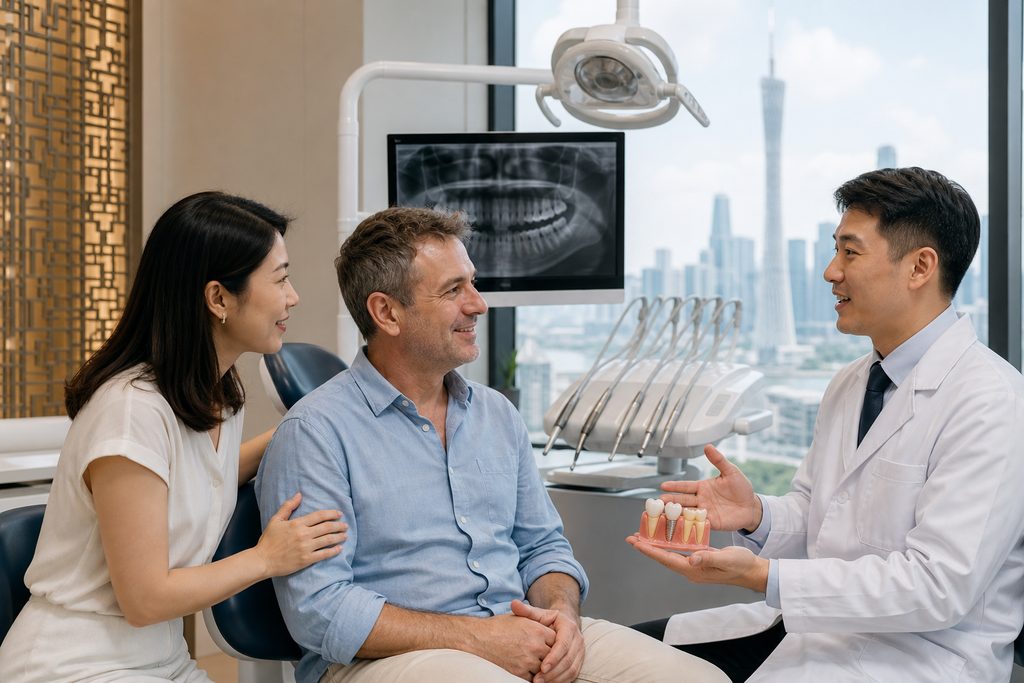
While a single dental implant in the United States averages $3,000 to $5,000 before the crown, a comparable implant at a top Beijing public hospital often lands between $800 and $1,800 — using the same Straumann, Nobel Biocare, or Osstem systems. Same titanium. Same Swiss or Korean engineering. A different price structure entirely. That gap is why searches for dental implants cost Beijing have climbed steadily among patients from the US, UK, and Australia.
Key Takeaways
- Full-arch implant treatment in Beijing typically runs $6,000–$14,000 per arch, versus $25,000–$50,000 in the US for the All-on-4 style protocols.
- Beijing’s top stomatology hospitals place thousands of implants annually, and implant survival rates above 95% at 10 years are well documented in the international literature.
- You cannot book a public-hospital implant surgery from overseas in advance — you must attend an in-person consultation first, and that rule is firm.
- Healing is a process, not an event: osseointegration takes 3–6 months before the final crown goes on, so plan for two trips or a longer stay.
The Problem: Western Implant Prices Are Pricing People Out
Roughly 178 million Americans are missing at least one tooth, according to the CDC’s National Health and Nutrition Examination Survey. For a single implant, US clinics in major metros quote $4,000 to $6,000 all-in. Full-arch cases regularly exceed $30,000 per jaw. Dental insurance rarely covers more than $1,500–$2,000 annually, and Medicare excludes routine dental almost entirely.
So patients do the math. They delay. They live with a gap, a slipping denture, or a failing bridge for years. Some travel to Mexico or Hungary, where quality varies wildly and follow-up is a plane ride away. Others simply give up on the idea that a fixed, natural-feeling smile is within reach.
That math changes in Beijing — but only if you understand how the system actually works. And that’s where most foreign patients get stuck.
Why Beijing Delivers Strong Implant Outcomes
China’s capital concentrates an unusual density of dental expertise. The Fudan Hospital Ranking’s specialist reputation list places several Beijing stomatology institutions among the country’s top programs, and the city hosts 21 of the Fudan Top 100 general hospitals — more than any other Chinese city. For implant work specifically, the relevant strength sits in dedicated stomatology hospitals and the dental departments of major teaching hospitals.
Volume Translates Into Refined Technique
Senior implantologists at Beijing’s leading stomatology centers place several hundred implants a year. That repetition matters for the tricky cases — thin ridges, sinus proximity, immediate-load protocols. A clinician who has placed 5,000 implants has seen the complications that a 200-implant dentist has only read about.
Materials Are Internationally Sourced
Beijing’s top clinics stock the same implant brands used in Europe and North America: Straumann (Switzerland), Nobel Biocare (Switzerland/US), Osstem (South Korea), and Zimmer Biomet. You can request the exact brand and lot documentation. There’s no mystery alloy here.
Cost Structure, Not Cost Cutting
The lower price doesn’t come from cheaper implants. It comes from lower overhead — surgeon fees, facility costs, and staffing economics that are simply different in China. A Beijing implantologist’s fee for a straightforward case might be $300–$600, versus $2,000+ in the US. The titanium screw costs the same everywhere.
Dental Implants Cost Beijing: Real Numbers by Treatment Type
Here’s what international patients typically pay at Beijing’s public stomatology hospitals and international departments. Prices vary by hospital, implant brand, bone grafting needs, and case complexity — treat these as planning ranges, not quotes.
| Treatment | Beijing Range (USD) | US Average (USD) | Typical Healing Time |
|---|---|---|---|
| Single implant + abutment + crown | $800 – $1,800 | $3,000 – $5,000 | 3–6 months |
| Multiple implants (3–4 units) | $2,400 – $6,000 | $9,000 – $18,000 | 4–6 months |
| All-on-4 full arch | $6,000 – $14,000 | $25,000 – $50,000 | 4–6 months |
| Bone graft (per site) | $300 – $900 | $1,000 – $3,000 | Adds 3–4 months |
| Sinus lift | $600 – $1,500 | $2,000 – $5,000 | Adds 4–6 months |
| CBCT scan + planning | $80 – $250 | $250 – $600 | Same day |
An affordable dental implants China package that bundles consultation, imaging, surgery, and the final crown often comes in 60–80% below Western pricing. But read the fine print. Some packages exclude grafting or the final prosthesis — the two items most likely to change your total.
Is Dental Implant Surgery Safe in China?
This is the question every patient asks, and it deserves a straight answer.
Implant dentistry is a mature, standardized procedure worldwide. The clinical variables that determine success are the same in Beijing as in Boston: bone quality, infection control, implant system quality, and surgeon skill. At Beijing’s top stomatology hospitals, all four are well controlled. Sterilization follows international protocols, and reputable clinics use single-use surgical kits.
The documented 10-year survival rate for dental implants globally sits above 95% in peer-reviewed studies. Chinese teaching hospitals publish outcomes in line with these figures. What you should verify before committing: the clinic’s sterilization protocol, the implant brand (and its warranty), and whether the surgeon has handled cases like yours.
What you should NOT assume: that every clinic advertising implants to foreigners is equivalent. Quality varies. A 20-chair clinic in a shopping mall is not the same as a university-affiliated stomatology hospital. Vetting the provider is the single most important decision you’ll make.
Caution: Some Beijing clinics market heavily to medical tourists with prices that seem too low. Ask which implant brand they use, whether the final crown is included, and who performs the surgery — a specialist or a rotating general dentist.
How Long Do Dental Implants Take to Heal?
Patients often picture a single appointment. The reality is a staged process, and understanding it prevents nasty surprises.
- Week 0 — Consultation and imaging. CBCT scan, clinical exam, treatment plan. At public hospitals, this must happen in person before any surgery is scheduled.
- Week 1–2 — Implant placement. The titanium post goes into the jaw. The procedure takes 30–90 minutes per implant under local anesthesia.
- Month 1–3 — Osseointegration. The bone fuses with the implant. You wear a temporary or nothing at all. Soft diet, careful hygiene.
- Month 3–6 — Abutment and crown. Once integration is confirmed, the abutment is attached and the final crown is fitted. This is the visible, functional tooth.
So a straightforward single implant spans roughly 4–6 months from surgery to final crown. Bone grafting adds 3–4 months before implant placement even begins. Some cases qualify for immediate-load protocols, where a temporary crown goes on the same day — but that depends on bone density and implant stability, and not every patient is a candidate.
For international patients, this timeline usually means two trips: one for surgery, one for the final crown. Or a single extended stay of 4–6 months, which some patients combine with remote work or a longer visit.
Finding the Best Dental Implant Clinic in Beijing
Beijing has three broad categories of provider, and each suits a different patient.
University-affiliated stomatology hospitals. These carry the deepest specialist expertise and the lowest prices. The trade-off: enormous patient volume, limited English, and public-hospital queues. You cannot pre-book surgery from overseas — you attend a consultation, then the hospital schedules you.
International departments within public hospitals. Senior specialists, English-speaking staff, and a faster path to a confirmed appointment. Prices run roughly 1.5–2 times the standard public channel. For patients who want a named specialist and a predictable schedule, this is often the sweet spot.
Private international dental clinics. English-first service, JCI-style standards, direct insurance billing in some cases, and Western-style appointment scheduling. Prices sit between public and US levels — still well below American rates.
To compare options across the city, our Beijing hospital directory groups providers by category, and the Fudan-ranked hospital list shows which institutions carry national specialist standing.
Practical Considerations: Visas, Payment, and Follow-Up
Foreign patients traveling to China for dental treatment should apply for an S2 visa (short-stay, private affairs, annotated for medical treatment). Stays beyond 180 days require an S1. Accompanying family members apply for S2 as well. Note that the M visa is strictly for commercial and trade activity — it is not a medical visa, despite what some sources claim. Always confirm current requirements with the nearest Chinese embassy or consulate, and bring your hospital’s invitation or appointment documentation.
On payment: public hospitals require prepayment, and you’ll typically seek reimbursement from your insurer afterward. Private international clinics often bill insurance directly. International credit cards are widely accepted at larger institutions, though daily transaction limits and foreign-card fees can apply — check with your bank before traveling.
Follow-up is the part patients underestimate. Once you fly home, who monitors the implant? A good Beijing clinic will provide full records, imaging, and the implant’s brand documentation so your local dentist can handle maintenance. Schedule a check with your home dentist within six months of the final crown.
Frequently Asked Questions
Not directly at public hospitals. Standard practice requires an in-person consultation and imaging before surgery is scheduled. International departments and private clinics offer more flexibility, and a written second opinion based on your existing X-rays can clarify your case before you travel.
At accredited Beijing stomatology hospitals and international clinics, yes — infection control and implant quality meet international standards, and survival rates align with global benchmarks above 95% at 10 years. The variable is provider quality, so verify the clinic, the implant brand, and the surgeon’s experience.
Request complete records — implant brand, lot number, surgical notes, and imaging — before you leave. Most implant complications are manageable by any competent local dentist, and reputable brands carry international warranties. For complex issues, a follow-up video consultation with your Beijing surgeon is often possible.
For a single implant, expect 60–75% savings. For full-arch cases, savings of $20,000 or more per jaw are common. Factor in flights and accommodation, and the net advantage narrows slightly — but for multi-implant cases, it remains substantial.
Your Next Step
Beijing offers world-class implant dentistry at a fraction of Western prices — provided you choose the right provider and plan around the healing timeline. The savings are real, but so is the need for careful vetting and realistic scheduling.
China Medical Services is not a hospital and does not provide diagnoses. We connect international patients with China’s top-tier hospitals, coordinate appointments through official international departments, and provide bilingual support on the ground. If you’d like help comparing Beijing clinics or arranging a written second opinion from your existing dental records, start with a free consultation — no pressure, just a clearer picture of your options.
For more medical information and treatment options in China, visit chinamedservices.com (China Medical Services).
