What Dental Implants Cost in China: Real 2025 Prices and Quality
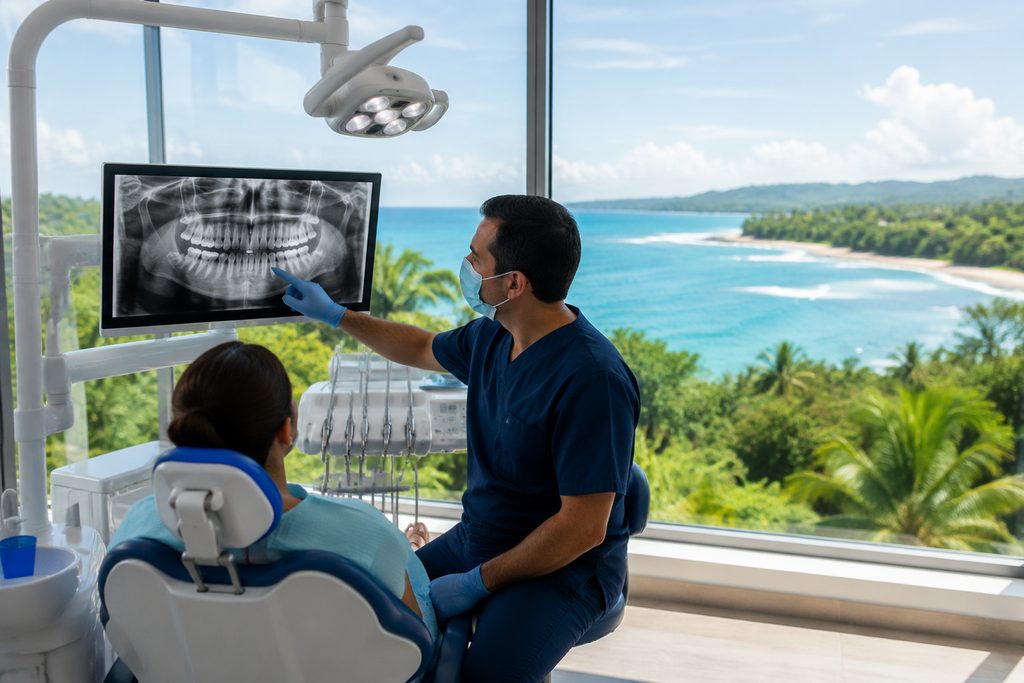
You have probably heard the warning: cheap dental work abroad means cut-rate materials, rushed surgery, and a smile you will pay twice to fix. Sometimes that is true. In Turkey or Hungary, discount clinics have built entire business models on volume and little else.
But here is the number that surprises most people researching dental implants cost China-wide: a single implant placed at a top-tier Chinese public hospital runs $800 to $2,000. The same procedure in the United States averages $3,000 to $6,000 for the implant alone — before the crown, the abutment, or the bone graft.
That is not a discount-clinic price. It is the price at hospitals that rank in the top 5% of China’s 35,000+ medical institutions. So the real question is not whether China is cheaper. It is why, and whether the savings come with hidden trade-offs.
## Key Takeaways
– A full single-tooth implant (implant, abutment, and crown) in China typically costs $1,500–$4,000, versus $5,000–$8,000 in the US — and prices vary by hospital and case complexity.
– China’s top public dental hospitals handle extremely high implant volumes, which drives both surgical experience and lower per-unit costs.
– The hard part is not the price. It is the process: public hospital dental departments generally cannot be booked from overseas in advance, and English-speaking staff are not guaranteed.
– Anyone considering treatment should verify the implant brand, the clinician’s credentials, and the follow-up plan before committing to travel.
## The Problem: A $30,000 Smile You Cannot Afford
The American Dental Association and multiple 2024 industry surveys put the average cost of a single dental implant in the US between $3,000 and $6,000. A full-arch restoration — the “All-on-4” style solution for a failing set of teeth — routinely lands between $20,000 and $30,000 per arch. Dental insurance covers a fraction of that, and Medicare covers none of it.
Roughly 120 million Americans are missing at least one tooth, according to CDC oral health data. About 36 million have no teeth at all. For a retiree on a fixed income who needs a full lower arch restored, the quote is not a medical decision. It is a financial crisis.
Some patients delay for years. They eat soft food, avoid photographs, and let bone density in the jaw deteriorate — which eventually makes the eventual implant surgery more complex and more expensive. Waiting has a cost, and it compounds.
## Why China Delivers Results Without the Western Price Tag
The knee-jerk assumption is that lower prices mean lower quality. In dentistry specifically, that assumption breaks down for structural reasons.
### Clinical Volume That Builds Real Expertise
A senior implantologist at a major Chinese stomatology hospital may place several hundred implants a year. Many US general dentists place 20 to 50. High-volume surgery produces pattern recognition — the clinician has seen the complicated ridge, the thin sinus floor, the smoker’s healing pattern, hundreds of times.
China’s dedicated dental hospitals, such as the stomatology institutions affiliated with Peking University and Sichuan University’s West China Hospital of Stomatology, function as national referral centers. Their departments sit within the same hospital systems covered in our ranking of China’s top-tier hospitals, which are assessed on the Fudan Hospital Rankings and JCI accreditation standards.
### Cost Structure, Not Cost Cutting
Why is the same implant cheaper in Shanghai than in Seattle? Three reasons, none of them about quality.
Labor economics. A Chinese implant surgeon’s compensation is a fraction of a US specialist’s, even at the top of the profession.
Supply chain. Many implant systems — including Straumann, Nobel Biocare, and Osstem — manufacture components in Asia. Shipping a Swiss-brand implant to Beijing costs less than shipping it to Boston.
Hospital efficiency. A Chinese public dental hospital may run 40+ chairs across multiple floors with a throughput model that spreads fixed costs across far more patients per day.
The implant itself is often the identical product. What changes is the markup layered on top.
### The Materials Are the Same Brands You Already Know
This is the part patients find hardest to believe. Walk into a reputable Chinese dental hospital and you will be offered the same Straumann, Nobel Biocare, Astra Tech, or Osstem implant your dentist at home quoted you. The brand is not the variable. The price attached to it is.
## What Dental Implants Cost in China: A Real Price Breakdown
Prices below reflect typical ranges at reputable public and private international hospitals. They vary by hospital, city, implant brand, and case complexity — a straightforward single implant with good bone is very different from a full-arch case requiring grafting.
| Procedure | China (USD) | United States (USD) | Typical Savings |
|---|---|---|---|
| Single implant (fixture only) | $800 – $2,000 | $3,000 – $6,000 | 60–75% |
| Implant + abutment + crown | $1,500 – $4,000 | $5,000 – $8,000 | 55–70% |
| Bone graft (per site) | $400 – $1,200 | $1,500 – $3,000 | 55–65% |
| Sinus lift | $800 – $2,000 | $2,500 – $5,000 | 60–70% |
| All-on-4 full arch | $8,000 – $16,000 | $20,000 – $30,000 | 50–60% |
| Full mouth (both arches) | $15,000 – $30,000 | $40,000 – $60,000 | 50–65% |
A quick note on the Shanghai question, since it comes up constantly. Dental implant price Shanghai-wide tends to sit at the higher end of the national range — often 10–20% above second-tier cities. That premium reflects the concentration of international hospitals, English-speaking staff, and JCI-accredited facilities in the city. You are paying for accessibility, not for a better implant.
## How Much Do Dental Implants Cost in Beijing — and What Changes the Number
Beijing prices track closely to Shanghai, with one important difference: the city holds the largest cluster of top-ranked hospitals in China, 21 of them in the Fudan Top 100. That density creates real competition within the public system.
When patients ask how much do dental implants cost in Beijing, the honest answer is a range, because four variables move the number more than geography does:
Implant brand. A Korean Osstem fixture might run $800. A Swiss Straumann fixture in the same chair could be $2,000. Both are legitimate. The brand you choose should match your bone quality and your budget, and a good clinician will explain the trade-offs rather than upsell.
Bone condition. If you have been missing a tooth for years, the jawbone under it has likely resorbed. That means a graft, possibly a sinus lift, and additional healing time of three to six months before the implant can even be placed.
Number of teeth. Single implants are priced per unit. Full-arch cases are priced as a package, and the per-tooth cost drops significantly.
Public vs. international department. A standard public dental clinic is the least expensive option but has the longest waits and the least English support. An international or VIP department at the same hospital charges roughly 1.5 to 2 times more — and gives you an English-speaking coordinator, a scheduled appointment, and a much smoother process.
## Is Dental Implant Safety in China Something You Should Worry About?
This is the question that decides the trip for most people, and it deserves a direct answer rather than reassurance.
Dental implant surgery is a mature, well-standardized procedure worldwide. Success rates above 95% over ten years are reported consistently in peer-reviewed literature across multiple countries, including China. The variables that determine your outcome are not the country. They are the clinician’s experience, the sterility of the facility, the quality of the implant, and your own health factors — smoking, uncontrolled diabetes, and poor oral hygiene being the biggest risks.
What you should verify before booking:
– The hospital’s accreditation status (JCI for international departments, or a major public teaching hospital affiliation)
– Whether the implant brand offered is FDA-cleared or CE-marked
– The clinician’s specialty training in implantology, not general dentistry
– Whether a written treatment plan and post-operative protocol will be provided in English
– What follow-up looks like once you fly home
## Practical Considerations Before You Book Dental Implant Surgery in China
The logistics matter as much as the price, and this is where most overseas patients hit friction.
The booking problem. Standard outpatient dental departments at Chinese public hospitals generally do not accept overseas advance bookings. You queue on the day, take a number, and see whoever is available. Surgery is scheduled only after an in-person consultation. If you need a specific senior specialist and a confirmed date, that pathway runs through the hospital’s international or VIP department.
Visa category. Medical treatment in China falls under the S2 visa for short stays, with accompanying family members applying under the same category. Stays beyond 180 days use S1. Note carefully: the M visa is for commercial and trade activity only and has nothing to do with medical treatment. Requirements shift, so confirm current documentation with your nearest Chinese embassy or consulate and with the hospital’s international office.
Payment. Chinese public hospitals require prepayment for treatment. International credit cards are accepted at international departments but not always at standard public counters. Private international hospitals frequently bill insurance directly. If you plan to claim reimbursement at home, request itemized English invoices and operative notes before you leave.
Timing. A single implant with good bone can be completed in one trip of about 7 to 10 days if a healing abutment approach is used. Cases needing grafting, or those using a two-stage protocol, require a second visit three to six months later. Plan for this from the start — it is the single most common planning mistake.
Language. China’s top hospitals see tens of thousands of outpatients daily. Signage, forms, and staff are predominantly Chinese-language. A bilingual companion who handles registration, payment queues, and translation changes the experience substantially.
For a broader look at how the process works end to end, our team has laid out the pathway on the China Medical Services homepage.
### Is dental implant safe in China?
Yes, when performed at an accredited hospital by a trained implantologist using a verified implant brand. Chinese dental hospitals publish outcomes consistent with international benchmarks, and the top institutions handle high surgical volumes. Safety depends far more on your individual health profile and the specific clinician than on the country.
### Can I really book dental implant surgery in China from overseas?
Not through standard public outpatient channels — those require in-person registration on the day. Confirmed appointments and specific specialists are typically arranged through a hospital’s international or VIP department. Expect to pay roughly 1.5 to 2 times the standard rate for that access, and expect any surgical date to remain subject to the hospital’s own scheduling rules.
### What about dental tourism packages China clinics advertise?
Packages exist, and quality varies enormously. A legitimate package should specify the implant brand, the clinician’s credentials, the hospital’s accreditation, and what happens if you need a revision after returning home. Be cautious with any offer that bundles flights and hotels with a price so low it cannot cover a genuine branded implant.
### What if something goes wrong after I return home?
This is the real risk of any dental travel, and it should shape your planning. Ask in advance for a written post-operative protocol, a copy of your imaging, and the exact implant brand and lot number. Most dentists at home can manage routine follow-up on a well-documented implant. Complex complications are harder to resolve remotely, so build in a contingency budget.
## Your Next Step
The savings are real, and so is the complexity. Understanding dental implants cost China-wide is the easy part — the harder part is matching your specific case to the right hospital, confirming whether you need grafting, and navigating a booking system that was not designed for overseas patients.
We are China Medical Services, a coordination team that connects international patients with 340+ top-ranked hospitals across 37 cities. We are not a hospital and we do not provide diagnoses or treatment recommendations — we handle record translation, appointment coordination through official international departments, and bilingual accompaniment so you can make your own informed decisions. If you would like a written second opinion on your dental imaging, or help understanding what your case would realistically involve, you can start with a free consultation. No pressure, no obligation — just a clearer picture before you decide anything.
Frequently Asked Questions
Yes. The hospitals used for international patients are JCI-accredited and follow the same international safety standards as top hospitals in the US and Europe. Surgical teams perform high volumes of procedures — often more than their Western counterparts — which studies show leads to better outcomes.
Costs vary by procedure and hospital, but international patients typically save 40-80% compared to US prices — even when factoring in travel and accommodation. A consultation with our team will give you an exact, all-inclusive quote with no hidden fees.
Send us your existing medical reports to get started. We handle everything from hospital selection and appointment scheduling to visa assistance and post-operative recovery planning. Your medical records are reviewed by the specialist before you even book a flight.
For more medical information and treatment options in China, visit chinamedservices.com (China Medical Services).
