Dental Treatment Cost in China: How It Works for Patients
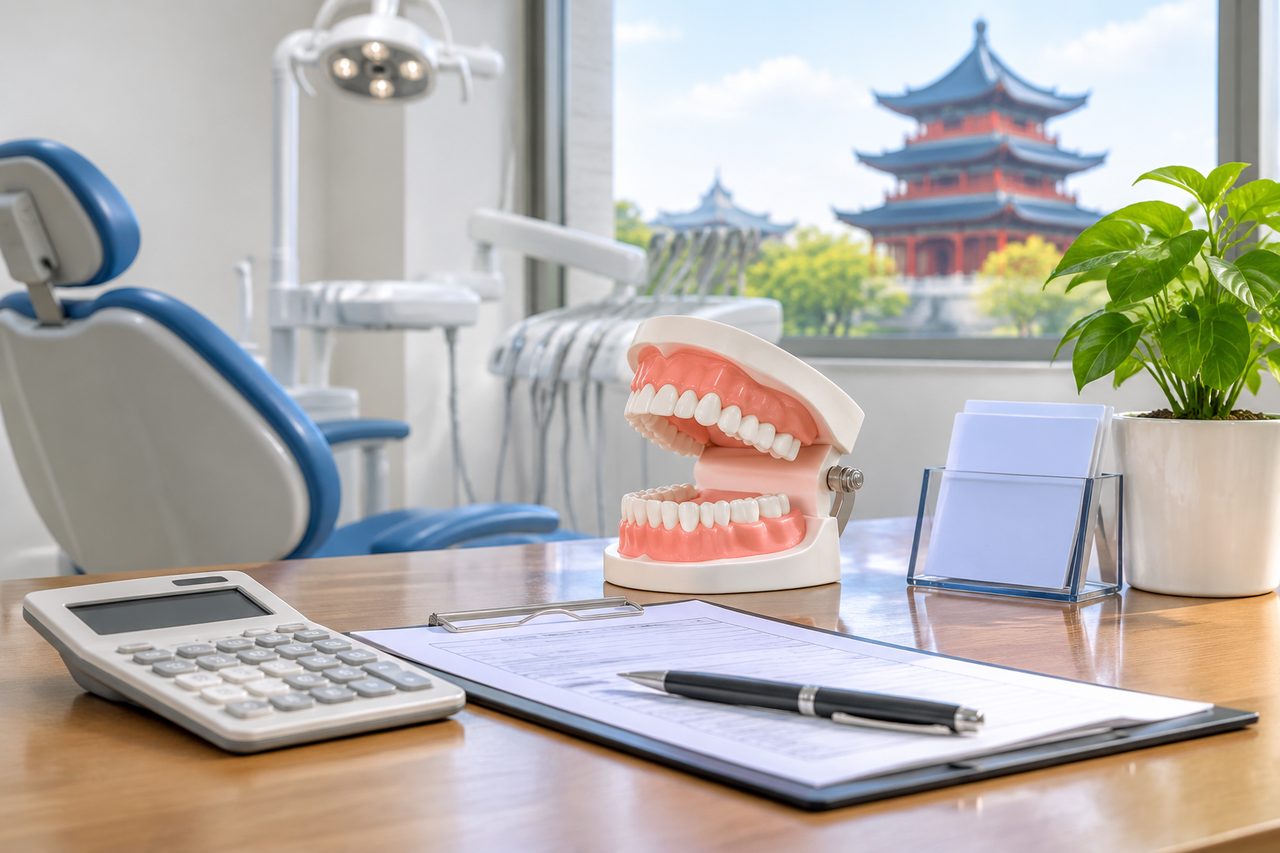
Dental Treatment Cost in China: How It Works
Dental treatment cost in China is usually lower than in the United States or Western Europe, but the number on a clinic’s website is rarely the whole story. In plain terms, what you pay depends on four things: the type of restoration or procedure, the material used, whether the clinic is a public hospital department or a private international clinic, and how much diagnostic work comes first. This guide explains how pricing is actually structured, how international patients arrange treatment, and where the genuine risks sit.
We are not dentists, and nothing here is individual medical advice. Our role at China Medical Services is coordination: helping international patients understand the system, reach appropriate hospitals, and manage language and logistics. The clinical decisions belong to qualified dentists.
How This Actually Works, Step by Step
Most international patients arrive at a Chinese dental appointment through one of two doors: a private international clinic or the stomatology department of a large public hospital. The sequence below describes the public-hospital route, since that is where most of the cost advantage sits and where the process is least familiar to foreign patients.
Step 1 — You send existing records. Panoramic X-rays, periapical films, CBCT scans if you have them, previous treatment notes, and a short description of what you want addressed. Without imaging, no responsible dentist can quote anything meaningful.
Step 2 — A specialty team reviews the file. A stomatology or implant department reviews the images and returns a written assessment: what treatment is indicated, what alternatives exist, and roughly what the cost range looks like. This is a written second opinion, not a prescription.
Step 3 — You decide whether to travel. Some patients learn that their case can be handled at home. Others confirm that a multi-implant reconstruction is worth the trip. Either outcome is useful.
Step 4 — Appointment coordination. Public hospital dental departments generally do not allow a foreign patient to book a guaranteed surgical slot from abroad through the ordinary queue. Registration typically happens on the day, and surgery is scheduled only after an in-person examination. International departments and VIP channels can sometimes pre-arrange a consultation, at roughly 1.5 to 2 times the ordinary channel price.
Step 5 — In-person examination and treatment plan. The dentist confirms the diagnosis, takes any additional imaging, and presents a written plan with itemized costs. You approve before work begins.
Step 6 — Treatment, then follow-up. Implant cases usually require more than one visit, sometimes across months. Ask at the planning stage how the staged visits fit your travel schedule.
What Drives Dental Implants Price China Patients See
The single largest variable in dental implants price China clinics quote is the implant system itself. A Korean or domestic implant fixture costs materially less than a premium European or Swiss brand, and the difference is not cosmetic — it reflects manufacturing tolerances, surface treatment, and the evidence base behind each system. Crown material is the second variable: porcelain-fused-to-metal, monolithic zirconia, and layered ceramic sit at different price points.
Beyond materials, three structural factors shape the total:
- Public versus private. A public tertiary hospital’s stomatology department generally charges less for the same procedure than a private international clinic, but offers less English-language support and longer waits.
- Bone condition. Cases needing sinus lift, ridge augmentation, or bone grafting add surgical time and biomaterials. This is often the biggest hidden cost, and it can only be assessed from a CBCT scan.
- Complexity and count. A single implant is straightforward. A full-arch reconstruction involving multiple implants, extractions, and provisional prosthetics is a different category of case with a different fee structure.
Because material brands, hospital tier, and case complexity vary so widely, published price ranges for dental work in China should always be read as indicative. The honest approach is to ask for an itemized written plan after examination, listing the implant system by name, the crown material, and any grafting separately.
A Realistic Timeline
Dental care is rarely a single trip, and the scheduling is where foreign patients most often underestimate. The table below shows typical ranges, not promises.
| Stage | Typical duration | What patients forget |
|---|---|---|
| Gathering records and imaging | 3–10 days | Old X-rays may be too outdated to use; a new CBCT may be requested |
| Written review by a specialty team | 3–7 business days | Records in English are usually fine; translated summaries speed things up |
| Visa preparation (S2 short-stay, medical purpose) | 2–4 weeks | Processing times vary by consulate and season; supporting hospital documents are usually required |
| Appointment coordination and travel | 1–3 weeks | Ordinary public-hospital slots cannot be locked in advance |
| Examination, imaging, plan approval | 1–2 days | Build in a buffer day before any surgery is scheduled |
| Implant placement surgery | 1 visit, often 1–2 hours | Recovery advice and medication instructions matter more than the procedure itself |
| Osseointegration healing | 3–6 months | Many patients fly home during this phase and return for the crown |
| Crown fitting and final review | 1–2 visits | Ask in advance who handles adjustments after you leave China |
What Can Go Wrong — and What Happens Then
The failure modes in dental tourism are not usually dramatic. They are slow, expensive, and administrative.
The plan changes after examination. You were quoted for two implants; the CBCT shows insufficient bone and the dentist recommends grafting. This is common and not a scam. The recourse is to have asked, before traveling, what the contingency costs would be if grafting proved necessary.
The timeline stretches. Healing varies by patient. A case planned around a three-month return visit may need longer. The recourse is flexibility in your return ticket and a clear written statement of the healing interval the dentist expects.
Follow-up happens in another country. If a crown loosens after you return home, your local dentist may be unwilling to adjust work done elsewhere. The recourse is to request the full clinical record — implant brand, lot number, torque values, radiographs — before departure, and to confirm with your home dentist in advance that they will handle maintenance.
Communication breaks down. Consent forms, post-operative instructions, and medication guidance in a language you do not read are a genuine safety issue. The recourse is a bilingual companion present at the appointment, or a clinic with documented English-speaking staff.
Costs exceed the quote. Ask for the itemized plan in writing, with each line priced, and clarify what is included in the quoted figure versus billed separately.
Is Dental Work in China Safe? How to Judge a Provider
The question “is dental work in China safe” deserves a direct answer: the country has well-established tertiary stomatology departments with rigorous training and sterilization protocols, and it also has commercial clinics of variable quality. Safety is a property of the specific provider, not the country.
Four checks do most of the work:
- Institutional setting. A stomatology department within a large public hospital, or a private hospital with international accreditation, carries accountability structures that a standalone shopfront may not.
- Named materials. A credible plan states the implant system, the manufacturer, and the crown material. Vagueness here is a warning sign.
- Imaging before planning. CBCT for implant cases is standard practice. A clinic willing to operate without it is cutting a corner.
- Written records. You should leave with your radiographs and treatment documentation. Refusal to provide them is disqualifying.
For patients comparing institutions, our directory of top-ranked Chinese hospitals groups major public hospitals by city and specialty ranking, which is a reasonable starting filter before narrowing to a stomatology department.
Practical Considerations: Records, Payment, and Follow-Up
Records. Bring or send digital copies of all prior dental imaging and treatment notes. If you have had orthodontics, extractions, or previous implants, say so — retained hardware and prior grafting change the plan.
Visa. Foreign patients traveling to China for medical treatment generally use the S2 short-stay visa with the purpose of treatment noted, subject to the latest embassy or consulate requirements and supporting hospital documentation. Accompanying family members apply under the same category. The M visa is for commercial and trade activity and is not a medical visa. Stays beyond 180 days involve a different category, and approval is never guaranteed.
Payment. Public hospitals typically require prepayment, with insurance reimbursement handled afterward in your home country. Private international hospitals more often offer direct billing with certain insurers. Confirm in writing which applies to your case, and ask for receipts formatted for insurance claims.
Language. Large public hospitals see enormous daily volumes, and wayfinding, registration, and payment counters operate in Chinese. A bilingual companion who handles registration, queueing, payment, and interpretation removes most of the friction — our patient support services describe how that works in practice.
Follow-up at home. Before you travel, ask your regular dentist whether they will maintain work performed abroad. Some will; some will not. Knowing this in advance prevents an awkward conversation later.
Frequently Asked Questions
Published figures vary widely by implant brand, hospital tier, and whether grafting is needed, so any single number should be treated with caution. The reliable method is to obtain an itemized written plan after examination, then compare it line by line with a quote from your home dentist. Material brand is the dominant variable.
Through the ordinary public-hospital channel, generally no — registration happens on the day and surgery is scheduled after an in-person examination. International departments and VIP channels can sometimes pre-arrange a consultation at a higher price. No coordination service can guarantee a specific surgeon or a specific surgical date.
Safety depends on the specific institution. Tertiary hospital stomatology departments and accredited private hospitals follow established sterilization and imaging protocols. Verify the setting, ask for named materials, insist on imaging before planning, and require written records you can take home.
Most implant cases require at least two visits separated by a healing period of roughly three to six months, though individual healing varies. Ask the treating dentist for the expected interval in writing before you book flights, and keep your return travel flexible.
Coverage depends entirely on your policy. Public hospitals generally require prepayment with reimbursement claimed afterward; some private international hospitals offer direct billing with participating insurers. Confirm both the billing method and the required documentation before treatment begins.
Your Next Step
The core message is simple: dental treatment cost in China is genuinely lower for many procedures, but the real work is in matching your case to the right institution and getting an itemized plan before you commit to travel. We are a coordination service, not a dental provider — we do not diagnose, treat, or promise outcomes, and we do not sell access to named surgeons. What we do is help you send records for a written review, understand what a realistic plan and timeline look like, and decide whether traveling makes sense for your case. If you would like to start that conversation, a free initial consultation is the natural first step.
This article is for general information only and does not constitute medical advice. Treatment decisions should be made with a qualified dental professional who has reviewed your individual records.
For more medical information and treatment options in China, visit chinamedservices.com (China Medical Services).
