Dental Work: A Remote Second Take on Prices and Safety in China
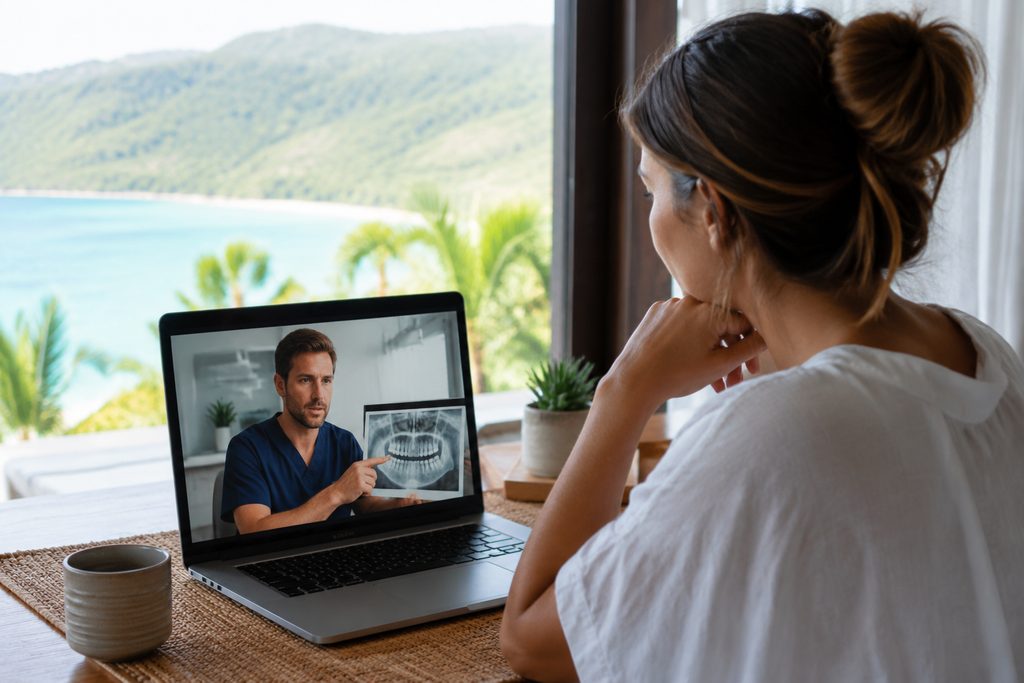
While patients in the United States routinely pay $3,000 to $6,000 for a single dental implant, the same procedure at a top-tier Chinese hospital typically costs between $800 and $1,800. That gap is not a sign of lower quality. It reflects a fundamentally different cost structure for labor, facilities, and materials. The question is not whether the savings are real. The question is whether the logistics, safety standards, and communication hurdles make those savings worth pursuing for your specific case.
Dental Work: A Remote Second Take — The Short Answer
The dental implant price China ranges from roughly $800 to $1,800 per implant at reputable public and private hospitals, compared to $3,000 to $6,000 in the United States and $2,500 to $4,500 in Western Europe. Crowns run $200 to $600 in China versus $800 to $2,000 in the US. The work is generally safe when performed at accredited institutions, with the same implant brands used globally — Straumann, Nobel Biocare, Osstem, and Dentium are standard. But the savings only hold up if you choose the right clinic, understand what you are paying for, and have a plan for follow-up care after you fly home.
That last part matters more than most patients expect. A dental implant is not a one-visit procedure. The implant is placed surgically, then the bone must fuse to the titanium post over three to six months before the crown is attached. If you live in London or Toronto, that timeline creates real coordination challenges. A remote second take — sending your X-rays and treatment plan to a Chinese dental team for review before you commit to travel — is one way to reduce that uncertainty.
Who This Is Right For — and Who It Isn’t
Dental tourism to China works well for a specific profile of patient. It is not a universal solution.
Good candidates typically include:
- Patients needing multiple implants or full-arch restorations, where the total savings reach $10,000 or more
- People who already travel to China for business or family and can combine treatment with an existing trip
- Patients with straightforward cases — good bone density, no active periodontal disease, no uncontrolled diabetes
- Those comfortable with a staged timeline: implant placement on one trip, crown delivery three to six months later
You should think twice if:
- You need a single crown or simple filling — the travel costs will likely erase the savings
- You have complex bone grafting needs or a history of implant failure
- You cannot return to China for the second phase, and no local dentist will touch another clinic’s implant work
- You have an active infection, uncontrolled diabetes, or heavy smoking history that compromises healing
And a hard truth: some Western dentists will refuse to complete or repair implant work done abroad. Before you book anything, ask your home dentist directly whether they will provide follow-up care for an implant placed in China. If the answer is no, you need a plan B.
The Options, Compared
You have three realistic paths for major dental work. Each has a different cost profile, timeline, and risk level.
| Factor | Treatment in China | Treatment in the US | Treatment in Thailand or Mexico |
|---|---|---|---|
| Single implant (all-in) | $800–$1,800 | $3,000–$6,000 | $900–$2,200 |
| Porcelain crown | $200–$600 | $800–$2,000 | $250–$700 |
| Full-arch restoration (All-on-4 style) | $8,000–$15,000 | $25,000–$50,000 | $10,000–$18,000 |
| Typical timeline | 2 trips, 3–6 months apart | 2–4 visits over 4–8 months | 2 trips or 1 extended stay |
| Implant brands used | Straumann, Nobel, Osstem, Dentium | Straumann, Nobel, Zimmer, BioHorizons | Mixed — verify carefully |
| Regulatory oversight | NMPA (China’s FDA equivalent) | FDA | Varies by country |
Thailand and Mexico offer comparable savings to China, often with more established dental-tourism infrastructure. So why consider China at all? Volume and specialization. The dental departments at major Chinese hospitals handle enormous patient loads — a single prosthodontics department in Shanghai may place more implants in a month than a typical American practice places in a year. That repetition builds technical proficiency, particularly for complex cases like full-mouth rehabilitation. For straightforward single implants, the three destinations are roughly equivalent. For complex restorative work, China’s top dental hospitals deserve a serious look.
Reading a Chinese Dental Quote: What the Numbers Actually Mean
This is the section that saves you from the most common mistake foreign patients make. A quote for a “dental implant” in China is rarely all-inclusive. You need to know exactly what line items to expect.
A complete implant quote should break down into four components. The implant fixture itself — the titanium screw that goes into the bone. The abutment — the connector piece. The crown — the visible tooth. And the surgical fee. Some clinics bundle all four. Others quote only the fixture, then add the abutment and crown later. A $900 implant can become a $1,700 implant once the crown is included. Neither price is dishonest. But you must compare quotes line by line.
Bone grafting is a separate charge, typically $300 to $800 per site. A CBCT scan — mandatory before implant placement — runs $50 to $150. If you need a sinus lift for upper-jaw implants, add $800 to $1,500. And if you choose a private international clinic like United Family or Jiahui, expect to pay 1.5 to 2 times the public hospital rate in exchange for English-speaking staff and Western-style billing.
What It Costs: Dental Implant Price China and Beyond
Let’s put concrete numbers on the table. At a top public hospital in Shanghai or Beijing, a single Straumann implant with a porcelain crown typically runs $1,200 to $1,800. A Korean-made Osstem or Dentium implant with crown runs $800 to $1,200. At a private international clinic, the same Straumann implant costs $2,000 to $3,000. These figures vary by hospital and case complexity — bone quality, the need for grafting, and the type of crown material all move the number.
For a full-arch restoration using four to six implants per jaw, public hospital pricing lands between $8,000 and $15,000 per arch. The equivalent in the US starts around $25,000 and frequently exceeds $40,000. Even after adding two round-trip flights and two weeks of accommodation in China, the savings on a full-arch case can exceed $15,000.
What is not included: your flights, hotel, local transportation, and any follow-up care at home. Also not included: the cost of fixing complications if they arise after you return. Most Chinese clinics provide a warranty on the implant fixture itself — typically 5 to 10 years — but that warranty requires you to return to the same clinic for evaluation. A warranty you cannot practically use has limited value.
Is Dental Work in China Safe? What the Evidence Shows
The short answer: yes, at accredited institutions. The longer answer requires nuance. China’s top dental hospitals — places like Peking University School of Stomatology, Shanghai Ninth People’s Hospital, and West China School of Stomatology — operate at international standards. They use the same implant systems, the same sterilization protocols, and the same imaging technology as Western academic centers. Many of their senior clinicians trained in the US, Europe, or Japan.
But China is a big country with uneven quality. A small clinic in a third-tier city is not the same as a university-affiliated dental hospital. The regulatory framework exists — the National Medical Products Administration oversees dental devices, and hospital accreditation is mandatory — but enforcement varies. Your job is to choose an institution where quality is verifiable, not assumed.
And what about how long do dental implants last in China? The honest answer: the implant’s longevity depends more on the patient than the country. Global survival rates for dental implants run 90–95% over 10 years. Chinese studies published in peer-reviewed journals report similar figures. The implant brand, the surgeon’s skill, your bone quality, and your oral hygiene after placement matter far more than geography. A well-placed Straumann implant in Shanghai should last as long as a well-placed Straumann implant in Seattle.
Best Dental Clinic Shanghai for Foreigners: What to Look For
If you are considering treatment in Shanghai — the most common entry point for foreign patients — the best dental clinic Shanghai for foreigners depends on your priorities. The city has three tiers.
Public university hospitals — Shanghai Ninth People’s Hospital is the flagship — offer the highest clinical volume and the lowest prices. But they are crowded, fast-paced, and largely Chinese-speaking. You will need a bilingual companion to navigate registration, payment, and communication with the dental team.
Private international clinics — United Family, Jiahui, Parkway, Raffles — offer English-speaking staff, direct insurance billing, and a calmer experience. Prices run 1.5 to 2 times public hospital rates. For a single implant, that might mean $2,500 instead of $1,500. For many foreign patients, the language support and smoother logistics justify the premium.
The middle tier: private Chinese clinics that cater to both local and international patients. Some have English-speaking coordinators and prices between the two extremes. Quality varies, so verify credentials carefully.
For dental crown cost Beijing, expect similar stratification. A porcelain-fused-to-metal crown at a public hospital runs $200 to $400. A full zirconia crown runs $400 to $600. At a private international clinic, the same zirconia crown costs $800 to $1,200. Compare that to $1,200 to $2,000 for a zirconia crown in the US, and the pattern holds: savings of 50–70% at the high end, more at the low end.
How to Book Dental Treatment Package China Without Getting Burned
Many clinics and agencies offer packages that bundle treatment, accommodation, and airport transfers. Some are legitimate. Some are marketing shells that add a 30–50% markup for “coordination” you could do yourself. Before you book dental treatment package China, understand what a package should and should not include.
A legitimate package should include: a detailed treatment plan with itemized pricing, imaging (CBCT and panoramic X-ray), the surgical procedure, the restoration, and a written warranty. It may include hotel recommendations and airport pickup, but those are conveniences, not value. If a package quotes a single lump sum without itemization, ask for the breakdown. If the agency refuses, treat that as a red flag.
Also understand what a package cannot guarantee. No legitimate clinic will promise a specific surgery date before reviewing your CBCT scan. No package should claim a 100% success rate. No agency can guarantee visa approval — and remember, medical treatment in China requires an S2 visa, not an M visa. The M visa is for commercial and trade activities. Applying for the wrong category can delay or derail your trip.
The most useful pre-travel step is a remote second opinion. You send your existing X-rays, photos, and treatment plan from your home dentist. A Chinese dental team reviews the materials and provides written analysis: whether the proposed treatment is appropriate, what they would do differently, and what the realistic timeline and cost would be. This costs $300 to $500 for a written second opinion from a top hospital specialist — a small fraction of what you might save, and a hedge against traveling for treatment that turns out to be unnecessary or misplanned.
Our team at China Medical Services coordinates remote consultations with dental departments at hospitals in Shanghai, Beijing, and Guangzhou. We handle document translation, scheduling, and follow-up questions. What we do not do: diagnose conditions, guarantee treatment outcomes, or promise access to specific specialists. We connect you with medical expertise. The clinical decisions remain between you and the dental team.
Practical Considerations: Records, Visas, Payment, and Follow-Up
Implant failure rates are low — roughly 5% over ten years globally — but they are not zero. If your implant fails, you need treatment where you are. Some home-country dentists will remove and replace a failed implant regardless of where it was placed. Others will not. Ask your local dentist before you travel. If you have no local dentist willing to handle complications, factor that risk into your decision.
For a single implant, no. The implant must fuse to the bone for three to six months before the crown is attached. Some clinics offer “immediate loading” — placing a temporary crown the same day — but this is appropriate only for select cases with excellent bone quality. Most patients need two trips. For crowns, veneers, and fillings, one trip is usually sufficient.
Most Western dental insurance plans do not cover treatment outside their network, and few have networks in China. Some expat health plans and international medical insurance policies include dental coverage that extends to China. Check your policy’s fine print. If you are paying out of pocket, the savings still typically exceed the cost of travel for multi-implant cases.
Yes. The hospitals used for international patients are JCI-accredited and follow the same international safety standards as top hospitals in the US and Europe. Surgical teams perform high volumes of procedures — often more than their Western counterparts — which studies show leads to better outcomes. Costs vary by procedure and hospital, but international patients typically save 40-80% compared to US prices — even when factoring in travel and accommodation. A consultation with our team will give you an exact, all-inclusive quote with no hidden fees. Send us your existing medical reports to get started. We handle everything from hospital selection and appointment scheduling to visa assistance and post-operative recovery planning. Your medical records are reviewed by the specialist before you even book a flight.Frequently Asked Questions
For more medical information and treatment options in China, visit chinamedservices.com (China Medical Services).
