How Dermatomyositis Is Treated in China: Costs, Top Hospitals, and Care Pathways
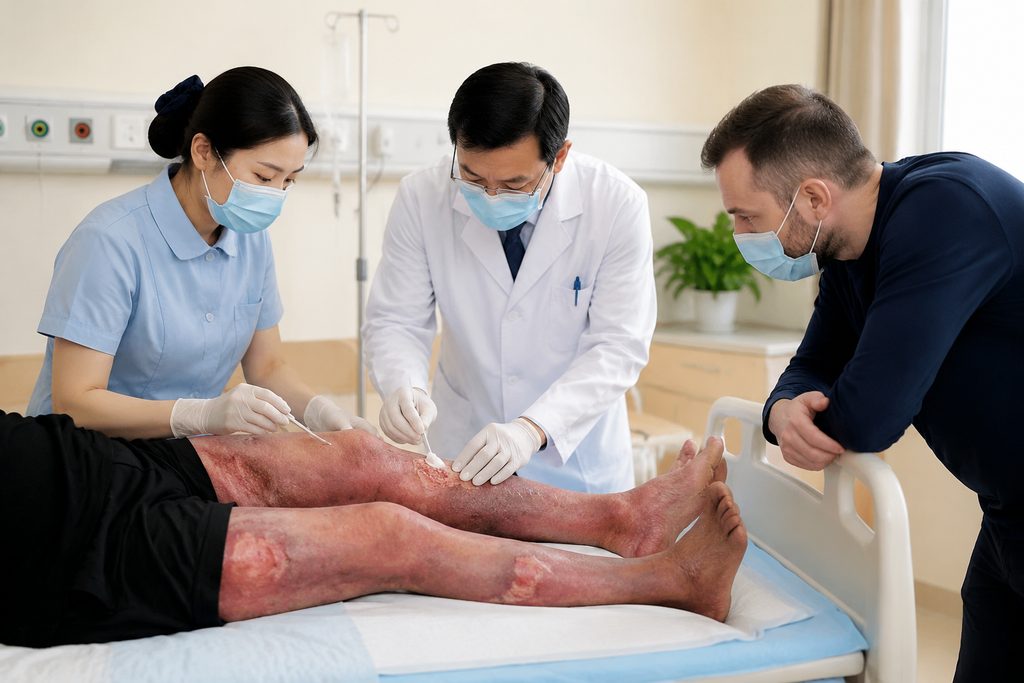
How Dermatomyositis Is Treated in China: Costs, Top Hospitals, and Care Pathways
A patient in the United States can wait three to six months for a rheumatology appointment at a major academic center. In China, the same evaluation — including muscle enzyme panels, electromyography, and a skin or muscle biopsy — can often be completed within one to two weeks at a top-tier public hospital. That gap is why searches for dermatomyositis treatment cost China have climbed steadily among international patients. The disease is rare, the diagnostic window matters, and the price difference is real.
Dermatomyositis is an inflammatory myopathy. It attacks muscle and skin, and in a subset of adults it signals an underlying malignancy. Getting the diagnosis right — and starting immunosuppression fast — changes outcomes. So the question is not only what treatment costs. It is who treats it, how quickly, and whether you can trust the system delivering it.
How This Actually Works, Step by Step
Here is the real sequence, without the marketing gloss.
Step one: you send records. Existing lab work, biopsy reports, MRI or EMG results, medication history, and a short summary of symptoms. If your records are in English, most major Chinese hospitals accept them. If they are in another language, certified translation is usually required before a specialist will review them.
Step two: a Chinese rheumatology or neurology department reviews the file. This is a written second opinion. You receive an analysis of your current diagnosis, treatment suggestions, and a direction for next steps. Turnaround is typically three to seven business days, depending on the hospital.
Step three: a video consultation, if you want one. You speak directly with the specialty team. You explain your symptoms and goals. They explain their recommendations. This is where most patients decide whether traveling makes sense.
Step four: logistics, if you decide to come. Appointment coordination, visa documentation, hospital registration, and a bilingual companion who sits with you through the queue, the payment window, and the consultation room.
Nothing here is instant. Public hospital outpatient slots cannot be reserved from overseas in the ordinary queue. That is a structural rule, not a service failure. To lock in a specialist appointment or a hospital bed in advance, patients typically go through the hospital’s international or VIP department. Expect to pay roughly 1.5 to 2 times the standard consultation fee for that access.
What Dermatomyositis Treatment in China Actually Involves
The treatment itself is not exotic. Chinese rheumatologists follow international consensus — glucocorticoids as first-line, steroid-sparing agents like methotrexate or azathioprine, and in refractory cases, intravenous immunoglobulin or rituximab. What differs is the delivery model.
Chinese academic hospitals see volume that Western centers rarely match. A single rheumatology department at a top hospital may manage hundreds of inflammatory myopathy patients. That concentration produces pattern recognition. It also produces crowded clinics, which is why a bilingual companion is not a luxury for most foreign patients — it is the difference between understanding your plan and nodding politely through it.
Diagnostic workup in China typically includes:
- Serum muscle enzymes (CK, aldolase, LDH) — often same-day results at large hospitals
- Myositis-specific antibody panels — available at major centers, though not every hospital runs the full panel
- Electromyography and nerve conduction studies
- Muscle or skin biopsy with immunohistochemistry
- MRI of affected muscle groups
- Age-appropriate cancer screening, given the malignancy association in adult-onset disease
For patients with interstitial lung disease — a complication in a meaningful share of dermatomyositis cases — pulmonary function testing and high-resolution CT are standard. Some Chinese centers have dedicated myositis-associated ILD clinics, which is uncommon elsewhere.
Is Dermatomyositis Treatment in China Safe?
This is the question patients ask last and worry about first. The honest answer: safety depends almost entirely on which hospital you choose and whether communication holds up.
China’s top public hospitals — the ones ranked in the Fudan Hospital Rankings — operate at a clinical standard that matches or exceeds most Western academic centers. The rankings divide the top 100 hospitals into tiers (A++++ down to A) rather than numbered positions. Within the specialty reputation rankings, the top 10 hospitals in each of 45 specialties are individually ranked. Rheumatology and neurology at these institutions are genuinely strong.
The safety risks are logistical, not clinical. They include:
- Language failure — misunderstanding a dosing instruction or a follow-up interval
- Fragmented records — your home physician never receives the Chinese treatment summary
- Unregulated “international departments” at smaller hospitals that look impressive online but lack the specialty depth you need
Our team only works with hospitals we can verify: 340+ top-ranked institutions across 37 cities, covering public tertiary hospitals, private international hospitals with JCI accreditation, and traditional Chinese medicine centers. That filter exists because the wrong hospital is the single biggest risk in medical travel.
A Realistic Timeline
Most international patients should plan for four to eight weeks from first contact to arrival. Here is how that breaks down.
| Stage | Typical Duration | What Happens |
|---|---|---|
| Record collection and translation | 3–10 days | Gathering reports, certified translation if needed |
| Written second opinion | 3–7 business days | Chinese specialty reviews file, returns written analysis |
| Video consultation | 1–2 weeks to schedule | Direct discussion with the specialty team |
| Visa (S2, annotated for medical treatment) | 1–3 weeks | Requires hospital invitation letter and supporting documents |
| Appointment and travel coordination | 1–2 weeks | Registration, hospital card, accommodation, airport transfer |
| In-person evaluation and testing | 3–7 days after arrival | Consultation, labs, imaging, possible biopsy |
| Treatment initiation | Varies | Depends on diagnosis confirmation and hospital admission rules |
Two steps people forget: visa processing (the S2 category, not the M visa — M is for commercial and trade activity and has nothing to do with medical treatment), and the fact that hospital admission for treatment is always subject to the hospital’s own rules after in-person evaluation. No coordinator can override that.
What Can Go Wrong — and What Happens Then
Failure modes are specific, and pretending otherwise wastes your time.
The diagnosis changes. Chinese specialists may disagree with your home diagnosis. Sometimes that is the point of coming. But it means your treatment plan may shift, and you should budget for additional testing.
The specialist slot is unavailable. Public hospital queues are real. If a specific professor’s clinic is full, the international department may offer an alternative specialist or a later date. We do not promise a named doctor or a fixed surgery date. What we do promise is a refund if the appointment we confirm cannot be delivered.
Insurance refuses to reimburse. Most Chinese public hospitals require prepayment. International private hospitals often bill insurers directly, but coverage for treatment abroad varies wildly. Verify with your insurer before you book anything.
You arrive and need a longer stay. Dermatomyositis management is often measured in months, not days. Plan for follow-up, either in China or with a home physician who receives your records.
Best Hospital for Dermatomyositis in China: How to Choose
There is no single best hospital. There is a best fit for your case, and it depends on three variables.
Does the hospital have a dedicated rheumatology or neurology myositis clinic? General rheumatology can manage uncomplicated cases. Complex cases — refractory disease, ILD, or suspected malignancy — belong at a center with multidisciplinary depth.
Can they run myositis-specific antibody panels in-house? This matters for subclassification and treatment selection. Not every hospital can.
Is there English-language support? Private international hospitals in Shanghai and Beijing offer English-speaking staff and direct insurance billing. Public hospitals offer deeper specialty expertise but require navigation support.
Beijing and Shanghai concentrate the largest number of top-ranked hospitals — 21 and 18 respectively in the Fudan top 100. Guangzhou follows with 10. For dermatomyositis specifically, the strongest programs cluster in these three cities, though excellent rheumatology departments exist in Chengdu, Wuhan, and Hangzhou as well.
Patients often ask about dermatomyositis treatment packages Shanghai. It is worth being precise: Chinese hospitals do not sell bundled treatment packages the way medical tourism brokers do. What exists is transparent per-service pricing. A written second opinion from a top hospital specialist runs from $300 to $500. A top-specialist video consultation runs $500 to $800. A multidisciplinary team consultation — useful when lung, skin, and muscle involvement all need input — runs $1,500 to $2,000. Any consultation fee is credited in full toward on-the-ground coordination if you travel within 90 days.
Practical Considerations: Records, Visa, Payment, and Follow-Up
Records. Bring everything. Biopsy slides, not just reports, if you can obtain them. Chinese pathologists can re-read slides, and a second read sometimes changes the picture.
Visa. The S2 visa is the applicable short-stay category for medical treatment and private affairs, subject to the latest embassy or consulate requirements. Family accompanying you apply under the same category. Processing takes one to three weeks in most cases. Never assume approval — requirements change.
Payment. Public hospitals: prepay, then seek reimbursement. Private international hospitals: often direct billing. Bring a payment method that works internationally.
Language. Top Chinese hospitals see tens of thousands of outpatients daily. Without Chinese, you will struggle with registration, payment, and pharmacy. A bilingual medical companion — from $300 per day for a half or full day — handles queueing, payment, wayfinding, and translation. It is labor, not access-buying.
Follow-up. Ask for a written treatment summary in English before discharge. Your home rheumatologist will need it.
Frequently Asked Questions
Consultation and diagnostic costs in China typically run one-fifth to one-tenth of US prices for equivalent services. A full initial workup — labs, EMG, imaging, and biopsy — often falls in the $1,500 to $4,000 range at a top public hospital, though this varies by hospital and case complexity. Ongoing immunosuppressive therapy is generally inexpensive by Western standards. Final costs depend on your specific regimen and how many specialists are involved.
Yes, through two channels. A written second opinion requires only your records. A video consultation adds a direct conversation with the specialty team. What cannot be reserved from overseas is an ordinary public hospital outpatient slot — that requires the international department, and any later admission remains subject to hospital rules after in-person evaluation.
At top-ranked hospitals, the clinical protocols match international standards. The real risks are communication and care continuity, not the medicine itself. Bringing a bilingual companion and requesting English discharge summaries addresses most of that risk. We do not promise outcomes — no responsible provider can.
For initial evaluation and treatment initiation, plan two to four weeks. For ongoing management, some patients return home after stabilization with a written plan for their local physician. Others stay longer for monitoring. This is a clinical decision, not a logistical one.
Your Next Step
Dermatomyositis is rare, and rare diseases reward careful choices about where you are treated. China’s top hospitals offer diagnostic speed and cost advantages that are difficult to match elsewhere — but only if you reach the right department and understand what you are walking into.
China Medical Services connects international patients with 340+ top-ranked hospitals across 37 cities. We are not doctors, and we do not provide medical advice or promise clinical results. We handle the parts that overwhelm people: records, appointments, language, and logistics. If you want to understand your options before committing to anything, start with a free consultation at our patient services page. No pressure, no obligation — just a clear picture of what is possible.
For more medical information and treatment options in China, visit chinamedservices.com (China Medical Services).
