Craniofacial Surgery Second Opinion: Shanghai Ninth Hospital Expertise
Craniofacial Surgery Second Opinion: Shanghai Ninth Hospital — The Short Answer
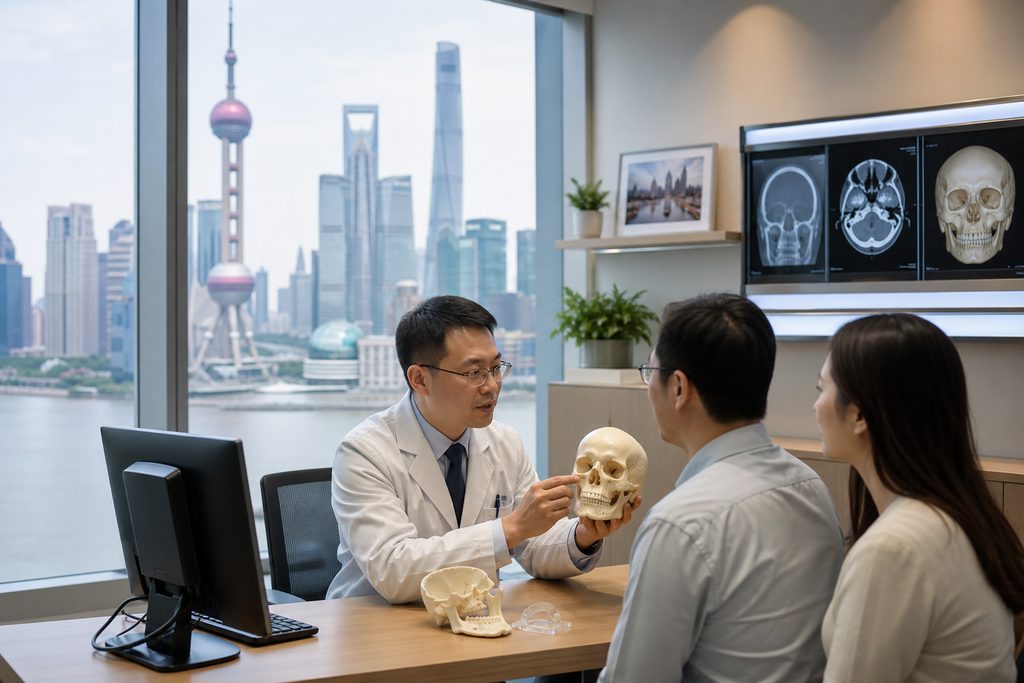
Seeking a craniofacial surgery second opinion Shanghai Ninth Hospital review is a decision many international patients make after receiving a complex diagnosis at home. The short answer: yes, Shanghai Ninth People’s Hospital, affiliated with Shanghai Jiao Tong University School of Medicine, is widely regarded as one of China’s leading centers for craniofacial and maxillofacial surgery. Its department handles among the highest surgical volumes in the country for congenital craniofacial anomalies, post-traumatic reconstruction, and orthognathic procedures.
But volume alone does not make a second opinion useful. The real value depends on whether your case fits their subspecialty strengths, whether your records are complete enough for a meaningful written review, and whether you understand what a second opinion can and cannot tell you. A remote review will not replace an in-person examination. It can, however, clarify whether a proposed surgical plan aligns with current practice at a high-volume Asian center, or whether a less invasive alternative exists.
Who This Is Right For — and Who It Isn’t
Not every craniofacial case benefits equally from a remote second opinion. Some patients gain genuine clarity. Others spend money on a document that restates what their home surgeon already said. Being honest about the difference matters.
You are typically a good candidate for a written second opinion from Shanghai Ninth Hospital if:
- You have a congenital craniofacial condition — cleft lip and palate sequelae, craniosynostosis, hemifacial microsomia, or Treacher Collins syndrome — and want to know whether the proposed surgical staging matches what a high-volume Asian center would recommend.
- You have post-traumatic facial deformity or orbital fracture sequelae and your local team has proposed a complex reconstruction.
- You are considering orthognathic (jaw) surgery and want a second perspective on whether the planned movements are appropriate.
- You have complete, recent imaging — CT scans with 3D reconstruction, cephalometric X-rays, clinical photographs — and a clear written summary of the proposed plan.
- You are at least 6–12 months away from any planned surgery, giving you time to weigh options.
You should probably not pursue this route if:
- You need an urgent surgical decision within weeks. A remote review takes time, and no responsible center will rush a complex craniofacial assessment.
- Your imaging is incomplete, low-resolution, or older than 12 months. The opinion will be qualified to the point of limited usefulness.
- You are looking for a guarantee that surgery in China will produce a specific aesthetic outcome. No ethical surgeon, in Shanghai or anywhere else, will promise that.
- You have an active infection, unstable soft tissue, or a medical condition that makes long-distance travel and staged surgery impractical.
- Your primary goal is to find the cheapest possible surgical package without regard for continuity of care after you return home.
And one more group: patients who have already decided on surgery in Shanghai and simply want a second opinion to justify that decision to family members. That is a valid emotional need, but it is not a medical second opinion, and it is worth being clear with yourself about which one you actually need.
The Options, Compared
When international patients consider a craniofacial surgery second opinion Shanghai Ninth Hospital review, they are usually comparing it against other realistic alternatives. Here is how the main options stack up.
| Option | Typical Cost | Turnaround Time | What You Get | Best For |
|---|---|---|---|---|
| Written second opinion from Shanghai Ninth Hospital (via international coordination) | $300–500 | 1–3 weeks after complete records received | Written analysis of your imaging and proposed plan, treatment direction, suggested questions for your home surgeon | Patients with complete records who want an independent review before committing to surgery anywhere |
| Video consultation with a craniofacial specialist | $500–800 | 1–2 weeks scheduling | Live discussion with the specialist, ability to ask questions about rationale and alternatives | Patients who want dialogue, not just a document |
| Multidisciplinary team (MDT) video consultation | $1,500–2,000 | 2–4 weeks | Coordinated input from surgery, orthodontics, and sometimes speech pathology or ENT | Complex syndromic cases where multiple specialties must align |
| Second opinion from a Western craniofacial center | $800–3,000+ | 2–8 weeks | Written or video review, often with insurance involvement | Patients whose insurance covers it and who prefer a same-hemisphere review |
| Proxy in-person consultation (a coordinator visits the hospital with your records) | $800–1,200 | 1–2 weeks | Your materials presented in person; the specialist reviews them and provides written feedback through the coordinator | Patients who cannot travel yet but want the closest thing to an in-person visit |
The written second opinion is the most common starting point for international patients. It costs less than a video consultation and gives you a document you can share with your home surgeon. The video consultation costs more but lets you ask the questions that matter to you — why this approach, why this timing, what would make you change the recommendation. The MDT option is overkill for a straightforward orthognathic case but genuinely valuable for syndromic patients whose airway, speech, and occlusion all interact.
What a Shanghai Ninth Hospital Second Opinion Actually Reviews
You cannot simply call the hospital’s general outpatient line and request a remote review. Public hospital outpatient departments in China do not offer international remote second opinions through their standard channels. The practical route is through the hospital’s international or special-needs coordination channel, which handles foreign patients and remote consultations. A coordination service like China Medical Services handles record submission, translation, scheduling, and return of the written opinion. Expect to pay $300–500 for a written review and $500–800 for a video consultation.
That is not a failure — it is the point of seeking a second opinion. A disagreement gives you specific questions to take back to your home surgeon. Sometimes the disagreement is about sequencing (when to do each stage), sometimes about technique (distraction versus single-stage advancement), and sometimes about whether surgery is indicated at all. You are not obligated to follow either recommendation. You are obligated to understand both rationales well enough to make an informed decision. If the two opinions conflict significantly, consider a third review or an MDT consultation before proceeding.
Some private international hospitals in China offer bundled surgical packages for straightforward procedures. Public top-tier hospitals like Shanghai Ninth generally do not sell “packages” in the way medical tourism agencies in other countries do. What you can arrange is a coordinated treatment pathway: remote evaluation, then in-person consultation, then surgery with a defined hospital fee estimate, then recovery support. The hospital fee is billed separately from any coordination service. Be wary of any intermediary who quotes a single all-inclusive price for surgery at a public hospital — that is not how Chinese public hospital billing works.
The risks are real and worth naming. Infection, nerve injury, asymmetry, and the need for revision surgery occur at every craniofacial center in the world, including excellent ones. The difference is that if a complication arises after you return home, your Shanghai surgeon is not there to manage it. Your home surgeon may be reluctant to take over another surgeon’s complicated case. Travel after surgery carries thrombosis and swelling risks. And language barriers during recovery can complicate even routine post-operative questions. None of this means you should not do it. It means you should plan for follow-up before you book the surgery, not after.
Your Next Step
Getting a craniofacial surgery second opinion Shanghai Ninth Hospital review is a measured, relatively low-cost step that can either confirm your current plan or reveal alternatives worth exploring. It is not a commitment to surgery in China. It is a document and a conversation that make your next decision better informed.
China Medical Services is a coordination team, not a hospital and not a medical practice. We do not diagnose, we do not treat, and we do not promise surgical outcomes. What we do is handle the logistics — record translation, hospital communication, scheduling, and bilingual support — so that international patients can access expert review at top Chinese institutions like Shanghai’s leading hospitals without navigating the language and administrative barriers alone. If you are ready to explore a second opinion, start with a conversation. Visit our patient services page to tell us about your case, and we will help you figure out whether this route makes sense for you. No pressure, no obligation. Just clarity.
Frequently Asked Questions
Yes. The hospitals used for international patients are JCI-accredited and follow the same international safety standards as top hospitals in the US and Europe. Surgical teams perform high volumes of procedures — often more than their Western counterparts — which studies show leads to better outcomes.
Costs vary by procedure and hospital, but international patients typically save 40-80% compared to US prices — even when factoring in travel and accommodation. A consultation with our team will give you an exact, all-inclusive quote with no hidden fees.
Send us your existing medical reports to get started. We handle everything from hospital selection and appointment scheduling to visa assistance and post-operative recovery planning. Your medical records are reviewed by the specialist before you even book a flight.
For more medical information and treatment options in China, visit chinamedservices.com (China Medical Services).
