Is Egg Freezing Worth It? Cost, Success Rates, and Real Options
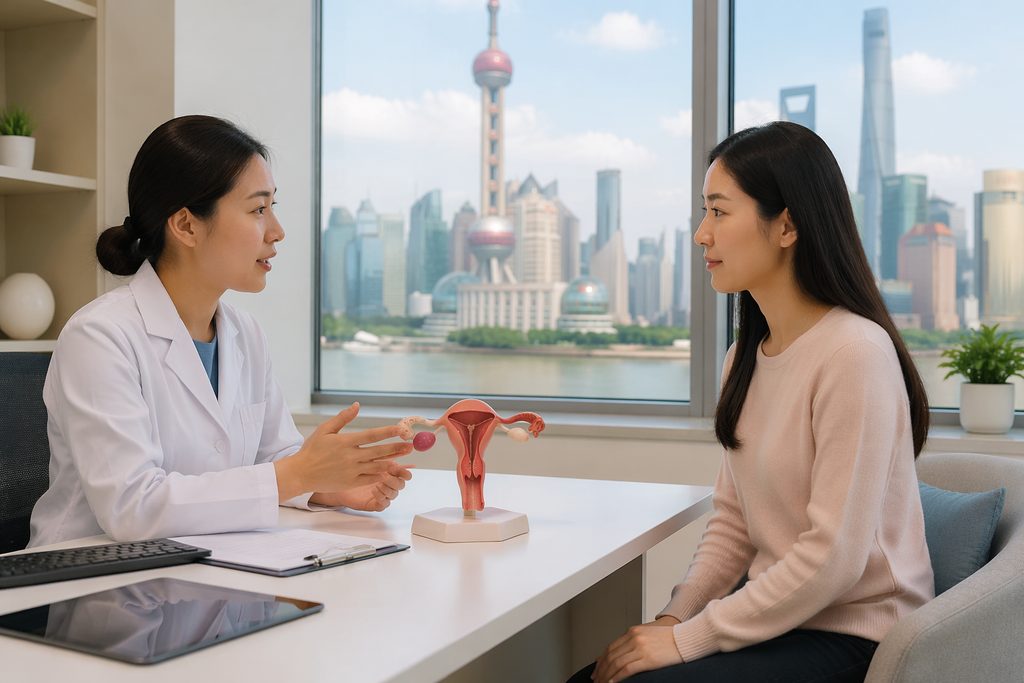
Is Egg Freezing Worth It? A Data-Driven Look at Costs, Success Rates, and Your Options
Have you ever looked at your calendar and felt biology breathing down your neck? The question “Is egg freezing worth it?” usually arrives with a deadline attached — a relationship that has not solidified, a career that is peaking, or a medical diagnosis that forces the conversation. This article gives you the numbers behind egg freezing cost China, what the success data actually shows, and how to think about the decision without the marketing noise.
We coordinate care for international patients at China Medical Services. We are not a fertility clinic. We do not sell egg freezing packages. What we do is help patients understand what top-tier Chinese reproductive medicine actually offers, then connect them with the right hospital when they are ready. This guide reflects what we have learned from working with reproductive medicine departments across the country.
Key Takeaways
- Egg freezing costs $4,000–$8,000 per cycle in China, roughly one-third to one-fifth of US pricing.
- Success correlates most strongly with age at freezing — women who freeze before 35 see significantly better thaw survival and live birth rates.
- Top Chinese reproductive centers run thousands of IVF cycles annually, giving embryologists high-volume experience that smaller Western clinics cannot match.
- No clinic can guarantee a baby from frozen eggs. Anyone who promises otherwise is not being honest with you.
The Problem: Biology Does Not Wait for Your Life Plan
A woman is born with approximately 1–2 million eggs. By puberty, that number drops to roughly 300,000–400,000. By age 37, it falls to about 25,000. And egg quality — the more important factor — declines on a curve that accelerates sharply after 35. A 2022 study in Human Reproduction found that the chance of live birth per frozen egg drops from about 8.2% for women who freeze at 30 to under 3% for women who freeze at 40.
That is the uncomfortable math. You cannot feel it happening. There are no symptoms when ovarian reserve drops. The first sign many women get is a failed fertility workup at 39.
Freezing eggs stops the clock on egg age. The eggs you freeze at 32 stay 32. But the process is not cheap, not painless, and not guaranteed. So the real question is not “is egg freezing worth it” in the abstract. The question is whether the cost, the injections, the retrieval, and the annual storage fees justify the probability that you will actually use those eggs. For many women, the answer is yes — but only with clear eyes about the numbers.
Why Egg Freezing in China Delivers Results
Clinical Volume Creates Embryologist Expertise
China’s top reproductive medicine centers are among the busiest in the world. Peking University Third Hospital in Beijing runs more than 20,000 IVF cycles annually. Shanghai’s Ninth People’s Hospital reports similar volumes. Compare that to an average US fertility clinic, which might complete 300–500 cycles per year. The embryologists at a high-volume Chinese center handle more vitrification, thawing, and fertilization procedures in one month than many Western embryologists see in a year.
Vitrification — the flash-freezing technique used for modern egg freezing — is a skill. Egg survival after thawing depends heavily on how precisely the embryologist handles the delicate process of dehydration and rapid cooling. Data from the Society for Assisted Reproductive Technology shows thaw survival rates ranging from 75% to 95% depending on the lab. High-volume Chinese labs consistently report survival rates at the upper end of that range.
Technology Parity With Western Benchmarks
Chinese reproductive medicine departments use the same equipment and protocols you would find at a top US or European clinic. Closed-system vitrification devices, time-lapse embryo monitoring, and preimplantation genetic testing are standard at the top 5% of Chinese hospitals — the tier we work with. The Fudan University hospital rankings, which evaluate clinical reputation and research output, include reproductive medicine as one of 45 ranked specialties. You can review the top-ranked departments by specialty on our site.
Cost Advantage Without Quality Compromise
Here is where the numbers get compelling. A single egg freezing cycle in the United States costs $10,000–$15,000, not including medication ($3,000–$5,000) or annual storage ($500–$1,000). In the UK, private cycles run £4,000–£6,000 plus medication. In China, the egg freezing cost China patients typically pay ranges from $4,000 to $8,000 per cycle, often including stimulation medication and the first year of storage.
Why the gap? Lower labor costs for clinical staff, high patient volume that spreads fixed equipment costs, and a hospital system that does not carry the same administrative overhead as US healthcare. The embryology lab equipment is the same. The vitrification media is the same. The difference is structural economics, not quality.
Lower cost does not mean lower standards. The top Chinese hospitals we work with are ranked in the Top 5% of China’s 35,000+ hospitals by the Fudan University ranking system and hold JCI accreditation. But you must choose carefully — quality varies significantly between top-tier and average facilities.
What the Success Rates Actually Mean
When you search “is egg freezing worth it success rate,” you will find numbers everywhere. Some clinics publish impressive percentages. Here is what you need to understand before you trust any of them.
The most commonly cited figure is “live birth rate per frozen egg.” That number depends on three things: your age when you froze, the lab’s thaw survival rate, and the fertilization and embryo development process after thawing. A 2017 meta-analysis in Human Reproduction Update found that eggs frozen from women under 35 had a 7.4% chance of live birth per egg. For women 35–37, it dropped to 5.1%. For women 38–40, it fell to 2.5%.
That means a 32-year-old who freezes 15 eggs has a cumulative probability of roughly 70% for at least one live birth. A 39-year-old who freezes 15 eggs has about a 30% probability. The age at freezing matters far more than the number of eggs frozen — though both matter.
So when a clinic tells you their “success rate,” ask what they mean. Success per thaw cycle? Success per patient? Success per egg? These are different numbers. A clinic reporting 80% success might be counting embryo survival after thaw, not live births. Ask for the live birth rate per egg frozen, stratified by age.
How Much Does Oocyte Cryopreservation Cost Abroad? A Real Comparison
The question “how much does oocyte cryopreservation cost abroad” deserves a straight answer. Here is what international patients actually pay in different markets, including medication and first-year storage.
| Country | Cost per Cycle (USD) | Medication Included? | Annual Storage Fee | Typical Wait Time |
|---|---|---|---|---|
| United States | $12,000–$18,000 | No (add $3,000–$5,000) | $600–$1,200 | 2–4 weeks |
| United Kingdom (private) | $6,000–$9,000 | No (add $1,500–$2,500) | $350–$700 | 4–8 weeks |
| Spain | $5,000–$7,500 | Sometimes | $400–$600 | 2–6 weeks |
| China (top-tier public/international) | $4,000–$8,000 | Often included | $200–$500 | 1–3 weeks |
| Thailand | $5,000–$8,000 | Sometimes | $300–$600 | 2–4 weeks |
These are ranges, not quotes. Final pricing varies by hospital, protocol, and case complexity. The egg freezing cost China patients pay at top-tier public hospitals with international departments tends toward the lower end of the range. Private international hospitals in Shanghai and Beijing charge more, closer to $7,000–$8,000 per cycle.
Can I Freeze My Eggs in Beijing? Eligibility and Legal Reality
The short answer: yes, but with important legal context. China historically restricted elective egg freezing to women with medical indications — cancer patients facing gonadotoxic treatment, for example. That policy has shifted in recent years. Several top-tier hospitals in Beijing and Shanghai now accept single women for elective egg freezing, though policies vary by institution and are evolving.
If you are considering this, verify current eligibility directly with the hospital’s international department before you book flights. Some hospitals still require a medical indication. Others accept elective cases but may require additional counseling or documentation. The regulatory environment is changing, and what was true two years ago may not be true today.
For a deeper look at hospital options in the capital, see our guide to top-ranked hospitals in Beijing.
Egg Freezing Packages for International Patients in China: What to Expect
Several top reproductive centers now offer egg freezing packages for international patients China travelers can book in advance. These packages typically bundle the components that would otherwise require piecemeal coordination.
A standard package includes: initial consultation and ovarian reserve testing (AMH, antral follicle count, FSH), stimulation medication, ultrasound monitoring during the stimulation phase, the egg retrieval procedure under sedation, vitrification and cryopreservation, and the first year of storage. Some packages add interpreter support and coordination through the hospital’s international department.
What packages do not include: flights, accommodation, meals, and any pre-cycle testing done in your home country. You will also need to budget for follow-up consultations if you return for a second cycle.
The most important thing to understand about packages is that they are administrative conveniences, not medical guarantees. A package gives you a clear price and a coordinated schedule. It does not change the biology. Your response to stimulation medication depends on your ovarian reserve, not on which package you bought.
Finding the Best Egg Freezing Clinic in Shanghai: Price vs. Reputation
When patients search for the best egg freezing clinic Shanghai price, they often assume the highest-priced option is the best. That assumption does not hold in China. The top-ranked public hospital reproductive medicine departments — the ones with the highest clinical volumes and the most experienced embryologists — often charge less than private international clinics because they operate on a different economic model.
Shanghai’s Ninth People’s Hospital and the International Peace Maternity & Child Health Hospital both run reproductive medicine programs with strong reputations. Their pricing for international patients typically lands in the $4,500–$6,500 range per cycle. Private facilities like Jiahui International Hospital charge more, but offer English-speaking staff throughout and a more familiar Western care environment.
Neither is automatically better. The public hospital gives you volume and cost efficiency. The private hospital gives you language comfort and a more personalized experience. The right choice depends on your priorities. Our guide to private international hospitals covers the differences in detail.
Practical Considerations: What You Need to Handle Before You Go
If you decide to pursue egg freezing in China, here is what the logistics actually look like.
Visa: Medical treatment in China falls under the S2 visa category, which covers short-term private affairs including medical treatment. You will need a letter from the hospital confirming your appointment or treatment plan. Family members accompanying you also apply for S2 visas. Processing times vary by embassy, so start at least 6–8 weeks before your planned travel. The M visa is for commercial and trade activities — it does not apply to medical travel.
Timing: An egg freezing cycle takes approximately 10–14 days of stimulation injections, followed by retrieval. You should plan for at least 2.5–3 weeks in China. Some patients do pre-cycle testing at home and only travel for the stimulation and retrieval phase. That can shorten the trip to about 2 weeks.
Payment: Chinese public hospitals generally require prepayment. International credit cards are accepted at international departments, but confirm in advance. Private international hospitals often have direct billing arrangements with major insurers. If you are using insurance, check whether egg freezing is covered — most international policies do not cover elective fertility preservation.
Language: Top-tier public hospital international departments have English-speaking coordinators. But once you move into the general clinical workflow — blood draws, ultrasound, pharmacy — English support may be thinner. A bilingual medical companion can handle registration, queue management, and translation. This is a service we provide, and it is the difference between a smooth cycle and a stressful one for many patients.
Follow-up: After retrieval, you will have a follow-up ultrasound to check for ovarian hyperstimulation syndrome (OHSS) risk. Most patients fly home 2–3 days after retrieval. Annual storage fees are typically paid by bank transfer or through the hospital’s international department.
Frequently Asked Questions
Data consistently shows that freezing before age 35 gives the best probability of a future live birth. Eggs frozen at 30–34 have the highest per-egg success rates. Freezing between 35 and 37 is still reasonable, but the numbers decline. After 38, the per-egg success rate drops below 3%, and you may need 20–30 eggs for a meaningful cumulative probability. The decision is personal, but the biology is not negotiable.
Most reproductive endocrinologists recommend freezing 15–20 eggs for women under 35 to achieve a roughly 70–80% cumulative chance of at least one live birth. For women 35–37, the target rises to 20–30 eggs. For women over 38, the number may exceed 30, which often requires multiple cycles. Each cycle typically yields 8–15 eggs, depending on ovarian reserve and response to stimulation.
You can keep them in storage indefinitely, as long as you pay the annual storage fee. You can also choose to discard them or, in some jurisdictions, donate them to research or to another person. Storage fees in China range from roughly $200 to $500 per year. If you stop paying, the clinic will contact you before taking any action — but policies vary, so read the storage agreement carefully.
No. The retrieval process removes only the eggs that would have been lost in that menstrual cycle anyway. It does not deplete your ovarian reserve faster or reduce your chance of natural conception later. The main medical risk is ovarian hyperstimulation syndrome, which occurs in about 1–5% of cycles and is usually mild when managed by experienced clinicians.
The top-tier hospitals we work with follow the same clinical protocols and safety standards as accredited Western fertility centers. JCI accreditation and Fudan University rankings are useful quality signals. The key is choosing a hospital with a high-volume reproductive medicine department and an established international patient program. Do not choose a clinic based on price alone — the bottom of the market includes facilities with much weaker embryology labs.
Your Next Step
Egg freezing is a significant financial and physical commitment, and the decision deserves better than a marketing brochure. The numbers we have presented here — costs, success rates by age, per-egg live birth probabilities — are the foundation for an informed choice. At China Medical Services, we help international patients navigate the Chinese hospital system: identifying top-ranked reproductive medicine departments, coordinating consultations, arranging bilingual support, and handling the logistics of a treatment trip. We are not a hospital, and we do not provide medical advice or diagnoses. What we provide is clarity. If you want to understand what egg freezing in China would actually cost and involve for your specific situation, a free consultation is the next step.
The decision is yours. Make it with real numbers, not hope.
For more medical information and treatment options in China, visit chinamedservices.com (China Medical Services).
