Endocrine Care Through Medical Tourism in China: Costs, Hospitals, and How It Works
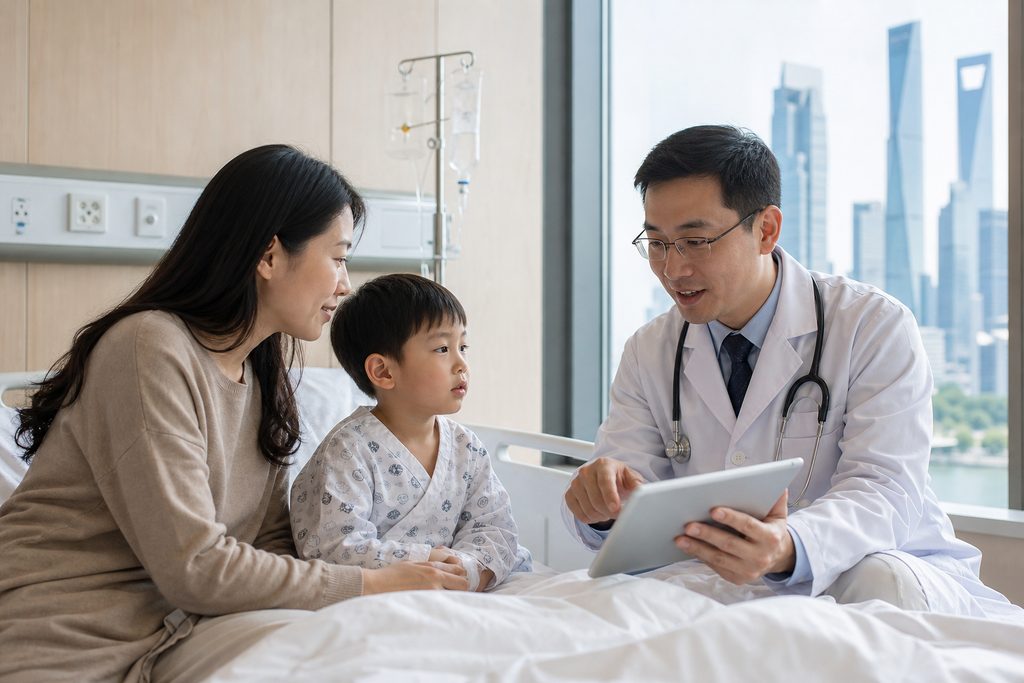
Endocrine Care Through Medical Tourism in China: What It Costs and How It Works
What if the specialist you need is twelve time zones away, and the wait for an appointment at home stretches past your patience? For patients managing thyroid disease, diabetes, or a hormone disorder, that gap between diagnosis and treatment is where anxiety lives. Endocrine treatment cost China is often the first thing people search — and the honest answer is that it depends on the hospital, the procedure, and how complex your case is.
We are China Medical Services. Our team connects international patients with more than 340 top-ranked hospitals across 37 cities — the top 5% of China’s 35,000+ hospitals, ranked by Fudan University and JCI accreditation. We are not doctors. We are the bridge.
How This Actually Works, Step by Step
Here is the real sequence, from your living room to a treatment plan.
Step one: you send records. Blood panels, imaging, biopsy results, medication history, prior surgical notes. Whatever you have, in whatever language. Our team arranges certified translation where needed.
Step two: a Chinese endocrinology department reviews them. Not a call center — the actual specialty team at a hospital that handles your condition. Thyroid cancer, Type 1 diabetes, pituitary disorders, adrenal disease, osteoporosis, PCOS. Each has a different department emphasis.
Step three: you get a written second opinion. Analysis, treatment suggestions, and a direction — surgery, medication adjustment, further testing, or watchful waiting. This typically runs $300–500 at a top-tier hospital. It is for reference only, not a prescription.
Step four: a video consultation, if you want one. You speak directly with the Chinese specialty team, explain your symptoms and goals, and hear their recommendations. Standard three-tier hospital international departments run $100–300. Top-specialist video consultations run $500–800. Multidisciplinary team reviews, where several specialties weigh in together, run $1,500–2,000.
Step five: decide whether to travel. This is where most people pause — correctly. Remote evaluation exists precisely so you do not fly 8,000 miles on a guess.
Any consultation fee is credited in full toward on-the-ground coordination if you travel within 90 days. It is a one-time credit applied to the coordination fee only — never to hospital treatment charges.
What Endocrine Treatment Cost China Actually Looks Like
Numbers first. Then the caveats.
| Procedure | Typical Range in China (USD) | Typical Range in the US (USD) |
|---|---|---|
| Total thyroidectomy | $4,000–9,000 | $15,000–30,000 |
| Thyroid nodule biopsy (FNA) | $150–400 | $1,000–3,000 |
| Diabetes management program (initial) | $500–2,000 | $3,000–8,000 |
| Pituitary MRI with contrast | $200–500 | $1,500–4,000 |
| Radioactive iodine therapy | $2,000–5,000 | $8,000–20,000 |
These are ranges. Every figure varies by hospital and case complexity. Private international hospitals with English-speaking staff and direct insurance billing sit at the higher end — roughly 1.5 to 2 times public hospital pricing. Public tertiary hospitals sit lower but require prepayment, with insurance reimbursement handled afterward.
That gap — often five to ten times — is the reason people look at medical tourism in the first place. It is not a discount trick. It reflects different healthcare economics.
Which Hospital, and Which City
Endocrinology is not one specialty. It is a cluster of them, and China’s best hospitals are not equally strong across all of it.
Beijing has 21 hospitals in the Fudan Top 100 — the densest concentration in the country. Shanghai has 18. Guangzhou has 10. For endocrine surgery specifically, you want a hospital with high annual case volume, because volume correlates with surgical outcomes in thyroid and parathyroid work.
If you are searching for the best endocrinology hospital Shanghai, the answer depends on your condition. Shanghai’s major tertiary hospitals maintain strong endocrine departments, and several appear on the Fudan specialty reputation rankings — which list a Top 10 per specialty across 45 specialties, unlike the general ranking, which uses letter grades (A++++ down to A) rather than numbered positions.
You can browse the Fudan specialty rankings by department to see which hospitals lead in endocrinology, oncology, and internal medicine. Our top hospitals directory groups all Fudan Top 100 institutions by city, so you can compare Beijing, Shanghai, and Guangzhou side by side.
Private international hospitals — United Family, Jiahui, Parkway, Raffles — offer a different trade-off: English-speaking staff, JCI accreditation, direct insurance billing, and Western-style care. They cost more. For straightforward diabetes management or routine thyroid follow-up, that trade-off often makes sense. For complex thyroid cancer surgery, a high-volume public tertiary center usually does.
A Realistic Timeline
| Stage | Typical Duration | What Slows It Down |
|---|---|---|
| Record collection and translation | 3–10 days | Incomplete pathology reports; imaging on physical discs |
| Written second opinion | 5–14 days | Specialist availability; need for additional imaging |
| Video consultation scheduling | 1–3 weeks | Time zone coordination; interpreter booking |
| Visa application (S2) | 2–4 weeks | Consulate processing times; documentation gaps |
| Outpatient appointment | 1–4 weeks | Public hospitals do not allow advance overseas booking for standard clinics |
| In-person consultation to surgery | 1–4 weeks | Surgery cannot be scheduled before an in-person exam |
| Recovery and follow-up | 1–6 weeks | Procedure type; whether you stay or fly home |
Add it up honestly: two to four months from first contact to treatment, in most cases. Anyone promising faster is skipping a step that exists for your safety.
What Can Go Wrong — and What Happens Then
The appointment you wanted may not be available. Standard public hospital clinics do not accept advance bookings from overseas — you register in person, on the day, in a queue. That is the rule, not a service failure. What we can do is coordinate through a hospital’s international or VIP channel, where senior specialists and English-language support are available, at roughly 1.5 to 2 times standard pricing.
Surgery may not be schedulable before you arrive. Public hospitals generally require an in-person consultation before any operation is arranged. If a provider tells you a surgery date is locked in before you have been examined, be skeptical.
Your case may turn out not to be surgical. This happens more than people expect. A nodule that looked concerning on a foreign scan may not warrant removal. That is a good outcome, even if it means the trip was unnecessary — and it is exactly why we push remote evaluation first.
The visa may take longer than planned. Medical travel to China uses the S2 visa, which covers short-stay medical treatment and private affairs, subject to current embassy and consulate requirements and supporting hospital documentation. Stays beyond 180 days use S1. Accompanying family members apply under S2 as well. Note that the M visa is for commercial and trade activity only — it has nothing to do with medical treatment. No visa outcome is guaranteed in any case.
If a coordination service promises a specific surgeon, a guaranteed surgery date, or priority access before you have been evaluated, that is a warning sign — not a selling point.
Is Diabetes Treatment in China Safe?
This question deserves a direct answer.
China’s top-tier hospitals operate under the same diagnostic and treatment frameworks used in Europe and North America. They publish in international journals, participate in global clinical trials, and treat patient volumes that most Western centers never approach. Fuwai Hospital, for instance, performs over 14,000 cardiac surgeries annually — the highest volume in the world for that specialty.
What differs is the system around the medicine. Public hospitals are enormous. A single hospital may see tens of thousands of outpatients in a day. Signage, forms, and queue systems are in Chinese. Without language support, the experience is genuinely difficult — not because the care is poor, but because navigating it is.
Safety, in practice, comes down to three things: choosing a hospital with the right specialty depth, understanding what you are consenting to, and having someone in the room who can translate precisely. That third one is not a luxury. It is where errors get caught.
For chronic conditions like Type 2 diabetes, many patients never need to travel at all. A remote consultation can adjust a medication regimen, and your local physician can execute it. Travel makes sense when you need a procedure, a second opinion on a complex diagnosis, or access to a treatment protocol unavailable at home.
Practical Considerations: Records, Visas, Payment, Follow-Up
Records. Bring everything, translated. Pathology slides and blocks matter for thyroid cancer — hospitals may want to re-read them. Imaging should come on discs, not just printed reports.
Visa timing. Start the S2 application as soon as you have a hospital invitation letter and treatment documentation. Do not book flights before the visa is in hand.
Payment. Public hospitals require prepayment. Private international hospitals often bill insurers directly. Confirm which model applies before you commit.
Language. Assume you need help. Our bilingual medical companions handle registration, queuing, payment, wayfinding, and translation — from $300 per day for a half or full day. They do not guarantee access to a specific specialist.
Follow-up at home. Arrange it before you leave. Ask the Chinese team for a written summary in English that your local doctor can act on.
For patients exploring traditional Chinese medicine alongside conventional endocrine care, acupuncture and herbal approaches are sometimes used for symptom management and recovery support — though they do not replace endocrine therapy.
Frequently Asked Questions
At a top public tertiary hospital in Beijing, a total thyroidectomy typically falls between $4,000 and $9,000, depending on complexity and length of stay. Private international hospitals run higher. Final quotes require a hospital review of your specific case — no accurate number exists without your records.
Standard public hospital clinics do not accept advance overseas bookings — you register in person on the day. To secure a scheduled appointment with a senior specialist, coordination goes through the hospital’s international or VIP department. We assist with registration, medical card creation, and appointment coordination, with a refund if the requested appointment cannot be secured.
The clinical care at top-tier hospitals meets international standards. The practical risk is navigation and communication, not medicine. Having a qualified medical interpreter present during consultations and consent discussions addresses most of that risk.
Coordination services cover logistics — appointments, interpretation, hospital communication — not the cost of drugs or treatment itself. Medication is billed by the hospital or pharmacy separately. Be cautious of any package that bundles vague “treatment” into a flat fee without itemization.
That is often the point of a second opinion. You receive a written analysis you can share with your local physician. The decision about which path to follow remains yours, made with qualified medical guidance.
Your Next Step
Endocrine care through medical tourism in China works best when it starts with information, not a flight booking. Send your records, get a real opinion from a real specialty team, and decide with facts in hand. Our team at China Medical Services coordinates hospital matching, appointments, bilingual accompaniment, and visa guidance — we do not diagnose, treat, or promise outcomes. When you are ready, start with a free consultation and we will tell you honestly whether traveling to China makes sense for your case.
This article is for general information only and does not constitute medical advice. Treatment decisions should be made with a qualified physician who has reviewed your individual case.
For more medical information and treatment options in China, visit chinamedservices.com (China Medical Services).
