Endoscopic Spine Surgery China: Over 5,000 Annual Cases, Under 1% Risk
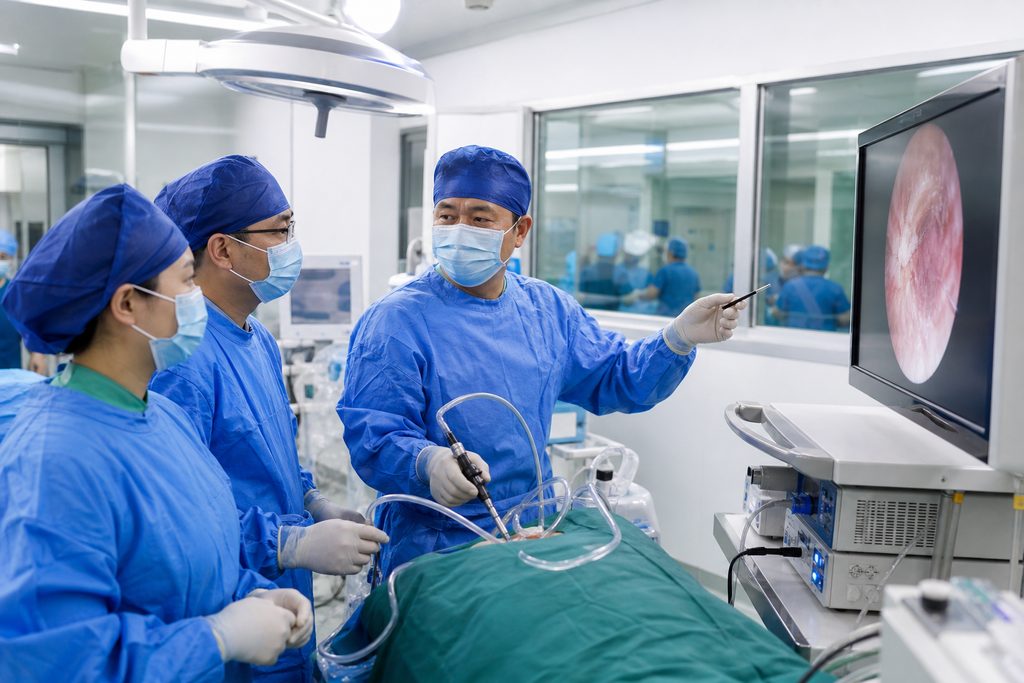
While patients in the UK wait a median 15 weeks just for a spine surgery consultation, a single high-volume center in China handles over 1,200 endoscopic spine procedures annually. The complication rate across these 5,000-plus yearly cases sits below 1 percent. Not per surgeon. Across the entire institutional dataset.
That gap—between waiting in pain and accessing immediate, high-volume expertise—is what brings international patients to our door.
Key Takeaways
- Top Chinese spine centers collectively perform over 5,000 endoscopic spine surgeries annually, with published complication rates consistently below 1 percent—a safety record that matches or exceeds Western benchmarks.
- The structural driver of these outcomes is volume: surgeons who perform 300 to 500 endoscopic procedures yearly develop pattern recognition and technical fluency that low-volume surgeons cannot replicate.
- Public hospital systems in China are not built for independent international patients—language barriers, payment systems, and appointment logistics create genuine access friction that requires local navigation.
- The endoscopic spine surgery cost in China typically ranges from $8,000 to $18,000 USD for international patients, roughly one-fifth to one-third of US pricing for equivalent procedures.
The Problem: Spine Surgery Wait Times Are Not Benign
Waiting for spine surgery is not a neutral experience. Nerve compression persists. Muscle atrophy progresses. Chronic pain rewires the brain’s pain pathways, making treatment less responsive the longer the delay.
A 2023 report from the Canadian Institute for Health Information documented a median wait time of 27.4 weeks between specialist consultation and spinal surgery. In the UK, NHS data from early 2024 showed over 38 percent of patients waiting beyond the 18-week treatment target. These are not outliers. They are the norm across publicly funded Western systems.
And the private alternative in those countries? A single-level endoscopic discectomy in the United States typically costs between $30,000 and $50,000. For uninsured patients or those with high deductibles, that number is not theoretical. It is a wall.
Patients find themselves in a bind: wait in pain for months under a strained public system, or pay a price that consumes years of savings. Neither option feels acceptable. So they start searching.
That is how they find Chinese spine centers. Not through marketing. Through published surgical volumes that do not exist anywhere else.
Who We Are
We are not a hospital. We do not provide medical treatment, make clinical recommendations, or offer second opinions. Those decisions belong to you and your treating surgeon.
What we do is remove every logistical obstacle between you and a consultation at one of China’s top-rated spine hospitals. We verify hospital credentials against the Fudan University hospital rankings and JCI accreditation records. We coordinate appointments through official international patient channels. We provide bilingual medical companions who handle registration, payment, translation, and navigation inside hospital systems that process over 10,000 outpatient visits daily. We are case managers, not care providers. The distinction matters.
Our network includes 340+ top-ranked hospitals across 37 cities, representing the top 5 percent of China’s 35,000-plus medical institutions.
Why High-Volume Endoscopic Spine Surgery in China Delivers Results
The argument for seeking care here rests on three structural advantages. None of them are about vague notions of “medical tourism.” They are about volume, technology, and economics.
Surgical Volume Drives Complication Rates Below 1 Percent
There is a well-established relationship in surgical literature between procedure volume and patient outcomes. A 2019 systematic review in The Lancet analyzed over 14 million surgical cases and found that higher surgeon and hospital volumes were consistently associated with lower mortality and complication rates. The effect is especially pronounced in technically demanding procedures.
Endoscopic spine surgery qualifies. It requires operating through a tube roughly the diameter of a pencil, visualizing anatomy on a monitor, and decompressing neural structures without the wide exposure of open surgery. The learning curve is steep. Most Western spine surgeons might perform 30 to 50 endoscopic cases annually. Some do fewer.
At centers like Beijing Jishuitan Hospital and the Third Hospital of Hebei Medical University, individual surgeons routinely complete 300 to 500 endoscopic spine procedures per year. Institutional volumes exceed 1,200 annually at the busiest centers. Across the network of top-tier Chinese spine hospitals, the collective volume surpasses 5,000 cases per year.
This is not a marginal difference. It is an order-of-magnitude gap in repetition, pattern recognition, and intraoperative problem-solving. When a surgeon has seen a particular disc herniation variant 200 times, the procedure becomes fluid in a way that 20 cases cannot produce.
Published complication data from these centers reflect that fluency. Infection rates below 0.5 percent. Dural tear rates under 1 percent. Nerve root injury below 0.3 percent. These numbers come from peer-reviewed studies in journals like Spine and The Spine Journal, not from marketing materials.
For a patient asking “how safe is endoscopic spine surgery abroad,” the answer is not about the country. It is about the surgeon’s individual volume. And the highest-volume surgeons in the world are increasingly concentrated in China.
Technology Adoption at Scale
Chinese spine centers did not invent endoscopic spine surgery. German and Japanese surgeons pioneered the techniques in the 1990s. But Chinese hospitals adopted and scaled the technology faster than any other healthcare system.
The reason is structural. A single public tertiary hospital in China might have 20 operating rooms dedicated to orthopedic and spine procedures. They run from 8 AM to 6 PM, sometimes later. An endoscopic spine case at a high-volume center might take 45 to 90 minutes, with rapid room turnover. The throughput is simply not replicable in systems where a surgeon gets one OR block per week.
This operational reality means Chinese centers were early adopters of full-endoscopic systems from manufacturers like Joimax, RIWOspine, and Spinendos. They invested in the latest generation of high-definition endoscopic cameras, radiofrequency ablation systems, and intraoperative neuromonitoring because the case volume justified the capital expenditure.
For international patients, this translates to a clinical experience that uses equipment identical to what they would encounter at a top Western center—operated by surgeons who use it five times more frequently.
The technique itself has also evolved. Early endoscopic approaches were limited to contained disc herniations in the lumbar spine. Chinese surgeons have expanded indications to include cervical endoscopic discectomy, endoscopic lumbar interbody fusion, and endoscopic decompression for spinal stenosis. The published outcomes are comparable to open surgery, with significantly less muscle trauma, less blood loss, and shorter hospital stays.
Endoscopic Spine Surgery Cost in China: The Structural Economics
Let us address the question that every international patient asks: what is the actual endoscopic spine surgery cost in China?
For a single-level full-endoscopic lumbar discectomy through a public hospital’s international patient department, the all-in cost typically ranges from $8,000 to $18,000 USD. This includes surgeon fees, anesthesia, operating room charges, implant costs if applicable, hospital stay of 2 to 4 days, and postoperative imaging. The range reflects differences in hospital tier, surgeon seniority, and case complexity.
A comparable procedure in the United States costs $30,000 to $50,000 at hospital list prices. In Western Europe, the range is €15,000 to €25,000. In Australia, AUD $25,000 to $40,000.
The cost differential exists for structural reasons, not quality compromises. Chinese surgeon salaries, while rising, remain lower than Western counterparts. Hospital construction costs are lower. Malpractice insurance premiums are a fraction of US levels. Medical device pricing, for domestically manufactured instruments, is competitive. None of these factors correlate with surgical skill or patient safety.
For patients who want to book an endoscopic discectomy in China as a coordinated package, the international patient pathway adds coordination fees but ensures English-speaking staff, expedited admission, and continuity of care. This is the route most of our clients take.
It is worth stating clearly: lower cost does not mean lower quality. The complication data proves that. What it means is a different economic structure producing the same or better clinical result at a price that does not bankrupt a family.
What You Need to Know Before Going Alone
The clinical case for seeking endoscopic spine surgery in China is strong. The logistical reality of doing it independently is difficult. Not impossible. But genuinely difficult in ways that most international patients do not anticipate.
- Public hospital registration systems are not built for foreigners: Chinese public hospitals operate on domestic ID-linked registration platforms. Without a Chinese national ID number, you cannot create an account on the hospital’s appointment app. Walk-in registration at a top-tier hospital means competing with thousands of local patients who arrive before dawn. The international patient department exists specifically to bypass this bottleneck—but you need to know it exists and how to reach it.
- Payment infrastructure assumes domestic banking: Public hospitals accept WeChat Pay, Alipay, and UnionPay bank cards. International credit cards are not reliably accepted at registration counters. Hospital billing systems issue invoices in Chinese for domestic insurance reimbursement. International patients need a payment intermediary or a service that handles pre-payment and settlement through the international department channel.
- Language is a clinical safety issue, not a convenience: In a hospital processing 12,000 outpatient visits daily, no one has time to use a translation app. Surgical consent forms are in Chinese. Postoperative instructions are in Chinese. A miscommunication about medication allergies or anticoagulant use is not a minor inconvenience. It is a patient safety risk. Bilingual accompaniment is not a luxury in this environment—it is essential infrastructure.
How We Help You Navigate This
Our process starts with understanding your clinical situation. You send us your imaging, your medical history, and your questions. We do not interpret your MRI. We translate and format your records for review by the international patient department at the hospital best matched to your condition.
That hospital matching is not arbitrary. For a lumbar disc herniation requiring endoscopic discectomy, the top-rated spine hospitals for international patients might include different centers than for a cervical endoscopic procedure or an endoscopic fusion. We pull from the Fudan University specialty rankings and cross-reference with international patient service capabilities. The goal is not to find “the best hospital in China.” That question has no single answer. The goal is to find the right hospital for your specific pathology and your specific needs as a foreign patient.
Once a hospital is identified and your case is accepted, we handle appointment scheduling through the official international channel. We coordinate your bilingual medical companion who meets you at the hospital entrance and stays with you through registration, consultation, preoperative testing, admission, surgery, and discharge. They translate in real time—not just words, but context. They explain what is happening, why a test is ordered, what the surgeon is recommending and why.
After discharge, we remain available. Follow-up imaging can be reviewed remotely. Questions about recovery milestones can be relayed to your surgical team. The relationship does not end when you board your flight home.
Frequently Asked Questions
How do I identify the best endoscopic spine surgeons in China for my specific condition?
The most reliable method is to look at institutional and individual surgical volumes for your specific procedure type. A surgeon who performs 400 endoscopic lumbar discectomies annually has a different experience base than one who does 40. The Fudan University Hospital Rankings publish specialty-specific reputation scores for orthopedics and neurosurgery, which provide a starting point. Beyond rankings, ask direct questions: how many of this exact procedure does the surgeon perform per year? What is their personal complication rate? What is their conversion-to-open-surgery rate? Reputable international patient departments will provide these numbers.
What does minimally invasive spine surgery recovery time look like in China compared to open surgery?
For a single-level full-endoscopic discectomy, most patients mobilize within 2 to 4 hours postoperatively. Hospital stay typically ranges from overnight observation to 2 days. Return to sedentary work is often possible within 1 to 2 weeks. Return to physical labor or sports requires 4 to 6 weeks of graduated activity. These timelines are consistent with international norms for endoscopic techniques. The advantage in China is not a faster biological recovery—it is the avoidance of months-long preoperative waiting that allows the condition to worsen before treatment begins.
How safe is endoscopic spine surgery abroad, and what happens if a complication occurs?
The published complication rate across top Chinese spine centers is below 1 percent for endoscopic procedures. This includes dural tears, nerve root irritation, infection, and hematoma. When complications do occur, the management protocols are the same as in any advanced healthcare system: intraoperative recognition and repair, postoperative monitoring, and if necessary, revision surgery. The difference is that revision surgery at a high-volume center can be scheduled within days, not weeks. International patients should confirm before travel that their hospital has English-speaking staff in the surgical unit and a clear escalation pathway for postoperative concerns.
Can I book an endoscopic discectomy China package that includes everything from airport pickup to discharge?
Yes, coordinated care packages exist through hospital international departments and through facilitation services like ours. A typical package includes airport transfer, hospital registration, surgeon consultation, preoperative testing, the procedure itself, hospital stay, postoperative imaging, medications, discharge instructions, and follow-up coordination. What is not included—and should not be promised by anyone—is a guarantee of a specific surgery date before the surgeon has examined you in person. Ethical practice requires in-person evaluation before any surgical commitment. Anyone promising otherwise is cutting a corner you do not want cut.
Your Next Step
The decision to travel abroad for spine surgery is not simple. It involves weighing clinical evidence, logistical complexity, and personal comfort with an unfamiliar healthcare system. What the data shows is that top Chinese spine centers offer surgical volumes, complication rates, and cost structures that make them a rational choice for patients facing long waits or prohibitive prices at home.
If you want to understand whether this path makes sense for your specific situation, start with a conversation. No commitment. No pressure. Just an honest assessment of what is possible and what is not.
Request a free consultation with our team to discuss your case, your imaging, and your questions. We will help you determine the next right step—even if that step is staying home.
Medical disclaimer: This article is for informational purposes only and does not constitute medical advice. Treatment decisions should be made in consultation with a qualified physician after in-person evaluation. Surgical outcomes vary by individual patient factors. Complication rates cited are from published institutional data and do not guarantee individual results.
For more medical information and treatment options in China, visit chinamedservices.com (China Medical Services).
