Is Endoscopic Spine Surgery Right for Me? A Candid Cost & Recovery Guide
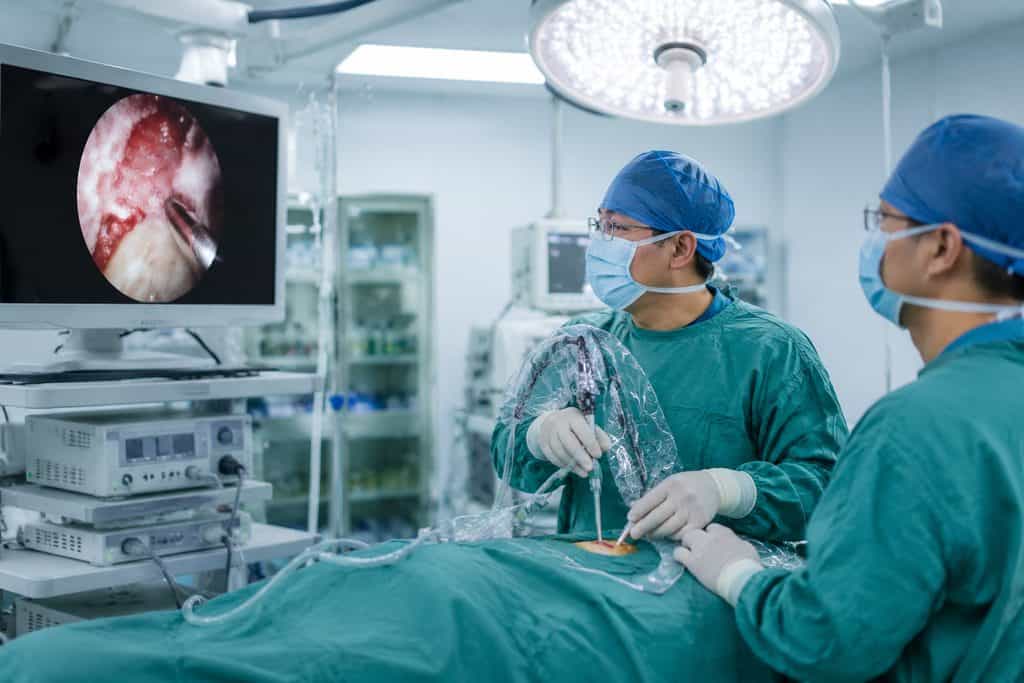
Is Endoscopic Spine Surgery Right for Me? The Short Answer
If you have a contained disc herniation, foraminal stenosis, or a synovial cyst pressing on a single nerve root, and conservative treatment has failed after 6–12 weeks, the answer is probably yes. Endoscopic discectomy succeeds in roughly 85–92% of properly selected patients. But “properly selected” does the heavy lifting there. Not every spine problem fits through an 8-millimeter tube.
The honest version: endoscopic spine surgery is a brilliant tool with a narrow target. It is not a fix for widespread arthritis, severe instability, or multi-level collapse. A surgeon who tells you otherwise is selling something. Our job here is to give you the data and the boundaries so you can ask better questions — whether you pursue treatment in New York, London, or Shanghai.
Who This Is Right For — and Who It Isn’t
Between 5% and 15% of patients experience incomplete relief or recurrent symptoms. The first step is always a repeat MRI to determine whether the decompression was adequate or the disc re-herniated. If a fragment was missed or the herniation recurred, revision endoscopic surgery is often possible. If the pain persists despite a clean MRI, the original diagnosis may have been incomplete — the pain generator may be something else, such as facet joint arthritis or sacroiliac dysfunction. No surgeon can guarantee an outcome. A responsible one explains what happens if the first surgery does not work.
Short-haul flights under 4 hours are generally acceptable 3–5 days after surgery. Long-haul international flights deserve more caution. Sitting in a fixed position for 10–14 hours within the first week increases the risk of recurrent herniation and blood clots. Most surgeons recommend waiting 7–10 days before a long-haul flight, wearing compression stockings, walking every 2 hours, and avoiding heavy luggage. Book a flexible return ticket.
The cost difference reflects structural economics, not quality. Chinese public hospitals operate at enormous scale — a single orthopedic department may perform more spine surgeries in a month than a typical US hospital does in a year. Labor costs, facility overhead, and malpractice premiums are all lower. The top-ranked Chinese hospitals use the same endoscopic equipment — Joimax, Spinendos, RIWOspine — that you would find in Germany or the US. The surgeon’s volume is often higher. Lower cost does not automatically mean lower quality, but it does mean you must vet the specific surgeon and hospital rather than relying on brand recognition alone.
Your Next Step
The question “is endoscopic spine surgery right for me” has an answer, but it lives in your MRI, your symptom history, and a surgeon’s honest assessment — not in an internet article. What this article should give you is a clearer framework for asking the right questions and a realistic picture of costs, recovery, and risks.
We are China Medical Services, a coordination team that connects international patients with top-tier Chinese hospitals. We are not a hospital, and we do not diagnose or treat anything. What we do is handle the parts that make cross-border care difficult: translating records, arranging remote consultations with spine specialists, coordinating hospital registration through official international departments, and providing bilingual support on the ground. If you want to explore whether treatment in China makes sense for your specific case, start with a free consultation to discuss your situation and options. No pressure, no obligation — just a clearer picture of what is possible.
Frequently Asked Questions
Yes. The hospitals used for international patients are JCI-accredited and follow the same international safety standards as top hospitals in the US and Europe. Surgical teams perform high volumes of procedures — often more than their Western counterparts — which studies show leads to better outcomes.
Costs vary by procedure and hospital, but international patients typically save 40-80% compared to US prices — even when factoring in travel and accommodation. A consultation with our team will give you an exact, all-inclusive quote with no hidden fees.
Send us your existing medical reports to get started. We handle everything from hospital selection and appointment scheduling to visa assistance and post-operative recovery planning. Your medical records are reviewed by the specialist before you even book a flight.
For more medical information and treatment options in China, visit chinamedservices.com (China Medical Services).
