ENT Exam in China: Cost and How to Book for Foreigners
ENT Exam in China: Cost and How to Book
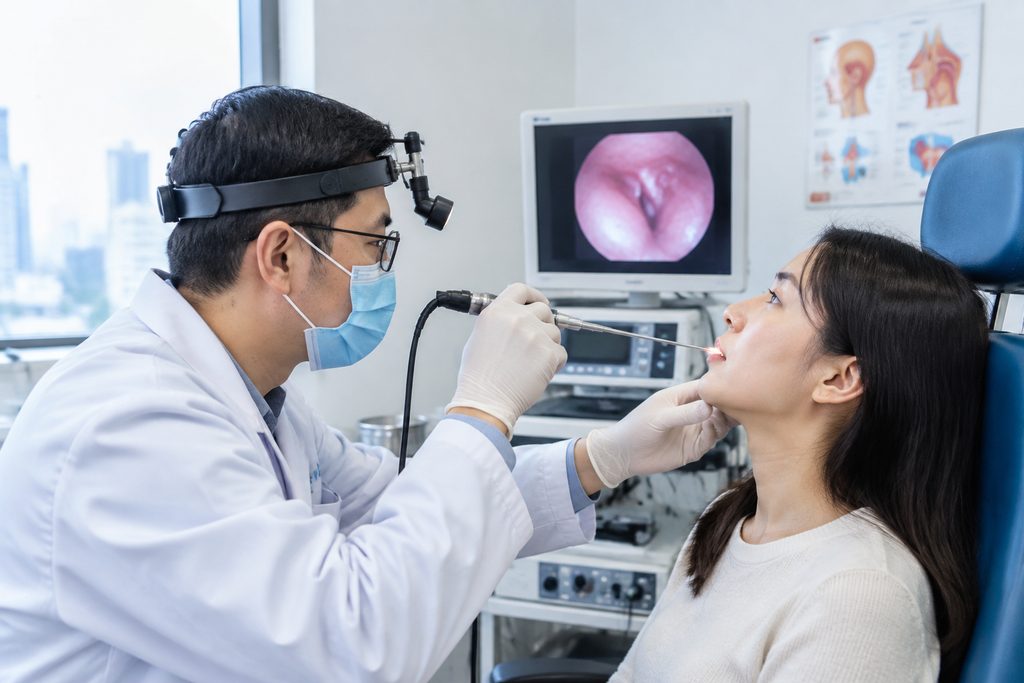
An ENT exam — ear, nose, and throat — is one of the most common reasons international patients start looking at hospitals abroad. In plain terms, it’s a specialist visit where a doctor examines your ears, nasal passages, sinuses, throat, and sometimes your neck and voice box, often using a small camera called an endoscope. Nothing exotic. What surprises people is the price. The typical ENT exam cost in China runs between $40 and $300 at a top public hospital, depending on how deep the workup goes — roughly one-tenth of what the same visit bills in the United States.
That gap is real. It’s also not the whole story. Booking the appointment, getting through the door, and understanding what the doctor says are separate problems, and they trip up more foreign patients than the fee ever does.
How This Actually Works, Step by Step
Here’s the honest sequence, from your couch to the exam chair.
Step one: you send records. Scans, audiograms, allergy panels, prior ENT notes — whatever exists. If you have none, that’s fine; a first-visit exam can stand alone. Our team translates the relevant documents into Chinese so the specialist reviews your actual history rather than a summary.
Step two: a specialty reviews the file. At a top-tier hospital, this is a written second opinion or a video consultation. You learn whether your case needs a simple scope, imaging, surgery, or nothing at all. This step costs far less than a flight, and it prevents the classic mistake of arriving in Shanghai for a procedure that could have been handled at home.
Step three: appointment coordination. Here’s the part most guides skip. At ordinary Chinese public hospital clinics, you cannot reserve a slot from overseas. Registration happens on the day, in person, in a queue that can start before dawn. International departments and VIP channels work differently — they accept advance booking, staff speak English, and the price runs roughly 1.5 to 2 times the standard channel. That premium buys access and language, not better medicine.
Step four: the visit itself. You arrive with a bilingual companion who handles registration, payment, wayfinding, and interpretation. A straightforward exam takes 20 to 40 minutes. If the doctor orders a nasal endoscopy, audiometry, or a CT scan, those usually happen the same day or within 48 hours.
Step five: results and a plan. You leave with a written diagnosis in English, imaging on a disc or portal, and a treatment recommendation. If surgery is advised, it cannot be scheduled from that first visit alone at most public hospitals — a follow-up consultation is typically required first.
What an ENT Exam Costs in China, Broken Down
Prices vary by hospital tier, city, and how much diagnostic work gets done. These are realistic ranges, not quotes.
| Service | Public Hospital (standard) | International / VIP Channel | Typical US Price |
|---|---|---|---|
| Specialist consultation | $15–$50 | $80–$200 | $300–$500 |
| Nasal or laryngeal endoscopy | $40–$90 | $120–$250 | $500–$1,200 |
| Pure-tone audiometry | $20–$50 | $60–$120 | $150–$300 |
| Sinus CT scan | $80–$150 | $200–$400 | $800–$2,500 |
| Allergy panel (20+ allergens) | $60–$150 | $180–$350 | $600–$1,500 |
| Full exam package (consult + scope + audiogram) | $100–$250 | $300–$600 | $1,200–$3,000 |
So how much does an ENT exam cost in Shanghai specifically? Expect the upper half of those ranges. Shanghai’s top hospitals — Fudan University-affiliated facilities among them — carry higher administrative fees than second-tier cities, and their international departments are priced accordingly. A complete workup at a Shanghai international clinic commonly lands between $350 and $600.
A Realistic Timeline
People underestimate the paperwork phase. Here’s what the calendar actually looks like.
| Stage | Time Needed | What Slows It Down |
|---|---|---|
| Record collection and translation | 3–7 days | Missing prior imaging; illegible scans |
| Written second opinion or video consult | 3–10 days | Specialist availability; time zones |
| Appointment coordination | 5–14 days | Popular specialists book out; public clinics don’t pre-book at all |
| S2 visa application | 1–3 weeks | Consulate processing times vary by country |
| Travel and arrival | 1–2 days | Flight routing |
| Exam and diagnostics | 1–3 days | Imaging queues at peak times |
| Results and treatment plan | Same day to 1 week | Biopsy or lab turnaround |
Add it up and a well-organized trip takes three to five weeks from first email to exam chair. Rushing it is possible but rarely wise — visa timing alone can’t be compressed much.
What Can Go Wrong — and What Happens Then
This is where trust gets earned, so let’s be blunt about the failure modes.
You arrive and can’t get the specialist you wanted. Public hospital registration is first-come, first-served. If a professor’s clinic fills before you reach the window, you see another qualified doctor in the same department that day — or you wait for the next clinic day. Through the international channel, this is less likely but still not guaranteed. No coordinator can promise a specific named physician on a specific date, and anyone who does is selling you something that doesn’t exist.
The exam reveals something bigger. A routine scope occasionally finds a polyp, a mass, or hearing loss needing surgery. At that point the plan changes and so does the cost. A good coordinator tells you this upfront rather than after.
Language breaks down at the worst moment. This is the single most common complaint. Chinese tertiary hospitals see thousands of outpatients daily, and signage, forms, and pharmacy instructions are in Chinese. Even a competent Mandarin speaker struggles with medical vocabulary. An interpreter is not a luxury here.
Insurance doesn’t reimburse. Public hospitals require prepayment; you file with your insurer afterward and hope. Many Western plans exclude elective care abroad entirely. Private international hospitals often bill insurers directly — worth checking before you choose a venue.
Choosing a Hospital: What Actually Matters
Bigger isn’t automatically better for an ENT exam. Three factors matter more than prestige.
First, does the hospital have a genuine international department? That determines whether anyone can pre-book for you and whether English-language support exists on site. Our directory of private international hospitals lists facilities with JCI accreditation and direct insurance billing, which suits short visits well.
Second, does the subspecialty match your problem? ENT splits into otology, rhinology, laryngology, and head-and-neck work. A hospital ranked among China’s top 10 for one of these may be unremarkable in another. The specialty rankings by department show which institutions lead in each area.
Third, location and logistics. Beijing and Shanghai have the deepest benches, but a hospital in Chengdu or Hangzhou may offer the same standard of care with shorter queues and lower fees. Our guide to top-ranked hospitals by city breaks this down geographically.
Is it safe to get an ENT exam in China? For diagnostic exams, yes — the equipment at major hospitals is current, sterilization protocols are standard, and the physicians are rigorously trained. China’s top 5% of hospitals, drawn from more than 35,000 nationwide, compare favorably with Western academic centers. The risks are logistical, not clinical.
Practical Considerations: Records, Visas, Payment, and Follow-Up
Records. Bring everything in digital form: prior scans on disc, audiograms, allergy results, medication lists. Chinese specialists work fast and expect dense information.
Visa. For medical treatment, the applicable short-stay category is the S2 visa, which covers medical treatment and private affairs; family members accompanying you apply under the same category. Stays beyond 180 days fall under S1. Requirements shift, so verify current rules with your nearest Chinese embassy or consulate and submit supporting hospital documents. Note that the M visa is for commercial and trade activity only — it has nothing to do with medical care.
Payment. Public hospitals take prepayment by card or mobile payment. Private international hospitals frequently settle directly with insurers. Budget an extra 20% for incidentals.
Follow-up at home. Ask for a written summary in English plus original imaging files. Your local ENT can then continue care without repeating tests.
Frequently Asked Questions
Yes, any medical visit requires an appropriate visa. The S2 category is used for short-term medical treatment, and accompanying family members apply under the same category. Processing typically takes one to three weeks, so apply well before your target appointment date.
At private international hospitals, generally yes — they accept direct bookings in English. At top public hospitals, walk-in registration is the norm and advance booking from abroad usually isn’t available. That’s precisely the gap a coordination service fills, though no service can guarantee a specific physician or date.
For a straightforward exam, probably not — you’d pay for travel what the exam itself costs. It becomes worthwhile when you need diagnostics that are slow or expensive at home, such as a sinus CT, allergy panel, or a specialist opinion you’ve waited months to get.
Surgery at most public hospitals cannot be scheduled from a single visit; a follow-up consultation is typically required first. We can coordinate that process, but admission and scheduling always remain subject to hospital rules and physician judgment.
Your Next Step
The core message is simple: an ENT exam in China costs a fraction of Western prices, and the medicine is solid — the hard parts are booking, language, and logistics. China Medical Services helps international patients navigate all three, from written second opinions and video consultations to bilingual accompaniment on the day. We don’t provide medical care and we never promise a particular doctor or outcome. If you’d like to understand your options before committing to anything, start with a free consultation and we’ll map out what your case actually needs.
For more medical information and treatment options in China, visit chinamedservices.com (China Medical Services).
