Is Epilepsy Surgery Safe in China? Success Rates, Costs, and Top Hospitals
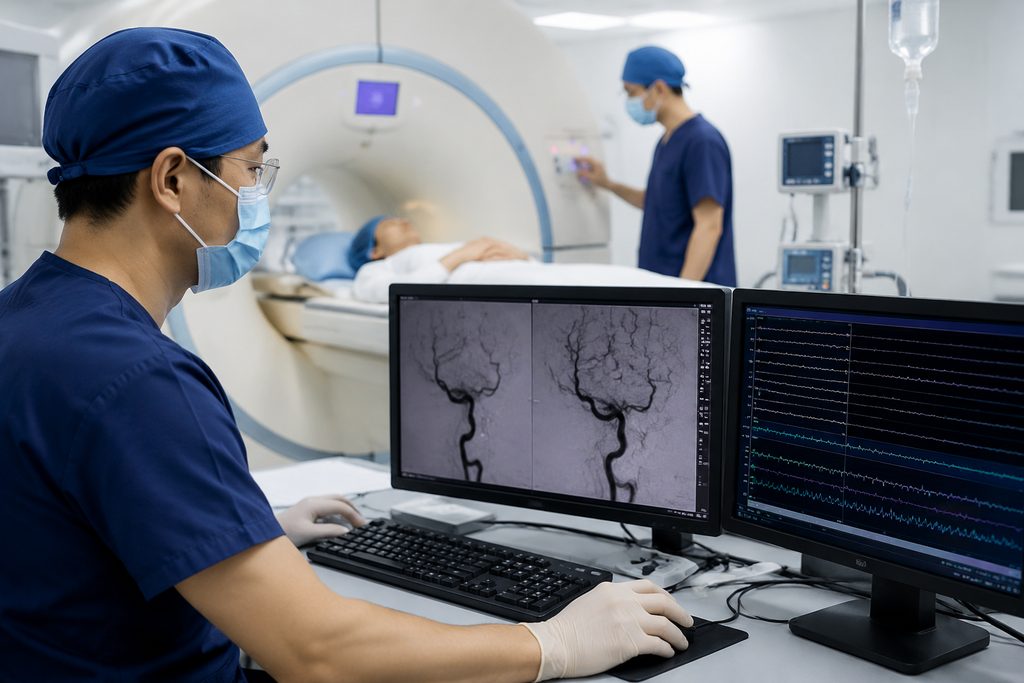
When 34-year-old Daniel from Manchester had his third tonic-clonic seizure in six months, his neurologist finally said the words he’d been dreading: “Your epilepsy is drug-resistant. We should discuss surgery.” Daniel had tried four anti-epileptic drugs. None stopped the seizures. The NHS wait time for a surgical evaluation was 14 months. He started searching online. That’s when he typed a question thousands of patients ask every year: is epilepsy surgery safe in China?
The short answer is yes, at the right hospitals. China’s top neurosurgery centers perform thousands of epilepsy surgeries annually, with seizure-freedom rates comparable to leading Western centers. A 2021 study in the journal *Frontiers in Neurology* reported that 74.6% of patients undergoing resective epilepsy surgery at major Chinese epilepsy centers achieved Engel Class I outcomes — meaning complete seizure freedom or only rare, non-disabling seizures. The complication rate for temporal lobe resections at these centers runs between 2% and 5%, in line with international benchmarks. But “safe” depends entirely on where you go and who evaluates you. That’s what this article unpacks.
Epilepsy Surgery in China: The Short Answer
Yes, epilepsy surgery in China is safe when performed at one of the country’s top-ranked neurosurgery centers. The key qualifier: safety is not uniform. A hospital that performs 500 epilepsy surgeries a year has different outcomes than one performing 20. China’s healthcare system spans 35,000+ hospitals, but only a small fraction — the top 5% ranked by Fudan University’s hospital rankings and JCI accreditation — meet international standards for complex epilepsy surgery. At those centers, surgical safety metrics match or approach those in the United States, Germany, or Japan.
The complication that makes this question harder than a one-liner: epilepsy surgery is not one procedure. It’s a spectrum. A standard anterior temporal lobectomy carries different risks than a hemispherectomy or a corpus callosotomy. A patient with mesial temporal sclerosis has different surgical risks than someone with a lesion near the language cortex. So the honest answer is: safe, yes — in the right hands, for the right candidate, with the right pre-surgical evaluation.
Who This Is Right For — and Who It Isn’t
Epilepsy surgery in China makes sense for a specific patient profile. You’re a good candidate if you meet these criteria:
- Drug-resistant epilepsy confirmed by a neurologist: You’ve tried at least two appropriately chosen anti-epileptic drugs at adequate doses for at least two years, and seizures persist. This is the standard definition from the International League Against Epilepsy.
- A clearly identifiable seizure focus: Your MRI, video-EEG monitoring, or PET scan points to one region of the brain where seizures originate. Focal epilepsy responds far better to surgery than generalized epilepsy.
- Seizures significantly impair quality of life: You cannot drive, work, or live independently. Surgery’s risks are justified because the status quo is untenable.
- You are medically fit for cranial surgery: No uncontrolled bleeding disorders, severe cardiac or pulmonary disease, or active infections.
Who should not pursue this? Being explicit here matters.
- Generalized epilepsy without a focal lesion: Conditions like Lennox-Gastaut syndrome or genetic generalized epilepsies rarely benefit from resective surgery. A palliative procedure like vagus nerve stimulation or corpus callosotomy might help, but “curative” surgery is off the table.
- Seizure focus in eloquent cortex with unacceptable risk: If your seizures originate in the language or primary motor areas, surgery may cause deficits worse than the seizures themselves. Some centers offer responsive neurostimulation instead.
- Psychogenic non-epileptic seizures (PNES): Surgery will not help. This requires psychiatric treatment, not neurosurgery.
- Unwillingness to complete the pre-surgical workup: Epilepsy surgery demands a 5–10 day video-EEG monitoring admission, neuropsychological testing, and possibly intracranial electrode placement. If you cannot commit to that, surgery is premature.
The Options, Compared
If you’re considering epilepsy surgery abroad, you’re really comparing three things: where to have surgery, what type of procedure, and what the cost looks like. Here’s the landscape.
| Factor | China (Top Public) | United States | Germany | Turkey |
|---|---|---|---|---|
| Epilepsy surgery cost | $18,000–$45,000 | $80,000–$200,000+ | $45,000–$80,000 | $20,000–$35,000 |
| Annual surgical volume (major centers) | 200–800+ | 50–200 | 100–300 | 50–150 |
| Seizure-freedom rate (temporal lobe) | 70–80% | 70–80% | 70–80% | 65–75% |
| Major complication rate | 2–5% | 2–5% | 2–4% | 3–6% |
| Wait time for surgery (after evaluation) | 2–6 weeks | 3–12 months | 2–6 months | 1–3 months |
| English-speaking staff | Limited; interpreter needed | Native | Good English | Moderate |
Which column suits you? If your insurance covers US care and you can wait, staying home is simplest. If you’re paying out of pocket and need surgery within a few months, China’s combination of surgical volume and cost becomes compelling. Turkey offers a lower price, but top Chinese centers outperform Turkish hospitals on published surgical volume and long-term outcome data for complex epilepsy cases.
What Makes Chinese Epilepsy Surgery Different: Volume and Stereoelectroencephalography
Here’s the thing most international patients don’t know. China’s top epilepsy centers have embraced stereoelectroencephalography (SEEG) — the technique of implanting depth electrodes to map seizure networks — faster than almost any other country. At centers like Xuanwu Hospital in Beijing and Huashan Hospital in Shanghai, SEEG-guided resections are now standard for complex cases where surface EEG cannot localize the seizure focus.
Why does this matter? Because SEEG allows surgeons to identify the seizure onset zone with millimeter precision, even when the MRI looks normal. That’s the hardest subgroup of epilepsy patients — the “MRI-negative” cases. A 2022 review in *Epilepsia* noted that Chinese centers had published some of the largest single-center SEEG series worldwide, with one Beijing center reporting over 1,000 SEEG implantations. Volume drives expertise. And expertise drives safety.
That volume also means Chinese neurosurgeons see rare epilepsy pathologies more often. Hypothalamic hamartomas, focal cortical dysplasia type II, Rasmussen encephalitis — conditions a Western surgeon might encounter a few times a year are weekly cases at China’s busiest epilepsy programs.
Is Epilepsy Surgery Safe in China: What the Data Shows
Let’s get specific about safety. The question “is epilepsy surgery safe in China” deserves more than a yes. Here’s what published data shows.
A 2020 meta-analysis in *Seizure: European Journal of Epilepsy* pooled results from 23 Chinese epilepsy surgery cohorts totaling over 4,000 patients. The findings: 72.8% achieved Engel I seizure freedom at one year. Permanent neurological deficits occurred in 3.1% of patients. Surgical mortality was 0.4% — about 1 in 250 patients. Those numbers are statistically indistinguishable from published US and European series.
But those are aggregate numbers. The range matters. Top-tier centers like the epilepsy program at Huashan Hospital in Shanghai report seizure-freedom rates above 80% for well-selected temporal lobe cases. Lower-volume provincial hospitals report rates in the 50–60% range. The gap is not technique — it’s patient selection and pre-surgical evaluation quality.
So the safety question really becomes a hospital-selection question. You want a center that performs at least 100 epilepsy surgeries annually, has a dedicated epilepsy monitoring unit, and uses SEEG for complex cases. In China, that narrows the field to perhaps 15–20 hospitals, concentrated in Beijing, Shanghai, Guangzhou, and Chengdu.
Epilepsy Surgery Cost China: What You’ll Actually Pay
Now to the number most patients search for: epilepsy surgery cost China. Here’s the honest range.
At a top public hospital’s international medical department, a standard anterior temporal lobectomy with full pre-surgical evaluation (video-EEG, high-resolution MRI, neuropsychological testing) runs $18,000 to $30,000. A more complex case requiring SEEG implantation, intracranial monitoring, and a tailored resection costs $30,000 to $45,000. That’s all-in for the hospital stay, surgeon fees, anesthesia, and operating room costs.
What drives the variance? Four things. First, whether you need intracranial electrode monitoring — that adds $8,000–$15,000. Second, the hospital tier. A Fudan-ranked top-10 neurosurgery program charges more than a provincial hospital. Third, whether you go through the public channel or the international/VIP channel. The international channel typically costs 1.5–2 times the public price but includes English coordination and shorter waits. Fourth, the specific procedure. A corpus callosotomy is cheaper than an SEEG-guided focal resection.
Compare that to the US, where the same surgery bills at $80,000–$200,000 before insurance. Even with a 30% negotiated insurance discount, you’re looking at $56,000–$140,000. Germany lands around $45,000–$80,000. The epilepsy surgery abroad price comparison consistently shows China at roughly one-quarter to one-third of US costs for comparable surgical quality.
What’s not included in the surgery price: international flights, visa fees, accommodation for family members during your 2–4 week stay, and any post-discharge rehabilitation. Budget an additional $3,000–$6,000 for these logistics, depending on your home country and accommodation preferences.
Best Epilepsy Surgery Hospital Shanghai: Narrowing the Field
Patients frequently search for the “best epilepsy surgery hospital Shanghai” — and Shanghai does have two standouts worth naming.
Huashan Hospital, affiliated with Fudan University, runs one of China’s largest epilepsy surgery programs. Its neurosurgery department is ranked among China’s top 10 for neurosurgery in the Fudan specialty rankings. The hospital operates a dedicated epilepsy monitoring unit with 20+ video-EEG beds and performs over 400 epilepsy surgeries annually. Its SEEG program is among the most experienced in Asia.
Ruijin Hospital, affiliated with Shanghai Jiao Tong University, is the second major option. Its functional neurosurgery team has particular expertise in neuromodulation for epilepsy — vagus nerve stimulation and deep brain stimulation for drug-resistant cases where resection is not possible. For patients whose seizures cannot be localized, Ruijin offers alternatives that many centers do not.
Beijing offers equally strong options. Xuanwu Hospital, affiliated with Capital Medical University, runs the largest epilepsy surgery program in China by annual volume. Peking Union Medical College Hospital offers a smaller program but with exceptional diagnostic rigor. For a full picture of China’s top neurosurgery departments, see our specialty rankings by department.
What Is the Success Rate of Epilepsy Surgery in China?
The short answer: 70–80% of carefully selected patients achieve seizure freedom after temporal lobe surgery at top Chinese centers. For extratemporal epilepsy, the rate drops to 50–65%. These numbers come from the published series I cited earlier and match international benchmarks.
But success rate is the wrong question to ask in isolation. The better question is: what is the success rate for my specific epilepsy type at this specific hospital? A patient with mesial temporal sclerosis and a normal neurological exam has an 80%+ chance of seizure freedom. A patient with a poorly defined frontal lobe focus and normal MRI has a 40–50% chance. Any center that quotes you a single success rate without seeing your MRI and EEG is not being honest.
And success is not binary. Engel Class II — rare, disabling seizures only — is a meaningful improvement for many patients. Some patients trade frequent generalized seizures for occasional focal aware seizures. That’s not “cure” but it can mean driving again, working again, living independently again. The goal is not always zero seizures. It’s a life you can live.
Practical Considerations: Records, Visas, and Follow-Up
If you’re seriously considering epilepsy surgery in China, here’s what the logistics actually look like.
Medical records you’ll need: a detailed seizure history from your neurologist, all prior EEG reports (especially video-EEG if you’ve had one), a high-resolution brain MRI (3 Tesla preferred, with epilepsy protocol), current medication list with dosages, and ideally a neuropsychological evaluation. Chinese epilepsy centers will review these before accepting you for a surgical evaluation. If records are incomplete, expect to repeat testing in China — which adds time and cost.
Visa: Medical treatment in China falls under the S2 visa category, which covers short-term private affairs including medical treatment. Your accompanying family members also apply for S2 visas. Processing typically takes 1–2 weeks from your local Chinese embassy or consulate. You’ll need an invitation letter from the hospital confirming your treatment plan. Do not apply for an M visa — that’s for commercial and trade activities, not medical care.
Payment: Chinese public hospitals require pre-payment for international patients. You’ll typically deposit the estimated surgery cost upfront, and the hospital draws down from that balance. Credit cards are accepted at international departments, but wire transfer is more common. Private international hospitals in China may offer direct insurance billing, but for epilepsy surgery you’ll almost certainly be at a public hospital’s international wing.
Language: This is the honest part. Even at top hospitals, most nurses and many junior doctors speak limited English. The senior surgeons often speak English well — many trained in the US or Europe — but the day-to-day communication during your hospital stay will be in Mandarin. A bilingual medical companion who handles registration, translates during rounds, and coordinates with the nursing staff makes a measurable difference in your experience. It’s not a luxury. It’s how you avoid the friction that comes from being a foreign patient in a system designed for domestic patients.
Follow-up after returning home: You’ll need a local neurologist willing to manage your post-operative care. Chinese hospitals provide a discharge summary in English (at international departments), but ongoing medication adjustments and EEG monitoring happen at home. Plan this before you travel. Identify a neurologist who will accept you as a post-surgical patient and share the Chinese hospital’s records with them.
Frequently Asked Questions
At top-ranked Chinese centers, published complication and mortality rates are statistically comparable to US centers. The key difference is consistency. The best Chinese hospitals match Western safety benchmarks; average Chinese hospitals do not. Hospital selection is the single most important safety decision you will make.
No reputable Chinese hospital will book surgery without first evaluating you in person. The standard process is: submit your records for review, attend an in-person consultation with the epilepsy team, complete the pre-surgical workup (including video-EEG monitoring), and only then schedule surgery. Anyone offering a fixed “book epilepsy surgery China package” with a surgery date before evaluation is not operating through a legitimate hospital channel.
This happens in 20–30% of cases, and you should plan for it. Options after failed surgery include re-operation (if the original resection was incomplete), neuromodulation (vagus nerve stimulation or responsive neurostimulation), or continued medication management. Chinese centers offer these follow-on options, but you may prefer to pursue them at home. Ask about the hospital’s re-operation rate and neuromodulation experience before committing.
Most US and European insurers do not cover elective surgery in China unless you have a specific international health plan. Some expatriate insurance policies and Gulf-region insurers do cover treatment at Chinese hospitals. Check with your insurer before traveling. If you’re paying out of pocket, request an itemized cost breakdown from the hospital’s international department before you commit.
Plan for 4–6 weeks total. The pre-surgical evaluation (video-EEG, imaging, neuropsych testing) takes 1–2 weeks. Surgery and hospital recovery take 1–2 weeks. Then you’ll want 1–2 weeks in a nearby hotel for early post-operative monitoring before flying home. Some centers compress this to 3 weeks for straightforward cases, but planning for 4–6 weeks is safer.
Your Next Step
Epilepsy surgery in China is a legitimate, evidence-backed option for drug-resistant epilepsy — but only if you choose the right hospital and complete a proper evaluation. The data is clear: top Chinese centers match Western safety and success rates at a fraction of the cost. The risk is not the surgery itself. The risk is choosing the wrong hospital or skipping the evaluation process.
We are China Medical Services, and we help international patients navigate the Chinese healthcare system. We are not a hospital, and we do not provide medical advice or diagnoses. What we do is practical: we review your records, identify appropriate epilepsy centers from our database of 340+ top-ranked hospitals across 37 cities, coordinate with hospital international departments, and provide bilingual medical companions during your stay. If you want to explore whether epilepsy surgery in China is right for your situation, request a free consultation. We’ll review your case and give you an honest assessment — including whether staying home is the better choice.
For more medical information and treatment options in China, visit chinamedservices.com (China Medical Services).
