Epilepsy Surgery in Shanghai: Huashan Neurosurgery Center Cost & Breakdown
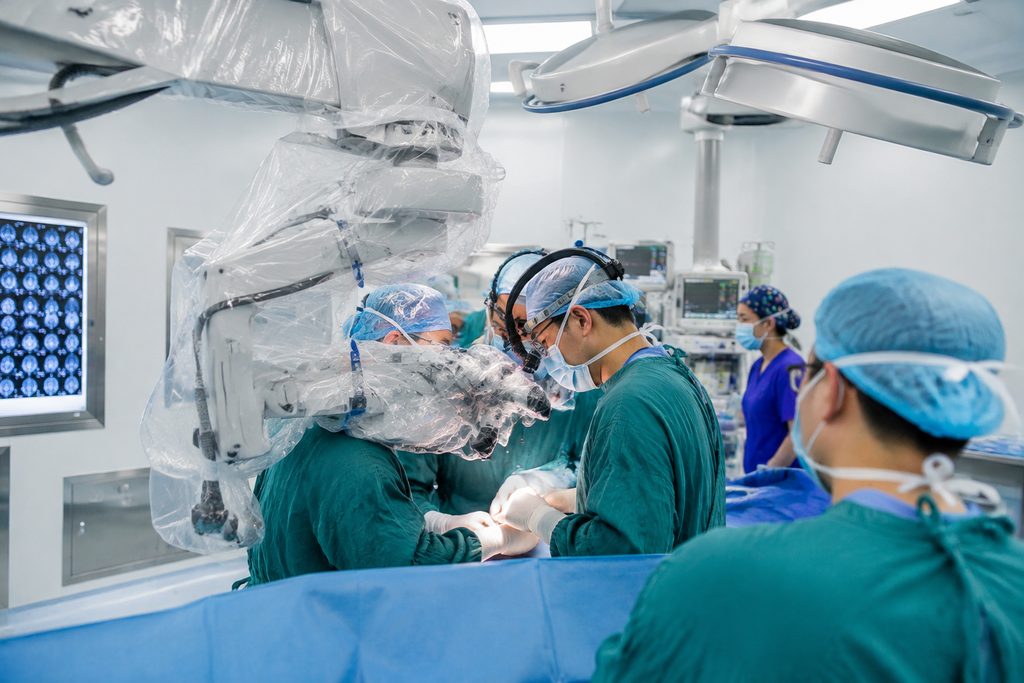
When 42-year-old Michael first heard the diagnosis—drug-resistant temporal lobe epilepsy—his neurologist in Manchester laid out a difficult path. The medications had stopped working years ago. The seizures were getting worse. Surgery was the only real option left, but the NHS wait for a specialized workup stretched past 18 months. He started searching online. That’s how he found himself staring at a screen at 2 a.m., typing “epilepsy surgery cost Shanghai Huashan hospital” into Google, wondering if flying halfway around the world for brain surgery was reckless or the most rational decision he could make.
It’s a question our team fields regularly. Not just about cost. It’s about safety, about the actual surgeons, about whether the reputation matches reality. The short answer is that Huashan Hospital’s Neurosurgery Center in Shanghai is not merely a leading institution in China. For epilepsy surgery specifically, it is one of the highest-volume, most technically equipped centers globally. The cost for a comprehensive surgical epilepsy program there, including advanced diagnostics like stereo-EEG and resection, typically ranges from $25,000 to $45,000 USD. That figure contrasts sharply with the $100,000 to $300,000 a comparable procedure often bills in the United States.
But numbers without context mislead. A price tag doesn’t tell you who holds the scalpel or what happens when the post-operative medication taper doesn’t go as planned. We need to look at the actual machinery of the center, the diagnostic process, and the honest timeline—including the parts that are genuinely difficult.
How This Actually Works, Step by Step
You don’t simply book a flight and check into a Shanghai hospital for brain surgery the following Monday. The sequence is methodical, and skipping steps means arriving in China with no clear plan. Here is the real sequence, based on how international patients typically move through this system.
First, you send your existing records. We’re talking about a bare minimum of three things: a detailed clinical history from your current neurologist, high-resolution brain MRI scans (preferably 3T MRI with epilepsy protocol, on a disc in DICOM format), and a record of seizure semiology. Video-EEG reports, if you have them, are gold. If you’ve already had a Wada test or neuropsychological evaluation elsewhere, include those too. This packet goes to the international patient center or, if you’re working with a coordination team, gets translated and formatted for the specific neurosurgeon who will review it.
The review itself is not a five-minute glance. A senior epileptologist and a neurosurgeon at the center will look at your imaging. They’re asking one question: is this a surgically remediable epilepsy syndrome? If the lesion is clear—say, mesial temporal sclerosis visible on the MRI—a preliminary surgical recommendation might come back within a week. If the imaging is subtle or discordant with the EEG findings, they may request additional sequences or a repeat scan in Shanghai. That’s not a delay tactic. That’s prudence.
Once the team confirms you’re a candidate, they issue a treatment proposal and a cost estimate for Phase I and potentially Phase II evaluations. With that document, you can apply for your S2 visa. The S2 is the short-stay visa category used for private medical treatment in China. Your accompanying family member applies for the same category. The hospital provides an invitation letter and a treatment confirmation, which you submit with your application. Visa processing can take two to six weeks depending on your home country’s Chinese embassy or consulate.
You arrive in Shanghai. The first hospital visit is not surgery. It’s a face-to-face consultation with the neurosurgeon and often a repeat of specific imaging sequences if the center’s protocol requires it. If non-invasive video-EEG monitoring is needed to capture seizures and localize the focus, you’ll be admitted to the epilepsy monitoring unit for anywhere from three to ten days. Only after this data is collected does the team finalize the surgical plan. The operation itself follows, typically within the same admission block. Post-operative monitoring in the neuro-ICU for one to two days, then step-down to a regular ward for five to seven days. Sutures out, a post-op MRI to confirm the resection, and discharge planning begins.
Why Huashan Neurosurgery Center Leads Epilepsy Surgery in China
The question “which hospital leads China” for epilepsy surgery has a data-driven answer, and it lands squarely on the Department of Neurosurgery at Huashan Hospital, affiliated with Fudan University in Shanghai. This is not a subjective ranking. The department is consistently ranked among the top neurosurgery units in the country by the Fudan University Hospital Specialty Reputation Ranking, and its epilepsy surgery program is one of the largest by annual surgical volume in Asia.
The center’s epilepsy program is not a side project within a general neurosurgery department. It’s a dedicated, multi-disciplinary unit. The team includes epileptologists, neurosurgeons who sub-specialize in epilepsy, neuroradiologists, neuropsychologists, and dedicated EEG technologists. This matters because epilepsy surgery is a diagnostic discipline as much as a surgical one. The surgeon’s skill in the operating room is downstream from the team’s accuracy in localizing the seizure onset zone.
The center performs over 400 epilepsy surgeries annually. That volume is clinically significant. Studies consistently show that surgical volume correlates with outcomes in complex neurosurgical procedures. The center also manages a significant number of difficult, non-lesional cases—patients whose MRI shows no obvious structural abnormality. For these patients, the center uses stereo-electroencephalography, or SEEG, with robotic guidance to implant depth electrodes and map the epileptogenic network in three dimensions. The ROSA robotic system is in routine use here. That’s the same platform used at top-tier centers in Europe and North America.
For international patients, one practical advantage of this volume is that the team has seen your variant of temporal or extratemporal lobe epilepsy many times before. That pattern recognition translates into faster, more confident decision-making during the pre-surgical workup.
A Realistic Timeline
The timeline below assumes no major surprises—no unexpected cardiac issues on pre-op clearance, no seizure clusters that delay monitoring. But it builds in realistic buffers. These are the windows you should plan around, not the optimistic minimums.
| Phase | What Happens | Typical Duration |
|---|---|---|
| Remote Document Review | Send records, receive preliminary surgical candidacy opinion and cost estimate | 1–3 weeks |
| Visa Processing | S2 visa application with hospital invitation letter; embassy processing time varies by country | 2–6 weeks |
| Arrival & Initial Consultation | Face-to-face with neurosurgeon, repeat imaging if required, pre-op clearance labs and cardiac workup | 2–4 days |
| Phase I Monitoring (if needed) | Admission to epilepsy monitoring unit, scalp video-EEG, seizure capture | 3–10 days |
| Surgical Planning & Operation | Final target confirmation, craniotomy and resection, intraoperative monitoring | 1 day (surgery), 1–2 days neuro-ICU |
| Post-Operative Ward Recovery | Step-down care, suture removal, post-op MRI, medication adjustment | 5–7 days |
| Early Follow-Up & Return | Final wound check, discharge summary, medication plan; fit to fly assessment | 2–3 days |
| Total In-Country Stay | From landing to departure | 3–5 weeks |
The longest variable is the Phase I monitoring. If your seizures are frequent—daily or near-daily—you may capture enough data in three days. If they’re sparse, you could be in the unit for two weeks. There’s no way to predict this with certainty beforehand. Budget for the longer end.
What Can Go Wrong — and What Happens Then
Honest failure modes are where trust is built or broken. Here are the specific things that can go sideways with an epilepsy surgery journey in Shanghai, and what recourse actually exists.
The first and most common disappointment: you are not a surgical candidate. This happens in roughly 20 to 30 percent of cases that look promising on paper. The in-person video-EEG reveals a seizure onset zone that overlaps with eloquent cortex—areas controlling speech, memory, or motor function—and the risk of a disabling deficit is too high. The team may recommend neuromodulation instead, such as responsive neurostimulation or deep brain stimulation, which Huashan also offers. If you flew to Shanghai specifically for a resection and that’s off the table, the trip still yields a definitive answer and an alternative treatment plan. It’s not the trip you wanted, but it’s not a wasted trip.
A second failure mode: post-operative infection or a wound-healing issue. The infection rate for clean craniotomies at high-volume centers is low, typically under 2 percent. But it’s not zero. If it happens, the hospital manages it with antibiotics, wound care, and if necessary, a washout procedure. Your in-country stay extends. This is where having a bilingual coordinator who can negotiate extended accommodation and communicate directly with the nursing team becomes the difference between manageable stress and a crisis.
The third and most serious: a neurological deficit. This could be a visual field cut, a memory decline, or a subtle speech difficulty. The consent process at Huashan explicitly covers these risks. The neuropsychology team assesses baseline function pre-operatively so that any change can be measured objectively. If a deficit occurs, the in-hospital rehabilitation team starts working with you before discharge. Outpatient rehab in Shanghai is available if you choose to extend your stay, or the team provides a detailed rehab protocol for your providers back home.
Is Epilepsy Surgery Safe in China at Huashan Center? What the Numbers Say
The question “is epilepsy surgery safe in China Huashan center” is really two questions. One is about surgical mortality and major morbidity. The other is about the systemic safety of navigating a foreign healthcare system. Both deserve direct answers.
On the clinical side, the surgical mortality rate for elective epilepsy surgery at a high-volume academic center like Huashan is below 0.5 percent. That’s consistent with published international benchmarks from centers in Europe and North America. The major morbidity rate—meaning a permanent, significant neurological deficit—hovers around 2 to 3 percent for temporal lobe resections and is slightly higher for extratemporal or multilobar surgeries. These are not numbers we sugarcoat. The surgeons won’t either. During the pre-operative consent discussion, the neurosurgeon will walk you through these risks in detail, often with an interpreter present if you’re working through an international patient channel.
The center’s surgical techniques mirror what you’d find at a top Western epilepsy center. Microsurgical resection under intraoperative neuromonitoring is standard. Awake craniotomy with cortical mapping is used when the epileptogenic zone is near language or motor areas. The anesthesia team at Huashan is experienced in the awake-asleep-awake protocol required for these cases. Robotic SEEG for invasive monitoring, as mentioned, is routine.
The systemic safety question is different. A Chinese public hospital is a high-throughput environment. The hallways are crowded. English is not widely spoken among nursing staff or administrative clerks. The international patient center at Huashan mitigates some of this with English-speaking coordinators, but the day-to-day reality on the ward is that communication happens in Mandarin. A bilingual medical companion who can translate your symptoms, understand discharge instructions, and flag concerns to the attending neurosurgeon is not a luxury. It’s the single most effective safety layer you can add to your trip.
Practical Considerations: Records, Payment, and the Long Follow-Up
Your medical records need to travel well. The DICOM disc from your home country’s MRI must be readable on Chinese hospital systems. Sometimes it isn’t. We’ve seen cases where the disc format or the software viewer doesn’t open, and the patient has to repeat a scan on arrival. If you can, ask your home radiologist to export the images in a universal DICOM format without proprietary viewer software. A second copy on a USB drive doesn’t hurt.
Payment at Huashan’s international wing is typically a deposit upfront, with the balance settled before discharge. The hospital accepts wire transfers and major credit cards through the international patient office. It does not direct-bill to foreign insurance in most cases. You pay, you get detailed invoices and medical reports in English, and you submit those to your insurer for reimbursement. Verify with your insurer before you travel that epilepsy surgery performed at a Chinese academic medical center is covered under your plan’s out-of-country provisions.
Language is the friction point nobody budgets enough energy for. The neurosurgeon likely speaks functional medical English. The ward nurses, the canteen staff, the pharmacy window, the CT scan technician—they speak Mandarin. Every interaction outside the neurosurgeon’s office is a negotiation across a language barrier. This is not a reason to avoid treatment. It’s a reason to plan for a bilingual escort or coordinator who handles the logistics so you can focus on recovering.
Follow-up at home is essential. The Huashan team will send you home with a detailed medication taper schedule and a recommendation for a follow-up MRI and EEG at three months, six months, and one year. You need a local neurologist willing to receive these instructions and execute them. Identify that neurologist before you leave for Shanghai. Send them the treatment summary when you return. The continuity gap between a Chinese surgical team and a home-country neurologist is manageable, but only if both sides have the paperwork.
Frequently Asked Questions
For a standard temporal lobe resection including pre-surgical video-EEG monitoring, imaging, the operation itself, and in-patient recovery, the total billed cost typically falls between $25,000 and $45,000 USD. Complex cases requiring robotic SEEG implantation and prolonged invasive monitoring can push the total toward the $50,000 to $60,000 range. These figures are hospital charges only and do not include travel, accommodation, or coordination services.
The Huashan epilepsy surgery team includes several senior neurosurgeons who sub-specialize in epilepsy and have operative volumes in the hundreds of cases per year. The best surgeon for your specific case depends on the location and complexity of your seizure focus. The team assigns cases based on sub-specialty match, not patient request. A written second opinion from the center will clarify which surgeon would take your case and why. You can read more about how we help patients navigate this selection on our patient coordination page.
At a top-tier academic center like Huashan, the surgical safety metrics—mortality, infection rates, major morbidity—are comparable to published international benchmarks. The procedural techniques and technology platforms are equivalent. The main difference for an international patient is the systemic experience: language, ward environment, and post-discharge continuity. These are manageable with proper planning but should not be underestimated.
A temporal lobe resection in the United States often bills between $100,000 and $300,000, depending on the length of the pre-surgical monitoring stay and the hospital’s chargemaster rates. In Western Europe, the cost to the health system is typically €40,000 to €80,000. The Huashan range of $25,000 to $45,000 represents a significant differential, even after factoring in international travel and accommodation costs. For patients paying out of pocket or facing long public-system waits, this differential is often the deciding variable.
The hospital itself does not sell a fixed-price “package” in the way a medical tourism facilitator might. What the international patient center provides is a coordinated treatment pathway: a bundled cost estimate for the medical components, an invitation letter for visa purposes, and English-language administrative support. Third-party coordination services can package the medical pathway with logistics—airport transfer, accommodation booking, bilingual escort, and post-operative follow-up coordination—to create a comprehensive experience. The medical component pricing remains the hospital’s own, itemized by procedure.
Your Next Step
Michael’s search for “epilepsy surgery cost Shanghai Huashan hospital” led him to a treatment pathway that his local system couldn’t offer on a timeline he could live with. The center’s technical capability is real, and the cost differential is substantial. But the decision to travel for brain surgery turns on details: the specific surgeon reviewing your MRI, the clarity of the cost estimate, and the support structure around you when you’re recovering in a ward where you don’t speak the language.
Our team at China Medical Services connects international patients with top-ranked Chinese hospitals for serious surgical treatment. We don’t provide medical advice or guarantee surgical outcomes. What we do is translate records, arrange written second opinions from the relevant specialty team, coordinate video consultations, and when you’re ready to travel, manage the on-the-ground logistics so you can focus on your health. If you’re considering epilepsy surgery at Huashan or another leading Chinese neurosurgery center and want to understand your options clearly, our patient coordination service is where that conversation starts. No pressure. Just the information you need to make a sound decision.
For more medical information and treatment options in China, visit chinamedservices.com (China Medical Services).
