Intraoperative Neuromonitoring in China: Protecting Nerves During Complex Spine and Brain Surgery
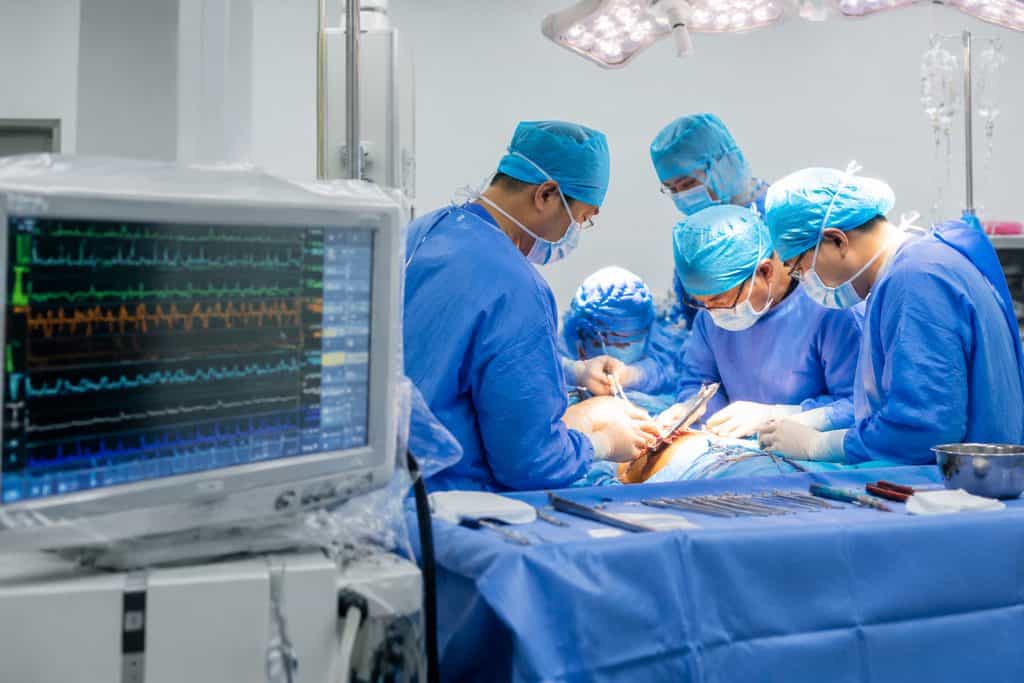
Have you ever been told you need spine or brain surgery, and the only thought louder than the pain is the fear of waking up different? That fear has a name: iatrogenic nerve injury. It is the complication that keeps surgeons awake at night, and it affects approximately 1 in 40 patients undergoing spinal instrumentation, according to a large-scale review in the *Journal of Neurosurgery: Spine*. The good news is that technology designed to prevent this—Intraoperative Neuromonitoring, or IONM—has become a standard of care in China’s top-tier neurosurgical and orthopedic centers. The barrier for international patients has never been the availability of the technology. It has been knowing where to find it, understanding the real intraoperative neuromonitoring cost China, and navigating a system that feels opaque from 6,000 miles away.
Key Takeaways
- IONM reduces the risk of permanent neurological deficit during complex spinal surgery to below 1% in high-volume centers, compared to a historical average of 4-8% without monitoring.
- China’s top-ranked neurosurgery departments perform over 3,000 monitored spine and brain cases annually, creating a volume-to-expertise ratio that is difficult to match in lower-volume Western hospitals.
- An IONM technologist and a remote supervising neurologist are standard in Chinese academic hospitals; however, the physical presence of a board-certified neurophysiologist in the operating room is not universal and should be confirmed before booking.
- The total package cost for surgery with IONM in China—including hospital stay, surgeon fees, and monitoring—routinely runs 60-80% less than the US cash price, but insurance pre-authorization and post-operative follow-up logistics require careful planning.
The Problem: A Preventable Complication That Changes Lives
Spine surgery is not subtle. A pedicle screw misplaced by 2 millimeters can breach the cortical bone and compress the spinal cord or a nerve root. During a complex scoliosis correction, the distraction forces applied to straighten the spine can stretch the spinal cord beyond its ischemic threshold. In brain tumor resections, the margin between a gross total resection and a permanent motor deficit is often less than 5 millimeters of white matter. Without real-time feedback, the surgeon operates blind to the functional status of the nervous system.
That is the old paradigm. The wake-up test—where anesthesia is lightened mid-surgery and the patient is asked to move their toes—is crude, intermittent, and useless for detecting sensory pathway injury. It also cannot be performed during brain surgery. A 2018 meta-analysis published in *Spine* found that multimodal IONM detected impending spinal cord injury with a sensitivity of 92% and a specificity of 97%, allowing the surgical team to intervene before the damage becomes permanent. The problem is not the technology. The problem is access and cost. In the United States, a cash-pay lumbar fusion with IONM can exceed $90,000. In the UK, NHS waiting times for non-emergency spinal surgery have stretched past 12 months in many trusts. Patients with progressive neurological symptoms cannot afford to wait. They start searching for alternatives. They start asking a very specific question: what is intraoperative neuromonitoring during brain surgery, and where can they get it without depleting their life savings?
Why China’s High-Volume Neurosurgical Centers Deliver Reliable IONM
IONM is not a machine you plug in. It is a clinical service delivered by a team. The quality of that team—and the volume of cases they see—determines whether the alarm sounds in time. China’s top hospitals have built a structural advantage here that is worth understanding.
Case Volume Creates Pattern Recognition
A neurophysiologist who monitors 50 scoliosis cases a year sees the subtle signal drift that precedes a motor evoked potential loss. One who monitors 400 a year has seen it a hundred times. They know the difference between a technical artifact and a true physiological alarm. At centers like Xuanwu Hospital in Beijing or Huashan Hospital in Shanghai, the neurosurgery departments operate at a scale that forces this level of expertise. Huashan Hospital’s neurosurgery service, ranked among China’s top three for the specialty, handles over 17,000 neurosurgical procedures annually. The IONM team is monitoring multiple operating rooms simultaneously, every single day. This is not theoretical. A 2020 study from a major Chinese spine center published in *European Spine Journal* reported a 0.8% rate of new neurological deficits in a series of 1,200 consecutive instrumented fusion cases using multimodal IONM. The global benchmark for unmonitored cases sits between 4% and 8%. Volume is not just a number. It is a safety signal.
Multimodal Monitoring as the Standard, Not the Exception
Some Western centers still rely on electromyography (EMG) alone for lumbar fusion, or somatosensory evoked potentials (SSEPs) alone for cervical cases. That is like flying with only one instrument. The accepted gold standard is multimodal: SSEPs to monitor dorsal column sensory pathways, transcranial motor evoked potentials (TcMEPs) to monitor corticospinal motor tracts, and free-running or triggered EMG for nerve root integrity. Brain surgery adds direct cortical stimulation and electroencephalography (EEG) for mapping eloquent cortex and monitoring for ischemia.
In China’s Fudan-ranked neurosurgery and orthopedics departments, multimodal monitoring is the default protocol for any case involving the spinal cord, nerve roots, or critical brain regions. The question is not whether IONM will be used. The question is which modalities are appropriate for the specific surgical plan. This is important because it eliminates the variable of a surgeon who is comfortable operating without monitoring—a situation still common in community hospitals worldwide.
The Cost Structure Is Fundamentally Different
Let us address the obvious question. If IONM requires a trained technologist in the OR and a neurologist interpreting the signals, how can the intraoperative neuromonitoring cost China be so much lower than in the West? The answer is not a mystery. It is structural. The IONM professional fee in a US hospital can range from $1,500 to $4,000 per case, billed separately from the surgeon and the facility. In China, the monitoring service is typically bundled into the surgical package at public academic hospitals, and the line-item charge for IONM itself often ranges from $500 to $1,200. The neurophysiologist’s salary is a fraction of their US counterpart’s. The equipment is the same—Cadwell Cascade, Natus, or Medtronic NIM systems are standard. The difference is the labor cost behind the interpretation, not the technology. This is why the total surgical package, including IONM, becomes viable for patients who have been priced out of care at home.
How IONM Works During Your Surgery: The Signal Chain That Protects You
Understanding the physical process demystifies the technology. Here is what happens, step by step, during a monitored spine or brain surgery at a major Chinese center.
Before the first incision, the IONM technologist places needle electrodes in specific muscle groups. For a lumbar fusion, this means the quadriceps, tibialis anterior, gastrocnemius, and anal sphincter muscles. For a brain tumor near the motor cortex, scalp electrodes deliver transcranial stimulation and record cortical responses. Baseline signals are recorded immediately after intubation but before positioning, because arm position alone can alter nerve conduction and create a false baseline. The surgeon and the monitoring team agree on alert criteria before the knife touches skin. A 50% drop in TcMEP amplitude, or a 10% increase in SSEP latency, triggers a pause.
During the critical phases of surgery—pedicle screw placement, tumor debulking, spinal distraction—the technologist runs continuous trains of stimulation and watches the waveforms in real time. If a motor evoked potential disappears from the left leg while the surgeon is placing a screw at L4, the surgeon is informed within seconds. The screw is repositioned. The signal returns. The deficit is prevented. This is not a hypothetical. It is the workflow that repeats dozens of times a day across China’s busiest neurosurgical theaters. For brain surgery, awake craniotomy with direct cortical mapping adds a layer of functional precision that is standard for tumors in eloquent areas. The patient is woken during the resection, asked to speak or move, and the brain’s functional boundaries are mapped in real time. This is the most definitive form of nerve protection available.
Choosing Where to Go: What Separates a Good IONM Program from a Great One
Not every hospital that advertises IONM delivers the same level of safety. The difference between a monitored case and a truly protected case comes down to three factors that a patient can investigate before booking surgery.
First, the monitoring team’s independence. In some hospitals, the IONM technologist reports to the surgeon. This creates a conflict of interest. The best programs have an independent neurophysiology department where the interpreting neurologist is not employed by the surgical service. They can call a stop without fear of losing future referrals. Ask directly: does the monitoring neurologist report to the department of neurology or to the spine surgeon? The answer tells you everything.
Second, the surgeon’s response protocol. Monitoring only prevents injury if the surgeon has a rehearsed response to an alert. The standard checklist includes checking blood pressure, hemoglobin, and cord perfusion; removing the most recently placed implant; warming the patient; and administering steroids if indicated. A surgeon who has drilled this response 50 times a year will act faster than one who sees an alert twice a year. The volume data matters here again.
Third, the equipment and the backup. A single Cadwell Cascade system can fail. A center that runs 10 monitors simultaneously has a hot-swappable backup in the next operating room. This is a small operational detail that becomes critical when a signal is lost and the team needs to rule out a technical fault within 60 seconds.
For patients searching for the best hospital for IONM spine surgery Shanghai, the answer is not a single institution. It is a cluster. Huashan Hospital, Changzheng Hospital, and Shanghai Ninth People’s Hospital all run high-volume monitored spine programs with independent neurophysiology support. The right choice depends on the specific pathology—a spinal cord tumor goes to a different surgeon than a degenerative scoliosis. This is where pre-travel case review becomes essential.
What Does It Actually Cost? A Transparent Breakdown
The question patients ask most directly is about money. How much does spine surgery with nerve monitoring cost in Beijing, and how does the intraoperative neuromonitoring cost China compare to other destinations? Here is a realistic breakdown based on current cash-pay rates at top-tier public academic hospitals in Beijing and Shanghai, compiled from our team’s coordination experience with international patients.
| Procedure | China (Beijing/Shanghai Academic Hospital) | United States (Cash-Pay Estimate) | Thailand (Private Hospital) |
|---|---|---|---|
| Single-Level Lumbar Fusion with IONM | $18,000 – $28,000 | $80,000 – $120,000 | $25,000 – $35,000 |
| Multi-Level Scoliosis Correction with IONM | $35,000 – $55,000 | $150,000 – $250,000 | $45,000 – $65,000 |
| Brain Tumor Resection (Eloquent Cortex) with Awake Craniotomy & IONM | $25,000 – $40,000 | $100,000 – $200,000 | $35,000 – $50,000 |
| IONM Professional Fee (Standalone Line Item) | $500 – $1,200 | $1,500 – $4,000 | $800 – $1,500 |
| IONM Medical Tourism Package Coordination | $1,500 – $3,000 | N/A | $2,000 – $4,000 |
Note: All prices are estimates in USD and vary by hospital, surgeon seniority, implant type, and case complexity. Chinese public hospital international department rates are typically 1.5-2x standard domestic rates and include English-language coordination. IONM medical tourism packages China typically bundle the monitoring fee, technologist time, and remote neurologist interpretation but exclude the surgeon’s fee and hospital stay.
Practical Considerations: Documentation, Visa, and Follow-Up
Arranging complex spine or brain surgery abroad is not a weekend decision. The logistics are real, and ignoring them creates risk. Here is what you need to have in order before you get on a plane.
Your medical records must be complete and in English or Chinese. At minimum, this means a recent MRI with contrast (within 3 months), a CT scan if instrumentation is involved, a full neurological examination report, and a detailed surgical history if you have had prior operations. Chinese surgeons will not provide a surgical plan based on a radiology report alone. They need the DICOM files—the raw imaging data—on a CD or secure upload link. Our team handles the translation and transfer, but you must request the DICOM files from your home hospital. Do not assume the radiology department will give them to you without a fight. Some do not.
Visa is the next hurdle. Medical treatment in China falls under the S2 short-stay visa category, which covers private affairs including medical treatment. You will need an invitation letter from the hospital confirming your admission or consultation schedule. The S2 is typically issued for 30-90 days and can be extended once in-country. Your accompanying family member applies under the same category. The hospital’s international department issues this letter after they have reviewed your case and agreed to treat you—not before. This means the sequence is: case review first, hospital acceptance second, visa application third. Do not book flights until the visa is in your passport.
Payment is predominantly out-of-pocket and upfront. Chinese public hospitals require a deposit before admission, typically 50-100% of the estimated surgical package. International credit cards are accepted at the international departments of major hospitals, but UnionPay is the default. Wire transfers are possible but slow. Some international insurance policies with direct billing arrangements can be used at JCI-accredited private hospitals in China, but public academic hospitals rarely accept direct insurance billing. You pay, then you seek reimbursement from your insurer.
Follow-up after you return home is the most overlooked piece. A spine fusion with IONM still requires post-operative imaging at 6 weeks, 3 months, and 1 year. Your surgeon in China will provide a detailed follow-up protocol, but you need a local spine surgeon willing to execute it. Establish this relationship before you travel. Send the proposed surgical plan to your local orthopedist and confirm they will handle post-operative care. Some will refuse. Find one who will not.
Frequently Asked Questions
IONM itself is non-invasive and carries no direct risk to the patient beyond minor skin irritation from needle electrodes. The safety question is really about the surgical team’s experience and the travel logistics. Flying long-haul after major spine surgery is not advisable for at least 10-14 days due to the risk of deep vein thrombosis and the physical stress of airport transfers. The hospitals we work with typically require international patients to stay in the city for 2-3 weeks post-operatively for wound checks and initial rehabilitation before clearing them to fly. The monitoring technology is identical to what you would find at a major US academic center. The variable is the team, not the equipment.
This is the hardest scenario, and it is rare. If motor evoked potentials are lost and do not recover after the standard interventions—repositioning hardware, raising blood pressure, administering steroids—the surgical team faces a difficult decision. In spinal surgery, the procedure may be staged, meaning the instrumentation is removed, the wound is closed, and the patient is woken for a neurological exam. A second surgery is planned after the spinal cord has had time to recover. In brain tumor surgery, a persistent signal loss in a critical area usually means the resection stops, accepting a subtotal removal to preserve function. The presence of IONM does not guarantee zero deficits. It guarantees that the team knows about the injury in time to stop making it worse. That is the value. No monitoring system can reverse a vascular injury that has already occurred.
Can I get IONM for a relatively simple procedure like a microdiscectomy?
Most surgeons do not use formal multimodal IONM for a routine single-level microdiscectomy because the risk of nerve root injury is low and the monitoring setup adds time and cost. However, free-running EMG with triggered EMG for pedicle screw stimulation is sometimes used if instrumentation is involved. For a simple decompression without fusion, IONM is generally not indicated. The decision is made by the surgeon based on the specific pathology and the proximity of the surgical field to neural structures. If a surgeon recommends IONM for a straightforward discectomy, ask why.
For more medical information and treatment options in China, visit chinamedservices.com (China Medical Services).
