Eye Care in China for Foreigners: Costs, Top Hospitals, and How to Book
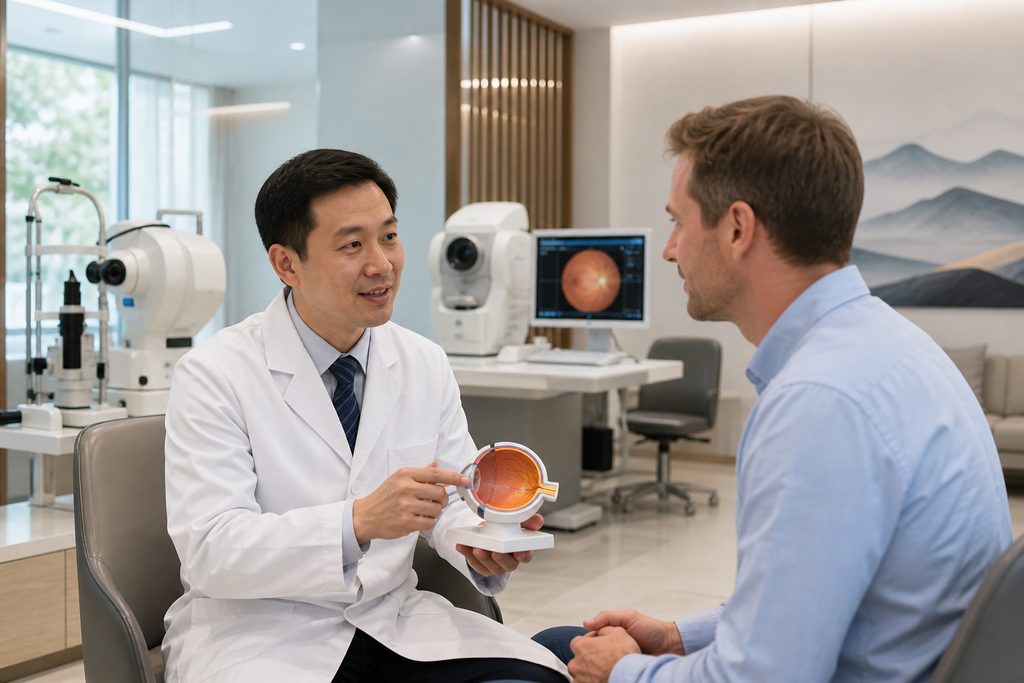
Eye Care in China for Foreigners: Costs, Top Hospitals, and How to Book
According to industry estimates, hundreds of thousands of international patients now travel to China each year for medical care, and ophthalmology sits among the fastest-growing specialties. The headline number that pulls most people in is this: lasik eye surgery cost China is typically $1,200 to $2,800 per eye, compared with $2,200 to $4,500 per eye in the United States. Cataract surgery with a standard monofocal lens often runs $1,500 to $3,500 total in China versus $6,000 to $12,000 in the US. Those gaps are real. But the process of accessing that care as a foreigner is not as simple as booking a flight, and the difference between a smooth trip and a frustrating one comes down to preparation.
China’s top eye hospitals are genuinely world-class. They also operate at a scale and pace that surprises first-time visitors. Understanding both sides — the savings and the friction — is what this guide is for.
Eye Care in China for Foreigners: The Short Answer
Yes, foreigners can receive excellent eye care in China, and the cost savings are substantial. The catch is access. Public hospital ophthalmology departments generally do not allow overseas patients to pre-book a standard outpatient slot from abroad. You show up, queue, register on the day, and only after an in-person examination can surgery be scheduled.
If you want to lock in a date before you fly, the realistic route is a hospital’s international department or VIP channel. That means senior specialists, English-speaking staff, and a price roughly 1.5 to 2 times the standard public rate. Still far below Western pricing — but not the rock-bottom number people see quoted online.
Who This Is Right For — and Who It Isn’t
Medical tourism for eye care suits a specific profile. It is not for everyone, and being honest about that up front saves people real money and real risk.
Generally a good fit:
- Patients with a clear diagnosis or a stable refractive error who want elective LASIK, SMILE, or ICL surgery
- People with cataracts who are uninsured or underinsured at home and facing long waits
- Patients seeking a second opinion on a retina, cornea, or glaucoma diagnosis
- Travelers already in Asia who can combine treatment with an existing trip
- Anyone comfortable navigating a large, busy hospital with language support
Probably not the right choice:
- Acute emergencies — sudden vision loss, eye trauma, or suspected retinal detachment. Go to the nearest emergency room, wherever you are.
- Patients with unstable systemic disease that makes elective surgery risky
- Anyone expecting a quiet, boutique Western clinic experience at public-hospital prices
- People who cannot travel for follow-up, since post-operative checks matter
That last point deserves emphasis. Follow-up is not optional after eye surgery.
The Options, Compared
Here is how the main pathways stack up. Prices are approximate ranges and vary by hospital and case complexity.
| Pathway | Typical Cost (USD) | Booking From Abroad | English Support | Best For |
|---|---|---|---|---|
| Public hospital, standard channel | $1,200–$2,800 per eye (LASIK) | No — register on arrival | Limited | Budget-focused, flexible schedule |
| Public hospital international/VIP department | $2,000–$4,500 per eye | Yes, with coordination | Yes | Pre-planned trips, senior specialists |
| Private international hospital | $3,000–$6,000 per eye | Yes | Yes, full service | Insurance direct billing, comfort |
| US private clinic (reference) | $2,200–$4,500 per eye | Yes | Yes | Baseline comparison |
| UK private clinic (reference) | $2,500–$5,000 per eye | Yes | Yes | Baseline comparison |
Which column fits you? If your priority is the lowest possible price and you have schedule flexibility, the standard public channel works — but bring patience and a translator. If you need a confirmed date before booking flights, the international department is the honest answer. And if direct insurance billing matters, a private international hospital is usually the only pathway that offers it.
Finding the Best Eye Hospital in Shanghai for Foreigners — and Beyond
Shanghai is the most common entry point for international eye patients, and for good reason. It hosts several of China’s highest-ranked ophthalmology departments, plus a dense cluster of private international hospitals with English-speaking staff and JCI accreditation.
When people search for the best eye hospital in Shanghai for foreigners, they usually mean three things at once: clinical quality, language access, and a booking process that works from overseas. Those are three different questions.
On clinical quality, China’s ophthalmology rankings are published annually through the Fudan University hospital rankings, which score departments by peer reputation. The top-tier eye centers cluster in Beijing, Shanghai, and Guangzhou. Beijing’s Tongren Hospital and Shanghai’s Eye and ENT Hospital are consistently named among the country’s leading ophthalmology institutions. For a specialty-by-specialty view, our department rankings by specialty lay out the top hospitals across 45 fields, including ophthalmology.
On language and booking, private international hospitals such as United Family, Jiahui, and Parkway operate dedicated international eye clinics with English-speaking ophthalmologists. They cost more. They also remove most of the friction.
And on the ground, the practical reality is that a top public eye hospital may see thousands of outpatients in a single day. Signage, registration systems, and payment kiosks are built for Chinese-speaking patients. This is exactly where an international eye clinic China English speaking option, or a bilingual companion, changes the experience.
How Much Does Laser Eye Surgery Cost in Beijing?
Rarely for elective refractive surgery, which most insurers classify as cosmetic. Some international policies cover medically necessary cataract surgery, but you should confirm coverage and reimbursement rules with your insurer directly. Private international hospitals are more likely to offer direct billing than public ones.
This is the real risk of medical travel, and it deserves a plan. Before you leave China, ask your surgeon for a written operative report and a follow-up schedule. Then identify an ophthalmologist at home who will accept the case. Most complications after routine eye surgery are manageable, but they need a clinician who can see you quickly.
At private international hospitals, no. At top public hospitals, realistically yes — or you need someone with you who does. Registration, payment, and pharmacy steps are almost entirely in Chinese. A bilingual medical companion handles exactly this.
Your Next Step
The core message is simple: eye care in China can deliver genuine clinical quality at a fraction of Western prices, but the savings come with a process that rewards preparation. Know which pathway you are choosing, get an itemized quote, and plan your follow-up before you book flights.
We are China Medical Services, a coordination service — not a hospital, and we do not diagnose or treat. We connect international patients with top-ranked Chinese hospitals, arrange written second opinions and video consultations, and provide bilingual companions on the ground. You can explore our rankings of top-ranked hospitals by city, or start with a free, no-pressure consultation at our patient services page. We will tell you honestly whether China is the right fit for your case.
This article is for general information only and does not constitute medical advice. Treatment decisions should always be made with a qualified ophthalmologist who has examined you in person.
Frequently Asked Questions
Yes. The hospitals used for international patients are JCI-accredited and follow the same international safety standards as top hospitals in the US and Europe. Surgical teams perform high volumes of procedures — often more than their Western counterparts — which studies show leads to better outcomes.
Costs vary by procedure and hospital, but international patients typically save 40-80% compared to US prices — even when factoring in travel and accommodation. A consultation with our team will give you an exact, all-inclusive quote with no hidden fees.
Send us your existing medical reports to get started. We handle everything from hospital selection and appointment scheduling to visa assistance and post-operative recovery planning. Your medical records are reviewed by the specialist before you even book a flight.
For more medical information and treatment options in China, visit chinamedservices.com (China Medical Services).
