Xiangya Hospital Nephrology for Foreigners: Real Costs, Process & What to Expect
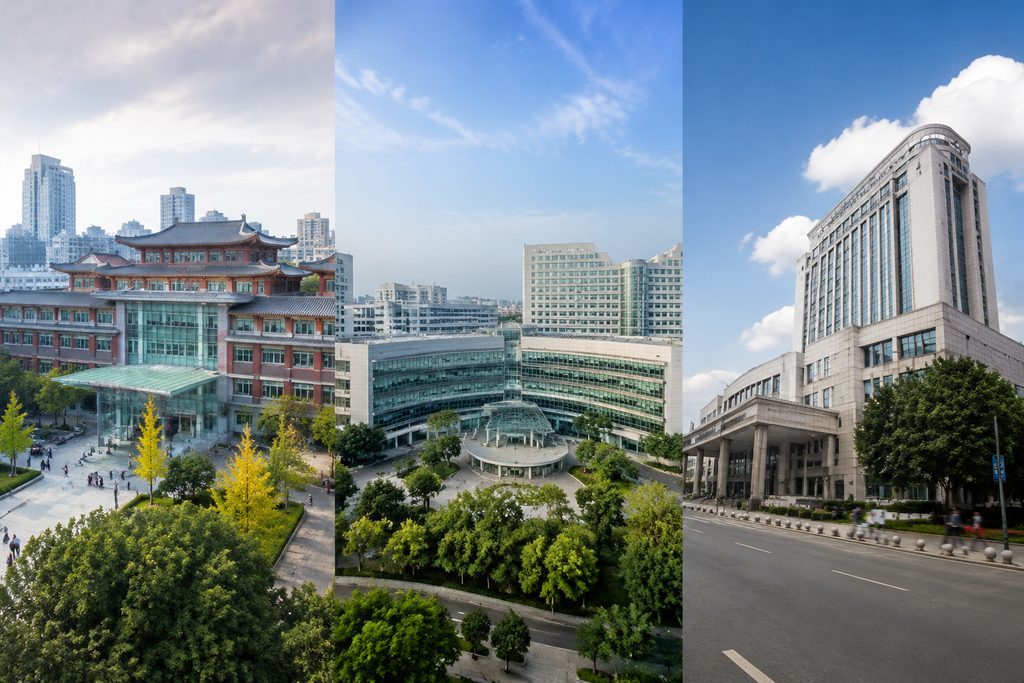
You have probably heard that getting specialized medical care in China means navigating chaos, language barriers, and questionable quality. The reality at a top-tier institution like Xiangya Hospital is quite different. The hospital, formally known as Xiangya Hospital Central South University, sits in Changsha and consistently ranks among China’s best for nephrology. For international patients with chronic kidney disease, glomerulonephritis, or dialysis needs, the question is not whether the expertise exists. The question is how to access it without wasting weeks or making costly mistakes. And that is where the real discussion begins.
Xiangya Hospital nephrology cost for foreigners is not a fixed number printed on a menu. It depends on what you need: a written second opinion, an outpatient consultation, a kidney biopsy, dialysis sessions, or longer-term disease management. What we can tell you, based on how Chinese public hospital international departments structure their pricing, is that costs run meaningfully below Western private rates while still giving you access to senior specialists. A first outpatient consultation through the international medical department typically starts around $100 to $250. A kidney biopsy, including pathology review, often lands between $1,500 and $3,000. Dialysis sessions run $150 to $300 per session depending on modality. These are ranges, not quotes. Your specific case will shift the numbers.
What makes Xiangya worth considering goes beyond price. The hospital’s nephrology department handles an enormous patient volume, which translates into clinical experience that smaller centers simply cannot match. Its physicians see rare glomerular diseases, complex lupus nephritis, and advanced CKD cases on a daily basis. That volume matters when your diagnosis is unclear or your current treatment has stalled. We will walk through exactly how to approach this hospital as a foreign patient, what the process looks like from abroad, and where things can go sideways if you are not prepared.
How This Actually Works, Step by Step
You do not fly to Changsha and hope for the best. The sequence starts remotely and moves in stages. Here is the realistic path.
First, you gather your existing medical records: recent lab results, urinalysis, imaging reports, pathology slides if you have had a biopsy, and a summary of your current medications. These need to be translated into Chinese or, at minimum, into clear English that the hospital’s international coordinators can process. Translation is not optional. A nephrologist reviewing your case needs to see trends in your creatinine, eGFR, proteinuria, and blood pressure over time, not just a single snapshot.
Second, you choose your entry point. The most practical options are a written second opinion or a video consultation with the nephrology team. For a written second opinion, you send your translated records, and a senior nephrologist reviews them and provides a written analysis with treatment suggestions. This typically costs between $300 and $500. A video consultation adds a live conversation, letting you explain your symptoms and goals directly. That runs $100 to $300 for a standard international department consultation, or $500 to $800 if you specifically request a top specialist. These fees are for the consultation service coordination, not for treatment itself.
Third, based on what the specialist says, you decide whether an in-person visit makes sense. If it does, the next step is securing an S2 visa with a medical treatment annotation. The hospital provides an invitation letter and supporting documents. You apply at your nearest Chinese embassy or consulate. Visa processing typically takes one to three weeks, sometimes longer depending on your home country.
Fourth, you travel to Changsha. You attend your outpatient appointment, complete any additional testing the nephrologist orders, and receive a treatment plan. If a biopsy or hospitalization is needed, that happens after the initial face-to-face consultation. Chinese public hospitals, including Xiangya, do not schedule surgeries or inpatient admissions purely through remote requests. The doctor must see you in person first.
Is Xiangya Hospital Good for Kidney Disease Treatment?
Short answer: yes, and the reason is structural, not anecdotal. Xiangya Hospital Central South University is one of China’s oldest and most respected teaching hospitals, founded in 1906. Its nephrology department is a national key clinical specialty, which in China’s hospital ranking system means it has been formally recognized for clinical excellence, research output, and training capacity. The department manages a high volume of complex cases: IgA nephropathy, membranous nephropathy, diabetic kidney disease, lupus nephritis, and end-stage renal disease requiring dialysis or transplantation evaluation.
But volume alone is not the point. The point is pattern recognition. When a department sees thousands of biopsy-confirmed glomerular disease cases each year, its specialists develop an instinct for atypical presentations that a general nephrologist in a lower-volume setting might miss. For international patients, that expertise is accessible through the hospital’s international medical department, which provides English-speaking coordination and faster access to senior specialists compared with the standard public queue.
There are limits. Xiangya is a public hospital, which means the main outpatient halls are crowded and the standard registration process is designed for Chinese-speaking patients. The international department smooths this considerably, but it does not turn the hospital into a Western-style private clinic. You will still encounter administrative friction. You will still need someone to help you navigate payment counters, lab queues, and pharmacy pickup. That is simply the reality of China’s top public hospitals, and it applies to every one of them, not just Xiangya.
A Realistic Timeline
People consistently underestimate how long the pre-travel phase takes. Here is a realistic breakdown for a foreign patient pursuing nephrology care at Xiangya Hospital.
| Stage | What Happens | Typical Duration |
|---|---|---|
| Document preparation | Gathering records, translating into Chinese, organizing pathology slides if applicable | 1 to 3 weeks |
| Remote consultation | Written second opinion or video consultation with the nephrology team | 3 to 10 business days after records are received |
| Decision and visa application | Confirming in-person visit, obtaining hospital invitation letter, applying for S2 visa | 2 to 4 weeks |
| Appointment scheduling | Booking the outpatient slot through the international department | 1 to 2 weeks lead time |
| Travel and consultation | Arriving in Changsha, attending appointment, completing initial testing | 3 to 7 days on the ground |
| Follow-up and decision | Receiving treatment plan, deciding on biopsy, dialysis arrangement, or continued remote management | 1 to 4 weeks after consultation |
The total from first contact to sitting in a nephrologist’s office in Changsha is realistically six to ten weeks. Can it be faster? Sometimes. But banking on speed is how patients end up in the wrong department or with incomplete records. The translation step alone trips up more people than any other part of the process.
What Can Go Wrong — and What Happens Then
Let us be direct about the failure modes, because pretending they do not exist helps no one.
The most common problem is incomplete or poorly translated records. A nephrologist cannot assess your kidney function trajectory from a single creatinine value. If your records arrive as a scattered pile of screenshots in three languages, the consultation will be delayed or the specialist will ask you to redo testing in Changsha anyway. The fix is simple but tedious: compile a chronological record, translate everything properly, and include pathology slides if a biopsy was ever performed.
The second problem is expectation mismatch about booking. Some patients assume they can book a kidney transplant consultation at Xiangya Hospital and show up with a surgery date already reserved. That is not how Chinese public hospitals work. You can book an outpatient consultation in advance through the international department. You cannot book a transplant or any inpatient procedure without an in-person evaluation first. If a service claims otherwise, walk away.
The third problem is communication breakdown on the ground. Even with the international department involved, you will encounter moments where a lab technician, a pharmacy clerk, or a ward nurse speaks only Chinese. Without a bilingual companion, these moments become hours of confusion. That is not a Xiangya-specific issue; it is true at every Chinese public hospital, including the very best ones.
And then there is the visa risk. The S2 visa application can be denied if the hospital’s invitation letter is incomplete or if the consulate questions the purpose of travel. We cannot guarantee approval, and neither can anyone else. What reduces the risk is a properly documented medical purpose, a clear treatment plan from the hospital, and consistency between your stated reason for travel and your actual itinerary.
How Much Does Dialysis Cost in Changsha China?
Xiangya’s nephrology department is a national key clinical specialty and consistently ranks among China’s top programs. For glomerular diseases, lupus nephritis, and complex CKD, it is a strong choice. Other top nephrology centers in China include Peking University First Hospital and Ruijin Hospital in Shanghai. The best choice depends on your specific diagnosis and whether you need a particular subspecialty focus.
Expect an initial international department consultation to run $100 to $250. A written second opinion from a senior specialist typically costs $300 to $500. A kidney biopsy with pathology runs $1,500 to $3,000. Dialysis sessions are $150 to $300 each. These are self-pay international rates and vary by case complexity and the specific services required.
Standard hemodialysis runs $150 to $300 per session at public hospitals in Changsha. Peritoneal dialysis typically costs $800 to $1,500 per month for supplies and monitoring. These prices are for self-paying international patients and do not include access surgery, hospitalization, or complication management.
Not necessarily. Packages can simplify logistics, but they also add markup and sometimes obscure what is actually included. A better approach for most patients is to start with a remote consultation, get a clear medical recommendation, and then decide whether you need full coordination or just help with specific pieces like translation, appointment booking, and on-the-ground support.
Your Next Step
The decision to pursue nephrology care in China should rest on evidence, not impulse. Xiangya Hospital offers genuine expertise at a cost that is often a fraction of Western private rates, but the process rewards preparation. We help international patients navigate exactly this: record translation, hospital matching, appointment coordination, and bilingual support on the ground. We do not practice medicine, and we do not promise outcomes. What we do is make a complex system navigable.
If you are weighing your options, start with a conversation. Tell us your diagnosis, what treatment you have already tried, and what you are hoping to achieve. We will help you figure out whether Xiangya or another Chinese hospital is the right fit, and what the realistic path looks like. Visit our patient services page to learn more, or explore our database of top-ranked Chinese hospitals to see how Xiangya compares with other leading institutions.
Kidney disease does not wait, but neither should you rush into a decision you do not fully understand. Get the facts first. Then move with confidence.
Frequently Asked Questions
Yes. The hospitals used for international patients are JCI-accredited and follow the same international safety standards as top hospitals in the US and Europe. Surgical teams perform high volumes of procedures — often more than their Western counterparts — which studies show leads to better outcomes.
Costs vary by procedure and hospital, but international patients typically save 40-80% compared to US prices — even when factoring in travel and accommodation. A consultation with our team will give you an exact, all-inclusive quote with no hidden fees.
Send us your existing medical reports to get started. We handle everything from hospital selection and appointment scheduling to visa assistance and post-operative recovery planning. Your medical records are reviewed by the specialist before you even book a flight.
For more medical information and treatment options in China, visit chinamedservices.com (China Medical Services).
