Eye Surgery: A Companion for Recovery and Realistic Costs
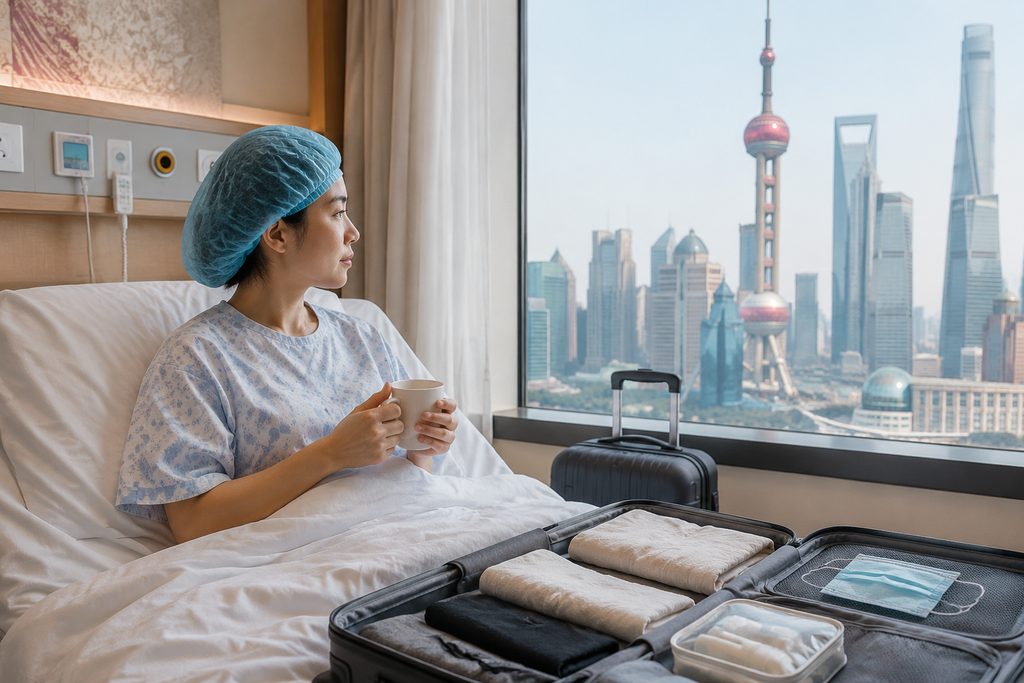
When 42-year-old Michael first heard the diagnosis, he had no idea where to start looking for treatment. A routine eye exam in Ohio had revealed early-stage cataracts. His surgeon recommended waiting six months. The quote for surgery, when it came, was $4,800 per eye after insurance. Michael started searching online and quickly became overwhelmed. Then a colleague mentioned something that stopped him cold: the same procedure at a top-tier hospital in Shanghai, using the same phacoemulsification technology, often costs between $1,800 and $3,500 per eye. The eye surgery cost China difference was substantial enough to consider a flight across the world.
That is where our team usually enters the picture. Not as doctors. As coordinators. We help patients like Michael understand what is real, what is not, and what the path actually looks like from initial inquiry to final follow-up.
How This Actually Works, Step by Step
You do not book a flight and show up. The sequence matters. Here is how it goes for most international patients considering eye surgery in China.
First, you send us your existing records. That means your latest eye exam, any OCT scans, corneal topography if you have had it, and a brief note on what you are hoping to address. Our team reviews these with the relevant ophthalmology department at one of the hospitals in our network. This initial review is not a diagnosis. It is a triage step. The doctors need to know whether your case is even appropriate for treatment in China.
Second, you get a written assessment back. This typically takes three to five business days. The assessment will tell you whether the hospital believes it can help, what additional tests might be needed on arrival, and a realistic price range for the procedure you are considering.
Third, if you decide to proceed, we coordinate the appointment. Here is the part most foreign patients do not expect: you cannot pre-book surgery from overseas through the standard public outpatient channel. Public hospital rules require an in-person consultation first. The surgeon must see you, examine you, and sign off before any operation is scheduled. What we can coordinate in advance is the international department or VIP channel, where a senior specialist will see you on a specific date. That consultation is the gatekeeper. Surgery follows, usually within one to two weeks depending on the surgeon’s schedule and your pre-operative test results.
Fourth, you travel. You bring your passport, your visa, your medical records, and a translator if you are not using our bilingual companion service. You attend the consultation. Tests happen same-day or next-day. Then the surgery is scheduled.
Eye Surgery Cost China: What the Numbers Actually Look Like
The primary question every patient asks is about money. Let us address it directly.
The cost of eye surgery in China varies significantly by procedure type, hospital tier, and whether you use the standard public channel or the international department. International departments charge more — typically 1.5 to 2 times the standard rate — because they include English-speaking staff, faster scheduling, and more personalized coordination.
Here is a realistic breakdown based on current market data:
| Procedure | China (International Dept.) | US Average (Pre-Insurance) |
|---|---|---|
| Cataract surgery (per eye, standard IOL) | $1,800 – $3,500 | $3,500 – $7,000 |
| Cataract surgery (per eye, premium multifocal IOL) | $3,500 – $6,000 | $6,000 – $12,000 |
| LASIK (both eyes) | $1,500 – $3,000 | $4,000 – $8,000 |
| SMILE (both eyes) | $2,500 – $4,500 | $5,000 – $10,000 |
| Vitrectomy (retinal surgery) | $4,000 – $8,000 | $15,000 – $30,000 |
These ranges are not quotes. They are reference points. The final number depends on your specific case, the hospital you choose, the surgeon’s seniority, and whether complications arise. Also, these figures assume you are paying out of pocket. Most Chinese public hospitals require prepayment. International private hospitals may bill your insurer directly, but public hospital international departments generally do not.
What about LASIK price abroad? The comparison holds. A patient paying $2,200 for both eyes in Guangzhou versus $6,500 in Texas is saving enough to cover airfare, a hotel for two weeks, and a bilingual companion for every hospital visit. That math is hard to ignore.
A Realistic Timeline
People underestimate the waiting. Here is what a typical journey looks like, with the steps nobody mentions.
| Stage | What Happens | Duration |
|---|---|---|
| Day 0 | You submit records and inquiry | — |
| Week 1 | Document translation and specialist review | 3–7 days |
| Week 2 | Written assessment returned; you decide whether to proceed | 2–5 days |
| Week 3–4 | Appointment coordination; visa application (S2) | 1–3 weeks |
| Week 5–6 | Travel to China; in-person consultation and pre-op tests | 2–3 days |
| Week 6–7 | Surgery performed | Same day or next day |
| Week 7–8 | Post-op follow-up in China | 3–7 days |
| Month 2–3 | Recovery at home; remote follow-up with your local ophthalmologist | Ongoing |
The part people forget is the visa. For medical treatment in China, you need an S2 visa, which is the short-stay category used for private affairs including medical visits. Processing takes one to three weeks depending on your home country’s Chinese embassy or consulate. You will need supporting documents from the hospital — typically an invitation letter or treatment confirmation. Our team helps prepare this, but we cannot guarantee approval. That decision rests entirely with the consular officer.
And no, the M visa is not the right one. That is for commercial and trade activities. Using it for medical treatment would be a misrepresentation. Do not do that.
What Can Go Wrong — and What Happens Then
Honesty matters more than optimism here. So let us talk about failure modes.
The surgeon may decline your case. This happens more often than patients expect, especially with complex retinal conditions or previous failed surgeries. If the specialist reviews your records and determines the risk is too high or the expected outcome too uncertain, they will say no. That is not a rejection of you. It is a medical judgment. The recourse is simple: we take the assessment to a different hospital in our network for a second opinion. Sometimes the answer changes. Sometimes it does not.
Your pre-op tests may reveal something new. A patient planning LASIK might discover corneal thickness that disqualifies them. A cataract patient might have undiagnosed glaucoma. This is not a failure of the system. It is the system working. The recourse is the surgeon recommending an alternative procedure or delaying surgery until the underlying condition is managed.
You may need to extend your stay. Post-operative complications — infection, elevated intraocular pressure, unexpected inflammation — can require additional follow-up visits before you are cleared to fly. Budget for this. Add a buffer of at least five to seven days beyond your expected departure date. If you cannot stay, you will need a local ophthalmologist at home who is willing to manage post-op care. Get that commitment in writing before you leave.
Language friction is real. Even in international departments, some nurses and technicians speak limited English. A bilingual medical companion from $300 per day solves most of this. But if you choose to go without one, bring a translation app and a printed list of your medications and allergies in Chinese.
How to Evaluate a Hospital for Eye Surgery in China
Not all hospitals are equal. And the “best” hospital is not always the right one for your specific case.
Start with the Fudan rankings. The Fudan University hospital rankings are China’s most authoritative. The comprehensive list groups the top 100 hospitals into tiers (A++++ through A) rather than giving specific numerical ranks. For ophthalmology specifically, the specialty reputation list names the top 10 departments in the country. Hospitals like Zhongshan Ophthalmic Center at Sun Yat-sen University in Guangzhou and the Eye and ENT Hospital of Fudan University in Shanghai consistently appear near the top of that specialty list.
But here is the nuance: is eye surgery safe in China? The answer depends on where you go. A top-ranked ophthalmology department performing thousands of procedures annually is a very different environment from a small private clinic with limited oversight. The safety profile at major teaching hospitals is comparable to Western standards. Infection rates are low. Technology is current — most top departments use the same Alcon and Zeiss equipment you would find in a US surgical center. The risk is not in the hardware. It is in choosing the wrong facility.
So how do you evaluate? Ask these questions. What is the surgeon’s annual case volume for your specific procedure? Does the hospital have a dedicated international department or only a standard public outpatient clinic? What is the infection control protocol? Will the same surgeon who performs your surgery also manage your post-op care, or will you be handed off to a resident? The answers tell you more than any ranking list.
For cataract patients specifically, how long to recover from cataract surgery is usually shorter than people fear. Most patients see improvement within 24 to 48 hours. Full visual stabilization takes about four to six weeks. The restrictions — no heavy lifting, no swimming, no eye rubbing — last about two weeks. You can fly home within a week of surgery in most uncomplicated cases, though your surgeon will want to see you at least once before you leave.
Practical Considerations: Records, Visa, Payment, and Follow-Up
Bring everything. Your complete ophthalmic history, not just the most recent exam. Previous surgeries. Current medications, including eye drops. Allergies. A letter from your local ophthalmologist summarizing your condition and why you are seeking treatment abroad. This letter matters more than you think — it gives the Chinese surgeon context and signals that you are a serious patient, not a medical tourist shopping for the cheapest option.
Payment is straightforward. Public hospital international departments typically require a deposit before surgery, with the balance due at discharge. Cash, major credit cards, and sometimes international bank transfers are accepted. Insurance is more complicated. Most Chinese public hospitals do not bill foreign insurers directly. You pay out of pocket and file for reimbursement. Private international hospitals — United Family, Jiahui, Parkway — do offer direct billing with many major insurers. But their surgical fees are higher, often approaching Western prices. The trade-off is convenience versus cost.
Language support is the single biggest determinant of how smoothly your visit goes. If you do not speak Mandarin, do not attempt the standard public outpatient channel alone. The queues are long. The signage is dense. The staff are busy. You will waste days. Either book through an international department or bring a bilingual companion. Those are the realistic options.
Follow-up at home is your responsibility. Before you leave China, get a detailed discharge summary in English. Ask your surgeon to specify the exact follow-up schedule — day 7, day 30, day 90. Then find a local ophthalmologist willing to see you on that schedule. Most will, especially if you explain that you had surgery abroad and need monitoring. Do not skip this step. The surgery itself is only half the outcome. The follow-up is the other half.
Frequently Asked Questions
At a top-ranked ophthalmology department, yes. The best Chinese eye hospitals perform thousands of procedures annually using the same equipment and techniques as Western centers. The key is choosing a hospital with a strong specialty reputation and an established international department. Avoid small, unranked clinics where oversight is thinner.
Not through the standard public channel. Chinese public hospitals require an in-person consultation before any surgery can be scheduled. What you can arrange in advance is a consultation slot through an international department or VIP channel, plus logistics like visa documents, accommodation, and a bilingual companion. Surgery follows the consultation, usually within one to two weeks.
You will need a local ophthalmologist to manage follow-up care. Before leaving China, get a written discharge summary and a clear follow-up schedule. Most surgeons will also offer remote video follow-up for a limited period. Serious complications are rare, but if one occurs, your local doctor can coordinate with the Chinese surgical team by email or phone.
Guangzhou and Shanghai are the two strongest centers for ophthalmology. Zhongshan Ophthalmic Center in Guangzhou and the Eye and ENT Hospital of Fudan University in Shanghai are both consistently ranked among China’s top ophthalmology departments. The Shanghai medical resources page and the Guangzhou hospital directory list additional options. For a broader view of specialty rankings, see the ophthalmology department rankings.
Your Next Step
Eye surgery is a serious decision, and doing it abroad adds layers of complexity. But the potential savings — often 50 to 70 percent compared to US prices — make it worth investigating for many patients. The key is doing the homework before you commit.
Our team at China Medical Services coordinates the process: record review, hospital selection, appointment scheduling, visa documentation, and on-the-ground bilingual support. We do not perform surgery. We do not guarantee outcomes. What we do is make sure you walk into the right hospital, with the right records, talking to the right specialist — and that you understand every step before you take it.
If you are considering eye surgery in China, start with a conversation. Send us your records and a brief note on what you are hoping to address. We will tell you honestly whether this path makes sense for your case. No pressure. Just clarity.
For more medical information and treatment options in China, visit chinamedservices.com (China Medical Services).
