Eye Surgery for Seniors in China: Costs, Safety, and Companion Support
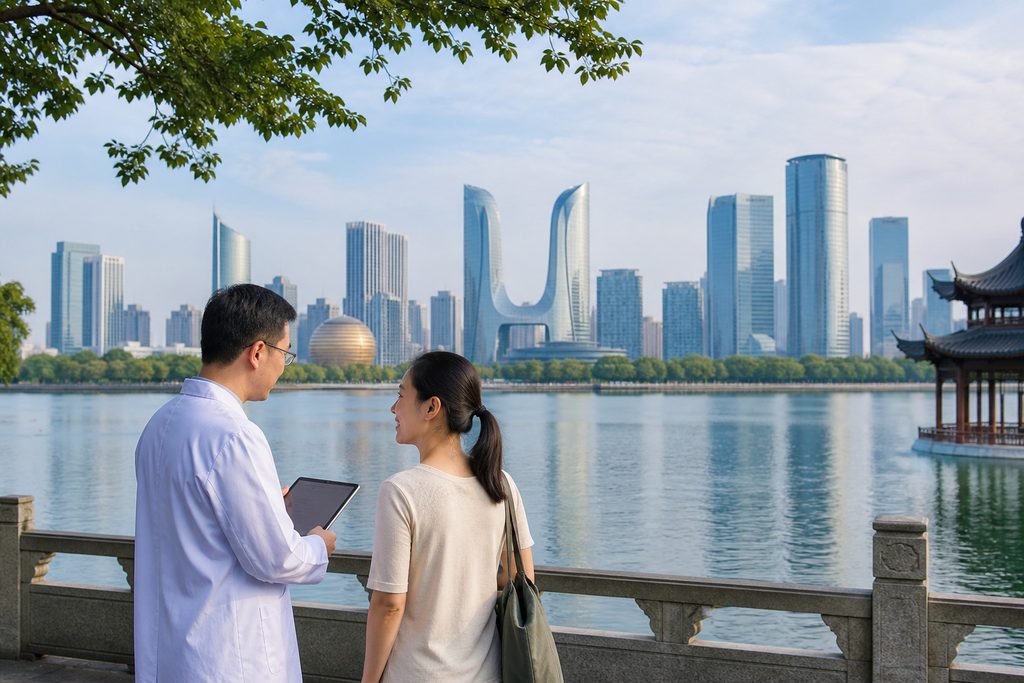
When 78-year-old Margaret from Manchester was told she needed cataract surgery in both eyes, her first reaction was not fear of the operation. It was the price. The NHS wait in her area had stretched past nine months, and a private clinic quoted her £4,800 per eye. Then her daughter, who works in trade logistics, asked a simple question: what if we looked at Shanghai?
Margaret is not a medical tourist by temperament. She dislikes flying, speaks no Mandarin, and had never considered surgery abroad. But the numbers forced a conversation. And that conversation is one we have with families every week.
Eye surgery for elderly China cost typically runs between $1,500 and $3,500 per eye for standard phacoemulsification cataract procedures at top-tier public hospitals. That figure includes the intraocular lens, surgeon fees, and a short hospital stay. Compare that to the United States, where the same procedure averages $3,500 to $7,000 per eye for patients without insurance, or the UK private sector at £3,000 to £5,500. The gap is real, and it widens when you factor in premium lens options.
But cost is only one variable. Safety, recovery, language, and logistics matter just as much for a 78-year-old.
Key Takeaways
- Eye surgery for elderly China cost ranges from $1,500 to $3,500 per eye at top public hospitals, roughly 50–70% less than US private-pay rates.
- Top Chinese ophthalmology departments handle cataract volumes that dwarf Western centers; Fuwai Hospital alone performs over 14,000 cardiac surgeries yearly, and leading eye centers see comparable case loads in cataract surgery.
- Language and navigation inside China’s massive public hospitals are the hardest barriers. A bilingual companion service addresses this directly, but it does not replace clinical judgment.
- Patients over 80 can safely undergo cataract surgery when a preoperative medical clearance is done properly. Age alone is rarely a disqualifier.
The Problem: High Costs and Long Waits at Home
Cataracts affect approximately 1 in 4 people over 70 in the United Kingdom and United States. The condition is not rare; it is nearly universal with age. What varies dramatically is how quickly and affordably patients get treated.
In Canada, the median wait time for cataract surgery reached 159 days in 2023, according to the Fraser Institute. In parts of the UK, NHS ophthalmology waiting lists have exceeded one year. Meanwhile, the out-of-pocket cost for private surgery in Australia, the US, or Singapore pushes many fixed-income seniors to delay treatment.
Delaying cataract surgery is not a neutral choice. Studies published in Ophthalmology and the American Journal of Ophthalmology link untreated cataracts to a higher risk of falls, hip fractures, and cognitive decline in older adults. A 2021 cohort study in JAMA Internal Medicine found that cataract surgery was associated with a 30% lower risk of dementia in older adults over a 10-year follow-up. The cost of waiting is measurable in fractures, hospitalizations, and lost independence.
That is the real pain point. Not the surgery itself. The system around it.
Why China Delivers Results for Senior Eye Surgery
China’s top-tier hospitals operate on a scale that few Western institutions can match. A single ophthalmology department at a leading Shanghai or Beijing hospital may perform 5,000 to 10,000 cataract surgeries per year. That volume creates efficiency, lowers per-case costs, and sharpens surgical skill.
Clinical Volume Drives Better Outcomes
The relationship between surgical volume and complication rates is well documented across specialties. For cataract surgery, a 2019 study in Ophthalmology found that surgeons performing more than 500 cases annually had significantly lower rates of posterior capsule rupture than low-volume surgeons. Chinese top-tier eye centers routinely assign cataract cases to surgeons who clear that threshold every few months.
This is not a claim about individual doctors. It is a structural feature of how large Chinese public hospitals organize care. High patient flow means surgeons repeat the same procedure hundreds of times a year, which is exactly what the safety literature says reduces risk.
Technology Without the Premium Price Tag
Femtosecond laser-assisted cataract surgery, premium multifocal intraocular lenses, and optical coherence tomography-guided planning are all available at major Chinese eye centers. The difference is cost structure. A premium multifocal lens that adds $2,500 to a US bill may add $800 to $1,200 in Shanghai or Beijing.
Why? Lower labor costs, higher patient turnover, and a hospital financing model that does not rely on per-procedure billing the way US systems do. The equipment is the same. The pricing is not.
Cost Advantage Without Quality Compromise
Lower cost does not automatically mean lower quality. The Fudan University hospital rankings identify the top 5% of China’s 35,000+ hospitals, and the ophthalmology departments on that list report complication rates comparable to international benchmarks. Many are JCI-accredited or maintain international patient departments with English-speaking coordinators.
The structural reasons for lower prices are mundane: lower physician salaries relative to the US, lower administrative overhead, and a public hospital mandate to serve high patient volumes. None of those factors compromise surgical sterility or implant quality.
What Cataract Surgery for an 80-Year-Old Actually Involves in China
The procedure itself is nearly identical to what a patient would receive in London or Toronto. Phacoemulsification through a 2.2 to 2.8 millimeter incision, ultrasound breakup of the clouded lens, and implantation of a foldable intraocular lens. Local anesthesia with light sedation. Total surgical time: 15 to 30 minutes per eye.
What differs is the preoperative workflow. Chinese public hospitals require a full medical clearance before scheduling surgery for any patient over 70. That includes an electrocardiogram, blood pressure management, blood coagulation tests, and often a consultation with an internal medicine specialist. For an 80-year-old, this is not optional. It is the standard pathway.
Is cataract surgery safe for 80 year old in China? The short answer is yes, when the preoperative clearance is done properly. A 2020 review in Clinical Ophthalmology concluded that age alone is not a significant risk factor for cataract surgery complications; uncontrolled hypertension, unstable diabetes, and untreated cardiac arrhythmias are. Chinese hospitals are strict about stabilizing these conditions before surgery, which is one reason the safety record for elderly patients holds up.
Recovery follows a predictable arc. Most patients see clearly within 24 to 48 hours. Full visual stabilization takes 2 to 4 weeks. Strenuous activity is restricted for the first week. Eye drops are required for 3 to 4 weeks post-op. A follow-up visit at day 1, week 1, and month 1 is standard.
How Long Is Recovery From Eye Surgery for Seniors? A Week-by-Week View
Recovery timelines vary by individual health status, but the general pattern for cataract surgery in patients over 70 looks like this:
| Timeframe | What to Expect | Restrictions |
|---|---|---|
| Day 1 | Blurry vision improving, mild discomfort, light sensitivity | No driving, no rubbing the eye, wear protective shield at night |
| Week 1 | Vision significantly clearer, colors brighter, some halos around lights | No heavy lifting, no bending below waist, no water in the eye |
| Weeks 2–4 | Vision stabilizing, eye drops tapering, most daily activities resume | No swimming, no contact sports, no eye makeup |
| Month 1–3 | Final visual outcome reached, new glasses prescription if needed | Most restrictions lifted; follow-up can be done remotely |
For seniors traveling from abroad, the practical question is how long to stay in China. Most surgeons recommend 7 to 10 days on the ground for a single-eye procedure. That covers the preoperative clearance (if not completed remotely), surgery day, day-1 follow-up, and a week-1 check before flying home. For both eyes done sequentially, plan for 2 to 3 weeks, with the second eye typically scheduled 3 to 7 days after the first.
Some patients choose to complete the final follow-up with their local ophthalmologist back home. This is common and workable, as long as the Chinese surgical team provides a complete discharge summary and operative notes in English. We always advise requesting these documents before departure.
Best Eye Hospital for Seniors Beijing Medical Tourism: What to Look For
Beijing and Shanghai dominate the landscape for senior eye surgery in China, but they are not the only options. Guangzhou, Chengdu, and Hangzhou all have strong ophthalmology departments. The question is not just which hospital, but which department and which pathway.
When families ask about the best eye hospital for seniors Beijing medical tourism, we point them to the Fudan specialty rankings rather than a single institution. The ophthalmology specialty list identifies the top 10 departments nationwide, and several are in Beijing. But the ranking alone does not tell you whether the department has an international patient office, English-speaking coordinators, or experience with foreign seniors.
Those operational details matter more than a ranking badge. A top-ranked department with no international pathway will be nearly impossible for a foreign senior to navigate alone. A slightly lower-ranked department with a dedicated international ward and bilingual staff will deliver a far smoother experience.
Our database covers ophthalmology departments ranked in the Fudan specialty top 10, plus private international hospitals like United Family and Jiahui that offer English-speaking staff and direct insurance billing. The right choice depends on the patient’s medical complexity, budget, and comfort level with large public hospital environments.
Practical Considerations: Visas, Payments, and Records for Senior Eye Surgery
The logistics are manageable, but they require planning. Here is what actually matters.
Visa: Foreign patients traveling to China for medical treatment apply for an S2 visa, which covers short-term private affairs including medical treatment. Accompanying family members also apply for S2 visas. The hospital must provide an invitation letter and treatment confirmation as supporting documents. The M visa is for commercial and trade activities and does not apply to medical travel. Embassy requirements vary by country, so check with the nearest Chinese consulate before booking flights.
Medical records: Bring complete ophthalmology records: recent visual acuity tests, intraocular pressure readings, corneal topography if available, and a list of all current medications. If the patient has diabetes or hypertension, include recent HbA1c and blood pressure logs. These documents allow the Chinese surgical team to do a remote pre-assessment before the patient travels.
Payment: Public hospitals in China require prepayment for surgery, typically via bank transfer, UnionPay, or major credit cards. International insurance is usually reimbursement-based, meaning the patient pays upfront and files a claim afterward. Private international hospitals like United Family often bill insurers directly. Confirm the payment method with the hospital’s international department before arrival.
Language: This is the single biggest barrier. Chinese public hospitals are vast, crowded, and operate almost entirely in Mandarin. Registration, payment, preoperative testing, and post-op instructions all happen in Chinese. A bilingual companion handles queuing, form-filling, fee payment, and translation during every step. Without one, a foreign senior will struggle even with a well-organized hospital.
Follow-up after returning home: Request a complete discharge summary, surgical notes, lens implant card, and medication list in English before leaving. Most local ophthalmologists can manage post-op care if these documents are provided. A video follow-up with the Chinese surgical team is also possible through the hospital’s international department.
Frequently Asked Questions
Yes, when the patient passes a thorough preoperative medical clearance. Chinese hospitals require cardiac, blood pressure, and coagulation checks for all patients over 70 before scheduling surgery. Age alone is not a contraindication; unstable medical conditions are. The clearance process is designed to catch and stabilize those conditions first.
The $1,500 to $3,500 per-eye range at top public hospitals typically covers the surgeon fee, standard monofocal intraocular lens, operating room charges, and a short hospital stay. Premium multifocal or toric lenses add $800 to $1,500 per eye. Private international hospitals charge more, often $4,000 to $6,000 per eye, but include English-speaking staff and direct insurance billing. Final quotes always vary by hospital and case complexity.
Plan for 7 to 10 days for one eye. That covers preoperative clearance, surgery day, the day-1 follow-up, and a week-1 check. For both eyes, plan 2 to 3 weeks, with the second eye typically scheduled 3 to 7 days after the first. Some patients complete the final follow-up with their local ophthalmologist after returning home.
Public hospitals in China generally cannot schedule surgery for overseas patients without an in-person consultation first. What a companion service can do is coordinate the hospital appointment, arrange the medical record review, handle registration and payment logistics, and provide translation during every step. The surgery itself is scheduled after the surgeon sees the patient in person. This is standard practice at Chinese public hospitals, not a limitation of any particular service.
Serious complications after modern cataract surgery are rare, occurring in less than 1% of cases. The most common issues — elevated eye pressure, inflammation, or mild infection — are treatable by any competent ophthalmologist in your home country. Carry your discharge summary and lens implant card, and your local doctor will have what they need. For questions about the Chinese surgical technique or implant selection, a video consultation with the original surgical team can usually be arranged.
Your Next Step
The decision to have eye surgery abroad is significant, especially for a parent or grandparent. The cost savings are real, and the clinical quality at China’s top eye centers is strong. But the logistics are not trivial, and language is the hardest barrier.
We help families navigate that gap. Our team connects you with vetted ophthalmology departments, coordinates appointments, and provides bilingual companions who handle every step inside the hospital. We are not a hospital and do not provide diagnoses or medical advice. We are the bridge between you and the clinical experts.
Start with a conversation. It costs nothing, and it will clarify whether China is the right choice for your family.
For more medical information and treatment options in China, visit chinamedservices.com (China Medical Services).
