Facelift Cost in China: Real 2026 Prices, Top Hospitals & Safety Guide
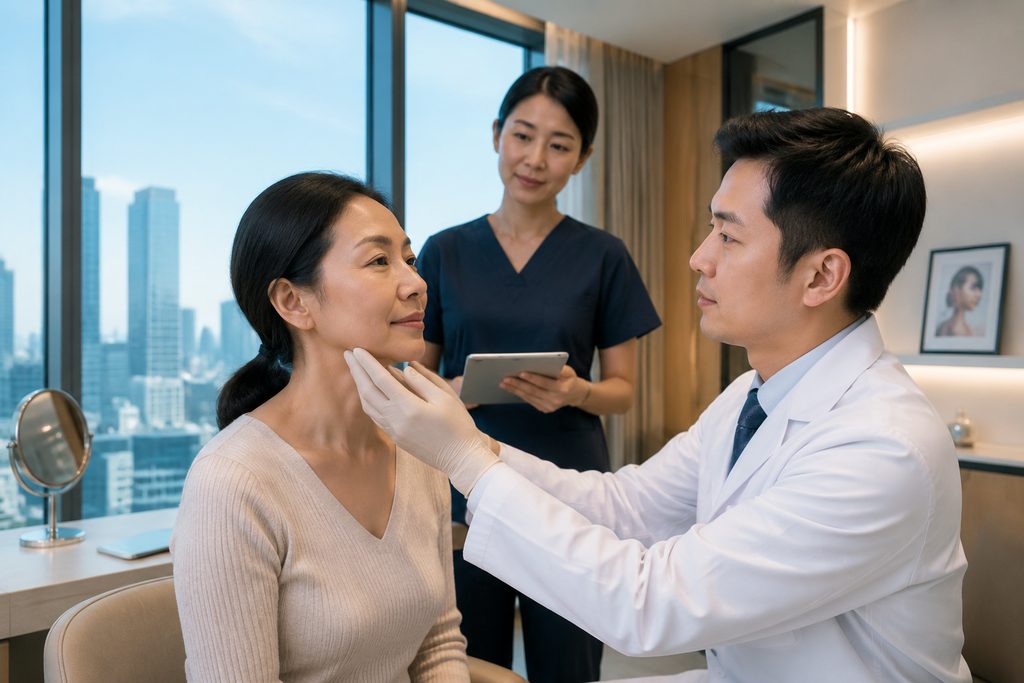
When 58-year-old Sarah from Manchester started researching her options, she found the same number everywhere: $18,000 to $35,000 for a full facelift in the UK. The recovery time, the consultation fees, the anesthesiologist charges — all itemized, all staggering. She had been saving for five years. Then a friend mentioned medical travel. Sarah’s first question, typed into Google at 11:42 PM, was exactly what you searched: how much does a facelift cost in China?
The short answer is that facelift cost China ranges from approximately $4,500 to $15,000 depending on the technique, the surgeon’s seniority, and whether you choose a top-tier public hospital’s international department or a private international hospital. That figure typically includes the surgeon’s fee, anesthesia, operating room, and a 2-3 night hospital stay. It does not include flights, accommodation, or our coordination services. Sarah ended up paying $9,800 for a deep-plane facelift at a JCI-accredited private hospital in Shanghai. She was back in Manchester 14 days after surgery.
But the price tag is only one part of the story.
Key Takeaways
- Full facelift surgery in China costs roughly 60-75% less than in the US or UK, with total fees from $4,500 to $15,000 at reputable hospitals.
- Top Chinese plastic surgery departments perform several hundred facelifts annually, giving surgeons high-volume experience that directly impacts results.
- Language barriers and the inability to book public hospital outpatient appointments from overseas are real obstacles — a bilingual medical companion solves this.
- You cannot simply email a top surgeon and book a date. The process requires in-person evaluation, and the best route is through hospital international departments or a coordination service.
The Problem: Facelift Prices Have Become Untenable in Western Markets
In the United States, the average surgeon’s fee alone for a facelift was $11,395 in 2023, according to the American Society of Plastic Surgeons. That number excludes anesthesia, facility fees, and post-operative care, which routinely push the total to $20,000-40,000. In London, a deep-plane facelift with an experienced consultant starts around £18,000. Sydney prices are comparable. For a procedure that insurance almost never covers, these figures put facial rejuvenation out of reach for most people.
The economics make no sense to patients. A facelift is not an experimental procedure. It has been performed for over a century. The techniques — SMAS plication, deep-plane, MACS lift — are well established. The cost difference between a facelift in Beverly Hills and one in Shanghai is not driven by superior American surgical skill. It is driven by structural economics: medical malpractice insurance premiums, hospital administrative overhead, and the simple fact that US healthcare prices are the highest in the world.
Sarah’s case is typical. She was quoted £22,000 in Manchester. She paid $9,800 in Shanghai — roughly £7,600. That is a 65% reduction for the same procedure, performed by a surgeon who completes over 100 facelifts per year.
Why Facelift Surgery in China Delivers Comparable Results at a Fraction of the Price
Clinical Volume: Surgeons Who Operate, Not Just Consult
A busy plastic surgeon at a top Chinese hospital might perform 150-300 facial aesthetic procedures annually. The average US plastic surgeon performs fewer than 30 facelifts per year, according to data from the American Board of Plastic Surgery. Volume matters in facial surgery. The surgeon who operates on faces every single day develops an intuitive grasp of tissue planes, nerve pathways, and healing patterns that no textbook can teach.
China’s top plastic surgery departments — such as those at Shanghai Ninth People’s Hospital and Peking Union Medical College Hospital — are among the busiest in the world. Shanghai Ninth alone handles over 100,000 outpatient visits in plastic and reconstructive surgery each year. That scale is unmatched in Europe or North America.
How Much Is a Facelift in Shanghai? Real Price Ranges at Real Hospitals
Shanghai is the most common destination for international patients seeking facial surgery. The city has 18 hospitals ranked in the Fudan Top 100, more than any city except Beijing, and several private international hospitals with JCI accreditation. Here is what you can expect to pay:
| Procedure & Setting | Price Range (USD) | What’s Included |
|---|---|---|
| Mini facelift / MACS lift — public hospital international dept | $4,500 – $7,000 | Surgeon fee, anesthesia, 1-2 nights ward |
| Full SMAS facelift — public hospital international dept | $6,000 – $10,000 | Surgeon fee, anesthesia, 2-3 nights ward |
| Deep-plane facelift — private international hospital (JCI) | $8,000 – $15,000 | Surgeon fee, anesthesia, private room, English-speaking nursing |
| Facelift + neck lift — private international hospital | $10,000 – $18,000 | Combined procedure, 3 nights private room |
| Facelift + upper blepharoplasty + fat grafting | $12,000 – $20,000 | Combined facial rejuvenation package |
These prices vary by hospital and case complexity. A revision facelift, where a previous surgery has left scar tissue, will cost more. A patient with significant skin laxity requiring extended dissection will pay at the upper end. But even the top of the range is dramatically below Western pricing.
Is Facelift Surgery Safe in China? What the Data Shows
Safety is the question every patient asks, and it deserves a straight answer. China’s top-tier hospitals are not back-alley clinics. The hospitals we work with are ranked in the top 5% of China’s 35,000+ hospitals by the Fudan University ranking system and many hold JCI accreditation — the same international standard used by hospitals in Singapore, Dubai, and the United States.
Serious complications from facelift surgery — hematoma requiring reoperation, facial nerve injury, skin necrosis — occur in 1-3% of cases worldwide, regardless of country. The key variable is not geography. It is surgeon experience and hospital infrastructure. A deep-plane facelift performed by a high-volume surgeon at a JCI-accredited facility in Shanghai carries no higher risk than the same procedure in London or Los Angeles.
What you must avoid is the unregulated cosmetic clinic sector. China has thousands of small aesthetic clinics. Some are excellent. Some are not. The distinction matters enormously. We only coordinate with public tertiary hospitals and accredited private international hospitals — never with unverified clinics.
What Actually Happens: The Step-by-Step Process for an International Patient
You cannot book a facelift in China the way you book a hotel. The process is medical, not transactional. Here is how it works, based on the real rules of Chinese public hospitals and the pathways available through international departments.
Step 1: Remote evaluation. You send your photos, medical history, and any previous surgical records. A plastic surgeon reviews them remotely — either through a written second opinion ($300-500) or a video consultation ($100-300 for a standard international department specialist, $500-800 for a top-specialist video consultation). The surgeon assesses whether you are a good candidate and what technique they would recommend.
Step 2: Travel and in-person consultation. You fly to China on an S2 visa, which is the correct short-stay category for medical treatment and private affairs. M visas are for commercial and trade activities only and are not appropriate for medical travel. The in-person consultation is non-negotiable. The surgeon must examine your skin elasticity, facial bone structure, and medical fitness before scheduling surgery.
Step 3: Pre-operative workup. Blood tests, ECG, and sometimes a chest X-ray. This typically happens 1-3 days before surgery. The hospital needs these results before the anesthesiologist will clear you.
Step 4: Surgery. A full facelift takes 3-5 hours under general anesthesia. You stay in the hospital for 2-3 nights afterward. Drains are usually removed on day 1 or 2. Sutures come out between days 7 and 10.
Step 5: Recovery in China. Most patients stay in China for 10-14 days after surgery. This allows for suture removal, a follow-up examination, and management of any early complications. You can fly long-haul after about 10-14 days, though you should discuss this with your surgeon.
Step 6: Follow-up at home. Your surgeon will want photos at 1 month, 3 months, and 6 months. Swelling resolves substantially by week 6, but final results take 6-12 months to fully settle.
Choosing the Right Surgeon: What the Numbers Actually Mean
Searching “best facelift surgeon Beijing price” will return dozens of results. Most are marketing pages. Here is what actually matters when evaluating a surgeon in China.
First, verify the hospital. The Fudan ranking system evaluates China’s hospitals every year. The comprehensive Top 100 list uses a tier system (A++++ through A) rather than individual numerical rankings, so be suspicious of any website claiming a specific “national rank” for a hospital. The specialty reputation rankings are different — for plastic surgery, specific hospitals are ranked among China’s top 10. Shanghai Ninth People’s Hospital, Peking Union Medical College Hospital, and West China Hospital consistently appear on these specialty lists.
Practical tip: Ask any surgeon you are considering three questions: How many facelifts do you perform per year? What is your personal complication rate for hematoma and nerve injury? Can I speak with a previous international patient? A confident, experienced surgeon answers all three without hesitation.
Second, understand the difference between public hospital international departments and private international hospitals. Public hospital international departments — such as the one at Peking Union Medical College Hospital — offer access to China’s most senior surgeons at prices roughly 1.5-2 times the standard public rate. You get the same surgeon, but with English-speaking coordination and shorter waiting times. Private international hospitals like United Family and Jiahui offer Western-style care, direct insurance billing, and English-speaking staff throughout, but their surgeon rosters are smaller.
Third, be realistic about what a facelift can and cannot do. A facelift tightens the lower two-thirds of the face and neck. It does not address the upper eyelids, brow position, or skin texture. Patients who want comprehensive rejuvenation often combine a facelift with an upper blepharoplasty or fat grafting. This is not upselling — it is facial anatomy. Discuss your goals honestly with the surgeon during the remote evaluation.
Medical Tourism Facelift Package China: What to Look For and What to Avoid
Your Chinese surgeon remains available for remote follow-up and can communicate with your local doctor. However, any physical treatment — draining a hematoma, revising a scar, managing an infection — must be performed by a local surgeon. You should identify a local plastic surgeon before you travel to China, so you are not scrambling if something goes wrong. Serious complications are uncommon, but this is the responsible way to plan.
Not inherently. The cost difference is driven by structural economics — lower malpractice premiums, lower hospital overhead, and lower labor costs — not by inferior surgical training. Top Chinese plastic surgeons train for 10+ years and perform several times more facial procedures annually than their Western counterparts. The key is choosing a top-tier hospital. A facelift at Shanghai Ninth or a JCI-accredited international hospital is not a budget procedure. It is a high-quality procedure at a structurally lower price.
Plan for 12-14 days. Sutures are removed between days 7 and 10. Your surgeon will want to see you once after suture removal to confirm healing is on track. Flying long-haul before day 10 is not recommended due to swelling and the small risk of deep vein thrombosis after surgery. Some patients stay longer if they want additional recovery time before a long flight.
Your Next Step
Facelift cost China is not a single number — it is a range that depends on the technique, the hospital, and the surgeon. What should be clear by now is that the savings are real, the safety record at top hospitals is solid, and the process requires careful planning. We are China Medical Services, a coordination team that connects international patients with 340+ top-ranked hospitals across 37 cities. We are not a hospital and we
Frequently Asked Questions
Yes. The hospitals used for international patients are JCI-accredited and follow the same international safety standards as top hospitals in the US and Europe. Surgical teams perform high volumes of procedures — often more than their Western counterparts — which studies show leads to better outcomes.
Costs vary by procedure and hospital, but international patients typically save 40-80% compared to US prices — even when factoring in travel and accommodation. A consultation with our team will give you an exact, all-inclusive quote with no hidden fees.
Send us your existing medical reports to get started. We handle everything from hospital selection and appointment scheduling to visa assistance and post-operative recovery planning. Your medical records are reviewed by the specialist before you even book a flight.
For more medical information and treatment options in China, visit chinamedservices.com (China Medical Services).
