Facial Paralysis Reconstruction China: Reanimating Long-Standing Palsy
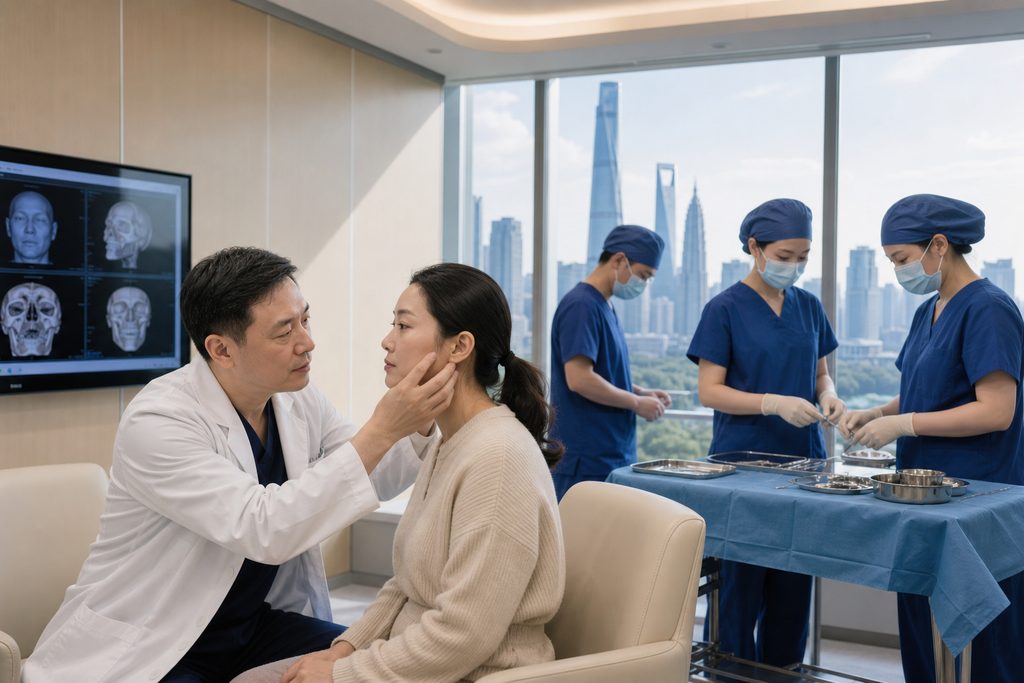
While patients in the US often face quotes exceeding $70,000 for a single-stage gracilis free flap, the same microsurgical procedure at a top-tier Chinese hospital typically ranges from $12,000 to $20,000. The gap is not a reflection of quality. It reflects structural economics—and a surgical volume that few Western centers can match. For someone living with a face that no longer moves, the question stops being abstract. Can old facial paralysis actually be fixed? The short answer is yes. The longer answer involves nerve grafts, muscle transfers, and a decision about where to have it done.
Key Takeaways
- Cost Reality: Facial reanimation surgery cost in China runs 60-80% below comparable procedures in the US or UK, with gracilis free flap reconstruction ranging from $12,000 to $20,000 depending on hospital tier and case complexity.
- Surgical Volume Matters: Top Chinese facial nerve centers handle a volume of complex palsy cases that builds a specific, hard-to-replicate microsurgical expertise—surgeons here may perform more reanimation procedures in a month than some Western surgeons do in a year.
- Honest Barrier: Public hospital systems in China do not allow overseas patients to pre-book surgery remotely. You must attend an in-person consultation first, and navigating the system without Mandarin fluency or local knowledge is genuinely difficult.
- Timing Is Flexible: Long-standing paralysis—even decades old—can be surgically addressed through free functional muscle transfer, not just early nerve repairs. The window has not closed.
The Problem: When the Face Stops Speaking
Facial paralysis is not a static condition. Over months and years, the affected side undergoes predictable changes: muscle atrophy, soft tissue sagging, and the development of synkinesis—unwanted, simultaneous movements that twist expressions into something unintended. Approximately 1 in 60 people will experience Bell’s palsy at some point, and while most recover, roughly 15-30% are left with permanent, disfiguring weakness. Add to that the patients who lose facial nerve function to acoustic neuroma resection, trauma, or congenital conditions, and the numbers grow quietly large.
What makes long-standing palsy different is the biological clock. After roughly 18-24 months of denervation, the native facial muscles lose their motor endplates. They can no longer receive a nerve signal—even if the nerve itself were perfectly repaired. This is the point where simple nerve grafting stops being an option. The patient hears, “It has been too long.” But that sentence is incomplete. Too long for a primary nerve repair, yes. Too long for any solution? No.
The surgical answer at this stage shifts from repairing the original wiring to building a new system entirely. Surgeons harvest a muscle from another part of the body—most commonly the gracilis muscle from the inner thigh—and transplant it to the face as a free flap, complete with its own blood supply and a new nerve input. The nerve to the gracilis is coapted to either the contralateral healthy facial nerve via a cross-face nerve graft, or to the masseteric nerve (the nerve that powers chewing). When it works, the patient thinks about smiling, bites down gently, or both—and the transplanted muscle contracts. The face moves again. This is facial reanimation surgery in its modern form. And the volume of these procedures performed in China has grown significantly in the last decade.
Who We Are
We are not a hospital. Our team does not provide medical treatment, clinical diagnoses, or surgical opinions. What we do is bridge the operational gap between international patients and China’s top-tier medical institutions. Think of us as your logistical architects: we handle hospital matching based on your specific diagnosis, coordinate in-person consultation schedules through official hospital international departments, arrange bilingual medical companions who translate in real time during every clinic visit, and manage the unglamorous but critical details—visa guidance, accommodation near the hospital, payment coordination. We work for you, not for any single hospital. Our database covers 340+ top-ranked hospitals across 37 cities, and we help you understand which centers genuinely specialize in facial nerve reconstruction versus those that treat a handful of cases annually.
Why China for Facial Reanimation Surgery
Volume Creates a Specific Kind of Expertise
Microsurgical free tissue transfer is unforgiving. The vessels are tiny—often 1-2 millimeters in diameter. The nerve coaptation must be precise. And the entire flap must survive on those microvascular anastomoses. Surgeons who perform this procedure occasionally, even at excellent Western hospitals, operate with a different level of accumulated pattern recognition than those who perform it weekly.
At major Chinese facial nerve centers—particularly those affiliated with top-tier otolaryngology and plastic surgery departments in Shanghai and Beijing—surgeons routinely manage high volumes of complex facial palsy referrals. A single department may evaluate 500-800 facial paralysis patients annually, with a significant portion proceeding to free functional muscle transfer. This case density builds a team competency that extends beyond the lead surgeon to the fellows, nurses, and rehabilitation therapists who understand the specific post-operative needs of these patients. When you ask how facial palsy surgery is done in China, the technique itself mirrors international best practice—gracilis free flap, latissimus dorsi transfer for broader defects, cross-face nerve grafting, masseteric-to-facial nerve transfer. The difference lies in the accumulated experience behind each step.
The Structural Cost Advantage
Let us address the obvious question directly: how can facial reanimation surgery cost in China be so much lower without sacrificing quality? The answer is structural, not magical.
Hospital operating costs in China are fundamentally lower due to labor economics, not corner-cutting. A complex microsurgical procedure that requires two attending surgeons, an anesthesiologist, and nursing support for 6-8 hours simply costs less to staff. The implantable hardware—plates, screws, nerve couplers—is often manufactured domestically to international standards. Hospital room charges, even in private international wards, run a fraction of US or UK rates. None of this implies inferior care. The same hospitals that treat international patients also serve as national referral centers for China’s most complex domestic cases. Their outcomes are scrutinized by a demanding local patient population and increasingly published in international peer-reviewed journals.
| Procedure | China (USD) | US (USD) | UK Private (USD) |
|---|---|---|---|
| Gracilis Free Flap (single stage) | $12,000 – $20,000 | $60,000 – $90,000 | $50,000 – $75,000 |
| Cross-Face Nerve Graft + Flap (two stage) | $18,000 – $28,000 | $80,000 – $120,000+ | $70,000 – $100,000 |
| Masseteric Nerve Transfer (isolated) | $8,000 – $14,000 | $30,000 – $50,000 | $25,000 – $45,000 |
| Eyelid Weight Implant (gold/platinum) | $3,000 – $6,000 | $8,000 – $15,000 | $7,000 – $12,000 |
All figures are estimates that vary by hospital, surgeon seniority, and case complexity. Hospital international department pricing is typically 1.5-2x standard domestic rates and includes English-language coordination.
Technology Without the Hype
Chinese microsurgery centers have invested heavily in the tools that matter for free flap surgery: high-magnification operating microscopes with integrated fluorescence angiography to confirm flap perfusion before closing, intraoperative nerve monitoring to verify donor nerve function, and thin-slice CT angiography for pre-operative perforator mapping. These are not futuristic technologies—they are standard-of-care equipment that reduces the risk of flap failure and donor site morbidity. What distinguishes the best centers is not the presence of this equipment but the team’s fluency in using it under time pressure. A gracilis flap has roughly a 4-hour window from harvest to revascularization before ischemic damage becomes irreversible. Experienced teams move with a calm speed that comes from repetition.
The Surgical Reality: Can Old Facial Paralysis Be Fixed Surgically?
The question that brings most patients to this page is blunt: can old facial paralysis be fixed surgically? The answer depends on what “old” means and what “fixed” means.
If the paralysis is less than 18-24 months old and the facial muscles still have viable motor endplates, a nerve transfer—such as a masseteric-to-facial or hypoglossal-to-facial transfer—can reinnervate the native musculature. The patient’s own facial muscles regain tone and voluntary movement. This is the ideal scenario. Recovery takes 6-12 months for visible results, and the smile, while often requiring a bite-down to initiate, looks natural because it uses the patient’s original facial muscle architecture.
If the paralysis has persisted beyond 2 years, the native muscles are typically no longer receptive to nerve input. The surgical solution shifts to free functional muscle transfer. The gracilis muscle is harvested from the medial thigh—a muscle most people never miss functionally—and transplanted to the cheek. Its artery and vein are anastomosed to the facial or superficial temporal vessels. Its nerve is connected to a donor nerve: either the contralateral facial nerve (via a sural nerve graft tunneled across the upper lip) for a spontaneous, emotionally-driven smile, or the ipsilateral masseteric nerve for a stronger, bite-activated smile. Some surgeons now perform dual-innervation techniques, using both nerve sources to combine spontaneity with power.
The result is not a perfect mirror of the unaffected side. No honest surgeon promises that. What a successful free flap delivers is resting tone—the face looks symmetrical at rest—and volitional movement. The patient can generate a smile. It requires conscious effort at first. Over time, with cortical plasticity, many patients report that the movement becomes more automatic. But it is a reconstruction, not a resurrection. Understanding this before booking facial paralysis surgery in China—or anywhere—is essential for realistic expectations.
Finding the Best Hospital for Facial Paralysis Treatment in Shanghai
Shanghai has emerged as a significant destination for facial nerve reconstruction, driven by several university-affiliated hospitals with dedicated facial plastic and reconstructive surgery divisions. When patients search for the best hospital for facial paralysis treatment in Shanghai, the answer is not a single name—it is a short list of institutions with documented microsurgical volume and English-language international departments.
The top candidates are typically drawn from the Fudan University hospital system and Shanghai Jiao Tong University’s affiliated network. These are public tertiary-A hospitals—the highest classification in China’s hospital ranking system—and they appear on the Fudan National Hospital Rankings, which evaluates clinical reputation and research output. Their otolaryngology and plastic surgery departments are consistently ranked among China’s top 10 for these specialties. What this means practically: they see enough facial palsy cases to have developed dedicated clinical pathways, from initial EMG testing through post-operative rehabilitation.
The international departments within these hospitals function differently from the main public wards. They offer English-speaking coordination staff, private rooms, and the ability to schedule consultations with senior surgeons on a defined timeline—something the standard public outpatient system cannot guarantee for overseas patients. The trade-off is cost: international department pricing runs approximately 1.5 to 2 times the standard domestic rate. But for a patient traveling internationally for microsurgery, the predictability and language support are not luxuries. They are necessities.
What You Need to Know Before Going Alone
We are direct about this because patients deserve honesty before they book a flight. Navigating the Chinese hospital system independently as a non-Mandarin speaker is genuinely difficult. Here are the barriers that trip up even resourceful travelers:
- Remote Surgical Booking Does Not Exist in Public Hospitals: Chinese public hospitals, including their international departments, require an in-person consultation before any surgery can be scheduled. You cannot email imaging, get a surgical date, and fly over for the operation. The surgeon must examine you, review your CT angiography in person, and assess your facial movement directly. This is a clinical necessity—flap planning depends on physical examination findings—but it means your first trip is for evaluation, not surgery. The gap between consultation and operation may be days or weeks, depending on the surgeon’s schedule and OR availability.
- Payment Is Prepaid and Cash-Flow Intensive: Hospitals require a deposit before admission, typically covering the estimated full cost of the procedure. International wire transfers take days to clear. Credit card acceptance is inconsistent outside private international hospitals. The practical workflow is: consultation → surgical plan agreed → deposit paid → surgery scheduled. Having a local entity that can facilitate payment while you are still abroad removes a major logistical headache.
- Medical Records Must Be Translated Properly: Your operative notes from a previous acoustic neuroma resection. The EMG report showing fibrillation potentials. The radiologist’s interpretation of your temporal bone CT. All of these must be translated into Chinese with medical precision—not by a general translator, but by someone who understands that “House-Brackmann grade V” has a specific clinical meaning. Errors in translation lead to surgical planning errors.
- Post-Operative Follow-Up Is Not Optional: A free flap requires monitoring. Flap color, capillary refill, Doppler signals—these are checked hourly for the first 24-48 hours. After discharge, the surgeon needs to see you at defined intervals: 1 week, 1 month, 3 months, 6 months. If you fly home immediately after suture removal, you sever the monitoring relationship that catches complications early. Planning for an extended stay or a structured follow-up plan is part of the decision to have surgery abroad.
How We Help You Navigate This
These barriers exist for structural reasons, not malice. The Chinese healthcare system was designed to serve a domestic population of 1.4 billion people—not to cater to international patients. The hospitals that do serve overseas patients have built dedicated international wings to bridge this gap, and our role is to connect you to those wings efficiently.
Before you travel, we translate and format your medical records, imaging, and diagnostic reports into a clinical summary that Chinese surgeons can review. We identify the hospitals and departments with documented expertise in your specific type of facial paralysis—not just any plastic surgery department, but one with a track record in free functional muscle transfer for long-standing palsy. We coordinate the consultation appointment through the hospital’s official international department, ensuring an English-speaking coordinator is assigned to your case.
During your stay, a bilingual medical companion accompanies you to every appointment. This person handles registration, payment queues, pharmacy runs, and real-time interpretation between you and the surgeon. They are not a distant phone interpreter—they are standing next to you when the surgeon explains why a dual-innervation technique may give you a better smile than a single-nerve transfer. When the hospital requires a deposit before scheduling surgery, we facilitate the process so funds are in the right place at the right time.
After surgery, we coordinate follow-up appointments, help extend accommodations if recovery takes longer than expected, and ensure your discharge summary and operative notes are translated back into English for your home physician. The goal is continuity—no information lost between systems, no gap in post-operative care.
For patients considering this path, a free consultation with our team is the starting point. We review your history, discuss realistic hospital options, and outline what a treatment timeline would actually look like—no soft promises, just operational clarity.
Frequently Asked Questions
For a single-stage gracilis free flap, the total cost—surgeon fees, anesthesia, operating room, hospital stay (typically 5-7 days), and standard post-operative medications—ranges from $12,000 to $20,000 at a public hospital international department. Two-stage procedures (cross-face nerve graft followed by free flap 9-12 months later) run $18,000 to $28,000 total. These figures exclude international travel, accommodation, and our coordination services. They also assume no major complications requiring extended ICU stay. Private international hospitals in Shanghai may charge 30-50% more but offer direct insurance billing and a more Western-style patient experience.
Yes—with the right procedure. The key distinction is that after roughly 2 years of denervation, the original facial muscles can no longer be reinnervated. But free functional muscle transfer bypasses this problem entirely by bringing a new muscle to the face with its own nerve supply. Surgeons have successfully performed gracilis free flaps on patients with paralysis lasting 20, 30, even 40 years. The transplanted muscle does not age out of viability. What matters is the patient’s overall health, the quality of the recipient blood vessels, and the availability of a suitable donor nerve. Age and duration of paralysis are not absolute contraindications.
Look for three things: documented microsurgical volume in free functional muscle transfer, an international department with English-speaking coordination staff, and surgeons who publish or present on facial reanimation specifically—not just general plastic surgery. The top candidates are typically university-affiliated public hospitals with dedicated facial plastic surgery divisions. Ask directly how many gracilis free flaps for facial palsy the department performs annually. A center doing fewer than 20-30 per year may not have the team rhythm that reduces operative time and complication rates. Our team can provide this volume data and help you interpret it in the context of your specific case.
The surgical risks are the same regardless of geography: flap failure (reported rates of 2-5% in experienced hands), hematoma, infection, donor site morbidity, and asymmetry. The additional risk of having surgery abroad is distance from the surgical team during recovery. If a flap shows signs of vascular compromise 10 days post-operatively, you need immediate access to a microsurgeon—not a video call. This is why we emphasize extended local stay after surgery and a clear emergency contact protocol. The best-laid plan includes a contingency for complications. Ask your surgeon what happens if the flap fails before you leave the country. A candid answer is a sign of integrity.
The term “package” requires careful definition. Legitimate hospital international departments offer bundled pricing that includes the procedure, hospital stay, and basic coordination—this is standard and safe. What you should be wary of is any intermediary promising to “guarantee” a specific surgeon or surgical date before you have had an in-person consultation. As noted above, Chinese public hospitals require face-to-face evaluation before scheduling. Any entity claiming otherwise is either misrepresenting the process or operating outside hospital protocols. Our service coordinates consultation appointments through official hospital channels, and we are transparent when a surgeon’s schedule means a waiting period. Legitimate facilitation means working within the system, not around it.
Your Next Step
Facial paralysis that has lasted years does not have to be permanent. The surgical techniques exist, the volume of expertise in China is real, and the cost differential makes treatment accessible to patients who have been quoted prohibitive figures at home. But this is microsurgery—complex, demanding, and requiring a team that performs it regularly. The decision of where to have it done matters as much as the decision to have it done at all.
If you are considering facial reanimation surgery and want to understand your options in China with clarity rather than salesmanship, start with a free consultation. We will review your history, discuss which hospitals genuinely specialize in your type of palsy, and map out what the timeline and costs would actually look like. No pressure. Just the operational truth, delivered by people who navigate this system every day.
For more medical information and treatment options in China, visit chinamedservices.com (China Medical Services).
