Facial Reconstruction Service China: Recovery After Trauma and Cancer
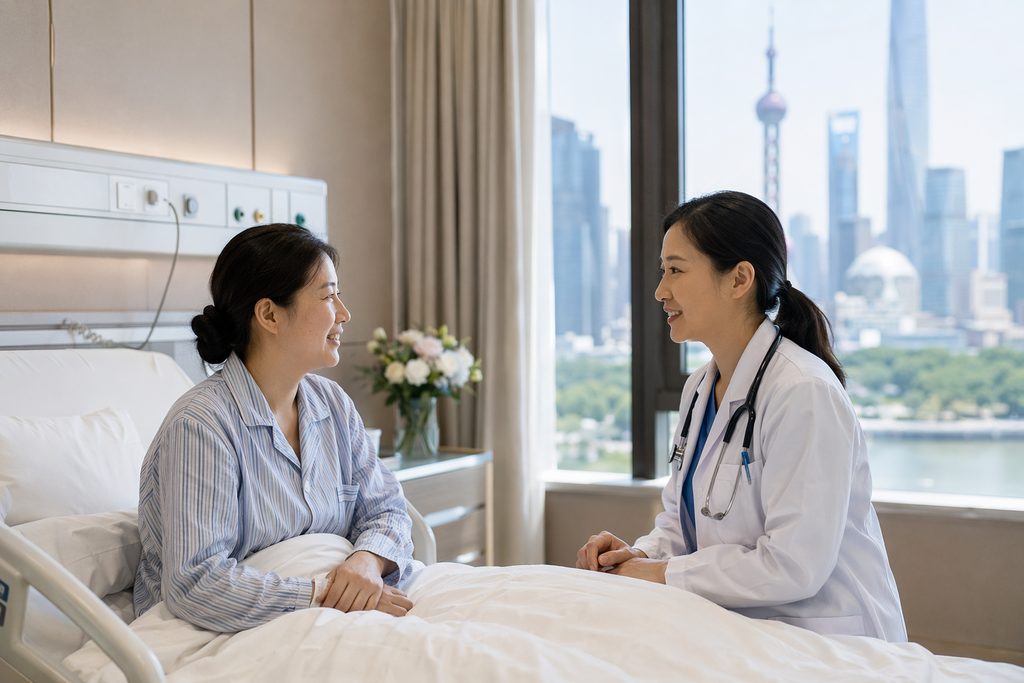
Have you spent sleepless nights staring at a reflection that doesn’t feel like your own, wondering if the face you remember is gone forever?
We hear a version of this question every single week. The accident that shattered bone structure. The cancer resection that removed part of a jaw or cheek. The quiet aftermath where healing feels stalled because the mirror tells a different story than the medical chart. The search for answers leads many patients across borders. Our team has guided hundreds of them through the specific, complex journey of facial reconstruction in China. Not as surgeons. As the logistical architects who make the impossible feel manageable.
Key Takeaways
- Facial reconstruction surgery cost in China typically ranges from $8,000 to $35,000—a fraction of the $40,000 to $120,000+ common in the US and Western Europe, without sacrificing the expertise of surgeons performing hundreds of these procedures annually.
- China’s top maxillofacial units in Shanghai and Beijing operate at a clinical volume that simply doesn’t exist in most Western hospitals, which directly correlates with lower complication rates in complex microvascular reconstruction.
- Navigating a foreign hospital system while recovering from facial surgery is genuinely difficult—language barriers, visa logistics, and post-operative follow-up coordination require a structured support plan, not just hope.
- Recovery timelines after cancer-related reconstruction are measured in months, not weeks, and understanding the realistic rehabilitation path before you travel prevents crushing disappointment later.
The Problem: When Reconstruction at Home Feels Out of Reach
Facial trauma and post-cancer defects don’t just alter appearance. They affect breathing, speech, eating, and the basic ability to walk into a room without feeling every gaze. Reconstruction is not cosmetic. It is functional restoration. And for too many patients, the path to that restoration is blocked by cost, wait times, or a lack of specialized surgical teams.
In the United States, a complex free flap reconstruction following mandibulectomy can easily exceed $100,000. In the United Kingdom, the wait for a maxillofacial reconstruction after cancer clearance can stretch beyond 18 weeks on the NHS—and longer if the case requires coordination between plastic surgery, otolaryngology, and oral surgery teams. Canada sees similar bottlenecks. Australia’s public system prioritizes urgent cancer resection but often leaves patients waiting months for the reconstructive phase.
The financial strain is brutal. Even with insurance, out-of-pocket costs for reconstructive plates, custom implants, and microvascular surgery can run to tens of thousands of dollars. Some patients simply give up. They learn to live with functional deficits that could have been repaired. That is the quiet tragedy in this field—not that the surgery doesn’t exist, but that it sits behind a wall of money and scheduling that feels insurmountable.
We have spoken with patients who spent two years fundraising for a procedure their insurance classified as “partially elective.” Others exhausted their savings on the cancer fight and had nothing left for the reconstruction. The search for alternatives brings them to us.
Who We Are
China Medical Services is not a hospital. We do not provide medical treatment, clinical diagnoses, or surgical opinions. We are a medical concierge organization that connects international patients with China’s top-tier hospitals—the 340+ institutions ranked in the top 5% of the country’s 35,000+ hospitals by the authoritative Fudan University rankings and JCI accreditation standards. Our team handles the architecture of your medical journey: hospital matching based on your specific condition, bilingual medical companions who stand beside you through every clinic visit, visa guidance, accommodation coordination, and the thousand logistical details that would otherwise overwhelm a patient traveling to a foreign country for major surgery. We are the bridge. The surgeons build the outcome. We build the path to reach them.
Why China Delivers Results in Facial Reconstruction
Volume Creates Precision: The Surgeon’s Hands
A maxillofacial surgeon at a major trauma center in Shanghai Ninth People’s Hospital or Peking University Hospital of Stomatology performs over 300 microvascular free flap procedures annually. The average American head and neck surgeon completes perhaps 30 to 50. This gap is not about talent. It is about system design. China’s top hospitals are fed by a population of 1.4 billion and a referral network that funnels complex cases into a small number of elite centers. A surgeon in Shanghai sees more mandibular reconstructions in a single year than many Western surgeons see in a decade.
Data from the International Journal of Oral and Maxillofacial Surgery shows that centers performing more than 100 free flaps per year report flap survival rates above 96%, compared to 91% at lower-volume centers. The difference is stark when a flap fails. A failed free flap means emergency reoperation, extended hospitalization, and often a second donor site surgery. Volume is not a marketing point. It is a direct predictor of whether the reconstruction survives.
Technology Without the Markup
Virtual surgical planning (VSP), 3D-printed titanium patient-specific implants, and intraoperative navigation are standard at China’s top maxillofacial units—not experimental add-ons. A patient requiring a custom mandibular plate after tumor resection can have the implant designed from CT data, printed, and sterilized within a week. The same process in the US or Europe often takes four to six weeks and adds $15,000 to $25,000 to the bill.
Chinese hospitals have invested heavily in in-house 3D printing labs. Shanghai Ninth People’s Hospital operates one of the largest such facilities in Asia. Custom implants are manufactured on-site, eliminating the third-party vendor costs that inflate Western pricing. The result is faster turnaround and a facial reconstruction surgery cost in China that lands between $8,000 and $35,000 for procedures that routinely exceed $80,000 elsewhere.
Cost Structure: Why Less Doesn’t Mean Worse
The lower cost is not a discount on quality. It is a function of economic fundamentals. Hospital operating costs in China are lower because labor, facilities, and domestic medical device manufacturing all sit on a different cost base. A top maxillofacial surgeon in Shanghai earns a fraction of what a comparable US surgeon earns—not because of lower skill, but because of different national salary structures. The titanium plate, the surgical microscope, the anesthesia team—all cost less without being inferior.
We have seen a full mandibular reconstruction with fibula free flap, including 10 days of hospitalization, billed at $22,000 in a top Shanghai hospital. The same procedure at a major US academic center typically invoices between $90,000 and $140,000. The clinical outcome data, published in peer-reviewed journals, shows equivalent or superior flap survival rates and functional recovery scores. The structural economics explain the gap. Nothing else.
What You Need to Know Before Going Alone
Honesty matters more than enthusiasm here. Traveling to China for facial reconstruction is not like booking a dental implant abroad. These are 8- to 14-hour surgeries with hospital stays of one to three weeks. Complications can happen. Communication with your surgical team is non-negotiable. Here is what we tell every patient before they commit:
- Visa Requirements Are Specific: Medical treatment in China requires an S2 visa (short-term) or S1 visa (stays over 180 days). The S2 is the standard for most reconstruction patients. You need an invitation letter from the hospital, proof of scheduled treatment, and documentation of financial means. Consulates reject incomplete applications. We have seen patients lose weeks because they applied for the wrong visa category—M visas are for business, not medical care, and using one for surgery can result in denial of entry or treatment.
- Public Hospital Registration Is a Maze: Top public hospitals in China do not allow overseas patients to pre-book outpatient appointments online. You cannot simply email a surgeon and reserve a slot. Registration happens in person, often requires a Chinese ID-linked system, and the best specialists have queues that stretch for weeks. Walking into a hospital without a local coordinator means spending hours in lines, missing appointments, and potentially being turned away because the specialist’s quota is full.
- Payment Is Upfront and Cash-Based: Chinese public hospitals require prepayment. You deposit funds at admission, and the hospital draws down against that balance. International credit cards are often not accepted at public hospital counters. Wire transfers, cash deposits in RMB, or UnionPay cards are the norm. Insurance reimbursement happens after the fact—you pay first, then claim. This catches many Western patients off guard.
- Follow-Up Requires a Plan: Microvascular reconstruction demands close post-operative monitoring. Flap checks every hour for the first 48 hours, then regular wound reviews, then rehabilitation. If you fly home too early, you risk missing a vascular compromise that could cost the reconstruction. The minimum in-country stay for a free flap case is typically three to four weeks. We help patients plan for this reality, including accommodation near the hospital for the full recovery window.
How We Help You Navigate This
These barriers are not flaws in the Chinese system. They are structural features of a healthcare environment designed for a domestic population of a billion-plus people. International patients are an exception, not the norm. Our entire organization exists to bridge that gap.
Before you travel, we match your medical records and imaging to the appropriate surgical unit. If you need mandibular reconstruction after ameloblastoma resection, we don’t send you to a general plastic surgeon. We connect you with a maxillofacial unit at a hospital like Shanghai Ninth People’s Hospital, which handles over 30,000 maxillofacial cases annually and ranks among the top institutions in China for this subspecialty. If your case involves orbital reconstruction after trauma, we identify the oculoplastic and craniofacial teams with the highest volumes in that specific procedure. This matching process draws on our database of 340+ top-ranked hospitals across 37 cities—not a Google search.
Once a hospital accepts your case, we coordinate the S2 visa invitation letter, schedule the initial consultation, and arrange a bilingual medical companion who meets you at the hospital entrance on day one. This companion handles registration, translates every conversation with the surgeon, manages payment deposits, and stays with you through the admission process. After surgery, they remain available for follow-up visits, medication instructions, and communication with the nursing staff. You focus on healing. We handle the system.
For patients who need to connect with a surgeon before committing to travel, we facilitate video consultations through the hospital’s international department. A written second opinion, including surgical plan review by the treating team, can be arranged before you book a flight. These services carry a fee—video consultations start from $500, written second opinions from $300—but that cost is fully credited toward our coordination fee if you proceed with treatment within 90 days.
The coordination itself starts from $300 for basic appointment scheduling, with comprehensive end-to-end packages ranging higher depending on case complexity. These are coordination fees only. Hospital treatment charges are paid directly to the hospital, and we never mark up medical costs.
Frequently Asked Questions
Safety depends on where you go, not which country you are in. The hospitals we work with are JCI-accredited or ranked in the Fudan University Top 100—institutions that report surgical outcomes, maintain international sterilization standards, and employ surgeons trained in microvascular techniques recognized globally. Complication rates for free flap reconstruction at these centers are published and comparable to top Western academic hospitals. The risk is not in the location. It is in choosing a hospital without verified outcomes data. We only connect patients with institutions where that data exists and is transparent.
For a complex microvascular free flap reconstruction—such as a fibula flap for mandibular defect—the total hospital bill in China typically falls between $15,000 and $35,000, including surgeon fees, anesthesia, implant hardware, and a 10- to 14-day hospital stay. The same procedure in the United States ranges from $80,000 to $140,000. Simpler procedures, like local flap reconstruction or bone grafting, can cost $8,000 to $15,000 in China. These figures vary by hospital tier, case complexity, and length of stay. They are provided as reference ranges, not fixed quotes.
Recovery is staged. The initial hospital stay for free flap monitoring is 7 to 14 days. Swelling and bruising peak around day three and begin subsiding after the first week, but residual swelling can persist for months. Return to soft diet typically occurs at four to six weeks. Full bony healing of a vascularized bone flap takes three to six months. Speech and swallowing therapy, if needed, may continue for six to twelve months. Patients should plan for at least three to four weeks in China for the acute recovery phase before considering international travel. We help arrange accommodation near the hospital for this entire window.
No. Chinese public hospitals require an in-person consultation before scheduling surgery. The surgeon must examine you, review imaging, and confirm the surgical plan face-to-face. What we can arrange beforehand is a video consultation or written second opinion, which allows the surgical team to review your case and indicate whether they are willing to proceed. If they accept, we schedule the in-person consultation and coordinate the subsequent surgery slot. But the sequence is fixed: consult first, then operate. No reputable surgeon will book a complex reconstruction without seeing the patient.
This is the hardest question, and it deserves a straight answer. If a complication arises after you leave China—a late infection, hardware exposure, flap compromise—your local healthcare system becomes the first responder. The Chinese surgical team remains available for consultation via telemedicine, but they cannot provide hands-on care from across the ocean. Before you travel, we strongly recommend establishing a relationship with a local maxillofacial or plastic surgeon who can manage post-operative issues. We provide a complete medical record and operative note translated into English for this exact purpose. The goal is continuity, not abandonment.
Your Next Step
Facial reconstruction is not a decision to rush. It is a surgery that restores function and identity, and it deserves a team with the volume, technology, and focus to give you the best possible outcome. China’s top maxillofacial centers offer that combination at a cost that makes treatment accessible when it would otherwise be out of reach. The logistics are real, but they are solvable with the right support.
If you want to understand whether your specific case is a fit for one of the hospitals in our network, start with a free consultation. No commitment. No pressure. Just a clear-eyed conversation about what is possible.
For more medical information and treatment options in China, visit chinamedservices.com (China Medical Services).
