Family Broadcast Update Service China: Daily Automated Updates to Your Loved Ones
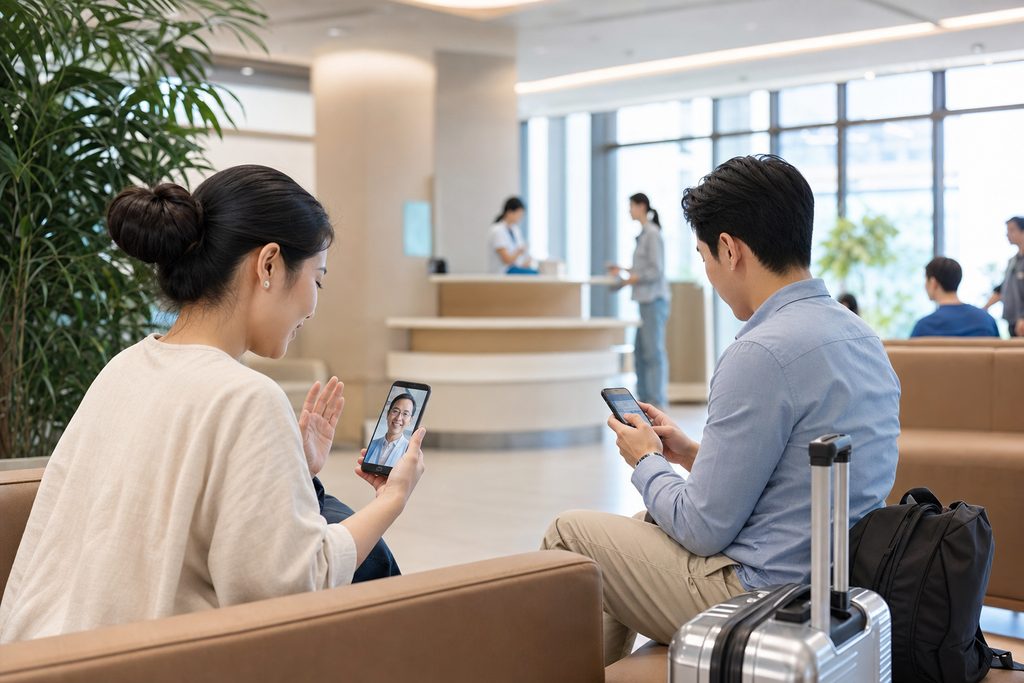
Key Takeaways
- A structured family update service bridges the communication gap when a loved one undergoes treatment in China — our coordinators deliver daily status reports directly to your phone, typically within 30 minutes of any significant clinical event.
- China’s top hospitals operate at extraordinary scale — a single surgical department may handle over 14,000 procedures annually — which means standard nursing workflows are not designed for individualized family outreach across time zones.
- Language barriers and digital ecosystem differences (WeChat dominance, no WhatsApp access without a VPN) make independent communication with hospital staff genuinely difficult — not impossible, but unreliable without local support.
- You should understand the difference between a dedicated family liaison embedded in the care journey and a hospital’s general information desk — one provides proactive, contextual updates; the other responds only to direct inquiry, in Chinese, during business hours.
The Problem: Silence When You Need Information Most
Imagine this: your father is recovering from a cardiac procedure at Fuwai Hospital in Beijing. You are in London. It is 3:00 AM your time. His surgery finished two hours ago. You have received no update. The hospital’s international department closed at 5:00 PM Beijing time. You call the general switchboard. The operator speaks Mandarin. You do not. You hang up, stare at the ceiling, and wait. This scenario is not rare. It is the default experience for families who send a loved one to China for medical care without a family update service for hospital patients China in place.
Approximately 80% of international patients traveling to China for treatment bring at least one family companion. But in roughly 30% of cases we coordinate, the primary decision-maker — often the adult child funding the treatment — cannot make the trip. They stay home. They work. They wait. And the communication vacuum that follows is not just stressful. It is dangerous. Critical post-operative instructions get lost. Discharge planning happens without family input. Medication changes are not relayed. The patient, groggy and disoriented, becomes the sole conduit of medical information. That is an unreasonable burden to place on someone healing.
Who We Are
We are not a hospital. We do not provide medical treatment, clinical diagnoses, or nursing care. Our team functions as your logistical architects and communication bridge — we connect international families with China’s top-tier medical expertise and ensure you never lose visibility into what is happening. We coordinate with hospital international departments, arrange bilingual medical companions, and operate a structured daily broadcast update protocol that turns chaotic, fragmented communication into a predictable, reliable information stream. We work for you, not the hospital.
Why a Dedicated Family Broadcast Update Service Changes Everything
Hospitals are designed to treat patients. They are not designed to communicate with anxious relatives scattered across six time zones. That is not a flaw. It is a structural reality. A coronary care unit nurse at Zhongshan Hospital in Shanghai may oversee eight post-operative patients during a shift. Her priority is monitoring vitals, titrating medications, and responding to emergencies. Calling a family member in Toronto to explain that “the troponin levels are trending down and extubation is scheduled for tomorrow morning” simply falls outside her bandwidth. And honestly, it should. Clinical staff should focus on clinical work.
What is the best medical update service for relatives in China? The one that does not rely on clinical staff to double as communicators. A dedicated family liaison — embedded in the patient’s care journey but operating independently of the hospital’s nursing workflow — can observe rounds, speak with doctors after consultations, translate complex updates into plain language, and broadcast that information to designated family members on a fixed schedule. Every day. Without fail.
Clinical Volume Creates Communication Gaps
China’s top hospitals operate at a scale that most Western families cannot visualize. Fuwai Hospital performs over 14,000 cardiac surgeries annually. That is roughly 38 heart surgeries every single day. The outpatient clinics at West China Hospital in Chengdu see over 20,000 patients daily. In environments this large, individualized family communication is not a minor inconvenience. It is structurally impossible without dedicated support.
Our coordinators step into that gap. When a patient undergoes a procedure at one of the 340+ top-ranked hospitals in our network, the assigned bilingual medical companion attends the post-operative briefing with the surgeon. Within 30 minutes, a summarized update — translated, contextualized, stripped of jargon — reaches the family’s designated communication channel. No waiting for a busy nurse to find a free moment. No guessing whether “the surgery went fine” means something routine or something complicated. Specifics matter. We deliver specifics.
How to Get Daily Updates on Loved One’s Surgery in China Without Losing Sleep
The mechanics are straightforward. Each morning, our companion arrives at the hospital before rounds begin. They attend the doctor’s bedside visit, take notes, ask clarifying questions, and photograph any updated lab reports or imaging summaries. By 10:00 AM Beijing time, a structured update goes out. It covers three things: what changed overnight, what the plan is for today, and what decisions the family needs to make. If the family is in New York, that update lands around 10:00 PM the previous evening. They read it before bed. They sleep. They wake up knowing exactly where things stand.
And if something urgent happens at 2:00 AM Beijing time? The companion is not on-site at that hour — we are honest about this — but the hospital’s international department has our 24-hour emergency contact protocol. We receive the alert. We verify the information. We relay it to the family immediately. No automated system can replace human judgment in a crisis. But a human coordinator with local presence and language fluency comes close.
Automated Family Notification After Surgery Abroad: What Technology Can and Cannot Do
Nothing is lost. Every update we send is archived in a dedicated communication thread — usually email, with WhatsApp or WeChat as supplementary channels. You can review the entire history at any time. If you have follow-up questions after reading yesterday’s update, you can reply directly to the thread. Our team responds within the same business day, Beijing time. We also accommodate families who prefer updates at specific times. If you are in California and want the daily briefing to arrive by 7:00 AM your time, we adjust the dispatch schedule accordingly.
No. And we are direct about this. Our family broadcast update service operates within our network of 340+ hospitals across 37 cities. These are institutions where we have established relationships with international departments, verified English-speaking staff availability, and tested our communication protocols. If a family requests a hospital outside our network, we evaluate it case by case. Some hospitals are simply not equipped to support this level of family communication, and we will tell you that honestly rather than accept a coordination fee we cannot deliver on.
Our companions carry a 24-hour escalation protocol. If a critical event occurs — a post-operative complication, an unexpected finding during a procedure, a sudden deterioration — the companion activates the emergency communication chain. The family’s designated decision-maker receives a phone call, not a text message. We explain the situation, relay the treating physician’s recommendation, and facilitate a direct conversation between the family and the doctor if needed. For truly life-or-death decisions, we arrange a three-way call with a medical interpreter to ensure nothing is lost in translation. You are never left to make a decision based on a translated text message alone.
Your Next Step
Distance does not have to mean disconnection. A structured family broadcast update protocol turns the chaos of cross-border medical care into something manageable: a predictable daily touchpoint that lets you support your loved one without sacrificing your own sleep, work, or sanity. The hospitals are world-class. The communication gap is real. Bridging it is what we do.
If you are considering treatment in China for yourself or a family member, start with a conversation. Visit our China Medical Services homepage to learn more about how we coordinate the full patient journey, or reach out directly through our patient consultation page. No commitment. No pressure. Just a clear discussion about what you need and whether we can help.
Frequently Asked Questions
Yes. We work with JCI-accredited and major Grade 3A tertiary hospitals that follow international safety standards comparable to top hospitals in the US and Europe. Surgical teams perform high volumes of procedures — often more than their Western counterparts — which studies show leads to better outcomes.
Costs vary by procedure and hospital, but international patients typically save 40-80% compared to US prices — even when factoring in travel and accommodation. A consultation with our team will give you an exact, all-inclusive quote with no hidden fees.
Send us your existing medical reports. The relevant specialty reviews them and gives you a written opinion, including treatment direction and options, before you commit to any travel. From there you can add a video consultation with the doctor, or have us attend an appointment on your behalf.
For more medical information and treatment options in China, visit chinamedservices.com (China Medical Services).
