Family Sightseeing During Recovery in China: A Complete Cultural Program Guide
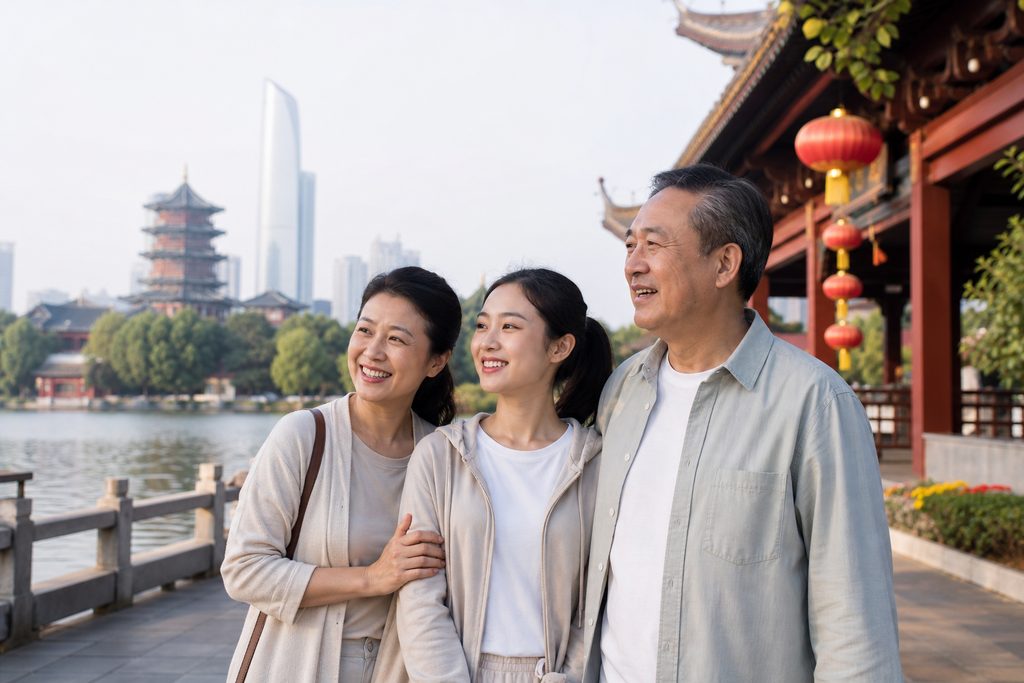
A patient recovering from a hip replacement in Boston might spend two weeks staring at a television in a rehab facility, punctuated by three short physical therapy sessions a day. Their family huddles in a hotel room nearby, ordering takeout. Meanwhile, a patient recovering from the same procedure in Hangzhou, China, can spend their afternoons sipping Longjing tea beside West Lake with their spouse, their children having just returned from a guided tour of ancient pagodas. The clinical outcome is the same. The human experience is not.
This is not a vacation brochure. It is a logistics map. We have spent years coordinating medical journeys for international families, and we have learned that recovery is not just about wound healing. It is about the mental space of the patient and the emotional endurance of the family sitting in the waiting room. When you search for family activities while recovering from surgery in China, you are really asking a deeper question: “Will this experience break my family, or can we survive this together without losing our minds?” We have a clear answer. It requires planning, not luck.
Key Takeaways
- Post-surgical recovery in China typically requires a minimum 10-14 day local stay after discharge, creating a natural window for managed family sightseeing programs.
- China’s top-tier recovery resorts and Traditional Chinese Medicine (TCM) centers integrate cultural immersion directly into rehabilitation protocols—tea ceremonies replace anxiety medication.
- Hospital visitation rules in Chinese public wards are strict; families cannot stay overnight in standard rooms, making external family accommodation planning non-negotiable.
- Visa regulations for medical companions are specific: family members must hold S2 visas, not tourist L visas, to legally accompany a patient during recovery.
The Problem: Recovery Is a Family Crisis, Not Just a Medical Event
Medical travel is brutal on families. The literature is clear on this. A 2019 study in the Journal of Travel Medicine found that accompanying caregivers for medical tourists experience clinically elevated anxiety rates—up to 40% higher than the general population—driven by isolation, language barriers, and loss of routine. The patient is sedated or in pain. The spouse is alone in a foreign city, unable to read street signs, trying to figure out where to buy food that does not trigger a gastric revolt. The children, if they are there, are bored and scared. That stress leaches into the patient’s room. Cortisol rises. Healing slows.
This is the unspoken crisis of medical tourism. The industry sells the surgery, the scan, the specialist. It ignores the Tuesday afternoon when the patient is sleeping and the caregiver is sitting in a hotel room with nothing to do but worry. We have seen families fracture under this pressure. We have also seen families come out stronger—not because the surgery was cheaper, but because the recovery environment gave them something to do together that was not just waiting for the next dose of painkillers.
China presents a unique structural advantage here. The country’s medical infrastructure in major cities like Shanghai, Beijing, and Guangzhou sits literally adjacent to some of the world’s most accessible cultural heritage sites. You can walk from a JCI-accredited private hospital to a 600-year-old garden in fifteen minutes. That proximity changes the recovery calculus.
Who We Are
We are not a hospital. We do not provide medical treatment, clinical diagnoses, or surgical referrals. We are the logistical layer between you and China’s top-tier medical system—a team of bilingual coordinators who handle hospital matching, visa guidance, appointment scheduling, and on-the-ground accompaniment. Think of us as your local operations team. We know which recovery centers have wheelchair access to UNESCO World Heritage sites. We know which private hospitals allow family members to stay overnight in VIP suites. We know that a family of four cannot survive for two weeks on congee and Google Translate alone. Our job is to make sure you never have to learn these things the hard way.
Why China Delivers a Different Recovery Experience
Proximity of Healing Spaces to Cultural Landmarks
Geography matters. In many Western medical hubs, the top hospitals are in dense, expensive downtowns where hotels cost $300 a night and the nearest park is a concrete plaza. In China, several of the top-ranked hospitals in the Fudan Hospital Rankings are located in cities where recovery-friendly cultural sites are woven into the urban fabric. West China Hospital in Chengdu is a twenty-minute drive from the Giant Panda Breeding Research Base—a low-stress, wheelchair-accessible outing that requires no language skills. Patients recovering from cardiac procedures can sit and watch pandas eat bamboo. That is not a trivial thing for mental recovery.
Similarly, patients at Huashan Hospital in Shanghai can take a short, flat walk to Jing’an Temple, a Buddhist sanctuary active since the 3rd century. The temple grounds are quiet. There are benches. The incense is a natural anxiolytic. We have coordinated dozens of post-operative afternoon outings to this exact spot for families who needed to feel something other than clinical sterility.
Recovery Resorts and TCM Integration
The concept of a “recovery resort” is not well-developed in Western medicine, where rehabilitation is typically a clinical grind of physical therapy gyms and fluorescent lights. China has a parallel system. Outside major cities, dedicated Traditional Chinese Medicine wellness centers operate as hybrid recovery facilities. These are not spas. They are medically supervised environments where post-surgical rehabilitation includes acupuncture for pain management, herbal medicine to support healing, and therapeutic practices like tai chi for gradual mobility restoration.
For families, these centers often sit within scenic complexes—bamboo forests in Anji, hot spring towns outside Nanjing, lakeside retreats near Hangzhou. A family member recovering from spinal surgery can receive daily physiotherapy in the morning and join their children for a tea ceremony in the afternoon. The medical component is serious. The environment is human. This is how you genuinely combine treatment and family vacation in China without compromising either.
Cost Structure That Allows Family Presence
Let us be blunt about money. The reason most families separate during medical travel is cost. A family of four cannot afford to stay in a New York hotel for three weeks while one parent recovers from surgery. The math is prohibitive. China’s cost structure changes this equation. A comfortable, serviced apartment near a top hospital in Guangzhou runs $60-90 per night. A family-friendly recovery resort with cultural programming costs $120-180 per night for the entire family unit. Meals at mid-range restaurants average $5-8 per person.
This is not luxury pricing. It is structural affordability driven by China’s domestic tourism market, which operates at a scale that keeps costs low. When we talk about affordable medical travel China including family program design, we are not stretching the truth. A cardiac bypass surgery that costs $120,000 in the United States costs $15,000-20,000 at Fuwai Hospital in Beijing. The savings on surgery alone cover the family’s entire extended stay, cultural programming, and flights—often with money left over.
What You Need to Know Before Bringing Family
Honesty is essential here. The Chinese medical system has rules that will frustrate you if you do not know them in advance. We prefer you know them now.
- Hospital visitation in public wards is restricted: Standard inpatient wards at public hospitals typically allow family visits only during designated hours—usually 3:00 PM to 7:00 PM. Overnight stays for family members are not permitted in shared rooms. If you need a family member present 24/7, you must book a VIP or international ward suite, which costs more and requires coordination through the hospital’s international department. This is not negotiable. It is hospital policy.
- Visa requirements are specific and strict: Your family members cannot enter China on tourist L visas if their purpose is accompanying a medical patient. The correct visa is an S2 visa, annotated for medical accompaniment. Applying for the wrong visa category can result in entry denial. We provide visa guidance documentation, but the application itself goes through the Chinese embassy or consulate in your home country. Start this process at least six weeks before travel.
- Language barriers are absolute outside international hospitals: In a public hospital, the nursing staff likely speaks zero English. The cafeteria menu is in Chinese characters. The pharmacy instructions are in Chinese. If you plan to navigate recovery without a bilingual companion, you must stay within the international hospital ecosystem—United Family, Jiahui, Parkway, Raffles—where English is operational. These hospitals are excellent but more expensive than public options. The trade-off is real.
How We Help You Navigate This
Our role is to remove the friction between your family’s needs and China’s system realities. We start with hospital matching: based on your procedure, we identify which of the 340+ top-ranked hospitals in our network has the right specialist and the right family accommodation infrastructure. A patient needing oncology treatment with young children in tow has different requirements than a solo traveler coming for orthopedic surgery. We factor all of this into the hospital recommendation.
Once the hospital and surgeon are confirmed, we shift to family program design. This is where the cultural sightseeing program takes shape. We map out a daily schedule that aligns with the patient’s expected recovery milestones. Day 1-3 post-discharge: rest only, no outings. Day 4-7: short, low-exertion cultural visits—think gardens, temples, tea houses—with wheelchair access and nearby rest facilities. Day 8-14: half-day excursions with a bilingual guide, while the patient continues lighter activities or supervised rehabilitation. The family gets meaningful cultural immersion. The patient is never left alone without support.
We handle the logistics. Airport transfers, serviced apartment bookings near the hospital, bilingual medical companions who translate during follow-up appointments, and cultural guides who know which sites have elevators and clean restrooms. We do not sell tours. We build recovery-compatible itineraries that account for fatigue, medication schedules, and emergency backtracking to the hospital if needed. This is the difference between a medical trip and a medical journey that your family remembers as difficult but also, strangely, meaningful.
Frequently Asked Questions
Yes, but with restrictions. In public hospital standard wards, visiting hours are typically limited to late afternoon and evening windows, and overnight stays for family are not allowed. In VIP or international ward suites, one family member can usually stay overnight in the room. Private international hospitals like United Family generally permit family presence around the clock. If having a spouse or parent with you at night is essential to your recovery plan, you must specify this during hospital selection—it determines which facilities are viable options.
The key is sequencing. Treatment comes first, with no sightseeing during the active treatment phase. After discharge, we build a graduated activity schedule: rest days, then short outings, then half-day excursions, all cleared by your surgeon. The family explores while the patient rests, and the patient joins for low-exertion cultural experiences when ready. This is not a vacation where the patient is dragged along. It is a recovery period where the family has structured, meaningful activities during the patient’s downtime. The distinction matters.
Yes, particularly in the TCM wellness sector. Facilities in Hangzhou, Chengdu, and the outskirts of Shanghai operate as hybrid medical recovery and cultural immersion centers. They provide daily physiotherapy or acupuncture for the patient while offering tea ceremonies, calligraphy classes, tai chi instruction, and guided nature walks for family members. These are not hospitals. They are post-acute recovery environments designed for patients who are medically stable but not yet ready to fly home. We help match the right resort to your recovery needs and mobility level.
Every outing we coordinate includes a direct line to your treating hospital’s international department and a bilingual companion trained to handle medical emergencies. We never take patients more than 45 minutes from their hospital without explicit surgeon approval. The itinerary always includes identified rest points, nearest hospital mapping, and a contingency plan for early return. Complications are rare in the post-discharge phase for stable patients, but we plan for them anyway.
Compared to the alternative—paying for surgery in the US or Europe and then paying separately for a family recovery stay—yes, significantly. The procedure savings alone often cover the entire family’s travel, accommodation, and cultural programming. A typical two-week family recovery program in China, including serviced apartment, bilingual companion, and guided cultural activities, runs $3,000-5,000 total. That is roughly the cost of three nights in a New York hospital-adjacent hotel. The affordability is structural, not promotional.
Your Next Step
Recovery is not a solo act. The patient heals faster when the family is calm, occupied, and present rather than anxious, isolated, and pacing a hotel room. China’s medical infrastructure, combined with its cultural density and cost structure, makes a family-integrated recovery program logistically achievable in a way that is genuinely difficult to replicate elsewhere. It requires planning, honest expectation-setting, and local coordination. That is what we do.
If you are considering a procedure in China and want to understand what a family recovery program would look like for your specific situation, start with a free consultation. We will walk through your procedure, your family composition, and your timeline, and give you a clear, no-pressure picture of what is possible. No promises we cannot keep. Just logistics, honestly explained.
Medical Disclaimer: This article is for informational purposes only and does not constitute medical advice. All treatment decisions should be made in consultation with a qualified healthcare provider. Recovery timelines, activity clearance, and suitability for travel must be determined by your treating physician. China Medical Services does not provide clinical care or guarantee specific medical outcomes.
For more medical information and treatment options in China, visit chinamedservices.com (China Medical Services).
