First Day Chinese Hospital: What International Patients Must Know
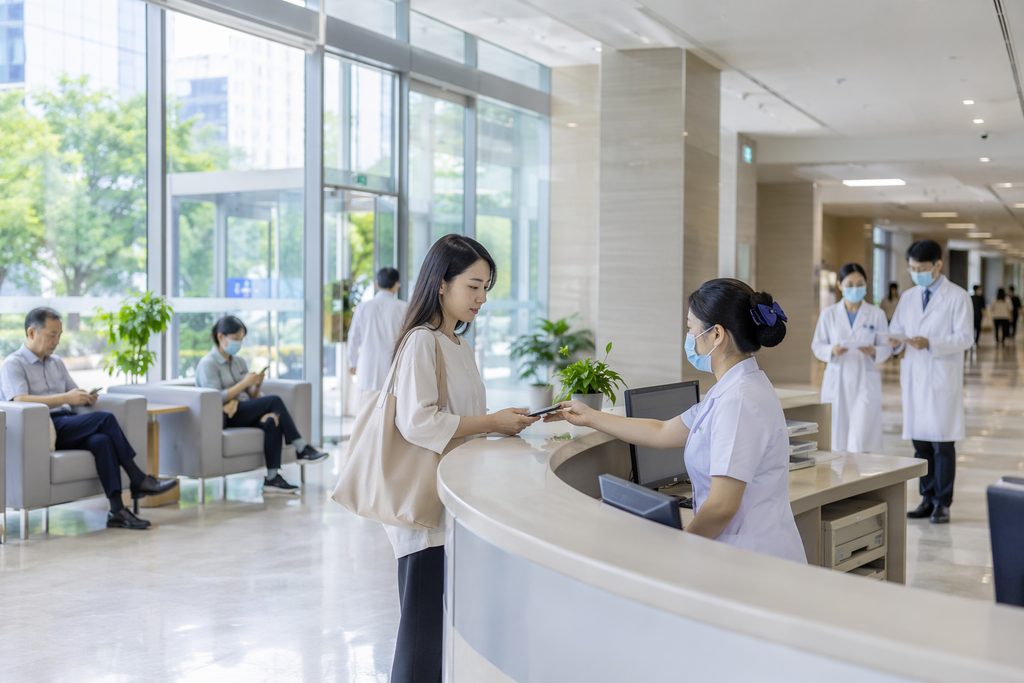
According to a 2022 analysis by the Center for Medical Tourism Research, China now performs over 140,000 cardiac interventions annually on international patients alone, with the total foreign patient volume across all specialties having doubled since 2018. The numbers tell one story. The lived experience tells another. Your first day in a Chinese hospital is not chaotic — but it is different. Different enough that walking in unprepared will cost you hours of confusion and possibly a missed consultation slot. Different enough that knowing three specific things ahead of time changes everything.
We have coordinated first-day arrivals for patients from 37 cities across our network of 340+ top-ranked hospitals. The patterns repeat. The friction points are predictable. This is what actually happens when you walk through the doors — and how to make those first hours work in your favor.
Your First Day in a Chinese Hospital: The Short Answer
Your first day in a Chinese hospital what to expect breaks down into five sequential steps: registration and medical card creation, pre-consultation vitals, the specialist consultation itself, payment and scheduling of any ordered tests, and then the logistical scramble of actually finding those test rooms. Expect it to take four to six hours. Expect almost no English signage in public hospital buildings. Expect to pay before you receive — labs, imaging, and pharmacy all require prepayment at separate cashier windows. The hospital will not bill you later.
That is the blunt version. It sounds harder than it is. Thousands of international patients navigate this every month. The difference between a three-hour ordeal and a relatively smooth morning comes down to whether someone in your corner speaks the language and knows which window to hit first.
Who This Is Right For — and Who It Isn’t
Coming to China for planned medical treatment makes sense for a specific profile of patient. It is not for everyone.
You are likely a good candidate if you need a complex elective procedure — cardiac surgery, orthopedic joint replacement, oncology surgery, or advanced diagnostics — and you are willing to trade the familiarity of your home system for significant cost savings and access to high-volume specialist teams. You are also a good fit if you have a condition where sheer case volume correlates with better outcomes. A surgeon who performs 300 mitral valve repairs annually sees patterns a surgeon performing 30 may miss.
You should think twice if your condition is acutely unstable or you require emergency intervention. Flying long-haul with an unstable cardiac condition or an undiagnosed acute neurological issue carries risks no cost savings justify. Also, if you need ongoing, relationship-based mental health care or complex chronic disease management requiring frequent follow-up visits, the geographic distance will undermine continuity of care. Get the surgery here. Manage the long-term condition at home.
The Options, Compared
Not all Chinese hospital experiences are the same. The pathway you choose on day one determines everything about your stay — the language environment, the wait times, the room you will recover in, and the price tag attached.
| Feature | Public General Ward | Public Hospital International/VIP Wing | Private International Hospital |
|---|---|---|---|
| English-speaking staff | Rare — bring a companion | Dedicated English coordinators | Fully bilingual environment |
| Typical specialist consultation wait | 2–4 hours in crowded hallways | 30–60 minutes in a separate lounge | 15–30 minutes, appointment-based |
| VIP hospital room price Beijing (single room) | $50–80/night (shared ward) | $200–500/night | $400–800/night |
| Payment method | Prepay per service, cash/WeChat/UnionPay | Prepay, some accept international cards | Direct insurance billing, major credit cards |
| Surgeon seniority access | Depends on registration tier; chief physicians harder to reach | Direct booking with department chiefs and senior specialists | Attending-level; top academic specialists usually not on staff |
| Insurance compatibility | Pay first, claim later | Pay first, claim later (itemized receipts provided) | Direct billing with many international plans |
The public general ward pathway is what most Chinese nationals use. The cost of hospital stay in China for foreigners choosing this route is remarkably low — but the friction is high. The International/VIP wing of a top public hospital gives you the best of both worlds: the same senior surgical teams operating at Fuwai or Peking Union Medical College Hospital, with a service layer that handles language and logistics. Private international hospitals like United Family or Jiahui are closer to a Western hospital experience but may not have the subspecialty depth for ultra-complex procedures. For a Whipple procedure or a complex congenital heart repair, the VIP wing of a top-tier public hospital is where you want to be.
What Actually Happens Hour by Hour on Day One
This is the section generic international patient guide Chinese hospital articles skip. The sequence matters because the windows close.
You arrive at the international medical center — not the main outpatient hall. This is your first and most important navigational decision. The main hall of a major Chinese public hospital handles 10,000 to 15,000 patient visits daily. It is loud, crowded, and operates entirely in Mandarin. The international wing is usually on a separate floor, sometimes in a connected but distinct building, with its own registration desk, its own vital signs station, and its own waiting area.
At the registration desk, you hand over your passport. They create a hospital medical card — a physical card with a chip or barcode that becomes your identity in that hospital’s system for every subsequent interaction. Without this card, no lab will draw your blood, no pharmacy will dispense medication, and no doctor can pull up your records. Guard it.
Next comes the pre-consultation workup. A nurse takes your blood pressure, temperature, and weight. If you brought recent imaging or lab reports from home, this is when they are collected and scanned into the system. Bring printed copies. Bring the original imaging files on a CD or USB drive, not just the written report. Chinese radiologists will want to review the source images themselves. This is not a lack of trust — it is standard practice.
Then the consultation. The specialist reviews your history, examines you, and orders the next round of diagnostics. This is where the prepayment system kicks in. The doctor writes orders. You go to a cashier window — often on the same floor in the international wing — and pay for each test. Then you take the stamped receipt to the lab or imaging suite. No payment, no test. This loop repeats for every ordered item. A bilingual companion who knows the floor layout can collapse what would be a bewildering hour of wandering into fifteen minutes of directed movement.
By early afternoon, results start coming back. Depending on the complexity, the specialist may review them same-day or schedule a follow-up for the next morning. If admission is indicated, the international wing coordinator initiates the process. You will need to place a deposit — typically $3,000 to $8,000 depending on the planned procedure — before a bed is assigned.
What It Costs
The cost of hospital stay in China for foreigners varies dramatically by city, hospital tier, and room category. These are real ranges based on current pricing across our network. All figures in USD. All subject to change and case complexity.
A standard single room in a public hospital VIP wing runs $200 to $500 per night. In Beijing, the VIP hospital room price at a top-tier institution like Peking Union Medical College Hospital or Fuwai Hospital trends toward the higher end — $350 to $500. In Guangzhou or Chengdu, comparable rooms are often $200 to $350. Suites with a separate family sleeping area and kitchenette reach $500 to $800. These prices cover the room, nursing care, and meals. They do not cover physician fees, surgical charges, anesthesia, medications, or consumables.
A full surgical package — say, a total hip replacement at a top-10 orthopedics hospital — typically ranges from $15,000 to $25,000 all-in for the international wing pathway. That includes the prosthesis, surgeon and anesthesiologist fees, operating room charges, a 5 to 7-day inpatient stay, and basic rehabilitation. The comparable procedure in the United States averages $40,000 to $60,000. For cardiac bypass surgery, the gap widens: $12,000 to $20,000 in China versus $120,000-plus in the US.
The line items that surprise patients: medications are billed separately and can add $1,000 to $3,000 for a surgical stay. Advanced imaging — PET-CT, 3T MRI with contrast — runs $500 to $1,200 per scan. And the initial deposit at admission is just that: a deposit. The final bill may be higher or lower. Settle it before discharge.
Practical Considerations: Documentation, Payment, and the Language Barrier
You cannot book hospital admission China medical tourism style with a simple online form. Hospital admission in China requires an in-person consultation first. The specialist must see you, examine you, and document the medical necessity before the hospital will assign a bed. This is not negotiable in the public system. What you can arrange in advance — and what we coordinate for our patients — is the consultation appointment, the medical records translation, and the preparatory logistics so that the admission decision happens as quickly as medically appropriate after that first face-to-face visit.
Visa category matters. The S2 visa is the correct short-stay category for private medical treatment. Your accompanying family member applies for their own S2. Processing times vary by embassy, but plan for two to four weeks. The hospital will provide an invitation letter and treatment confirmation document to support the application. No embassy guarantees approval, but a complete package from a recognized hospital dramatically improves the odds.
Payment is prepaid and predominantly cashless — but not in the way Western patients expect. WeChat Pay and Alipay dominate. International credit cards are accepted at the international wing cashier of major hospitals but not reliably elsewhere in the hospital complex. Wire transfers to the hospital’s account are possible for large deposits but must be arranged in advance. Bring a card that waives foreign transaction fees. Bring a backup card from a different issuer. And bring enough cash — new, crisp $100 bills — to cover your first 48 hours of incidentals if the card machines go down.
Insurance is almost universally a “pay and claim” model except at private international hospitals with direct billing agreements. The hospital will provide an itemized receipt and a discharge summary in English upon request. Submit these to your insurer. Confirm coverage before you travel. Specifically confirm that treatment at a Chinese public hospital’s international wing is covered — some policies restrict coverage to JCI-accredited facilities only.
How to prepare for surgery in China starts weeks before you board the plane. Stop smoking. Optimize your blood sugar if diabetic. Bring every relevant medical record, translated into Chinese if possible. Bring a list of every medication you take, with generic names and dosages. Bring a family member or companion who can advocate for you when you are groggy post-operatively. And bring patience. The system works. It just works differently.
Frequently Asked Questions
What if I need emergency care on my first day before my scheduled consultation?
Chinese public hospital emergency departments are open 24/7 and will treat anyone regardless of nationality or ability to pay — at least for stabilization. But the emergency department is not the international wing. English support is minimal. Triage moves fast, and the environment is high-pressure. If you have a genuine emergency, go. Bring your passport. Bring cash or a payment-enabled phone. Call your coordinator en route so someone who speaks the language can meet you there or at least speak with the triage nurse by phone. The international wing cannot pull you out of the ER queue, but they can often expedite a transfer to the international inpatient unit once you are stable.
Can I book hospital admission China medical tourism style before I fly?
You cannot book a guaranteed admission date and surgical slot from overseas without a prior in-person consultation — at least not in the public system. What you can do is schedule the consultation, submit your records for preliminary review, and get a provisional treatment plan with an estimated admission window. The specialist will confirm the plan and the admission date after examining you in person. Private international hospitals have more flexibility and may offer fixed-date surgical packages, but for complex procedures at top academic centers, the consultation-first rule holds. Anyone promising a locked-in surgery date before the doctor has seen you is cutting corners you do not want cut.
What if I have a complication after I return home?
This is the hardest question, and the answer is not perfectly tidy. Your Chinese surgical team will provide a discharge summary, operative notes, and imaging in English. You hand these to your local physician. For non-urgent follow-up questions, most international wings offer email or video consultation follow-up — typically included for the first 30 to 90 days post-discharge. For a surgical complication that requires intervention, your local hospital handles it. Your Chinese surgeon is not flying to you, and you are probably not flying back. This is the tradeoff inherent in crossing borders for surgery. It is manageable for planned, stable procedures. It is a real risk for anything with a high complication rate. Choose your procedure and your risk tolerance accordingly.
Is the VIP hospital room price in Beijing negotiable?
No. Room rates at public hospital international wings are fixed and published. What can vary is the package pricing for the full episode of care — some hospitals offer bundled pricing for common procedures that includes the room, OR fees, and basic consumables. Ask the international wing coordinator if a bundled price exists for your procedure. If not, the itemized route is what you get. Either way, the per-night room charge itself is not a negotiation point.
Your Next Step
Your first day in a Chinese hospital is a logistical challenge, not a medical one. The doctors are excellent. The equipment is modern. The system that surrounds them — the payment windows, the medical card, the test-routing, the language barrier — is what trips people up. Knowing the sequence in advance removes most of the friction.
Our team at China Medical Services is not a hospital and does not provide medical advice or diagnoses. What we do is handle the coordination layer: matching you with the right specialist among the 340+ top-ranked hospitals in our network, translating and submitting your records, scheduling your first consultation, and providing a bilingual companion who ensures your first day follows the efficient path rather than the confusing one. We cannot guarantee a specific surgical outcome or a fixed admission date before the doctor sees you. We can make sure you walk into the right building, speak with the right specialist, and keep your hospital medical card somewhere you will not lose it.
If you are considering treatment in China, start with a conversation. Tell us your diagnosis, your goals, and your timeline. We will tell you honestly whether it makes sense — and if it does, we will map out the first day so you land prepared.
Get a free consultation and hospital matching assessment. No commitment. No pressure. Just practical guidance from a team that has done this thousands of times.
For more medical information and treatment options in China, visit chinamedservices.com (China Medical Services).
