Is It Safe to Fly After Heart Surgery? A Realistic Recovery Timeline
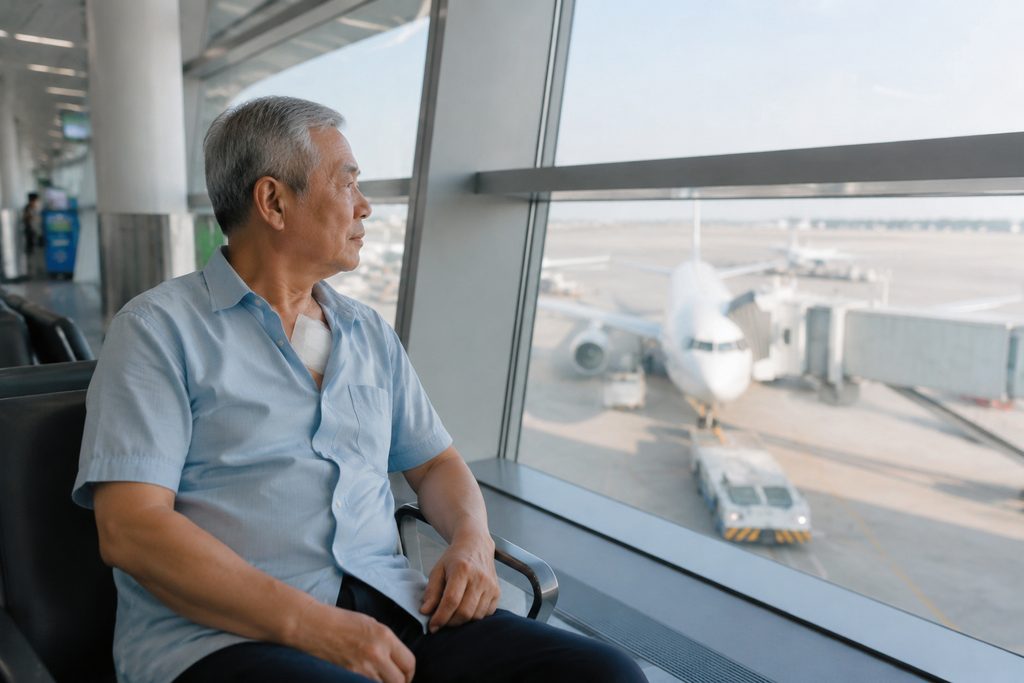
Flying after heart surgery is not a yes-or-no question. The answer depends on which procedure you had, how your sternum is healing, your oxygen saturation at cabin pressure, and what your cardiologist sees on your discharge summary. Most cardiac surgical teams set a baseline of 10 to 14 days before any commercial flight for uncomplicated cases. That number stretches to 4 to 6 weeks when a sternotomy was involved. Heart surgery recovery time before flying is a moving target, and anyone who gives you a single universal number is guessing.
We work with international patients who plan cardiac procedures in China and then need to get home safely. The flight question comes up in nearly every consultation. Here is what the evidence says, what the major cardiology societies recommend, and how to think about your own risk window.
How This Actually Works, Step by Step
You do not book a ticket the day you feel okay. You work backward from objective medical criteria. Here is the sequence our team walks patients through when they ask about flying home after cardiac surgery at a hospital in Beijing or Shanghai.
First, your surgical team reviews your discharge records. They check three things: sternal stability on imaging, hemoglobin level, and any arrhythmia on your last 48-hour monitor. If all three are stable, they may clear you for short-haul flights. If any one is borderline, the conversation changes.
Second, you complete a walk test. Most Chinese cardiac centers use a 6-minute walk test before discharge. You need to walk at least 300 meters without desaturation below 90%. That is the minimum for cabin-level activity tolerance.
Third, we coordinate a pre-flight evaluation with the same cardiology department, not a general practitioner at an airport clinic. The cardiologist writes a fit-to-fly letter. Airlines serving routes between China and Europe, the Middle East, and North America almost always request this letter if your surgery was within 30 days.
Fourth, you arrange supplemental oxygen if your resting SpO₂ is under 92% at sea level. Cabin pressure at cruising altitude simulates 6,000 to 8,000 feet. Your oxygen partial pressure drops by roughly 25%. A patient who is fine at sea level can become hypoxic at 35,000 feet. This is the most underestimated risk in post-cardiac-surgery air travel.
Then you fly. And when you land, you do not resume normal activity. You schedule a follow-up with your home cardiologist within 7 days.
Is It Safe to Fly After Cardiac Bypass Surgery? What the Guidelines Actually Say
Let’s address the specific question: is it safe to fly after cardiac bypass surgery? The British Cardiovascular Society and the Aerospace Medical Association both advise waiting at least 10 days after uncomplicated CABG before flying. That assumes no sternal wound infection, no significant pleural effusion, and no new atrial fibrillation. The American College of Cardiology is less prescriptive but points to the same physiological concerns: gas expansion in the chest, reduced cabin oxygen, and immobility-related thrombosis risk.
But “safe” is a probability, not a guarantee. The main danger in the first two weeks is not the heart itself. It is the sternum. A median sternotomy takes 6 to 8 weeks to reach 80% of its original strength. During that window, a sudden cough, a heavy bag lifted from an overhead bin, or even a rough bout of turbulence can stress the wires holding your chest together. That is why many surgeons extend the no-fly window to 4 weeks for CABG patients, even when the heart rhythm and ejection fraction look fine.
There is another issue nobody talks about. Post-pericardiotomy syndrome. It affects roughly 10% to 40% of cardiac surgery patients, usually appearing 1 to 6 weeks after the operation. Fever, chest pain, pleural effusion. If it flares at 30,000 feet, you are hours from a cardiac center. That is a real argument for staying on the ground longer than the minimum.
A Realistic Timeline
Here is what a typical international patient timeline looks like after heart surgery at a top Chinese cardiac center, assuming no major complications. Ranges reflect differences between minimally invasive valve repair and full sternotomy CABG.
| Stage | Typical Timing | What Happens | Flight-Relevant Status |
|---|---|---|---|
| ICU stay | Day 1–3 | Extubation, hemodynamic monitoring, first mobilization | Not fit to fly under any circumstances |
| Ward recovery | Day 4–10 | Walk test, drain removal, medication stabilization | Fit-to-fly assessment begins; most patients not yet cleared |
| Discharge | Day 7–14 | Discharge summary, wound check, anticoagulation plan | Earliest possible short-haul clearance for uncomplicated minimally invasive cases |
| Sternal healing (CABG/valve via sternotomy) | Week 3–6 | Bone consolidation visible on chest X-ray | Long-haul clearance typically granted here |
| Post-pericardiotomy risk window | Week 1–6 | Monitoring for effusion, fever, chest pain | Longer ground time reduces risk of in-flight emergency |
| Home follow-up | Within 7 days of landing | Echo, ECG, medication review with home cardiologist | Return to normal activity only after this step |
Forget the waiting steps and the timeline collapses. Document translation for your home cardiologist takes 3 to 5 business days. A fit-to-fly letter from a Chinese hospital’s international department takes 2 to 3 days after the assessment. If you need a visa extension because your S2 stay is expiring, that is another 5 to 7 working days at the local exit-entry administration. None of these are emergencies, but all of them consume calendar time.
What Can Go Wrong — and What Happens Then
Atrial fibrillation appears in about 20% to 30% of cardiac surgery patients within the first week. If it starts on day 9 and you fly on day 10, you are taking an unmanaged arrhythmia into a hypobaric environment. The recourse is simple: you do not fly. Your surgical team starts rate control or rhythm control medication. You stay in China another 5 to 7 days until the rhythm is stable. This is not a failure of planning. It is normal postoperative biology.
Pleural effusion is another common complication. Small effusions resolve on their own. Moderate ones need drainage. If a chest X-ray before your planned flight shows a growing effusion, the flight is postponed. The fix is a thoracentesis, usually same-day or next-day at a Chinese cardiac center. You lose a week. You do not lose your life at altitude.
Sternal wound infection is the complication everyone fears. Incidence is roughly 1% to 3% in high-volume centers. If it happens, your no-fly window extends to 6 to 8 weeks minimum. Treatment involves antibiotics, sometimes vacuum-assisted closure, and close wound care. This is exactly the scenario where having a bilingual coordinator on the ground matters. You are not navigating a Chinese hospital’s wound care clinic alone while trying to rebook flights and extend a visa.
And then there is the ordinary failure mode: you feel fine, you book the flight, and you are not fine. Cabin pressure drops. Your chest feels tight. Your oxygen saturation dips. The crew asks if you need medical assistance. The answer is always yes. Most airlines have basic oxygen and a medical kit. They do not have a cardiologist. The plane diverts if you deteriorate. That diversion lands you in a city without your records, without your surgical team, and without a plan. This is why the fit-to-fly letter is not a formality. It is the document that keeps you off a plane when your body is not ready.
Heart Surgery Cost in China for Foreigners: Why the Flight Question Comes Up Early
The heart surgery cost in China for foreigners is often the reason patients travel in the first place. A CABG at a top Chinese public hospital runs roughly $12,000 to $20,000. The same procedure in the United States averages over $120,000. Valve replacement follows a similar ratio. So patients budget for the surgery, the hospital stay, and then they want to get home. The flight is not an afterthought. It is part of the total cost equation.
But here is what changes when you plan the recovery window properly. An extra 10 days in a serviced apartment near the hospital costs far less than an emergency diversion or a re-admission at home. A bilingual medical companion at $300 per day for follow-up visits is cheaper than a medical evacuation. The economics of flying too early are terrible. The economics of waiting are boring and safe.
Our team has seen patients try to compress the timeline. They book a flight 8 days after a sternotomy because the ticket was cheap. Then the discharge summary is not translated. Then the fit-to-fly appointment is on day 10. Then the flight is rebooked at triple the fare. Waiting costs less than rushing, every single time.
Best Cardiac Hospitals in Shanghai for International Patients: What to Look For
If you are still choosing where to have surgery, the best cardiac hospitals in Shanghai for international patients share a few traits. High annual surgical volume. A dedicated international department. English-speaking cardiology staff. And a discharge process that explicitly addresses air travel.
Zhongshan Hospital affiliated with Fudan University runs one of the highest-volume cardiac surgery programs in China. Its international medical center handles foreign patients routinely, including the fit-to-fly documentation that airlines require. Ruijin Hospital, also in Shanghai, has a strong cardiology and cardiac surgery department with JCI-accredited processes in its international wing. Both are in our top-ranked hospital database, grouped by city and specialty.
Volume matters for outcomes. A surgical team doing 1,000 CABGs a year has seen every complication. A team doing 50 has not. That is not marketing. That is the central finding of every volume-outcome study in cardiac surgery for the last two decades. When you ask about heart surgery recovery time before flying, a high-volume team gives you a number based on thousands of cases, not a textbook range.
Practical Considerations: Records, Visas, Payment, and Follow-Up at Home
Let’s get concrete about what you need before you can even think about a departure date.
Your discharge summary must be translated into English. Chinese public hospitals issue summaries in Chinese. The international department can provide an English version, but it takes time. Request it the day you are admitted for surgery, not the day before discharge.
Your S2 visa for medical treatment typically allows a stay of up to 180 days. That is enough for most cardiac surgery recovery timelines. If complications extend your stay beyond the visa validity, you apply for an extension at the local exit-entry administration bureau. This requires a letter from the treating hospital confirming ongoing medical necessity. We handle this for our patients, but you should know it exists as a step.
Payment is another practical matter. Chinese public hospitals require prepayment. International insurance usually reimburses after the fact. That means you need liquidity. The hospital’s international department will give you a cost estimate before surgery. Add 15% to 20% for the unexpected: extra imaging, a longer ICU stay, a medication adjustment. If you cannot absorb that buffer, you are not ready to travel for surgery.
Finally, follow-up at home. Your home cardiologist needs the English discharge summary, the surgical notes, the medication list, and ideally the pre-discharge echocardiogram images on a CD or USB. Get all of this before you leave China. Requesting records by email from another country, in another time zone, in another language, is a slow and frustrating process. Our bilingual medical companion service exists precisely because these logistics eat days and cause real stress.
Frequently Asked Questions
Most cardiac surgeons clear patients for international flights 4 to 6 weeks after a sternotomy, and 10 to 14 days after uncomplicated minimally invasive procedures. The decision depends on sternal healing, oxygen saturation, rhythm stability, and your surgical team’s assessment.
Hypoxia at cabin altitude. Cabin pressure at cruising altitude reduces your blood oxygen partial pressure by about 25%. If your resting saturation is borderline at sea level, you can become significantly hypoxic in flight. Sternal instability and postoperative arrhythmia are the other major concerns.
Most airlines require a fit-to-fly letter if you are flying within 30 days of cardiac surgery. The letter must come from your treating physician or cardiologist, state that you are stable for air travel, and specify any required accommodations such as supplemental oxygen.
Some international departments at major Chinese hospitals offer bundled packages that include surgery, hospital stay, and nearby recovery accommodation. However, you should speak with a coordinator before committing to any package. The details vary by hospital, and what is included in the quoted price is not always obvious from a brochure.
Yes. A JCI-accredited international hospital or an international wing of a public hospital in Beijing typically charges 1.5 to 2 times the standard public hospital rate. You are paying for English-speaking staff, direct insurance billing, and a more familiar care environment. The clinical quality at top public cardiac centers is excellent, but the logistics require more support if you do not speak Chinese.
Your Next Step
The safest answer to “when can I fly” is the one your surgical team gives you after looking at your chest X-ray, your walk test, and your rhythm strip. Everything else is a guideline. Our job at China Medical Services is to make sure you get that answer in English, with your records translated, your visa in order, and a realistic recovery timeline in place. We do not perform surgery, and we do not give medical clearance. We coordinate the logistics so you can focus on healing. If you are considering cardiac surgery in China and want to understand the full timeline from admission to flying home, start with a free consultation. We will help you map out the realistic path, including the waiting steps most people forget.
Recovery is not a race to the airport. It is a process with a sequence. Respect the sequence, and the flight takes care of itself.
For more medical information and treatment options in China, visit chinamedservices.com (China Medical Services).
