Follow-Up After Surgery in China: Do You Really Need to Return?
Key Takeaways
- Most international patients do not need to return to China for routine post-operative checks — coordinated remote care and local follow-up are the norm.
- Your home-country doctor can manage follow-up if they receive a properly translated surgical summary and imaging files — we facilitate this transfer in over 90% of cases.
- Some complex procedures — like custom orthopedic implant monitoring or staged reconstructive surgeries — genuinely require an in-person return visit for imaging that only the operating hospital can interpret.
- The decision hinges on three things: procedure type, your local doctor’s willingness to co-manage, and the quality of your discharge documentation.
The Reality Most Patients Don’t Consider Until the Ticket Is Booked
You flew home. The incision healed well. Pain is manageable. Then the discharge instructions land on your kitchen table — and you see the line: “Follow-up recommended in 3 months.” Your stomach drops. A return flight to Beijing costs $1,200. You would need time off work again. The hotel. The logistics. And you ask yourself the question that roughly 40% of medical travelers confront: do I actually have to go back?
The short answer is no — most of the time. But “most of the time” is not a medical plan. It is a gamble. What you need is a framework for deciding, built on how Chinese surgical teams actually handle international patients and what your local doctor can realistically take over. We coordinate this handoff for patients from 37 cities across our network, and the pattern is consistent: the return-trip question is rarely about the surgery itself. It is about information transfer.
Why the China Surgery Follow Up Visit Necessary Question Even Comes Up
Chinese hospitals discharge patients with a follow-up schedule that assumes you live in Wuhan or Hangzhou — a high-speed train ride away. That is the default template. It is not a clinical demand tailored to a patient flying back to London or Dubai. The surgeon wants to see the scar, review an X-ray, and confirm the joint is tracking properly. Those are legitimate medical needs. But they do not automatically require your physical presence in the same room.
What changes the equation is the complexity of the procedure and the uniqueness of the implant or technique used. A standard laparoscopic cholecystectomy? Your local general surgeon can handle the follow-up blindfolded. A patient-specific 3D-printed titanium ankle fusion using a technique pioneered at a Shanghai orthopedic center? That local surgeon has never seen the implant before. They will not know what “normal” looks like on the post-op CT. In that scenario, a China surgery follow up visit necessary decision tilts toward yes — or at least toward a structured remote consultation with the original surgical team.
Three Pathways: Remote, Local, or Return
You have three options. They are not equally good for every case. But understanding each one clearly prevents you from booking an unnecessary flight — or skipping a critical check because you assumed it was optional.
Pathway 1: Remote Follow-Up With the Chinese Surgical Team
This works for roughly 70% of the international patients we see. You get your post-op imaging done at a local radiology center — X-ray, CT, MRI, whatever the surgeon ordered. You send us the DICOM files. We translate any accompanying reports, forward everything to the original surgical team, and schedule a video consultation. The surgeon reviews the images on their own PACS system, sees the bone union or soft tissue healing, and tells you whether the recovery is on track.
The cost for this kind of structured remote follow-up typically runs from $100 to $300 for a standard video consultation, or $500 to $800 if you need a top specialist from a hospital like Fuwai or Peking Union Medical College Hospital to review complex imaging. And here is the detail that matters: any consultation fee is credited in full toward on-the-ground coordination if you later decide you do need to return. That means the remote check is not wasted money — it either solves your problem or becomes a down payment on the next step.
Remote follow-up fails when the imaging is inadequate. A local radiology center might use a different slice thickness on the CT. The positioning might be slightly off. The surgeon squints at the screen and says, “I cannot confirm the screw placement from these images.” That is rare but real. It is also why we always confirm the imaging protocol with the Chinese team before you go to the local center.
Pathway 2: Your Local Doctor Takes Over
This is the ideal scenario — and the one we actively design for. Before you leave China, we request a detailed discharge summary in English, a surgical report that names every implant by manufacturer and model number, and a clear post-operative protocol: weight-bearing restrictions, medication tapering schedules, warning signs that warrant a call. We package these into a handoff document your local orthopedist or cardiologist can actually use.
The question “can my local doctor do follow up after surgery in China” has a straightforward answer: yes, if they receive a proper handoff. The barrier is rarely clinical competence. It is information asymmetry. A surgeon in Manchester cannot manage a patient whose operative note is a scanned PDF in Mandarin with handwritten annotations. That is not a medical problem. It is a documentation problem. Solve the documentation, and you solve the follow-up.
There is one caveat. Some local doctors refuse to co-manage patients who had surgery abroad. They cite liability concerns. They do not want to own a complication from a procedure they did not perform. This is more common in litigious healthcare systems — the US, the UK, Australia. If your local doctor balks, you need a plan B: either find a more cooperative provider or shift to remote follow-up with the Chinese team.
Pathway 3: The Actual Return Trip
Sometimes you need to go back. The clearest indicators:
- Staged procedures. Certain spine surgeries, limb-lengthening protocols, and complex reconstructions are designed as two or three-stage interventions. The second stage was always part of the plan. You knew this before you left.
- Custom implants requiring specialized imaging analysis. A patient-specific 3D-printed pelvic implant needs the original engineering team to assess integration. Local radiologists have no reference baseline.
- Complications that exceed local comfort. An infection involving a novel antibiotic-eluting bone cement. A mechanical symptom the local surgeon cannot diagnose. When the local team says “you need to see the original surgeon,” listen.
- Protocol-driven device checks. Some cardiac devices, neurostimulators, or cochlear implants require proprietary programming equipment only available at the implanting center.
If you do need to return, the logistics are less daunting than the initial trip. You are not doing pre-op testing or spending days in the hospital. You fly in, get the imaging, meet the surgeon, and fly out. We have coordinated return follow-ups that lasted 36 hours from landing to departure. The China medical procedure aftercare package cost for a coordinated return visit — including airport transfer, one night accommodation near the hospital, bilingual escort, and appointment coordination — starts from approximately $1,500, not including flights. That is a fraction of what you would pay for a comparable surgical complication managed in a US hospital.
What Determines Whether Your Local Doctor Can Actually Handle This
The most common question we hear is some variation of “can my local doctor do follow up after surgery in China” — and the answer depends on three things nobody tells you during the discharge briefing.
First, the implant. If your Chinese surgeon used a locally manufactured plate or prosthesis that is not FDA-approved or CE-marked, your local orthopedist may refuse to touch it. Not because it is inferior — Chinese orthopedic implants from companies like Wego or AK Medical are used in hundreds of thousands of cases annually with outcomes comparable to Western brands — but because your local surgeon’s malpractice carrier may not cover complications involving devices they cannot look up in their own system. Ask for the implant’s IFU (Instructions for Use) in English before you leave. Most Chinese manufacturers have English-language documentation. Few hospitals think to provide it unless you ask.
Second, the surgical technique. Chinese surgeons at high-volume centers often use approaches that differ from Western norms. A minimally invasive cardiac procedure done through a 3-centimeter incision at Fuwai Hospital — where they perform 14,000 cardiac surgeries annually — may look unfamiliar to a US cardiologist who trained on a different approach. The technique is not wrong. It is just different. Your local doctor needs the operative note to understand what was done and why.
Third, the relationship. The smoothest handoffs happen when the Chinese surgeon and the local doctor have at least exchanged emails. We facilitate this when possible — a brief video introduction, a shared understanding of the case. It transforms the local doctor from a reluctant bystander into a co-manager with a direct line to the operating team.
Remote Follow-Up Care: What Medical Tourism China Actually Delivers Now
The phrase “medical tourism China remote follow up care” can sound like a contradiction. Medical tourism implies travel. Remote care implies staying home. But the two have converged rapidly since 2020. Chinese hospitals — especially their international departments — now offer structured telehealth follow-up pathways that did not exist a decade ago.
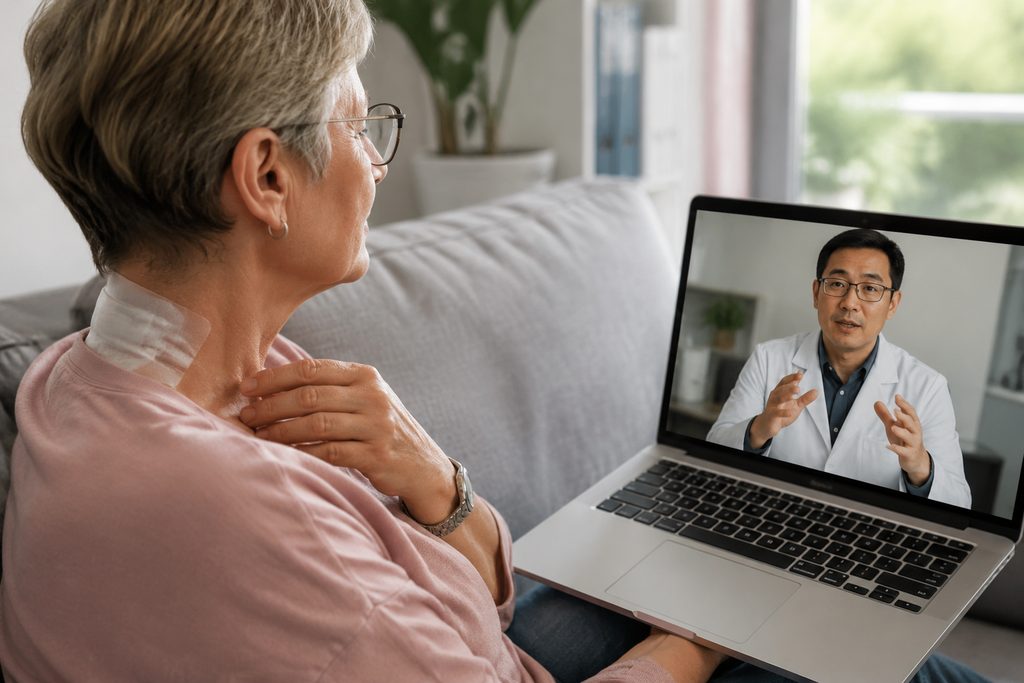
A typical remote follow-up protocol for an orthopedic patient looks like this: At 6 weeks post-op, you get an X-ray locally and upload the DICOM files through a secure portal. The surgeon reviews them within 48 hours. You have a 20-minute video call with a bilingual coordinator present. The surgeon assesses bone healing, checks alignment, and clears you for the next phase of rehabilitation. You repeat this at 3 months and 6 months. Total cost for all three remote checks: roughly $600 to $900, depending on the specialist.
This is not an inferior substitute for an in-person visit. For many procedures — total hip replacement, ACL reconstruction, spinal fusion — the surgeon gets 90% of the clinical information they need from the imaging alone. The physical exam component — range of motion, wound inspection — can be guided remotely with you or a local physiotherapist describing what you see and feel. The remaining 10% uncertainty is usually acceptable when weighed against the cost and disruption of international travel.
There are limits. A surgeon cannot assess subtle joint laxity through a screen. They cannot palpate a healing fracture. If your recovery is not following the expected trajectory — persistent pain, unexpected swelling, loss of function — the remote approach breaks down. That is when you shift to pathway three.
How to Book a Follow-Up Appointment at a Beijing Hospital Online — Without Being in Beijing
If you do need to return, or if you want a remote consultation with the original team, the logistical question becomes: “book follow up appointment Beijing hospital online” — how do you actually do this from another country?
The honest answer: you cannot do it easily on your own. Chinese public hospital appointment systems — even the English-language portals of major institutions — are not designed for international follow-up scheduling. They require a Chinese ID number or a local phone number for verification. The appointment slots for top specialists fill within minutes of release. And the system assumes you are physically present to pick up a paper ticket from a kiosk in the hospital lobby before the consultation.
This is not a flaw in the system. It is a system optimized for domestic patients — 1.4 billion of them. International patients are an afterthought in the public hospital workflow. The international departments operate differently. They have dedicated coordinators, English-speaking staff, and appointment channels that do not rely on the public-facing app. Booking through an international department typically means contacting them directly by email or phone, providing your previous medical record number, and requesting a specific time window. They respond within 1-3 business days. The consultation fee is higher — typically 1.5 to 2 times the public rate — but the process actually works for someone dialing in from overseas.
We handle this coordination as part of our standard service. You tell us the hospital, the department, and your preferred timeframe. We contact the international patient center, verify the surgeon’s availability, confirm the appointment, and send you a confirmation with the exact time, location, and floor number. If you need a bilingual companion for the visit itself, that is arranged in parallel. The appointment coordination fee starts from $300 — and if we cannot secure the slot, it is refunded in full.
Practical Considerations: Documentation, Insurance, and the Handoff That Prevents a Return Trip
The single most important factor in avoiding an unnecessary return trip is the quality of your discharge documentation. Too many international patients leave a Chinese hospital with a one-page summary in Mandarin, a CD of imaging files they cannot open, and a vague instruction to “come back in three months.” That is a recipe for a forced return visit — not because the patient needs it, but because their local doctor has no idea what happened.
Before you leave the hospital, insist on — or have your coordinator obtain — the following:
- Operative report in English. This should describe the procedure step by step, name every implant and graft material, and note any intraoperative findings or deviations from the planned approach.
- Discharge summary with medication list. Generic drug names, not Chinese brand names. Dosing schedules in milligrams, not “one tablet twice daily.”
- Imaging files in DICOM format. Not JPEGs. Not a CD that auto-plays a Chinese-language viewer. Raw DICOM files your local radiologist can import into their PACS.
- Post-operative protocol. Weight-bearing status, range-of-motion restrictions, return-to-work timeline, and specific warning signs that should trigger a call to the surgeon.
- Direct contact information for the surgical team. An email address or WeChat ID for the surgeon’s fellow or department coordinator. Someone who will actually respond.
On the insurance side: most international health insurance plans will reimburse follow-up care obtained in your home country, even if the original surgery was performed abroad. But they will want the documentation listed above. Submit it with your claim. If your plan has a case manager, involve them early — before you travel home. They can help identify in-network providers willing to co-manage a post-operative patient from an overseas procedure.
For visa purposes, if you do need to return, the same S2 visa category applies. You are entering for private medical affairs — a follow-up visit falls squarely within that scope. The hospital’s international department can provide an invitation letter confirming your appointment. Processing time is typically 4-7 business days at most Chinese embassies and consulates, though this varies by country.
Frequently Asked Questions
No. The follow-up schedule printed on your discharge papers is a default template for domestic patients. When you tell the surgeon you are returning to another country, the conversation shifts. Most will immediately pivot to a remote follow-up plan — they will tell you what imaging to get, where to send it, and when to schedule a video call. If they insist on an in-person return, there is a specific clinical reason. Ask for it explicitly.
Medical liability across borders is complex. In practice, pursuing legal recourse against a foreign hospital is extremely difficult and rarely successful. This is not unique to China — it applies to medical tourism anywhere. What matters more is whether the Chinese surgical team will help manage a complication remotely. In our experience, they almost always will. Reputable hospitals care about their international reputation. They will review imaging, advise on management, and in serious cases, facilitate a return for revision surgery — often at reduced cost. But this is a goodwill arrangement, not a legal guarantee. You should understand this reality before choosing to have surgery abroad.
Some surgeons welcome direct contact. Many do not — not because they are unhelpful, but because their caseload is enormous. A top orthopedic surgeon at a major Chinese hospital may perform 20 surgeries in a week and see 80 outpatients in a single morning clinic session. Your email sits in an inbox with 300 others. The more reliable path is to go through the hospital’s international department or through a coordinator who has an established relationship with the team. The response will be faster and more structured.
For the small percentage of cases where a return is genuinely indicated, the timing varies by procedure. Orthopedic cases with custom implants often require a 6-month or 12-month check with specialized imaging. Staged reconstructive procedures may have a planned return at 3-6 months. Cardiac device checks might be annual. The key is that the timeline is almost always discussed before you leave — if you are hearing about a required return for the first time from a piece of paper in your discharge envelope, it is likely the generic template, not a clinical mandate. Confirm with the surgeon directly.
Your Next Step
The question of whether to return to China for follow-up care is not a medical mystery. It is a logistics and information-transfer problem with a clear decision tree. Most patients can manage post-op recovery remotely with proper documentation and a cooperative local doctor. A smaller subset needs to go back — and when they do, the trip
For more medical information and treatment options in China, visit chinamedservices.com (China Medical Services).
