Fracture Repair Surgery Cost China with Companion: Complex Trauma Pricing Guide
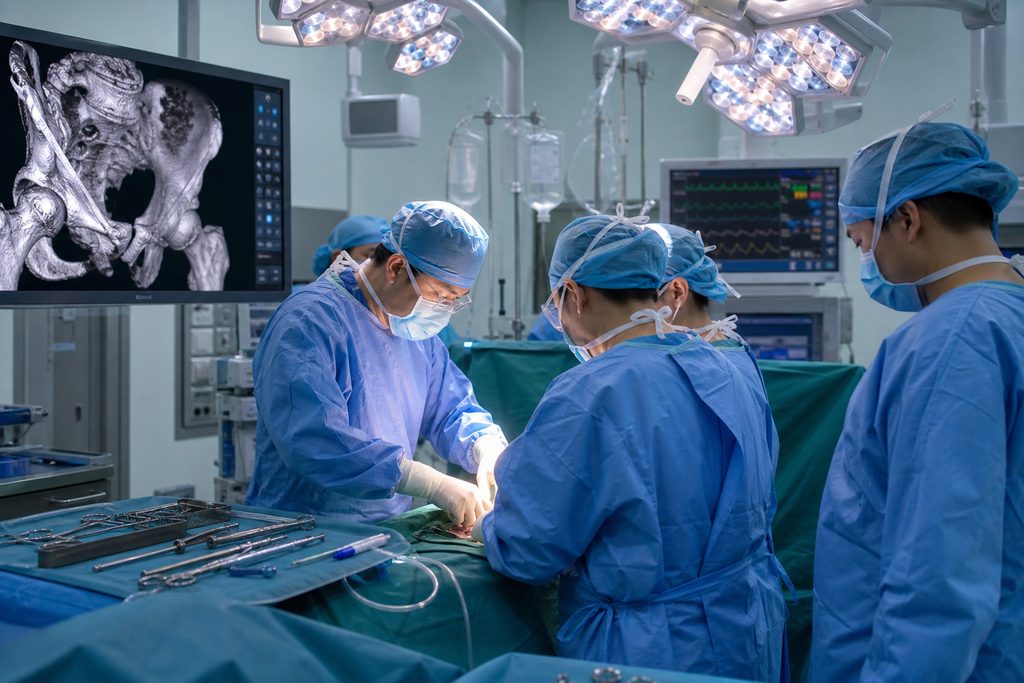
According to a 2023 report in the Journal of Orthopaedic Surgery and Research, the volume of high-energy trauma cases treated in Chinese trauma centers has risen by nearly 40% over the last decade. That volume drives expertise. For a foreign patient staring at a six-figure surgical estimate at home, the complex trauma fracture repair surgery cost China often lands between $8,000 and $25,000. That covers the surgeon, the implant, the operating theater, and the inpatient stay. The same procedure in the United States routinely exceeds $80,000 before rehabilitation.
But a price tag alone doesn’t fix a shattered tibial plateau or a comminuted distal radius. You need a system that can handle the hardware, the surgical planning, and the language barrier. That’s where a medical companion changes the equation. We’ll break down the real numbers, the hospital tiers, and the logistics that determine whether this path makes sense for your specific injury.
Complex Trauma Surgery in China: The Direct Answer
For a complex fracture requiring open reduction and internal fixation (ORIF) with locking plates, intramedullary nails, or external fixation frames, expect to pay $8,000 to $25,000 at a top-tier Chinese public hospital. That’s the all-in surgical cost. Add $2,500 to $5,000 for a comprehensive companion and coordination package. The total — roughly $10,500 to $30,000 — still runs 70% to 85% below typical U.S. cash-pay rates. The catch? You can’t just book it online. You need a structured evaluation first, and the implant choice drives the final number more than anything else.
Who This Is Right For — and Who It Isn’t
Complex trauma isn’t elective. You didn’t choose the motorcycle accident or the fall from scaffolding. But you can choose where the reconstruction happens. This path fits a specific patient profile.
Typically a good candidate:
- You have a confirmed complex fracture (intra-articular, comminuted, segmental, or non-union from a prior failed fixation).
- Your condition is stable enough for a long-haul flight, or you can wait the required 2-4 weeks post-injury for soft tissue swelling to subside.
- You have complete imaging — CT scans with 3D reconstruction are non-negotiable for surgical planning.
- You’re paying out of pocket or your insurance allows overseas reimbursement.
- You understand that recovery doesn’t end when you leave the hospital. You’ll need a follow-up plan back home.
Who should pause and reconsider:
- Open fractures with active infection. Get source control first, wherever you are. Flying with an uncontrolled infection is dangerous.
- Polytrauma patients still in the ICU. You need stabilization before any transfer.
- Fractures that can be managed non-operatively with casting. The cost-benefit ratio for travel disappears.
- Anyone expecting a guarantee that the bone will heal perfectly. No surgeon on earth can promise that.
The Options, Compared
Not all fracture repair pathways are equal. The table below compares what you’re really choosing between when you look at the orthopedic trauma surgery pricing China with companion model versus staying in the U.S. or going to another medical travel destination.
| Factor | U.S. Cash-Pay | China (Public Top-Tier) | China (Private International) |
|---|---|---|---|
| ORIF Complex Fracture Cost | $65,000 – $150,000+ | $8,000 – $25,000 | $28,000 – $55,000 |
| Surgeon Experience | Variable; board-certified | High-volume trauma surgeons; often 300+ complex cases/year | Western-trained or bilingual; lower volume but more personalized |
| Implant Options | All major brands (Synthes, Stryker, Zimmer) | Same global brands available; domestic implants cost 40-60% less | Primarily imported implants |
| Language Barrier | None | Significant; companion essential | Minimal; English-speaking staff |
| Wait Time for Surgery | Days to weeks (OR scheduling) | Usually within 1 week of evaluation | Within days |
| Companion Service | Not needed | Strongly recommended; $300/day | Optional; $150-200/day if desired |
The public hospital column is where the genuine savings live. It’s also where you need the most on-the-ground support. The private international route costs more but feels familiar. For a comminuted pilon fracture or a complex acetabular fracture, the surgeon’s weekly case volume matters more than the lobby’s marble floors. That pushes many patients toward the public tier with a companion bridging the communication gap.
Why Implant Selection Drives the Entire Bill
Here’s what most pricing articles miss. The single largest variable in your complex trauma fracture repair surgery cost China isn’t the hospital’s reputation. It’s the metal. A titanium locking compression plate system from Synthes or DePuy Synthes can add $3,000 to $8,000 to the implant line item alone. A domestically manufactured plate from a company like Double Medical or Wego — both holding CFDA and CE marks — might cost $800 to $2,000 for a comparable construct.
Are they the same? Not exactly. The metallurgy, the screw-hole threading tolerances, the available instrumentation sets — these differ. Chinese trauma surgeons routinely use both. For a straightforward intertrochanteric hip fracture in a 70-year-old, a domestic proximal femoral nail performs equivalently. For a 28-year-old athlete with a comminuted both-bone forearm fracture, many surgeons will strongly recommend the imported implant with its refined locking mechanism. You need to have this conversation before surgery, through a translator who understands orthopedic terminology. Your companion should be able to relay the surgeon’s implant rationale in plain English, not just a catalog number.
Also, external fixation — sometimes used as temporary spanning fixation before definitive ORIF — runs $1,500 to $4,000 for the frame and application. If your injury requires a staged approach, factor in two surgeries, not one.
What a Medical Companion Actually Does During Fracture Treatment
The phrase “with companion” in the search medical tourism package fracture surgery China companion included is doing heavy lifting. This isn’t a tour guide. For complex orthopedic trauma, the companion’s value crystallizes at specific pressure points.
Pre-operative imaging review. The surgeon needs your DICOM files, not JPEGs. A companion coordinates the upload to the hospital’s PACS system, confirms the images are viewable, and gets a written confirmation that the surgical team has reviewed them before you ever board a plane.
Day of admission. You’ll need a hospital-issued medical record number, a deposit paid (typically 50-70% of the estimate upfront), and signatures on consent forms written in Chinese. The companion translates each form line by line. They clarify that the consent for “intraoperative fluoroscopy” means real-time X-ray during surgery — not an additional billing trap.
Implant verification. Before you’re wheeled into the OR, the companion can confirm with the circulating nurse that the implant listed on the surgical booking sheet matches what was discussed. Imported Synthes plate, 8 holes, titanium. This five-minute check is worth the entire day rate.
Post-operative rounds. The attending surgeon rounds at 7:30 a.m. with a team of residents. The companion ensures your questions get asked: “Was the reduction anatomical? What’s the weight-bearing timeline? When can I fly?” You get answers, not nods and smiles.
Hospital Selection for Complex Fractures: Where the Volume Is
This is the hardest question, and the answer isn’t comforting. If a deep infection develops weeks after surgery, you’ll need treatment where you are. That means an orthopedic surgeon in your home country managing a complication from surgery done abroad. Some surgeons are reluctant to take on these cases. Before you travel to China, identify an orthopedic practice back home that will agree to see you for follow-up and potential complication management. Get that agreement in writing. Do not skip this step. The cost savings evaporate quickly if you need an unplanned revision surgery at U.S. cash-pay rates.
Yes, with a caveat. Implants sold in China fall under National Medical Products Administration (NMPA) regulation. Many are also CE-marked for the European market. The major domestic manufacturers — Double Medical, Wego, Trauson — have products with published clinical data. But the regulatory standard for post-market surveillance differs from the FDA’s system. Ask your surgeon directly which implant they plan to use, the manufacturer, and whether there is published outcome data for your specific fracture pattern. If the answer is vague, push harder. A good surgeon will have a clear rationale and won’t mind the question.
No. The companion is not permitted in the operating room. Their role on surgery day is pre-operative verification — confirming the implant, the surgical site marking, and the consent — and then being present in the waiting area during the procedure. After surgery, they’ll be there when you wake up in the recovery room to relay the surgeon’s immediate post-operative notes. They’ll also coordinate with the nursing staff on your pain management and the first post-op X-ray schedule.
Your Next Step
The decision to travel for complex trauma surgery isn’t just about the complex trauma fracture repair surgery cost China. It’s about whether the surgical team, the implant, and the recovery plan align with what your injury demands. We don’t perform surgery. We don’t diagnose fractures. What we do is connect you with the orthopedic trauma departments that handle high volumes of cases like yours, and we put a bilingual medical companion at your side from admission through discharge. If you have your imaging ready and want to know whether a Chinese trauma center is a viable option for your specific fracture, send us your scans and a brief history. We’ll get a written surgical opinion and a real price estimate — not a brochure number. Then you can decide.
Frequently Asked Questions
Yes. The hospitals used for international patients are JCI-accredited and follow the same international safety standards as top hospitals in the US and Europe. Surgical teams perform high volumes of procedures — often more than their Western counterparts — which studies show leads to better outcomes.
Costs vary by procedure and hospital, but international patients typically save 40-80% compared to US prices — even when factoring in travel and accommodation. A consultation with our team will give you an exact, all-inclusive quote with no hidden fees.
Send us your existing medical reports to get started. We handle everything from hospital selection and appointment scheduling to visa assistance and post-operative recovery planning. Your medical records are reviewed by the specialist before you even book a flight.
For more medical information and treatment options in China, visit chinamedservices.com (China Medical Services).
