Fujian Medical University Union Hospital Gastroenterology: A Guide for International Patients
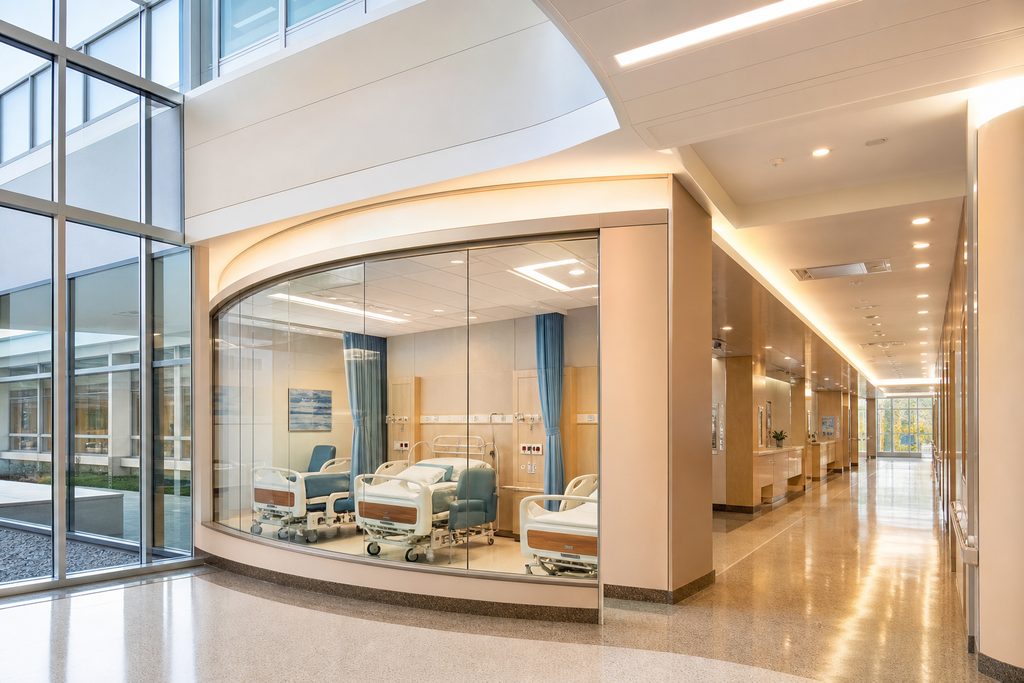
You have probably heard that getting specialized medical care in China means long waits, language chaos, and questionable quality. The reality at a handful of top-tier institutions is different. Fujian Medical University Union Hospital runs one of the busiest gastroenterology departments in southeastern China, and it increasingly treats patients who fly in from Europe, North America, and Southeast Asia. This guide breaks down what the department actually offers, what a colonoscopy or gastroscopy costs, and how an English-speaking patient navigates the process without losing weeks to confusion.
Fujian Medical University Union Hospital Gastroenterology: The Short Answer
Fujian Medical University Union Hospital, located in the heart of Fuzhou, operates a gastroenterology department that handles high volumes of endoscopic procedures, inflammatory bowel disease management, and early GI cancer screening. For international patients, the realistic path is through the hospital’s international or VIP outpatient channel, not the standard public registration desk. A diagnostic gastroscopy typically runs between $150 and $350, while a colonoscopy with sedation lands in the $300 to $600 range — a fraction of what the same procedure costs in the United States or Western Europe. The catch: you cannot simply email the hospital and book a slot. You need a local coordinator or a bilingual companion who understands the hospital’s internal flow.
That is the honest trade-off. The medical capability exists. The administrative friction is real.
Who This Is Right For — and Who It Isn’t
This department makes sense for a specific profile of patient. Not everyone should board a flight to Fuzhou for a stomach complaint.
Good candidates for treatment here include:
- Patients with chronic digestive symptoms — persistent reflux, unexplained weight loss, recurrent abdominal pain — who want a comprehensive endoscopic workup without a six-month wait at home.
- People who need a second opinion on a GI diagnosis and are comfortable sending existing records, endoscopy images, and pathology slides for review.
- Expats or business travelers already based in China or Southeast Asia who can reach Fuzhou in under three hours.
- Patients with a family history of gastric or colorectal cancer seeking high-volume screening at a lower out-of-pocket cost.
Who should not pursue this:
- Anyone with an acute GI emergency — severe bleeding, bowel obstruction, or suspected perforation. Go to the nearest emergency department, not an international patient coordinator.
- Patients whose condition is stable and well-managed at home. Flying across the world for a routine follow-up rarely justifies the cost and disruption.
- People who require highly specialized procedures like small bowel transplantation or complex hepatobiliary surgery. Those cases belong at dedicated transplant or liver centers.
- Anyone unwilling to spend at least one full day at the hospital for consultation, preparation, and procedure. This is not a walk-in clinic.
Being clear about who should stay home is what makes the rest of this guide trustworthy.
The Options, Compared
When a foreign patient considers gastroenterology services in China, they are really choosing between three care tiers. Here is how they stack up for cost, access, and language support.
| Option | Typical Cost for Diagnostic Colonoscopy | English-Speaking Staff | Time to Appointment | Best For |
|---|---|---|---|---|
| Fujian Medical University Union Hospital — Standard Outpatient | $150–$300 | Rare | Same-day registration, procedure scheduled later | Mandarin-speaking patients or those with a bilingual companion |
| Fujian Medical University Union Hospital — International/VIP Channel | $300–$600 | Partial; coordinator-assisted | 3–7 days with coordination | Foreigners who want faster access and some language support |
| Private International Hospital (e.g., United Family, Raffles) | $800–$1,500 | Yes, fully | 1–3 days | Patients prioritizing Western-style service and direct insurance billing |
Which column fits you depends on one thing: how much friction you are willing to trade for savings. The standard outpatient route is cheapest but essentially impossible for a non-Mandarin speaker to manage alone. The international channel at Fujian Union Hospital splits the difference — you pay roughly double the local rate but still far less than a private international hospital. The private hospital route removes almost all friction but costs three to five times more.
Most international patients we see choose the middle path: the hospital’s VIP or international outpatient service, supported by a bilingual medical companion who handles registration, payment, and translation on the day of the procedure.
What Actually Happens at Fujian Union Hospital’s GI Department
Here is the part generic hospital guides skip. Fujian Medical University Union Hospital’s gastroenterology department sits inside a large public teaching hospital. The outpatient building sees thousands of patients daily. The GI floor handles gastroscopy, colonoscopy, endoscopic ultrasound, and polypectomy. Doctors here perform endoscopic procedures at a volume that most Western gastroenterologists would find staggering — and volume matters for polyp detection rates and procedural skill.
But the experience for a foreigner is not like walking into a clinic in Frankfurt or Toronto. There are no English signs on every door. The registration machines require a Chinese ID or a hospital-issued medical card. Payment windows are cash or Chinese mobile payment first; international cards are not universally accepted. This is why the phrase “best gastroenterologist Fujian for foreigners” is slightly misleading. The best gastroenterologist for a foreigner is not necessarily the most published professor — it is the one you can actually see, communicate with, and follow up with without a translator melting down in the waiting room.
In practice, that means going through the hospital’s international medical service desk, which exists but is not always staffed with fluent English speakers on every shift. A bilingual companion bridges that gap. They do not replace the doctor. They replace the confusion.
What It Costs: Gastroenterology Hospital Cost China
Let us put concrete numbers on the table. The gastroenterology hospital cost China conversation confuses people because published prices are rare and package deals vary wildly. Based on current ranges at top-tier public hospitals in Fuzhou and comparable cities:
- Outpatient specialist consultation (international channel): $50–$120
- Diagnostic gastroscopy (no sedation): $80–$150
- Diagnostic gastroscopy (with sedation): $150–$300
- Diagnostic colonoscopy (with sedation): $300–$600
- Combined gastroscopy + colonoscopy: $450–$800
- Polypectomy (simple, during colonoscopy): $100–$400 additional, depending on size and number
- Endoscopic ultrasound (EUS): $400–$900
- Pathology / biopsy analysis: $30–$100 per specimen
These figures vary by hospital tier, sedation type, and case complexity. They do not include coordinator or companion fees, which are separate. A bilingual medical companion in Fuzhou typically starts around $300 per day, covering registration, queue management, payment assistance, and interpretation during the consultation and procedure.
Compare that with the United States, where a diagnostic colonoscopy without insurance routinely bills between $2,000 and $4,000, and even insured patients often face $500–$1,500 in deductibles and co-insurance. The savings are real. But so is the need to plan ahead.
How to Book a Colonoscopy at Fujian Union Hospital
The most common question we hear: “How to book colonoscopy at Fujian Union Hospital?” The honest answer is that you cannot book it directly from overseas as an individual patient. The hospital does not operate a public international online booking portal for gastroenterology.
The workable route looks like this:
- Send your records first. Existing endoscopy reports, imaging, blood work, and a summary of symptoms. A written second opinion costs $300–$500 and confirms whether a trip to Fuzhou is even warranted.
- Confirm the doctor and date. Once the department reviews your file, a coordinator requests a specific date through the international service desk. Expect 3–7 days of lead time.
- Arrange the S2 visa. Medical treatment falls under the S2 short-stay visa category, not the M business visa. You will need an invitation letter or supporting documents from the hospital. A family member accompanying you also applies for an S2.
- Complete bowel preparation. The hospital provides a standard prep protocol. Follow it exactly. A failed prep means a wasted procedure and a rescheduled slot.
- Arrive one day early. You need to create a hospital medical card, pay the deposit, and possibly meet the anesthesiologist if sedation is planned.
If that sequence sounds manageable in theory but stressful in practice, that is because it is. The hospital’s rules are not designed for foreign patients. They are designed for a domestic system that assumes Chinese language ability and local payment methods. A bilingual companion turns a two-day bureaucratic ordeal into a single morning.
Is Gastroenterology Treatment Safe in China?
The short answer: at a top-tier teaching hospital like Fujian Medical University Union Hospital, yes — the procedural safety record is comparable to good Western centers. The longer answer requires nuance.
China’s best hospitals perform endoscopic procedures at enormous scale. That scale drives technical proficiency. A gastroenterologist at a major Fuzhou hospital may perform more colonoscopies in a month than a typical American gastroenterologist performs in a quarter. Polyp detection rates at leading Chinese centers are published in peer-reviewed journals and generally fall within international benchmarks.
But safety is not only about the doctor’s hands. It is about communication, infection control, sedation monitoring, and what happens if something goes wrong. Those systems vary more widely across China than across Western Europe. At the top 5% of Chinese hospitals — the tier that includes Fujian Union Hospital — infection control and sedation protocols are standardized and audited. Below that tier, the variance widens.
So the answer to “is gastroenterology treatment safe in China” is: it depends on the hospital tier you choose. Stay within the top-ranked public teaching hospitals or JCI-accredited private international hospitals, and the risk profile is acceptable for elective diagnostic procedures. Wander into an unranked county hospital to save another $50, and you are making a different trade-off.
Digestive Health Check-Up Packages for International Patients
Some patients do not arrive with a specific diagnosis. They want a comprehensive digestive health check up package China international patient — a structured screening that covers blood work, abdominal ultrasound, gastroscopy, colonoscopy, and a final consultation with a gastroenterologist.
Fujian Union Hospital and comparable top-tier hospitals in Fuzhou offer executive health screening packages through their VIP or international departments. A full digestive health package typically ranges from $800 to $1,500, depending on whether you add CT imaging, tumor marker panels, or capsule endoscopy. That price includes the procedures, sedation, basic pathology, and a summary report. It usually does not include hotel, transport, or translation.
For patients over 45, or anyone with a family history of gastric or colorectal cancer, this kind of package makes sense. You get a baseline. You get answers. And you get them in two days rather than two months.
Practical Considerations: Records, Visa, Payment, and Follow-Up
Let us address the logistics that actually trip people up.
Records. Bring everything. Endoscopy images on a disc or USB, pathology slides if available, medication lists, and a one-page summary of your symptoms and history. Chinese specialists read imaging themselves — they will not rely on a written report alone. If you have had a colonoscopy at home within the last year, bring the actual images, not just the conclusion.
Visa. The S2 visa is the correct category for short-term medical treatment and private affairs. It is not a guarantee of entry. You need supporting documents from the hospital, and processing times vary by consulate. The M visa is for commercial and trade activities — it has nothing to do with medical travel. Applying with the wrong category can delay or derail your trip.
Payment. Public hospitals in China operate on a prepaid deposit system. You load money onto a hospital medical card, and costs are deducted as you go. International credit cards are not consistently accepted at public hospital payment windows. Bring a UnionPay card or arrange for someone to handle payments locally. Private international hospitals are different — they accept major international cards and often bill insurers directly.
Language. Do not assume the gastroenterologist speaks English. Some do. Many do not. The international service desk may provide basic interpretation, but it is not guaranteed for every step of the process. If you need certainty, arrange a bilingual companion.
Follow-up. After you return home, you will need the final pathology report and any images. Request digital copies before you leave. The hospital can provide them, but it may take a few days. A coordinator can courier physical slides or discs if needed.
Frequently Asked Questions
Not through a public online portal. The hospital requires an in-person visit or a designated proxy to create a medical card and schedule the procedure. International patients typically work through the hospital’s international service desk with the help of a local coordinator. Expect 3–7 days of lead time once your records have been reviewed.
A diagnostic gastroscopy runs $150–$300 with sedation. A colonoscopy with sedation runs $300–$600. Combined procedures fall between $450 and $800. These are out-of-pocket prices at the hospital; they do not include coordinator fees, companion services, or travel costs. Prices vary by case complexity and sedation type.
At a top-tier teaching hospital like Fujian Medical University Union Hospital, procedural safety is comparable to good Western centers. The key is staying within the top-ranked public hospitals or JCI-accredited private international hospitals. Below that tier, quality control becomes less predictable. Choose the hospital carefully, not just the lowest price.
Yes. The S2 visa is the appropriate category for short-term medical treatment and private affairs. Family members accompanying you also apply for an S2. The M visa is for commercial and trade activities and is not suitable for medical travel. You will need supporting documents from the hospital to apply.
If a polyp is found, it is usually removed during the same colonoscopy and sent for pathology. Results typically return within 3–7 days. If a more serious finding emerges, the gastroenterologist will recommend next steps — additional imaging, endoscopic ultrasound, or referral to a GI surgeon. You are not obligated to continue treatment at the same hospital; you can take the pathology results home and consult your local specialist.
Your Next Step
Fujian Medical University Union Hospital’s gastroenterology department offers genuine clinical capability at a fraction of Western prices. The barrier is not the medicine — it is the process. China Medical Services exists to remove that barrier. We are not a hospital, and we do not provide diagnoses or treatment. We help international patients send records for a written second opinion, coordinate appointments through hospital international channels, and arrange bilingual companions who handle the on-the-ground logistics.
If you are considering a digestive health check-up or a specific procedure in Fuzhou, start with a free consultation. Tell us your situation. We will tell you honestly whether this hospital makes sense for you — and if not, we will point you toward one that does. Request a free consultation and get a clear, no-pressure assessment of your options.
Medical care in China is not a mystery. It is a system. And systems can be navigated.
For more medical information and treatment options in China, visit chinamedservices.com (China Medical Services).
