Fujian Medical University Union Hospital Urology: A Guide for International Patients
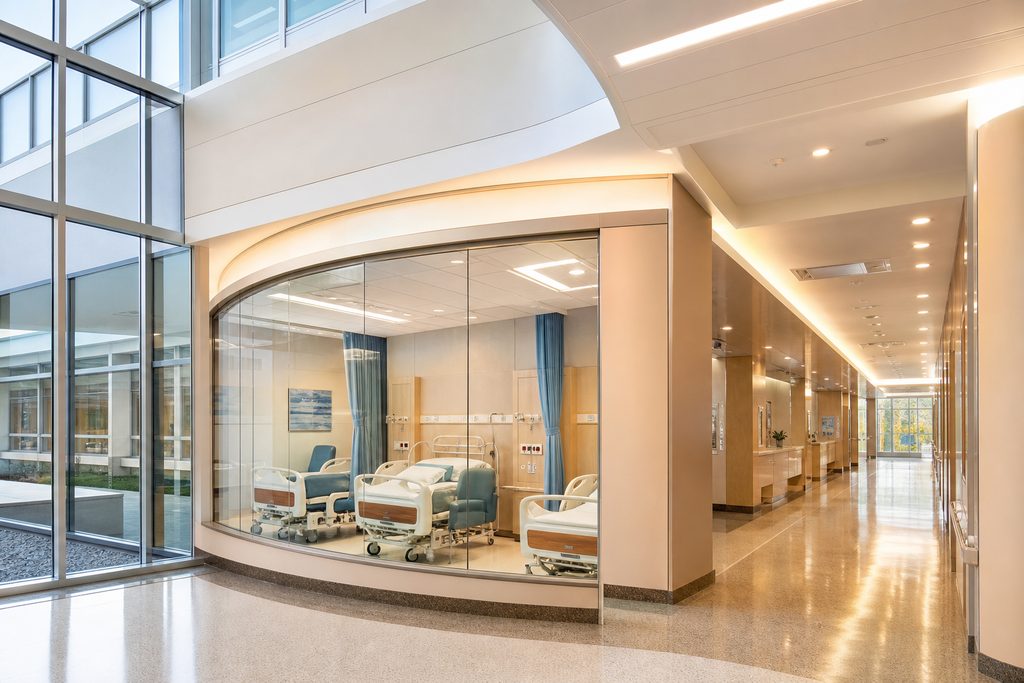
Have you ever wondered whether a top-tier urology hospital China for foreigners actually exists outside Beijing or Shanghai? The answer is yes. Fujian Medical University Union Hospital in Fuzhou runs a high-volume urology department that treats complex stone disease, prostate conditions, and urologic cancers. But getting there as an international patient is not as simple as booking a flight and walking in. Here is what you need to know before you commit.
Fujian Medical University Union Hospital Urology: The Short Answer
Fujian Medical University Union Hospital is a large public tertiary hospital in Fuzhou, the capital of Fujian province. Its urology department handles a significant share of the region’s complex urologic surgeries. That includes minimally invasive procedures for kidney stones, transurethral resection of the prostate, and laparoscopic or robotic-assisted surgery for urologic cancers. For international patients, the hospital is not a dedicated international facility. You will not find a glossy “international patient center” website. What you will find is a serious clinical department with high surgical volume and experienced surgeons, accessible through the hospital’s official channels or a bilingual coordinator who knows the system.
The caveat: public hospital registration in China does not work like Western online booking. You cannot simply reserve a specialist slot from overseas through a generic portal. Appointments are tied to hospital rules, and surgery requires an in-person consultation first. That reality shapes everything about planning a visit here.
Who This Is Right For — and Who It Isn’t
Fujian Medical University Union Hospital makes sense for a specific type of patient. Not everyone should fly to Fuzhou for urology care.
Typically a good candidate:
- You need a second opinion on a complex urologic diagnosis, such as a large or recurrent kidney stone, elevated PSA with biopsy results, or a newly diagnosed bladder or kidney tumor.
- You are already in Southeast Asia, the Middle East, or another region where Fuzhou is a shorter and cheaper flight than Beijing or Shanghai.
- You are price-sensitive but unwilling to compromise on surgical volume. China’s top public hospitals perform far more urologic procedures annually than most Western centers.
- You have a family member or coordinator who speaks Mandarin, or you plan to use a bilingual medical companion.
- You want a written second opinion before deciding whether to travel.
Who should not pursue this:
- Patients who need immediate emergency surgery. If you have acute urinary retention with fever, sepsis, or uncontrolled bleeding, go to the nearest emergency department — not an airport.
- Patients who expect a fully English-speaking hospital environment. Fujian Medical University Union Hospital is a Chinese public hospital. English proficiency among clinical staff varies widely.
- Patients with rare genetic urologic conditions requiring highly specialized multidisciplinary teams that may be better served by dedicated centers elsewhere.
- Patients who cannot accept that surgery will not be scheduled until after an in-person consultation in Fuzhou.
The Options, Compared
If you are weighing where to get urology treatment abroad, here is how Fujian Medical University Union Hospital stacks up against the alternatives. Numbers are ranges based on typical public hospital pricing and published international comparisons; your final quote depends on the exact procedure, hospital tier, and case complexity.
| Option | Prostate surgery (TURP) | Kidney stone (PCNL) | Language support | Wait time after consultation |
|---|---|---|---|---|
| Fujian Medical University Union Hospital (public, Fuzhou) | $4,000–8,000 | $3,500–7,000 | Limited; companion recommended | 2–6 weeks typical |
| Top-tier public hospital, Beijing/Shanghai | $6,000–12,000 | $5,000–9,000 | Some international departments | 2–8 weeks |
| Private international hospital, China (e.g., United Family) | $15,000–25,000 | $10,000–18,000 | Full English | 1–3 weeks |
| United States (average, insured) | $15,000–30,000 | $12,000–25,000 | Native English | Variable, often 4–12 weeks |
| Thailand or India (private international) | $5,000–10,000 | $4,000–8,000 | English widely available | 1–4 weeks |
Which column fits you? If you want the lowest cost with high surgical volume and can handle Mandarin logistics, Fuzhou is compelling. If you need full English service and direct insurance billing, a private international hospital in China or Southeast Asia may suit you better. If you want the absolute top of China’s urology reputation rankings, look at our department rankings for urology and other specialties before deciding.
What “High Volume” Actually Means at Fujian Medical University Union Hospital
Volume is the metric that matters most in urologic surgery. A surgeon who performs 300 percutaneous nephrolithotomies (PCNL) a year has seen complications a lower-volume surgeon has only read about. Union Hospital’s urology department runs a busy inpatient and day-surgery service, with a steady stream of complex stone cases referred from across Fujian and neighboring provinces. That regional referral pattern is meaningful. It means local doctors send their difficult cases here.
And that is the section no generic article can give you. The reason this specific hospital appears in searches for Fujian Medical University Union Hospital international patients is not marketing. It is the hospital’s role as a clinical workhorse in a province of roughly 41 million people. Fuzhou is not a medical tourism hub. It is a working regional medical center. That changes the experience: fewer international frills, more raw clinical throughput.
But throughput without navigation is chaos. The hospital’s outpatient halls are crowded. Registration kiosks operate in Chinese. Payment windows require a local bank card or WeChat Pay in many cases. None of this is impossible to manage. It is simply not designed for a foreigner walking in alone.
How Much Does Prostate Surgery Cost in China?
The honest answer: less than you think, but more than the headline number. For a standard transurethral resection of the prostate (TURP) at a top public hospital in Fuzhou, expect $4,000 to $8,000 for the hospital portion. That typically includes the surgeon’s fee, operating room time, basic disposable instruments, and a standard ward bed for 3–7 days. It does not include your flight, hotel, visa, meals, interpreter, or any post-discharge complications requiring extended stay.
What drives the variance? The type of procedure matters enormously. Holmium laser enucleation of the prostate (HoLEP) costs more than standard monopolar TURP because of the laser equipment and longer surgeon training. Robotic-assisted radical prostatectomy, if indicated for prostate cancer, can run $12,000–20,000 at a public hospital — still a fraction of the $40,000–70,000 common in the U.S. Stone procedures vary by stone burden. A simple ureteroscopy with laser lithotripsy costs $2,500–5,000. A complex staghorn calculus requiring multiple PCNL access tracts can exceed $8,000.
Compare that to the question patients actually type: how much does prostate surgery cost in China versus staying home. In the U.S., even with insurance, a TURP often carries $5,000–10,000 in out-of-pocket costs after deductibles and coinsurance. For uninsured patients, the full bill is $15,000–30,000. In the UK, NHS wait times for non-urgent urology surgery routinely stretch past 18 weeks — and private care costs £6,000–10,000. The arithmetic is straightforward. But cost is only one variable.
Is Urology Surgery Safe in China?
The short answer is that safety depends on hospital selection, surgeon volume, and your own preoperative risk. China’s top-tier public hospitals — those in the Fudan ranking system, which covers the top 5% of the country’s 35,000+ hospitals — operate at Western-equivalent safety levels for common urologic procedures. Infection control, sterile technique, and complication management in these institutions are mature and protocol-driven. What differs is the patient experience layer: communication, pain management philosophy, and discharge planning.
Here is what the data does not tell you. Is urology surgery safe in China is not a yes/no question. A better question: is it safe at this specific hospital, with this specific surgeon, for this specific procedure? That is where a written second opinion or video consultation becomes valuable. You are not just asking “can this be treated.” You are asking “does this team’s experience match my exact case.”
One practical safeguard: ask about the surgeon’s annual case volume for your procedure. High-volume surgeons in Chinese public hospitals are typically open about this. If the number is vague or the surgeon deflects, that is information too.
Practical Considerations: Records, Visa, Payment, Follow-Up
Preparing for urology treatment at Fujian Medical University Union Hospital means handling logistics that have nothing to do with medicine.
Medical records. Bring everything: recent imaging (CT, MRI, ultrasound) on CD or USB, not just printed reports. Bring pathology slides if you had a biopsy. Bring a medication list with generic names. Bring a one-page summary in English and, ideally, translated into Chinese. A bilingual coordinator can handle the translation — but the source documents must be complete.
Visa. Foreign nationals traveling to China for medical treatment apply for an S2 visa, with the purpose of medical treatment noted. Accompanying family members also apply for S2 visas. The hospital or your coordinator can provide an invitation letter and treatment confirmation. Do not apply for an M visa — that is for commercial and trade activities, not medical care. Visa approval is never guaranteed and depends on the latest consulate requirements.
Payment. Public hospitals in China require prepayment. You deposit funds at admission, and the hospital deducts from that balance. International credit cards are not always accepted at public hospital cashiers. Plan for a local payment method or use a coordinator who can handle hospital deposits. Private international hospitals are different — many do direct insurance billing. Public hospitals generally do not. You pay, then claim reimbursement from your insurer.
Language. Do not underestimate this. Even in a top urology department, ward nurses and junior doctors may speak limited English. The surgeon may speak some English but will default to Chinese for complex explanations. A bilingual medical companion costs from $300 per day and changes the entire experience. You will understand what is happening, what the post-op instructions actually say, and what to expect on day two versus day five.
Follow-up after returning home. Urology surgery is not finished when you leave the hospital. Stent removal after stone surgery, catheter management after prostate surgery, PSA monitoring after cancer surgery — all of this continues for weeks or months. Before you travel, confirm who will manage follow-up at home. Get written discharge instructions in English. Get the surgeon’s protocol for stent removal timing and who can remove it locally.
Frequently Asked Questions
Not directly through a public online portal. Chinese public hospitals require in-person registration for most outpatient visits. What you can do from overseas is arrange a remote consultation or have a coordinator handle registration and a proxy visit using your medical records. Surgery still requires an in-person consultation first. That is the rule at virtually every public hospital in China, not just this one.
Usually, yes. Hospital fees in Fuzhou are typically 20–40% lower than equivalent procedures at top Beijing or Shanghai public hospitals. Hotel and food costs are also lower. The trade-off is fewer English-speaking staff and a smaller international patient infrastructure. If budget is your primary driver, Fuzhou is worth considering. If you want maximum English support, a private international hospital or a Beijing/Shanghai public hospital with an international department may be a better fit.
Top public hospitals in China have established protocols for managing surgical complications. The question is whether you can navigate them. If a complication requires extended hospitalization, your costs rise, your visa may need adjustment, and your family may need to extend their stay. This is not unique to China — it is true of any medical travel. The difference is that in China, language barriers compound the stress. A bilingual companion who stays with you through discharge is not a luxury in this scenario. It is the difference between understanding your situation and guessing.
No formal referral is required. But a complete set of records from your home urologist is essential. The Chinese surgeon will review your imaging, lab results, and any prior procedure notes. Without these, you will repeat expensive tests in Fuzhou. A written second opinion service can review your records before you travel and tell you whether the trip is even necessary.
For a typical TURP or uncomplicated stone procedure, plan for 7–14 days total. That includes 1–2 days for consultation and preoperative testing, 3–7 days in hospital, and 2–5 days for early recovery and a follow-up visit before flying home. Complex cancer surgery requires 3–4 weeks. Your surgeon will give you a more precise estimate after reviewing your case.
Your Next Step
Fujian Medical University Union Hospital is a legitimate, high-volume option for international patients who need urology care at a fraction of Western prices. But it is not a plug-and-play destination. The hospital’s clinical quality is real; the navigation challenge is equally real. Our team at China Medical Services helps international patients match with the right Chinese hospital for their specific urology case, arrange remote consultations, and coordinate on-the-ground support. We are not a hospital, and we do not diagnose or treat. We handle the logistics so you can focus on the medical decision. If you are seriously considering urology treatment in Fuzhou or elsewhere in China, start with a free consultation to talk through your case.
Get a free consultation to discuss your urology needs and whether Fujian Medical University Union Hospital is the right fit. Tell us about your case and we will help you map the next step.
Choosing where to have surgery in a foreign country is never purely a medical decision. It is a logistics decision, a financial decision, and a trust decision. The more you understand before you book a flight, the better your outcome — and the calmer you will feel throughout the process.
For more medical information and treatment options in China, visit chinamedservices.com (China Medical Services).
